How Do We Stop Designing for Personas and Start Designing for People?
Written by : Maigan Webster and Fabian Faes Edited by: Jack LaMarche
How Do We Stop Designing for Personas and Start Designing for People?

Written by : Maigan Webster and Fabian Faes Edited by: Jack LaMarche
The Limits of Persona-Driven Design
Historically, we relied on personas not because they perfectly represented people, but because our own cognitive limits demanded simplicity. *Miller’s Law* reminds us that humans can juggle only a handful of concepts at once — roughly seven, give or take. Our design methods evolved around that limitation: a few personas, a few funnels, a few predictable journeys.
But technology has outgrown those boundaries. With AI, we can process and respond to hundreds of signals simultaneously.
The question is no longer can we design for individual variation, but how we do it responsibly.
Our Question: How do we combine innate human empathy with generative AI’s capacity for nuance to create experiences that respond to the person, not just the persona?

From categorising people into personas to reacting to individual people and their signals
Moving Beyond Personas: Signal Driven Design
As design moves from persona‑based to signal‑driven, new possibilities — and new complications — emerge. Real‑time signals allow experiences to adapt to the individual, but reacting to every signal can quickly become intrusive or inconsistent.
This made us think: What elements of design should remain deterministic, and what can become probabilistic?
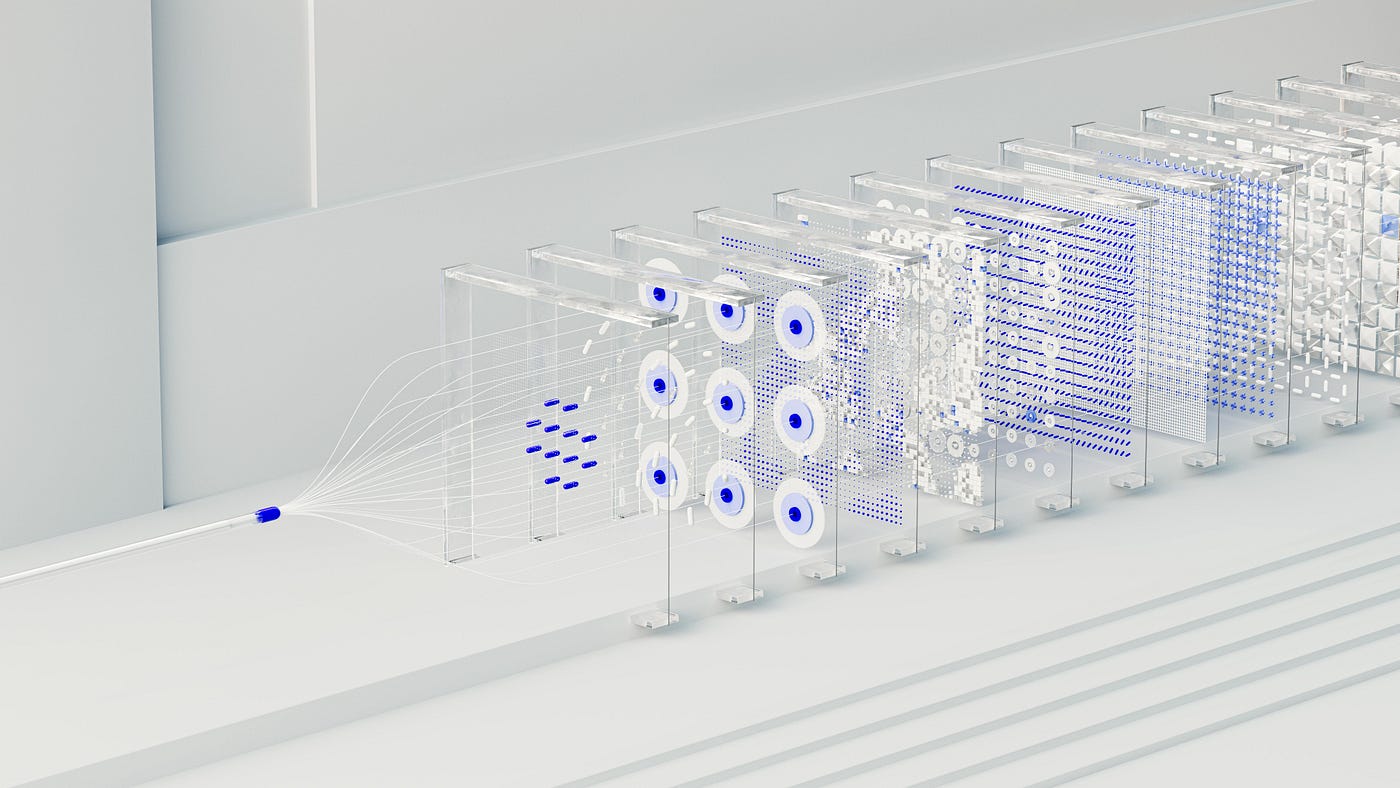
Deterministic elements — layout, typography, color, and component structure — anchor the brand and ensure accessibility. Probabilistic elements — content, tone, or imagery — can flex in response to a person’s context.
This balance protects the integrity of the experience while still allowing it to feel personal. Yet it also raises a new challenge: We know how to govern deterministic systems through design reviews and brand checks, but how do we govern probabilistic layers generated in the moment for each person and scenario?

On a given design pattern, what should remain deterministic vs. what could become probabilistic
Designing & Governing Experiences in The Moment
If experiences can now generate themselves in real time, the question becomes: How do we design — and govern — what they say and show?
The experience starts with intent. Every adaptive moment should connect to the product’s core purpose — the job it helps the person accomplish. That anchor keeps personalisation meaningful rather than manipulative.
From there, we design for signals. For each signal, we define what a desired experience looks like and what crosses into the undesirable — where customisation shifts from delightful to creepy. This isn’t a new tension in design, but it grows sharper as signal‑driven systems gain access to richer data and faster inference.
Then come the guardrails. These screen the probabilistic content that surfaces within our deterministic experiences, ensuring generated elements align with brand voice, compliance, and ethical standards. Guardrails make abstract principles operational by deciding what should appear and what should be withheld.
Finally, we plan for fallbacks. When generation fails two or three times, or when response time exceeds the acceptable threshold, the experience should display a deterministic default — content designed, reviewed, and ready. It’s the safety net that preserves trust when the adaptive layer doesn’t deliver in time.
As designers, our role expands: We’re not just shaping static journeys but also defining how dynamic ones behave—and how they fail gracefully.

What will designers’ role become in designing governance layers?
Signal-Driven Design in Action: The Prototype
To put this concept into practice, we wanted to create a short prototype to demonstrate. It focuses on a signal-driven offer card within the financial services industry, inside an authenticated app journey. The example is entirely fictional and does not represent real data or customers.
The card adapts to two input signals — life‑event detection and majority spending category detected. The card component remains deterministic and follows the carbon design system whilst adapting to AI content and surfacing explainability through the Carbon for AI pattern.
When AI explainability is enabled, the design system applies the AI label and states the inferred signal and data source, providing data lineage for how the content was generated. This visible trace helps maintain trust in an established brand by showing how personalisation decisions are made, not hiding them.
The guardrail switch highlights governance in action. When turned on, the system filters signals that could lead to intrusive or inappropriate personalisation and displays a neutral fallback message; When turned off, it reveals how those same signals could produce content that feels overly personal and potentially intrusive.
The goal of the prototype is to provoke discussion about designing adaptive yet ethical experiences — where personalisation is transparent, explainable, and always aligned with brand trust.

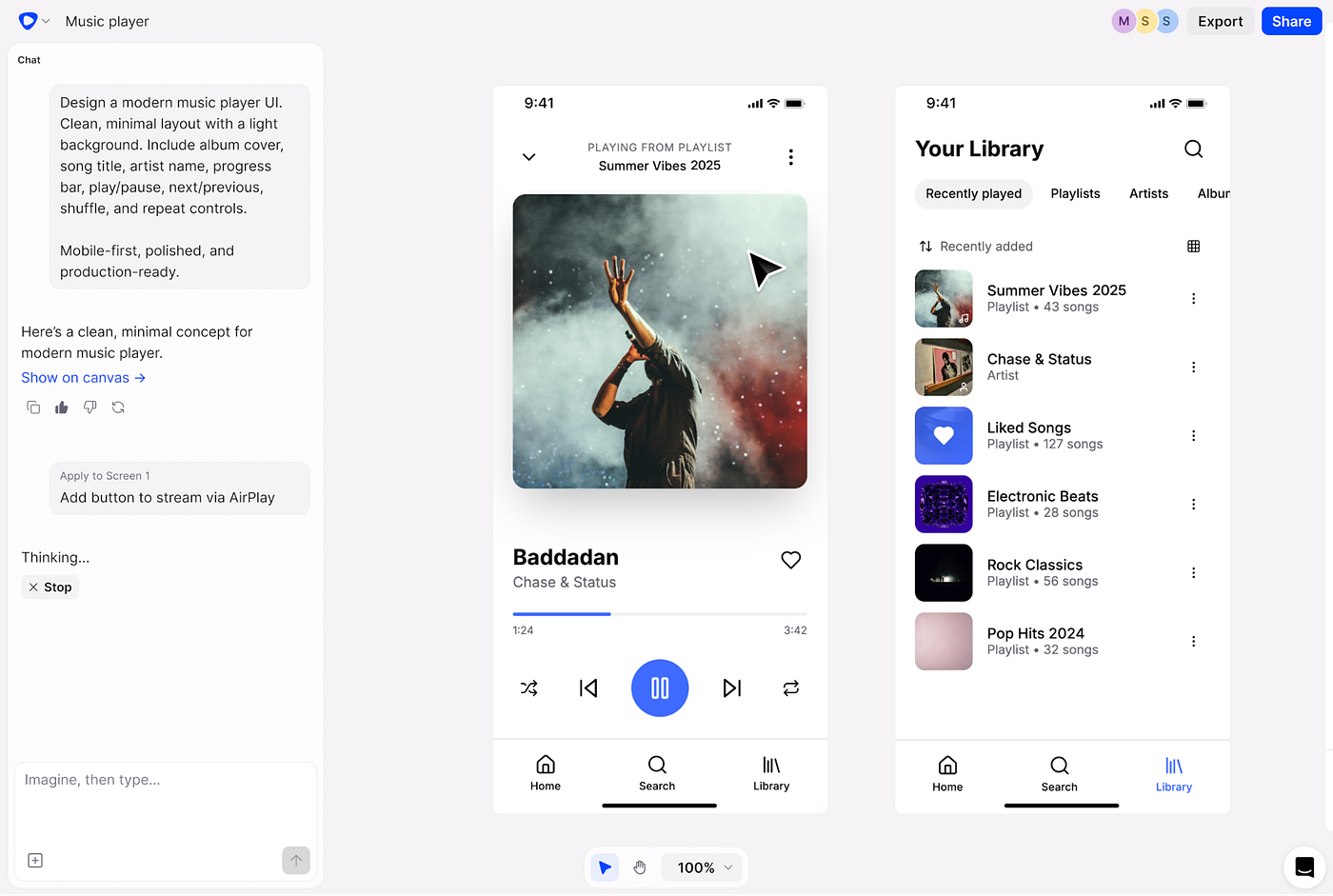
A conceptual Figma Make prototype of signal driven experiences reacting to signals
We‘re curious:
- What roles have you played in designing guardrails for probabilistic experiences?
- How do we decide when personalisation feels delightful and when it crosses the line into intrusiveness?
We’d love to see how others are working within this point of tension and what you’ve learned!
Note: Maigan Webster and Fabian Faes are designers at IBM Consulting, based in Sydney, Australia. The above article is personal and does not necessarily represent IBM’s positions, strategies, or opinions.
This work was created with an even blend of human and AI contributions. AI was used to make stylistic edits, such as changes to structure, wording, and clarity. AI was used to make new content, such as text, images, analysis, and ideas. AI was prompted for its contributions, or AI assistance was enabled. AI-generated content was reviewed and approved. The following model(s) or application(s) were used: ChatGPT5.
메타데이터
- post_id
- f333ebd9d22f
- slug
- how-do-we-stop-designing-for-personas-and-start-designing-for-people-f333ebd9d22f
- url
- https://medium.com/design-ibm/how-do-we-stop-designing-for-personas-and-start-designing-for-people-f333ebd9d22f
- canonical_url
- https://medium.com/design-ibm/how-do-we-stop-designing-for-personas-and-start-designing-for-people-f333ebd9d22f
- author_url
- https://medium.com/@fabian.faes585
- status
- ok
- fetched_at
- 2026-06-10 21:21:38