Understanding On sLLM and LLM
Performance Under the Microscope: Benchmarking LLMs and sLLMs
Understanding On sLLM and LLM
Performance Under the Microscope: Benchmarking LLMs and sLLMs
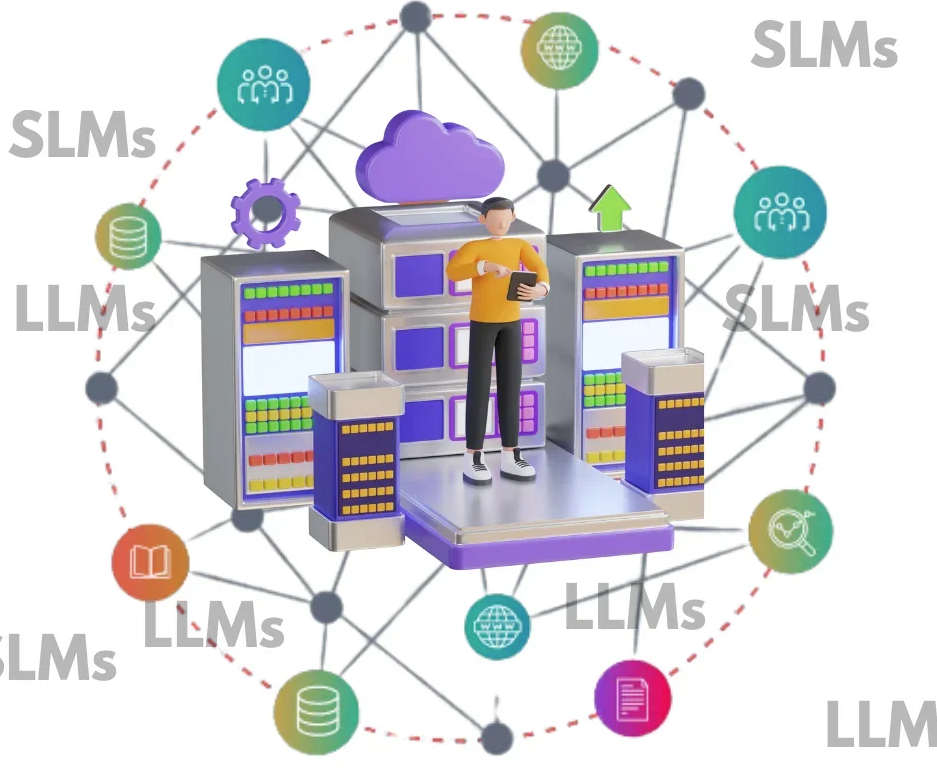
LLM and sLLM
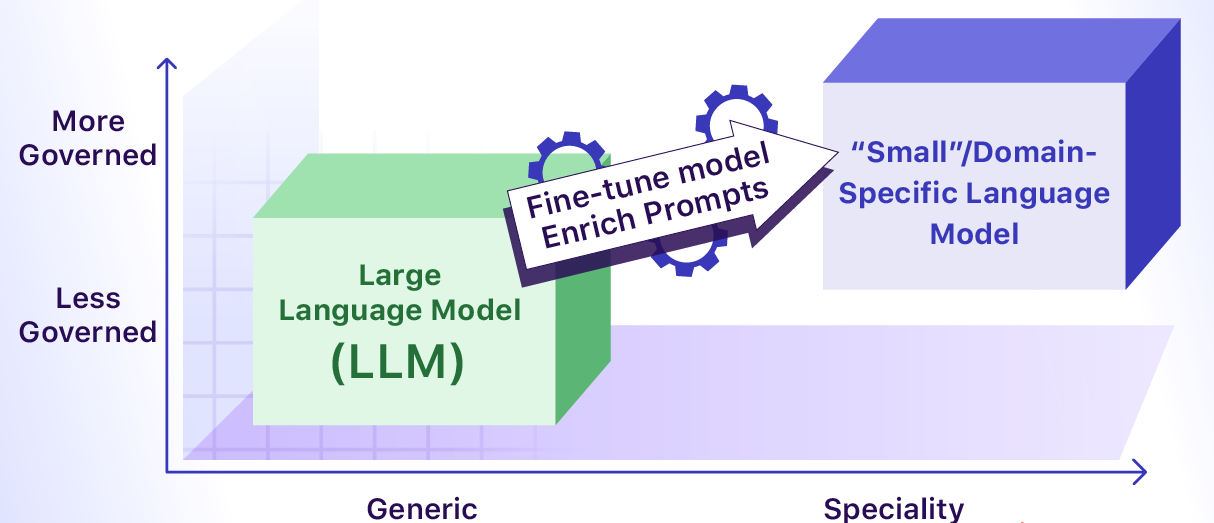
Large Language Models (LLMs) and Small Large Language Models (sLLMs) represent key developments in AI. LLMs, trained on vast datasets, offer broad knowledge and versatility across various tasks. However, their size can make deployment challenging. sLLMs aim to address this by maintaining much of the capability of larger models in a more compact form. They’re designed to balance performance with efficiency, making them suitable for applications with limited computational resources. While LLMs excel in complex, general tasks, sLLMs offer a compromise between capability and practicality. This diversity in model sizes and capabilities is driving innovation across numerous industries, from mobile applications to enterprise solutions.
INTRODUCTION
Large Language Models (LLMs) and small Language Models (sLLMs) represent two ends of the spectrum in natural language processing. LLMs, like GPT-3 and Gemini Pro, are massive neural networks with billions of parameters, capable of understanding and generating human-like text across a wide range of topics and tasks. On the other hand, sLLMs are more compact models designed for efficiency and specific use cases.
Google’s Gemini API offers access to different model sizes, making it an excellent platform for comparing LLMs and sLLMs. While Gemini doesn’t provide direct access to its smallest models (like Gemini Nano) through the API, we can simulate sLLM behavior by constraining a larger model’s outputs.
Setting Up Gemini API
Before we dive into the comparison, let’s set up the Gemini API:
import google.generativeai as genai
import os

# Set up the API key
os.environ['GOOGLE_API_KEY'] = 'your-api-key-here'
genai.configure(api_key=os.environ['GOOGLE_API_KEY'])
This code imports the necessary library, sets up your API key as an environment variable, and configures the genai library to use this key. Remember to replace ‘your-api-key-here’ with your actual Gemini API key.
Using Gemini Pro (LLM example)
Gemini Pro represents the LLM in our comparison. It’s a powerful model capable of handling complex tasks. Here’s how to use it:
# Initialize the model
model = genai.GenerativeModel('gemini-pro')

# Generate content
response = model.generate_content("Explain the concept of quantum computing in simple terms.")

print(response.text)
This code initializes the Gemini Pro model and uses it to generate an explanation of quantum computing. The model’s response will likely be comprehensive, possibly covering aspects like qubits, superposition, and potential applications of quantum computing.
Simulating an sLLM with Gemini
While we can’t directly access Gemini Nano (an sLLM) via the API, we can simulate sLLM behavior by constraining Gemini Pro’s output:
# Initialize a more constrained model
model = genai.GenerativeModel('gemini-pro')

# Set parameters to constrain the model's output
response = model.generate_content(
    "Summarize the benefits of exercise in one sentence.",
    generation_config=genai.types.GenerationConfig(
        max_output_tokens=30,
        temperature=0.2
    )
)

print(response.text)
Here, we’re using the same Gemini Pro model, but with constraints that mimic an sLLM:
max_output_tokens=30limits the response length.temperature=0.2reduces randomness, making the output more focused and deterministic.
These constraints force the model to be more concise and direct, similar to how an sLLM might behave.
Comparison of Capabilities
Let’s create a function to compare the “full” LLM versus the constrained version:
def compare_models(prompt):
    llm_model = genai.GenerativeModel('gemini-pro')
    sllm_model = genai.GenerativeModel('gemini-pro')  # Using same model but with constraints

    llm_response = llm_model.generate_content(prompt)
    sllm_response = sllm_model.generate_content(
        prompt,
        generation_config=genai.types.GenerationConfig(
            max_output_tokens=50,
            temperature=0.2
        )
    )
    print("LLM Response:")
    print(llm_response.text)
    print("\nsLLM Response:")
    print(sllm_response.text)

compare_models("Explain the process of photosynthesis.")
This function allows us to see side-by-side how the unconstrained LLM and the constrained “sLLM” handle the same prompt. The LLM will likely provide a more detailed explanation, possibly including the light-dependent and light-independent reactions, while the sLLM version will give a more concise overview.
Handling Different Tasks
To further illustrate the differences, let’s test both models on a variety of tasks:
tasks = [
    "Translate 'Hello, how are you?' to French.",
    "What's the capital of Japan?",
    "Write a short poem about autumn.",
    "Explain the theory of relativity."
]

for task in tasks:
    print(f"\nTask: {task}")
    compare_models(task)
This code tests both models on translation, factual recall, creative writing, and complex explanation tasks. You’ll likely observe that:
- Both models handle simple tasks like translation and factual recall well.
- The LLM excels at creative tasks and complex explanations, providing more elaborate responses.
- The constrained “sLLM” gives more direct, concise answers, which can be beneficial for certain applications.
Performance Metrics
To quantify the differences, let’s measure performance metrics:
import time

def measure_performance(model, prompt, constrained=False):
    start_time = time.time()

    if constrained:
        response = model.generate_content(
            prompt,
            generation_config=genai.types.GenerationConfig(
                max_output_tokens=50,
                temperature=0.2
            )
        )
    else:
        response = model.generate_content(prompt)

    end_time = time.time()

    return {
        'response_time': end_time - start_time,
        'output_length': len(response.text.split())
    }

llm_model = genai.GenerativeModel('gemini-pro')
sllm_model = genai.GenerativeModel('gemini-pro')  # Using same model but with constraints

prompt = "Explain the importance of renewable energy."

llm_performance = measure_performance(llm_model, prompt)
sllm_performance = measure_performance(sllm_model, prompt, constrained=True)

print("LLM Performance:", llm_performance)
print("sLLM Performance:", sllm_performance)
This code measures response time and output length for both models. You’ll likely find that:
- The constrained “sLLM” responds faster due to its output limitations.
- The LLM produces longer responses, demonstrating its capacity for more comprehensive answers.
Use Case Discussion
Based on our observations, we can identify appropriate use cases for each model type:
LLMs (Gemini Pro):
- Complex reasoning tasks requiring in-depth analysis
- Creative writing projects needing diverse and elaborate outputs
- Detailed explanations of complex topics
- Multi-turn conversations that require context retention
sLLMs (Constrained models):
- Quick answer generation for chatbots or voice assistants
- Mobile applications with limited computational resources
- Real-time processing scenarios where low latency is crucial
- Specific, narrow tasks like sentiment analysis or text classification
Conclusion
In conclusion, both LLMs and sLLMs have their place in the AI ecosystem. LLMs excel at tasks requiring depth, creativity, and broad knowledge, while sLLMs shine in scenarios demanding efficiency, speed, and focused outputs. When choosing between them, consider factors like:
- Task complexity
- Required response time
- Available computational resources
- Specificity of the use case
메타데이터
- post_id
- f33bb84def4e
- slug
- understanding-on-sllm-and-llm-f33bb84def4e
- url
- https://medium.com/@jaganjaganps46/understanding-on-sllm-and-llm-f33bb84def4e
- canonical_url
- https://medium.com/@jaganjaganps46/understanding-on-sllm-and-llm-f33bb84def4e
- author_url
- https://medium.com/@jaganjaganps46
- status
- ok
- fetched_at
- 2026-06-27 18:20:27




