How Do Advanced Master Key Blueprints Protect Multi-Tenant Commercial Buildings?
Optimizing corporate perimeter protection across a multi-tenant business facility involves deploying restricted keyways, rekeying worn…
How Do Advanced Master Key Blueprints Protect Multi-Tenant Commercial Buildings?
Optimizing corporate perimeter protection across a multi-tenant business facility involves deploying restricted keyways, rekeying worn interchangeable cores, adjusting heavy-duty hydraulic door closers, and installing durable panic bar mechanisms. When a commercial entry point experiences continuous employee foot traffic, internal tumbler pins wear down and compromise properties against unauthorized access. Operational facility metrics indicate that implementing structured access architecture cuts annual rekeying expenditures by up to sixty-five percent. Partnering with an expert **Commercial locksmith service in St. Louis City, MO,** team remedies these critical access vulnerabilities immediately, stabilizing broken emergency exit components while ensuring complete compliance with local life safety codes.
Key Takeaways
- Structured master key setups eliminate large key rings while restricting specific room access.
- High-security interchangeable cores facilitate rapid cylinder swapping during staff turnovers.
- Heavy-duty hydraulic door closers prevent energy loss by checking latch lines automatically.
- Fire-rated panic hardware satisfies municipal safety codes while maintaining facility exit defense.
Securing a busy storefront entrance from continuous wear relies on an intentional maintenance methodology that isolates fragile mechanical elements before hardware failure happens. When a high-traffic entry pivot drops even a fraction of an inch during seasonal temperature shifts, the primary lock bolt rubs awkwardly against the strike opening. This continuous physical stress warps internal latching linkages, strains electric strike plates, and can lock employees out during morning opening hours.
Evaluating complex commercial door assemblies with absolute field precision requires extensive training, specialized digital tools, and deep knowledge of commercial code regulations. Our technicians use heavy-gauge replacement components, professional cylinder pick tools, and advanced electronic programming devices to fix complex lock infrastructure. These commercial installation practices safeguard your sensitive retail inventory, keep internal emergency pathways open, and protect the overall monetary value of your commercial real estate asset.
Analyzing the Structural Security of High-Security Interchangeable Cores
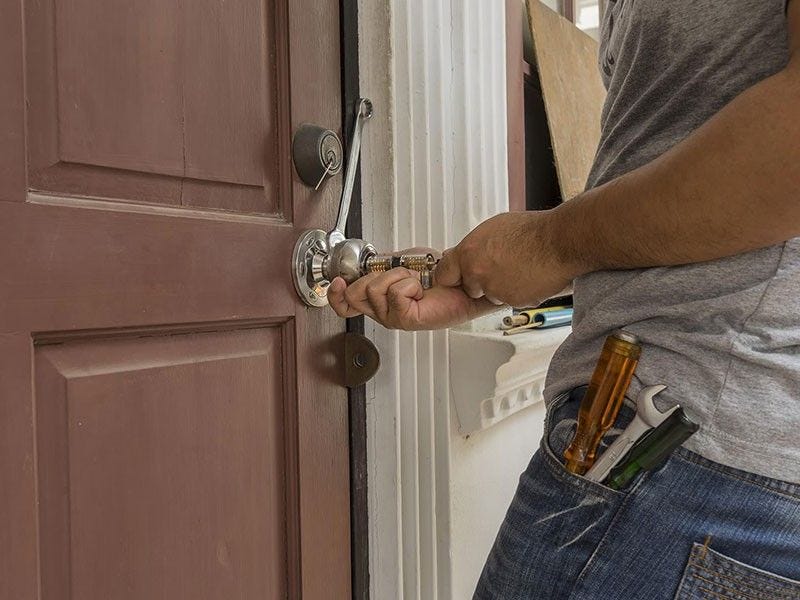
Industrial-grade lock sets utilize small-format interchangeable cores to give operations managers the ability to change facility security access profiles in seconds. By inserting a unique control key into the cylinder plug, supervisors pull the entire internal pinning unit out of the lock housing cleanly. A newly pinned core can be pushed into the empty lever handle right away, neutralizing lost or stolen keys instantly without taking the entire door lock apart.
Beneath the heavy brass shell, these premium lock cylinders feature solid nickel-silver bottom pins that resist physical drilling and traditional lock picking methods. These hard metal components are paired with thick sidebars that stop the lock from turning unless a factory-authorized key is used. This advanced mechanical design keeps warehouse perimeters, corporate cash rooms, and IT server rooms secure from uninvited entry attempts.
Advanced Commercial Security Hardware Elements
- Small-format interchangeable cores allow rapid key changes without removing lock bodies.
- Nickel-silver cylinder pins resist continuous metal-on-metal friction and drill bit impacts.
- Heavy-duty latch protection plates guard vulnerable latch bolts against pry bar manipulation.
- Grade-one mortise locks deliver maximum structural resistance across busy facility entrances.
Crucial Operational Factors to Assess Before Updating Building Access Lines
Selecting a permanent hardware upgrade for a commercial building requires analyzing daily foot traffic numbers, verifying local fire exit pathways, and checking glass storefront dimensions. Continuous entry points require heavy-duty grade-one mortise assemblies, whereas secondary office doors use lighter cylindrical lever locks without risking early mechanical failure. Reviewing these architectural details early prevents unexpected project cost increases and ensures your hardware complies fully with federal accessibility rules.
Business owners must always verify that their contracted field technicians operate with active state business registrations and comprehensive commercial liability insurance certificates. Verifying these corporate background records keeps your enterprise safe from unexpected financial liabilities if property damage happens during complex security upgrades. Relying on the experienced commercial specialists at **Quick Assist LLC** guarantees your security assets utilize industrial-grade materials configured precisely according to corporate safety rules.
Essential Commercial Security Evaluation Benchmarks
- Verify active state corporate registrations and current commercial contractor licensing numbers.
- Confirm that comprehensive workplace injury insurance coverages are fully active before work begins.
- Demand comprehensive key control policies that prevent unauthorized key cutting at hardware stores.
- Check for formal factory certifications from major national electronic security manufacturers.
- Request itemized estimates that clearly show separate labor charges and material costs.
Understanding the Physical Mechanics of Automatic Hydraulic Door Closers
Maintaining a safe business entrance involves more than just installing a heavy deadbolt on the exterior glass door frame. High-traffic commercial entry points rely on adjustable hydraulic door closers to control the closing speed and latching force of heavy glass doors. If the internal hydraulic fluid leaks out due to seal wear, the door will slam shut violently, cracking expensive glass or breaking electrical locking parts.
Master technicians adjust these hydraulic systems by turning separate regulating valves that control the closing swing and the final latching speed. This careful adjustment ensures the door swings closed quickly enough to stay secure, yet slows down right at the end to latch smoothly without vibrating the frame. Proper hydraulic tension stops frame warping, prevents finger-crushing accidents, and keeps your digital card readers working reliably over consecutive winter seasons.
Critical Signs of Commercial Hardware Failure and Code Violations
- Leaking hydraulic fluid along closer bodies indicates total internal seal failure.
- Binding panic bars require excessive manual pushing pressure to release the exit latches.
- Dragging aluminum door bottoms scrapes expensive tile floors during business hours.
- Broken keyways wiggle inside lever handles, showing that internal retainer clips are loose.
- Mismatched electric strike plates cause electronic access systems to jam or fail to lock.
Preserving Facility Protection and Corporate Asset Values Over Time
Sustaining a resilient, safe, and highly operational perimeter asset relies on combining timely hardware maintenance with durable access tracking updates. By replacing worn locking cylinders, checking structural pivot wear, and correcting alignment errors early, you protect your business facility from expensive breach vulnerabilities. Relying on professional local help ensures your exterior entry barriers remain fully dependable, giving your management team absolute peace of mind through severe weather changes and shifting building movements.
Secure Your Business Entryways
Are you ready to safeguard your commercial facility against unexpected access vulnerabilities with top-tier materials and precise hardware craftsmanship? Contact our corporate office today to organize a comprehensive on-site security inspection and receive a clear, itemized project estimate tailored to your commercial property. Our certified field specialists stand fully prepared to handle everything from minor cylinder updates to complete system replacements. Let us secure your commercial investment by providing the exceptional technical precision, resilient materials, and responsive support your enterprise deserves.
Frequently Asked Questions
How do professional locksmith technicians design a secure corporate master key blueprint for commercial properties?
Our technicians create custom master key systems by analyzing your organizational chart to match specific employee job roles with necessary room entry levels. We establish separate security tiers where individual keys operate single office doors, master keys open entire departments, and grand master keys operate all locks in the facility. This structured layout minimizes total key counts while preventing lower-level staff from entering sensitive storage rooms.
What specific building problems develop when a business delays fixing a slamming storefront entrance door?
Delaying repairs on a slamming door allows intense physical vibrations to travel through the aluminum frame, loosening internal wiring and breaking digital badge readers. The repeated heavy impacts quickly bend the main hinge pivots, causing the door to sag and misalign with its automatic locking points. This mechanical damage leaves your store vulnerable to break-ins and risks serious liability if a customer gets hurt by the heavy glass.
Why should commercial facilities prioritize restricted keyway cylinders over standard hardware store locksets?
Restricted keyways provide essential asset protection by utilizing unique key blanks that are not sold to standard hardware stores or kiosks. Keys for these high-security locks can only be cut by an authorized locksmith after verifying the signature of a pre-approved facility manager. This strict defense stops employees from making unauthorized duplicate keys at local retail counters, ensuring your key tracking system remains completely secure.
Can an old exit panic bar be modified to connect with modern digital proximity card readers safely?
Yes, our technical teams modify existing crash bars by installing specialized electric latch retraction kits or mounting heavy-duty electric strike plates inside the door frame. This hybrid setup allows the exit hardware to stay locked from the outside until a valid employee badge releases the electronic latch. Crucially, the internal mechanical push bar stays fully functional at all times, satisfying fire codes by letting occupants exit during power failures.
How often should a high-traffic retail storefront undergo comprehensive hardware inspection and adjustment?
Busy retail entrances should receive a professional maintenance review twice a year to adjust for the structural changes caused by changing seasons. These regular inspections include testing hydraulic closer fluid levels, tightening hinge anchor screws, cleaning electronic strike plates, and lubricating internal lock cylinders. Staying ahead of this maintenance protects your business from unexpected security failures and avoids expensive emergency repairs during holiday weekends.
메타데이터
- post_id
- f34ba2dd241d
- slug
- how-do-advanced-master-key-blueprints-protect-multi-tenant-commercial-buildings-f34ba2dd241d
- url
- https://medium.com/@quickassistllc/how-do-advanced-master-key-blueprints-protect-multi-tenant-commercial-buildings-f34ba2dd241d
- canonical_url
- https://medium.com/@quickassistllc/how-do-advanced-master-key-blueprints-protect-multi-tenant-commercial-buildings-f34ba2dd241d
- author_url
- https://medium.com/@quickassistllc
- status
- ok
- fetched_at
- 2026-08-06 17:47:09