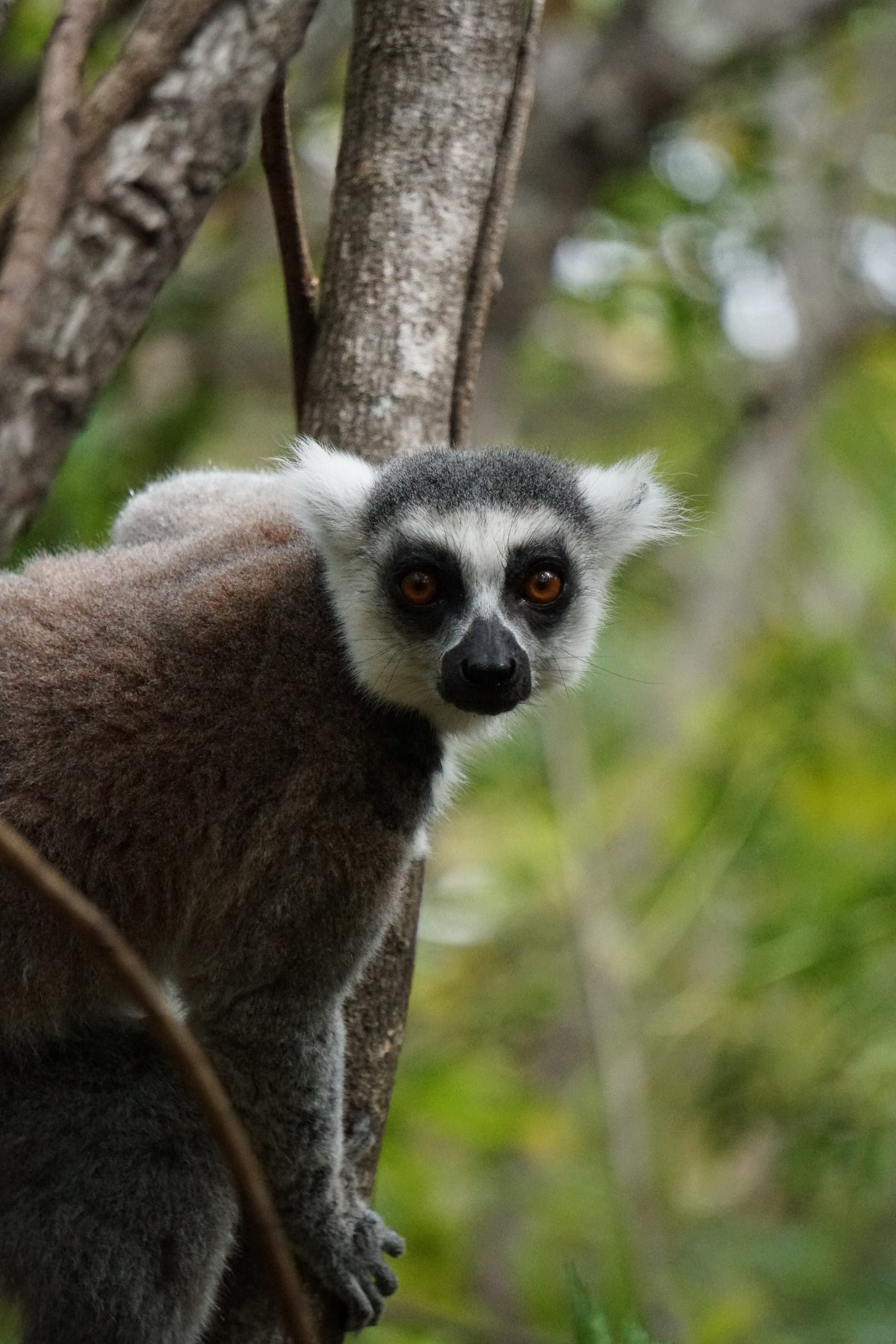
Howling in the Woods
The Eerie Calls of the Indri
Howling in the Woods
The eerie calls of the Indri
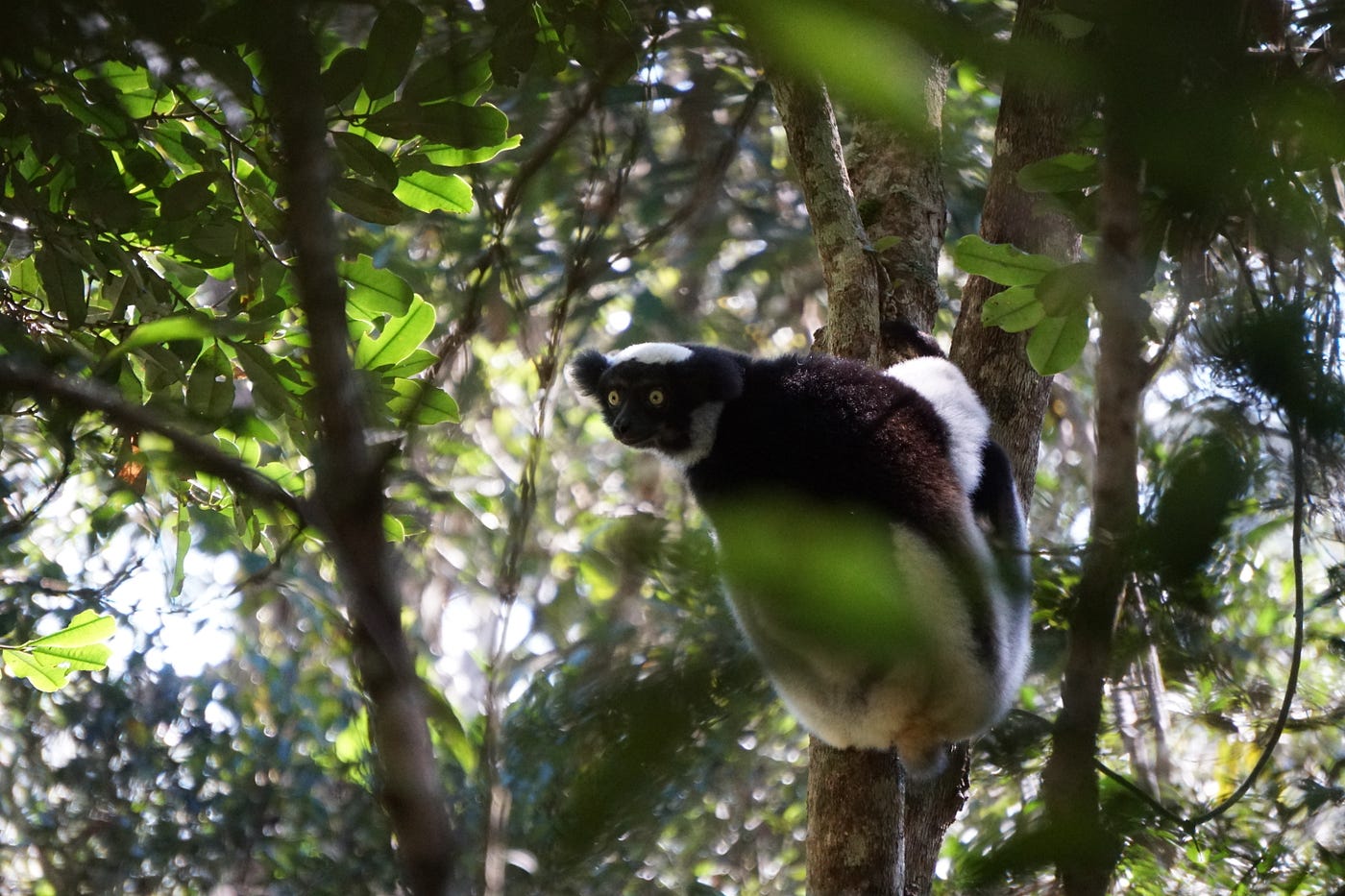
An Indri (Indri indri) in Andasibe, Madagascar
Welcome back to the FINAL post from my study abroad trip to Madagascar! Today I’ll be talking about one of the last animals I saw, the indri. I have been waiting to make this post because these animals are really special, so I wanted to save a great one for last!
Indris are found in Madagascar’s northeastern rainforests. In order to see them we visited Analamazaotra National Park, in the Andasibe region, because of its proximity to Madagascar’s capital. This park was a rainforest, just like our home base in Ranomafana, but it is a completely different environment. This rainforest doesn’t get as much moisture as Ranomafana’s higher elevation cloud forests, so the canopy is less dense and lets more light through. The trees are skinner and shorter, making it feel almost similar to American deciduous forests I’ve visited. The trek through this forest was also pretty easy, as the area is relatively flat; especially compared to the tall rolling hills of Ranomafana.


The rainforest in Andasibe (left) versus Ranomafana (right)
It wasn’t long before we found our first group of indri: their huge size and stark black and white coloring makes them easy to spot. Indris are the largest species of lemur, reaching up to 28 inches from head to the end of their body (for comparison, the ring-tailed lemurs I posted a few weeks ago are only 17 inches from head to the base of their tail). Speaking of tails, indris are unique among lemurs in that they don’t really have one! Most lemurs have a long tail that they use to balance when climbing on trees, but all the indris have is a rabbit-like stump. Their large size is really startling, which, combined with their lack of a tail, makes it look almost like a little kid is swinging around in the trees.

Zoomed out picture to hopefully convey their size relative to this tree.
Another unique thing about indris is that they are monogamous: mated pairs stay together year after year and form family groups with their maturing offspring. They are far from the only monogamous lemur, but most lemurs are promiscuous, meaning they will seek new partners every year, or sometimes several within the same year. We were lucky enough to catch a glimpse of a mother indri carrying her baby. Likely just a few weeks old, we were likely some of the first humans it saw. We also got to see it leave its mother’s arms briefly to climb on the tree, although the view was obscured so I wasn’t able to get any good photos. In the photo below you can see its little head peeking out above its mother’s hip!
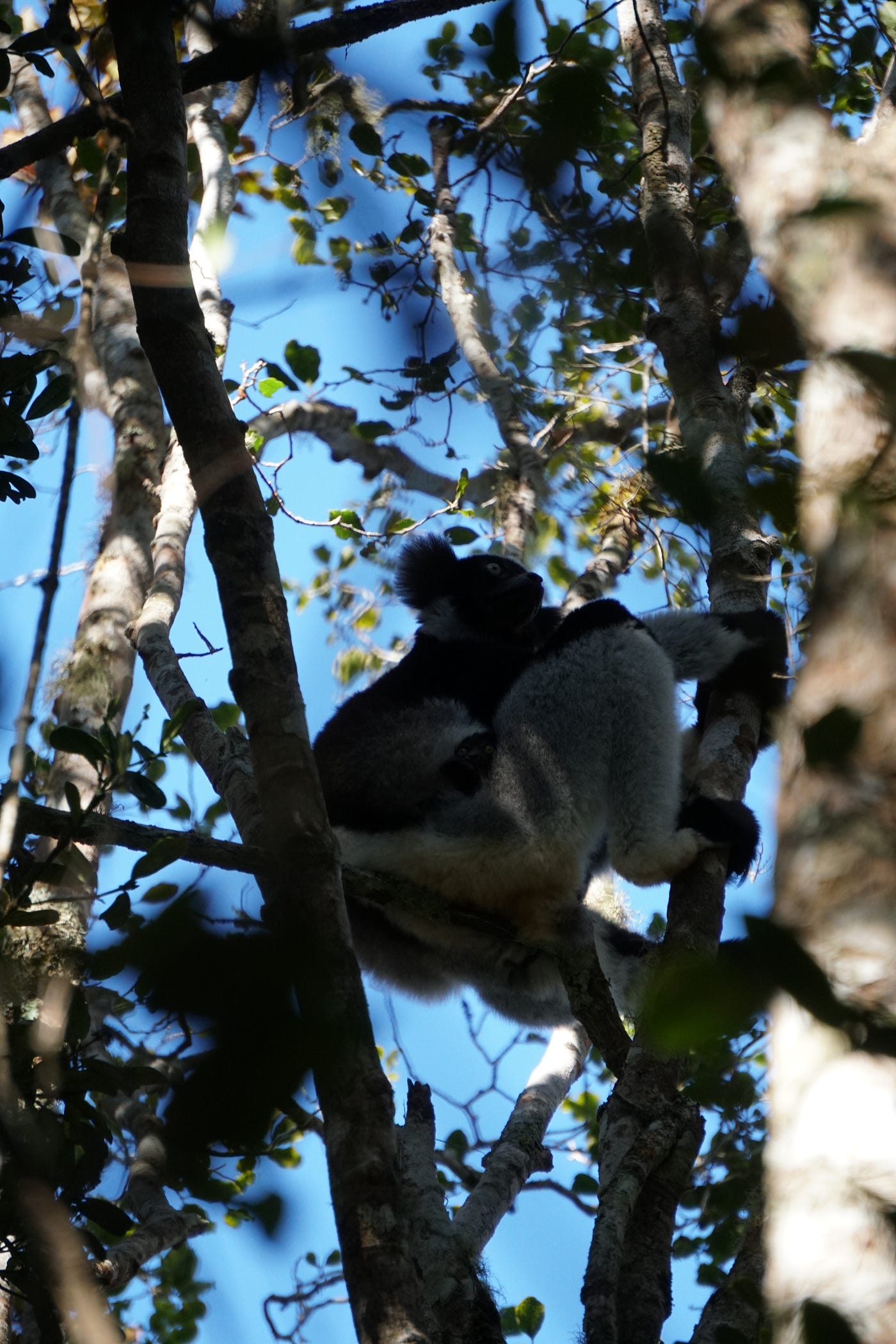
Indri with baby
Indris have a lot of unique features, but they are known for their eerie song. Each day, indris perform a loud song that carries through the forest, and can be heard from far away. Although we did not get to see them singing, we were lucky enough to hear the song while walking through the forest. Out of nowhere, it started, and although the animals weren’t anywhere near us it was SO loud. Our entire group fell silent immediately, and once I remember looking at my friend, eyes wide, in pure shock and awe. I can’t attach my own video to this post (it only allows images), but check out this link for a recording from YouTube. Also, just for fun here’s a video of a young David Attenborough, one of my favorite filmmakers, recording the first ever audio and video of indris in the wild!
Indris sing to communicate with each other, defend territory, and more. Unlike most lemurs, who call alone, indris sing in groups, which makes their songs last for up to 4 minutes. According to a study from the University of Warwick, young indris sing out of tune and refine their singing as they get older, just like humans!


Unfortunately, their many unique qualities have not saved them from human disturbance. According to the IUCN, they are critically endangered. Their primary threat is habitat loss due to expansion of agriculture, just like many other animals in Madagascar. Clearing of forests for logging, collection of firewood, and creation of farmland occurs within protected areas, and with a lack of enforcement of conservation laws it continues to be a problem. Within the last couple decades, illegal hunting has also become a major problem for the indri.

Sign about indris in captivity from Analamazaotra National Park
On the topic of conservation, many endangered species benefit from captive breeding efforts to increase their wild population. Animals like the California condor, Przewalski’s horse, and the American bison have been saved from near extinction because of captive breeding. However, despite several attempts, the sign in the photo above explains (in French) that indris are unable to survive in captivity. Scientists are not sure why, but every time wild indris have been brought to zoos or other captive environments, they have been unable to survive. This makes it impossible to help the wild indri population through captive breeding, meaning the only way to save this species is to ensure its habitat remains intact. Although it is sad, I will admit that the fact that it is not held in any zoos made seeing this animal in the wild even more special, since this is truly the only place you can find them.

Thank you all so much for reading this final post! I hope you’ve enjoyed this series, I had a lot of fun writing it and reflecting on my study abroad experience through the lens of different animals. I guess I’ll just have to go on another wildlife trip so I have new photos to post about! Comment down below which animal I posted was your favorite!
메타데이터
- post_id
- f360c15f28bb
- slug
- howling-in-the-woods-f360c15f28bb
- url
- https://medium.com/@aragone2/howling-in-the-woods-f360c15f28bb
- canonical_url
- https://medium.com/@aragone2/howling-in-the-woods-f360c15f28bb
- author_url
- https://medium.com/@aragone2
- status
- ok
- fetched_at
- 2026-06-25 07:00:49