Beyond the Gallery: Africa’s Fight to Repatriate Sacred Pre-Independence Artifacts and Redefine…
Three modern repatriation cases — one successful, one partial, one denied — reveal today’s uneven global approach to returning stolen art.
Beyond the Gallery: Africa’s Fight to Repatriate Sacred Pre-Independence Artifacts and Redefine Modern Decolonization
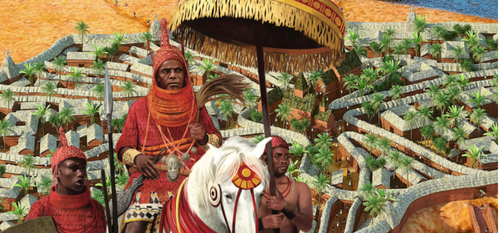
The Kingdom of Benin’s keen infrastructural framework and military (History Answers, “The Real Wakanda: Inside the Lost City of Benin”)
Three modern repatriation cases — one successful, one partial, one denied — reveal today’s uneven global approach to returning stolen cultural artifacts.
“To dehumanize a people, you first denigrate their culture and knowledge systems.” — Budd Hall, Canadian Academic, Researcher, and Activist
“Negotiation about the status and ownership of these objects ought to begin sooner rather than later, and until there is a lot of pressure put on the institutions or the private collections that have them, they’re not going to do anything.” — Chika Okeke-Agulu, Nigerian Art Historian and Scholar
Introduction:
Imagine exiting the metro at the Smithsonian Station and finding that the Washington Monument, White House, Congressional Buildings, Lincoln Memorial, etc., no longer exist. Instead, a sign with a photograph of these monuments sits where the Smithsonian Museum should be. It explains that they are housed in London, as the US was once a British colony, and Britain’s early 18th-century looting helped shape the showcase of American heritage across the Atlantic. Of course, this is hypothetical, but it would obfuscate modern Americans from understaning their ancestors’ pre-independence identities, making it harder to grasp the creators’ intended meaning behind the monuments. For nearly every country in Africa, this disconnect between civilizations and their ancient cultures still exists and has since the late 19th century when imperialist European powers colonized them. A staggering amount of Africa’s ancestral art remains in institutions founded by those who illegally took it, yet contemporary Africans are reclaiming their cultural heritage through transcontinental repatriation.
Much has changed since Nigerian archaeologist Ekpo Eyo launched arguably the first official African repatriation campaign of the Benin Bronzes in 1972. Appealing to numerous European embassies, Eyo sought to reunite his country with the cultural treasures of its ancient inhabitants, which are still located across a diverse range of Western museums and private collections.
Despite initially being met with refusals and legal documentation declaring the Bronzes the rightful property of the respective institutions housing each, Eyo refused to allow Nigeria’s former colonizers to maintain control of Africa’s modern narrative.
Ekpo Eyo’s fight continues today, but unlike in 1972, Nigerian voices demanding the restitution of their ancestors’ treasures are now joined by almost every other country within the African continent. Contemporarily, merely a dozen African countries have managed to secure only partial returns of their ancestral artifacts looted during the 19th century, with nations like Benin, Senegal, Uganda, and Madagascar securing notable restitutions.
Nonetheless, while more Western institutions today acknowledge the immorality of colonial looting, the effort to return African art to its rightful origins remains in its infancy. Not until the 2010s did any of the Bronzes actually find their way back to Nigeria, and a myriad of modern African states have yet even to be engaged by those in possession of their ancestral artifacts.
The slow and selective process of convincing a global superpower to return its war spoils to their nations of origin reveals various truths about the state of the Western decolonization movement. For one, modern repatriation transcends the simple restitution of artifacts — it is one of the key prerequisites for true decolonization. The barriers Africans face in reclaiming and even viewing their cultural artifacts mirror colonial justifications that framed African communities as “unfit” to care for their treasures. True restitution involves dismantling this gatekeeping and restoring African nations’ right to define their own history and cultural identity.
The following will examine three modern repatriation campaigns launched by three different nations — one granted full restitution, one granted partial return with resistance, and one outright rejected — to highlight the differing degrees of repatriation today.
The ‘Okukor’ (Cockerel) was the first Benin Bronze returned to Nigeria from Jesus College, Cambridge University, England in 2022 (Varsity, “Jesus College first global institution to return a Benin Bronze to Nigeria”)
Case Study 1 — Partial Return with Continued Resistance: Nigeria’s Benin Bronzes (Kingdom of Benin, ca. 13th Century)
The Benin Bronzes are an array of brass and bronze sculptures, statues, plaques, and royal regalia meant to honor the ancient Obas (Kings) of Benin City (present-day Nigeria) and document Nigeria’s rich cultural and spiritual heritage. The casts also depicted warriors, royal families, and religious entities, symbolizing the divine protection over the Kingdom of Benin and its military. The first Benin Bronze did not return to Nigeria until October 2021–almost 50 years after Ekpo Eyo’s initial appeal to the European embassies and institutions. Jesus College of the University of Cambridge (Engand) repatriated a single Bronze statue, known as the Okukor or the Cockerel, after university students voiced contempt toward the museum for housing a looted artifact. The Edo civilization of ancient Benin City are believed to have used the Cockeral as a zoomorphic ceremonial artifact in rituals honoring the Iyoba (queen mother) of the Kingdom. The Okukor was transferred to the Oba of Benin’s palace, where it was welcomed as a step toward cultural restitution and where it remains today.
Although this repatriation was a milestone, archaeologists estimate there to be around 5,000 Bronzes distributed worldwide, many of which are unaccounted for. Yet the end of 2022 saw the return of ~1,160 Bronzes from institutions spanning Germany, the UK, and the US.
In March 2023, Nigerian President Muhammadu Buhari issued a decree to the West declaring that all Benin Bronzes were to be returned to the Benin City Royal Family. He emphasized the right of the modern Edo people to maintain and preserve their heritage on the grounds of their ancestors, the creators of the sculpted treasures. However, this shifted Western perspectives on repatriation–Buhari’s decree contained the legal declaration of the Benin Bronzes as the property of the Oba and Royal Faily of Benin CIty. Before, restitution had been facilitated via a case-by-case private negotiation process, but after Buhari’s announcement, any returns made to Africa were a legal obligation rather than acts of charity that the Western nations could boast. Consequently, November 2022 would signify the final transfer of looted Bronzes to Nigeria, leaving almost 4,000 of the treasures in foreign institutions and private curations across the globe. These prestigious museums leveraged their prominent bureaucratic and Government affiliations to enforce the narrative that their displays evoked the concept of a “shared world heritage” linking Nigeria to the Western world. This faulty justification continues to stall current repatriation progress, and is attributed to the refusal of colonial institutions and global superpowers to relinquish control over Africa’s historical narrative.
While Nigeria has made significant strides in reclaiming its looted artifacts, the fact that the majority remain in European and American collections underscores how the thieves themselves still control the narrative of their colonial theft. As soon as Buhari introduced legal diplomacy to leverage the Oba of Benin’s rightful ownership of the Benin Bronzes, these Western institutions refused to comply, dismissing African agency over their ancient heritage. Until restitution occurs on African terms, the power imbalance that allows former colonizers to determine the fate of looted treasures will persist, proving that the fight for true decolonization is far from over. Nevertheless, Nigeria’s unwavering demands and growing successes in securing returns demonstrate that the fight for repatriation is gaining momentum — and that African nations are determined to reclaim control over their stories.
Case Study 2 — Full & Permanent Repatriation: Benin’s Abomey Treasures (Kingdom of Dahomey, ca. 17th Century)
Between the 17th and 19th centuries, the Fon people of the Dahomey Kingdom (present-day Benin) constructed approximately 26 royal treasures celebrating their kings’ power, spiritual authority, and military prowess. The Fon sculpted royal thrones, religious altars, and zoomorphic and regal statues of King Glélé and King Béhanzin, who ruled from the ancient city’s capital, Abomey.
After the French captured and colonized the Dahomey Kingdom in 1892, the Royal Palaces of Abomey were looted of all 26 artifacts. Despite informal repatriation requests issued by Benin’s Government between the 1970s and 2006, it was not until Emmanuel Macron’s ascent to power in 2017 that the French began to engage with Beninese President Patrice Talon.
In March 2017, in Ouagadougou, Burkina Faso, President Macron pledged to return all looted African artifacts to former colonies of France.
The following year, President Talon would issue a formal decree to France requesting the repatriation of all 26 Abomey Treasures to Benin, housed in Paris’s Musée du Quai Branly. In November 2019, the French National Assembly approved the return of all Abomey Treasures to Benin within one year, finalizing the transfer on November 9, 2021. The National Assembly recognized France’s moral and legal obligation to reunite these artifacts with their country of origin. They agreed on a legally binding repatriation contract to ensure the treasures would remain in Benin indefinitely.
This retribution would mark the first permanent and complete cultural repatriation from a Western power back to one of its former colonies. The Palais de la Marina in Cotonou, Benin, continues to proudly display the remnants of the Fon civilization who celebrated the nation’s history through their artwork. The Treasures’ return immediately sparked investments in new cultural institutions and museums throughout Benin, including the Museum of the Epic of the Amazons and Kings of Dahomey, which is under construction in Abomey today.
This achievement, however monumental, similarly exposed the rigor required on behalf of these African governments to regain possession of their nations’ rightful property. Had Emmanuel Macron not come to power, or had Patrice Talon not applied diplomatic and legal pressure on France, the Abomey Treasures would likely remain in Paris today. Furthermore, this case study focuses specifically on one collection of artifacts originating from one ancient society; scholars estimate that France still habors ~7,000 looted Dahomey Treasures today. So, why must Africans jump through so many hoops to narrate their own history and the timeline of their lineage? Again, because Western powers refuse to forfeit the prestige and profit they earn from Africa’s stolen legacy.
Present-day Abomey-Calavi King, Patrick Zachmann, admires the statues of ancient Dahomey Kings, Glele and Behanzin (Magnum,“From Paris to Benin: the restitution of the royal treasures of Abomey”)
Case Study 3 — Outright Rejection: Egypt’s Rosetta Stone (Ptolemaic Kingdom, ca. 196 BCE)
Unlike the examples illustrated above, Egypt’s repatriation claims requesting the return of the precious Rosetta Stone from the United Kingdom continue to fall on deaf ears. In 1801, following the Stone’s 1798 discovery by Napoleon Bonaparte’s imperialist army, the UK and Ottoman Empire defeated France, claiming control over the territory and artifact.
The Rosetta Stone was a granodiorite stele containing the transcription of one of the Egyptian priesthood’s ancient decrees under Pharaoh Ptolemy V, written in Greek, Egyptian Hieroglyphics, and Demotic. Between the 4th and 5th centuries, hieroglyphics officially became an extinct communication system, so the discovery of the Stone allowed 18th and 19th-century scientists to translate the symbols using the Greek transcription adjacent. It detailed ancient affirmations of the Pharaoh’s divine appointment to the throne, depicting him as a human extension of the various sacred deities their society worshipped.
After its capture, the Stone was swiftly moved to the British Museum, home to the world’s largest collection of colonial-era artifacts, many looted during Britain’s imperial expansion. The sacred relic remains in London today.
In 2003, Egypt’s then Secretary General of the Supreme Council of Antiquities, Zahi Hawass, voiced contempt toward the museum for its sequestering of the artifact amid Egyptian pleas for its return. Making a public statement that same year, Hawass declared: “If the British want to be remembered, if they want to restore their reputation, they should volunteer to return the Rosetta Stone because it is the icon of our Egyptian identity.”
In rebuttal, the British Museum cited the 1801 Treaty of Alexandria, which declared the artifact public property and granted Britain control over the Rosetta Stone’s fate after French defeat. As of July, 2003, diplomatic procedures and UNESCO mediation facilitated Egypt’s repatriation requests, but were still dismissed by the British Museum. Additionally, the institution referred to the British Museum Act of 1963, signed into law by the Board of Trustees, which prevented any artifacts from permanently removed from the museums collections.
In 2010, Hawass attempted again to negotiate with the institution by issuing it a loan proposal whereby the Rosetta Stone would be temporarily returned to Egypt for display in Cairo’s Grand Egyptian Museum (opened in October 2024). Again, the response of the British Museum was an excuse, claiming the object was too fragile to withstand such a lengthy transportation process. The museum’s Board of Trustees released a statement expressing their fear that the repatriation of the Rosetta Stone would set a precedent demanding the return of all their looted artifacts on display.
In 2023, Dr. Monica Hanna, the Dean of the College of Archaeology in Aswan, Egypt, spearheaded the repatriation campaign by frequently appearing across global media networks to advocate for Egypt’s reclamation efforts. Zahi Hawass reinforced Hanna’s demands, as did a substantial portion of the international community, who urged the British Museum to reunite the Stone with its community of origin. Nonetheless, the institution continued denying Egypt retribution under the guise that the Rosetta Stone did not belong to any one culture, but to the human species collectively. Within the same year, the museum, facing immense criticism from all corners of the globe, doubled down on its rejection of Egypt’s requests. Insultingly, it merely offered the country replicas and digital access to the treasure, refusing even to entertain a loan of the physical object.
Today, Egypt has yet to see the return of one of its most renowned ancient relics. Instead of facilitating a culture’s reunion with its ancestral heritage, the British Museum continues to profit from showcasing the Rosetta Stone. The above account does not even cover the similar European retention of ancient Egypt’s Bust of Nefertiti or Dendera Zodiac ceiling, just to name two more examples of looted property in retention. Britain, a contemporary global superpower, enjoys immunity from international petitions for restitution, remaining protected by a 19th-century colonial-era Treaty, which also designated Egypt as property of the long-extinct Ottoman Empire. Egypt, comparatively, has made no headway in its quest for cultural repatriation compared to nations like Benin and Nigeria, primarily because the country is abundant with artifacts containing hidden answers to questions the human species has been asking for centuries.
However, from an African perspective, these artifacts are not merely captivating testimonials of ancient civilizations but the last remaining clues of their heritage and ancestral lineage. While Western audiences regard artifacts like the Rosetta Stone as fascinating relics of human history, native Egyptians see them as vital pieces in reconstructing their cultural identity. The tool that allowed the West to decode and claim ownership over Egypt’s ancient knowledge is now the same tool used to deny Egypt ownership over its very narrative!
Egyptian archaeologist Zahi Hawass doubled as Egypt’s Secretary General of the Supreme Council of Antiquities (2002–2011) and later as Minister of Antiquities (2011) (Yule Dark, “Egyptologist Zahi Hawass in Jhb”)
The Bigger Picture: What These Cases Reveal
The aforementioned cases of Nigerian, Beninese, and Egyptian repatriation attempts paint a single picture of global neo-colonialism in 2025. Nigeria, arguably the trailblazer in leveraging claims to their Benin Bronze artifacts across the Western Hemisphere, still lacks roughly 4,000 Bronzes. Imagine a burglar entered your home and robbed you of $5,000, and when the police arrested the thief, he was only willing to provide the location of $1,160. You would continue to feel justified in retrieving the missing $3,840 from the subject, even if the police didn’t care, right? This hypothetical scenario illustrates Nigeria’s current status in repatriation; however, instead of missing $3,840, a nation is missing 3,840 artifacts responsible for the foundations of their modern state.
Egypt garnered support throughout the global archaeological, historical, and scientific communities yet is still rendered helpless in its fight to repossess its ancient treasures. In this scenario, imagine a burglar steals every last dollar you own. Though the police catch and prosecute the thief, they merely ask for the return of your money — without any legally binding obligation. Egyptians maintain little control over their historical narrative, considering their ancestors’s artifacts reside in the hands of the very group that looted them centuries ago.
Modern-day Benin enjoys the possession of its 26 Abomey Treasures after roughly 60 years of appeals to the French National Assembly. This victory represented the first official repatriation of an entire collection of cultural artifacts. However, it does not negate that ~100,000 colonial-era African relics from across the continent remain in French museums, institutions, and private curations nationwide. Further, Emmanuel Macron refused to install any permanent legal framework behind his promises made in Ouagadougou (2017) of full French repatriation being at the forefront of his presidential foreign policy agenda. Now, suppose your home is looted, and all your family heirlooms and valuables are stolen. You are unsure exactly how many items were taken, only that tens of thousands of invaluable heirlooms are missing. After months of investigation, the police inform you that they have recovered a single cherished set of Russian Nesting Dolls — but have located no other items. This is obviously a meaningful find, yet the vast majority of your possessions remain lost. Thank goodness your late mother’s dolls are safe and accounted for, but what about the countless other treasures that the thief may have destroyed, lost, or sold? This is the reasoning behind Benin’s ongoing fight for total restitution, as the retrieval of the Abomey Treasures represents only a fraction of what was taken in 1892.
Repatriation is not just about the philanthropic transfer of property from a colonizer to its former colony. Repatriation embodies the reunification of African communities with the regalia of their ancient ancestors, allowing them to define their cultural identity on their own terms rather than through a Eurocentric lense. If the seizure of a group or civilization was declared illegal in 1945 under the UN’s self-determination clause, why can Western countries still legally withhold looted treasures from their former colonies? The right to self-determination affirms that all people deserve to narrate their own histories using the interpretation of the treasures left to them by their ancestors.
So, instead of sharing collective ownership over history’s most iconic artifacts, the international community should share ownership of progressing the African repatriation movement, justifying the restitution of all artifacts stolen during the imperial age. The reunification of these artifacts with the descendants of their creators ensures that their talismanic meanings are interpreted by those who crafted them, not by the institutions that stole them. With the unwavering determination of these African nations, the future holds immense promise for a world where cultural heritage is no longer withheld, but rightfully restored — where history is finally told by those to whom it belongs.
Lai Mohammed, Nigeria’s previous Minister of Information and Culture pictured at the repatriation ceremony of Nigeria’s commemorative “Royal Oba Head” Benin Bronze hosted at the Smithsonian National Museum of African Art (NBC News, “U.S. museums return African bronzes stolen in the 19th century”)
References:
- Gordon, Jonathan. “The Real Wakanda: Inside the Lost City of Benin.” History Answers. March 9, 2019. https://www.historyanswers.co.uk/people-politics/the-real-wakanda-inside-the-lost-city-of-benin/.
- Hall, Budd. “Epistemicide: The Coloniality Acts of Killing Knowledge,” presented at Sussex Decolonize Education, June 24, 2016.
- Patinkin, Jason, and Guensburg, Carol. “Scholar Vows to Step Up Fight to Repatriate African Artifacts.” Voa News. July 13, 2020. https://www.voanews.com/a/africa_scholar-vows-step-fight-repatriate-african-artifacts/6192713.html#
- Sarr, Felwine, and Bénédicte Savoy. “The Restitution of African Cultural Heritage. Toward a New Relational Ethics,” report commissioned by the President of France. November 2018. https://www.about-africa.de/images/sonstiges/2018/sarr_savoy_en.pdf.
- Ferrell, Caitlin, and Isman, Serge. “Jesus College first global institution to return a Benin Bronze to Nigeria,” Varsity. October 29 2021. https://www.varsity.co.uk/news/22330
- Lucas, Julian. “The Forgotten Movement to Reclaim Africa’s Stolen Art.” The New Yorker. April 14, 2022. https://www.newyorker.com/books/under-review/the-forgotten-movement-to-reclaim-africas-stolen-art.
- Gbadamosi, Nosmot. “Africa’s Struggle for its Art: A Debate Frozen in Time,” Foreign Policy. May 15, 2022. https://foreignpolicy.com/2022/05/15/africa-art-museum-europe-restitution-debate-book-colonialism-artifacts.
- Wikipedia contributors, “Benin Expedition of 1897,” Wikipedia, The Free Encyclopedia, https://en.wikipedia.org/w/index.php?title=Benin_Expedition_of_1897&oldid=1269305879.
- Smithsonian Institution. “Smithsonian Returns 29 Benin Bronzes to National Commission for Museums and Monuments.” Smithsonian Newsdesk. October 11, 2022. https://www.si.edu/newsdesk/releases/smithsonian-returns-29-benin-bronzes-national-commission-museums-and-monuments.
- Hickley, Catherine. “‘Restitution with conditions is neo-colonialism’: German ruling parties defend return of Benin bronzes in parliament,” The Art Newspaper. May 12, 2023. https://www.theartnewspaper.com/2023/05/12/german-ruling-parties-defend-return-of-benin-bronzes-in-parliament.
- Macron, Emmanuel. “Emmanuel Macron’s Speech at the University of Ouagadougou.” Élysée — Presidency of the French Republic. November 28, 2017. https://www.elysee.fr/en/emmanuel-macron/2017/11/28/emmanuel-macrons-speech-at-the-university-of-ouagadougou.
- Al Jazeera. “France returns 26 treasures looted from Benin,” Al Jazeera. November 9, 2021. https://www.aljazeera.com/news/2021/11/9/france-hands-back-26-treasures-looted-from-benin.
- Zachmann, Patrick. “Patrick Zachmann King of Abomey-Calavi stands in front of Glele and Behanzin statues, with Guezo behind. Cotonou, Benin, 2022.” Magnum Photos. 2022. https://www.magnumphotos.com.
- Hawass, Zahi. “Repatriation.” Dr. Zahi Hawass — Official Website. https://www.hawasszahi.com/repatriation.
- PBS NewsHour. “Egyptians Call on British Museum to Return the Rosetta Stone.” PBS NewsHour. December 5, 2022. https://www.pbs.org/newshour/world/egyptians-call-on-british-museum-to-return-the-rosetta-stone.
- Yule Dark. “World-Renowned Egyptologist Zahi Hawass in JHB.” Yule Dark. https://yuledark.co.za/world-renowned-egyptologist-zahi-hawass-in-jhb/.
- National Geographic. “Nigeria’s Stolen Benin Bronzes May Finally Be Returned from London Museum.” National Geographic, August 10, 2021. https://www.nationalgeographic.com/travel/article/nigeria-stolen-benin-bronzes-london-museum.
- Tordjman, Jeremy. “‘Titanic’ Task Of Finding Plundered African Art In French Museums,” Barrons. April 15, 2024. https://www.barrons.com/news/titanic-task-of-finding-plundered-african-art-in-french-museums-81cf43f5
Bellamy, Claretta, and Associated Press. “U.S. Museums Return African Bronzes Stolen in 19th Century.” NBC News. October 13, 2022. https://www.nbcnews.com/news/nbcblk/us-museums-return-african-bronzes-stolen-19th-century-rcna52138.
메타데이터
- post_id
- f380ca4e2a38
- slug
- beyond-the-gallery-africas-fight-to-repatriate-sacred-pre-independence-artifacts-and-redefine-f380ca4e2a38
- url
- https://medium.com/@mollylafaver/beyond-the-gallery-africas-fight-to-repatriate-sacred-pre-independence-artifacts-and-redefine-f380ca4e2a38
- canonical_url
- https://medium.com/@mollylafaver/beyond-the-gallery-africas-fight-to-repatriate-sacred-pre-independence-artifacts-and-redefine-f380ca4e2a38
- author_url
- https://medium.com/@mollylafaver
- status
- ok
- fetched_at
- 2026-08-12 09:31:03