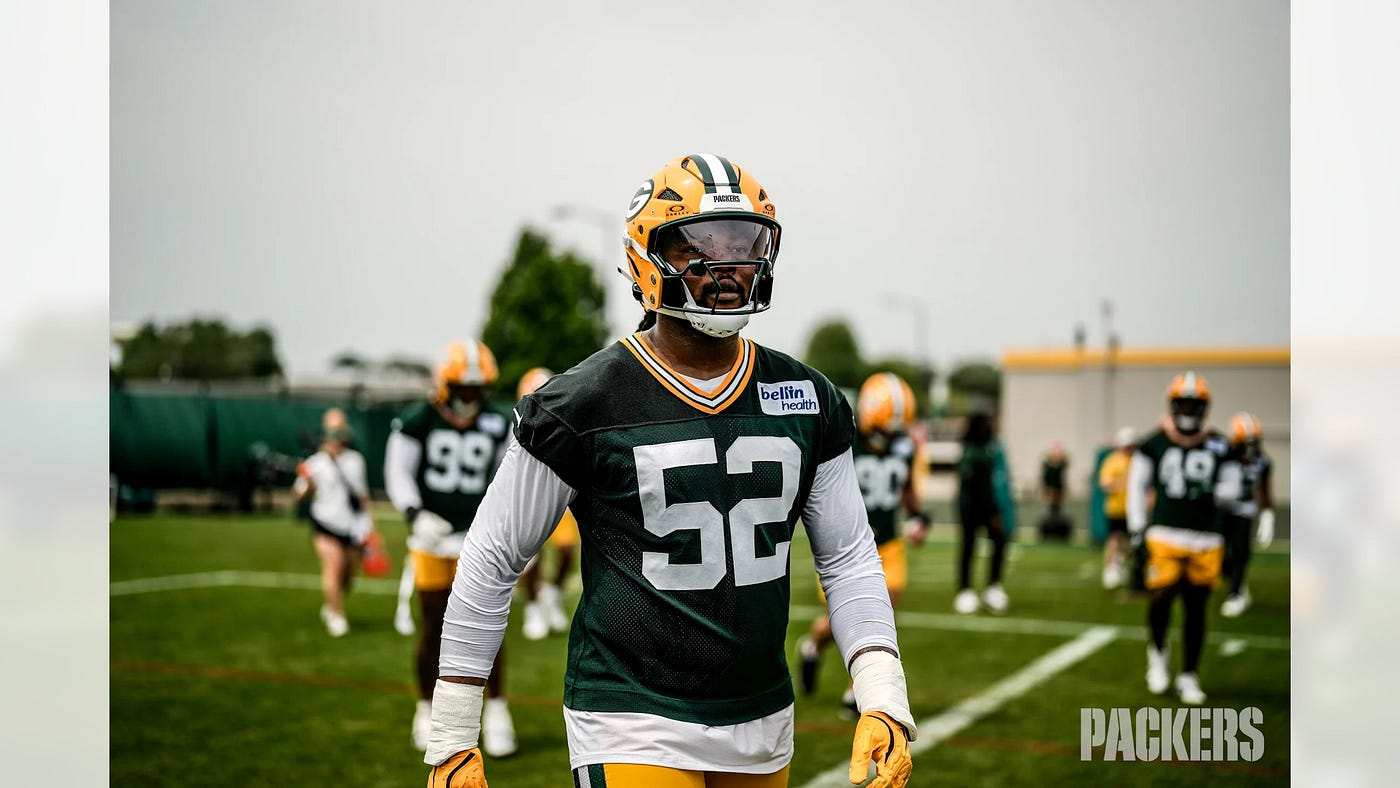
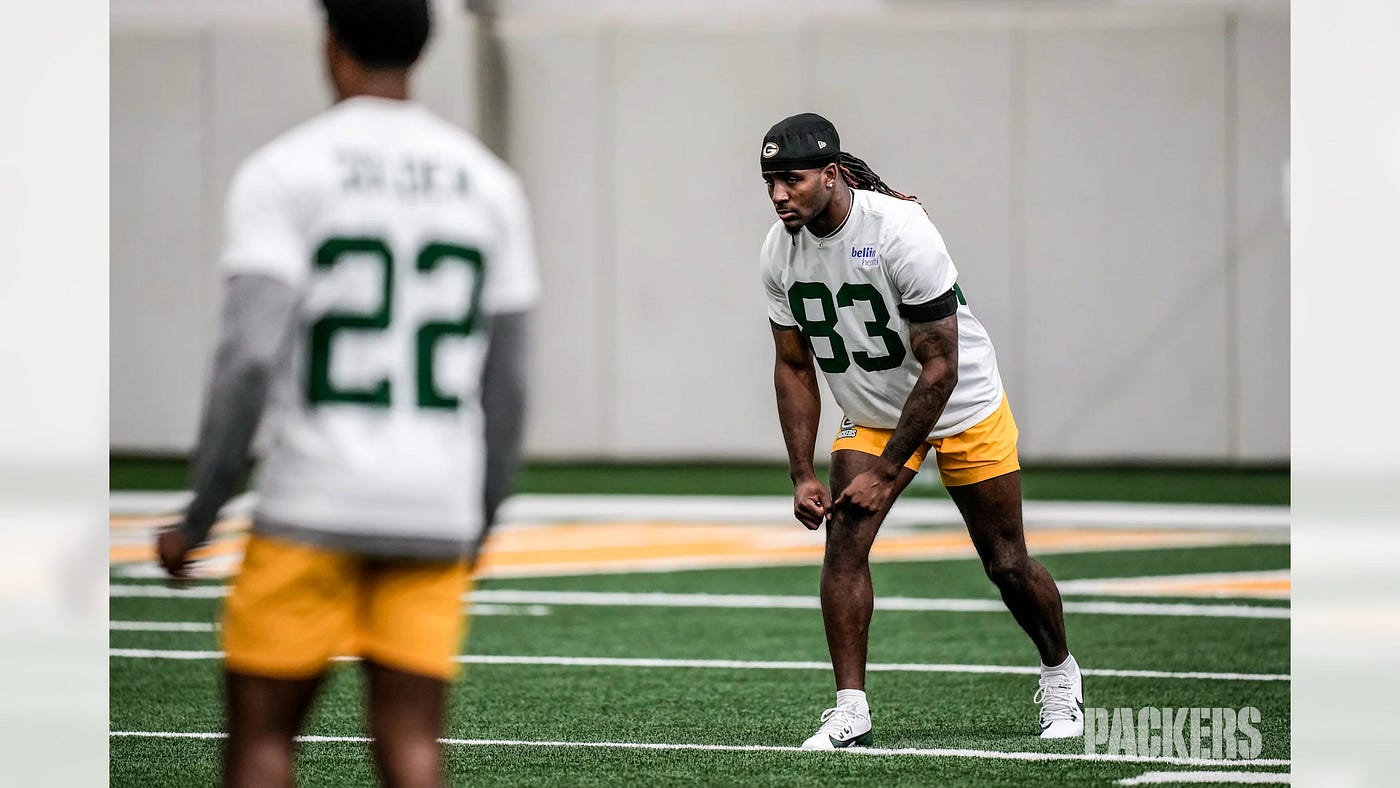
What kind of hole does Jaire Alexander leave in the Packers’ secondary?
And a larger outlook of the secondary as a whole.
What kind of hole does Jaire Alexander leave in the Packers’ secondary?
And a larger outlook of the secondary as a whole.

One of my favorite NFL draft memories of all time was Jaire Alexander’s selection in 2018.
The team was at a crossroads that year. They had just failed to reach the playoffs for the first time in almost a decade, after Aaron Rodgers suffered a broken collarbone in week six. The rest of the roster was simply not good enough to keep the team afloat in his absence, and then GM Ted Thompson’s streak of bad draft classes finally caught up to them. Thompson retired from the position after the season, and his protégée Brian Gutekunst was named as his replacement.
When draft night rolled around, Packers fans eagerly waited to find out exactly who this new face would choose. They were treated to a rollercoaster that night, as the Packers first traded down from the 14th pick to the 27th, then all the way back up to 18 for a corner from Louisville: Jaire Alexander. When you watched him walk across the stage, you could already tell that this guy just had it. Call it confidence, call it swagger, but he had it.
Jaire made an immediate impact as a rookie, lifting up a secondary that had struggled mightily, and had been without a true CB1 since Charles Woodson. Of course, Jaire endeared himself to fans immediately with his physical play and ball skills. The far and away highlight of his early career was tackling both Adam Theilien and Steffon Diggs at the same time. This led to a career long rivalry that even led to a pre-game confrontation just last year.
The best thing about Jaire was always his one of one personality. There was never. anyone. like. him.
He’s a possible Packers Hall of Famer, and he’ll forever remain one of my favorite players to wear the green and gold.
Last year, Jaire Alexander earned a 78.3 coverage grade from PFF, which was 16th in the league, and a 75.2 overall grade which was 25th.So obviously, while Jaire was a plus defender for the team even last season, the over-analyzed elephant in the room is the fact that he played a mere seven games. In fact, he had missed a total of over half of the games over the past four seasons, with a massive contract that simply was no longer worth the risk of sunk cost.
At the time of his release, Alexander’s contract (a four year, $84 million contract inked in 2022), placed him as the fifth highest paid corner in terms of per-year average, but merely the ninth highest paid in terms of total money.
There are rumors abound from a variety of sources about what exactly transpired behind the scenes between the team and the cornerback, but as we look back over the summer it’s clear that the team never really intended to keep Alexander at all. It’s my opinion that the reported reworked contract and subsequent attempts to mend fences were likely a last ditch attempt to drum up trade interest in Alexander.
The Packers will get what they were probably after the entire time, $17 million cleared up in cap space next offseason, and $19 million cleared the year after that. The team will certainly need this money, having been projected to start 2026 already over the salary cap figure, and with numerous lucrative extension candidates looming.
Having recently signed with the Ravens, Packers fans will have to wait until week 17 to see Jaire again. Baltimore was a great landing spot for Jaire, as he clearly wanted to reunite with his former college teammate Lamar Jackson, he will get to compete for a Super Bowl, and will get the chance to prove he can stay healthy and is worth another big contract.
But as the title of this article suggests, our job today is not to look back, but rather forward, and attempt to figure out where exactly the Packers’ secondary (and cornerback room in particular) stands now with his absence.
As it stands now, the returning corners to the team are Keisean Nixon, Corey Valentine, Kalen King, Kamal Hadden and possibly Javon Bullard, should the team continue his workload at slot corner in 2025. Nate Hobbs is the major addition to the room, along with seventh round rookie Micah Robinson. Over the off-season they lost (obviously) Jaire Alexander, Eric Stokes, Corey Ballentine, and Robert Rochelle.
The team handed a major 4 year, $48 million contract to Nate Hobbs, the 25 year old corner who comes from the Las Vegas Raiders. Gregory Junior was signed, and has spent time with a couple teams. Besides those, the team’s only other addition to the team was the seventh round selection from Tulane, Micah Robinson.
Basically, the team has lost two starters in Jaire and Eric Stokes, and gained one in Nate Hobbs.
At the beginning of the offseason, I had been very bullish on the team’s movement in the secondary, particularly the swap of Eric Stokes for Nate Hobbs (who also, interestingly enough, have replaced each other on their new teams). There was a case to be made that Stokes had been the lowest performing player on the entire roster, with a 61.3 overall PFF grade and a 62.4 coverage grade, and the Packers letting him walk in free agency was a prime example of addition by subtraction.
Adding Hobbs seemed to be the cherry on top. He’s a year younger than Stokes and possesses valuable slot/boundary versatility. He has a reputation for tough, physical play at the corner position, which has produced a number of injuries during his career, including six games missed in 2024.
Hobbs has spent most of career with the Raiders playing in the slot, but also has experience on the outside. Even he seemed a bit unsure of where he’d be playing for Green Bay, according to his media introduction in March.
Evaluating Hobbs’ career is a great example of why you don’t just look at the stat box when evaluating players. His 61.4 overall PFF grade was merely a single .1 better than Eric Stokes’ last year, and actually graded worse than Stokes in coverage grade by .9, the difference between ranking the 94th corner in coverage grade and the 103rd. Remember that physical reputation? Hobbs’ run defense grade was a whole 11.4 points higher than Stokes, but still was the 100th ranked corner in that regard.
Nevertheless, one still feels better with a Nate Hobbs at corner than an Eric Stokes. While not as athletically gifted as Stokes, the hallmark of Hobbs’ career is consistency, something the Packers secondary is desperate for. And we can at least feel like Green Bay has replaced a major liability at the position with an average one.
Speaking of replacements, you can certainly pencil in two out of three from the trio of Kalen King, Kamal Hadden and Micah Robinson as the replacements for Corey Ballentine and Robert Rochelle. While Ballentine and Rochelle had seen limited snaps in 2024 (Ballentine was a steady roster presence, while Rochelle had only been active for one game in 2024), both had been special teams contributors at the least. While fans may have been surprised to see the pair walk in free agency (I myself would have liked to see the team keep Ballentine, after he played adequately in starting opportunities in 2023), it’s not hard to understand why the front office chose this path. Both King and Hadden spent the 2024 season on the team’s practice squad, and it’s officially time to see what these young corners can do. The two were both undrafted free agents following the 2024 draft, despite carrying mid-round grades from multiple draft analysts that year. Micah Robinson possesses plenty of intrigue on his own, and it’s not hard to imagine that there’s at least one playable special teams contributor in that group. It might be a risk, but the point of having young, high upside players on your roster is to eventually give them a chance to prove that upside.
Speaking of upside: Corey Valentine. At only 23 years old, Valentine has already far and away surpassed any expectations the team could have had for a seventh round draft pick. Since entering the league in 2023, Valentine has earned his opportunities, and despite starting 2023 and 2024 as a backup, ended both seasons as a clear and obvious starter. He earned impressive grades last season, being ranked 45th last year among corners in overall PFF grade (70.4) and 27th in coverage grade (74.4). He was tied for 15th in interceptions last season (though with only two, which speaks volumes about how hard it is to get interceptions in the NFL), and is possibly the only real “outside only” corner left on the roster (more on that later).
Keisean Nixon is a bit of a flashpoint for Packers fans: you love him or you hate him. Okay, maybe hate is the wrong word, since I doubt anyone could hate the man who did this. But his ability as a coverage corner ranges from “adequate” to “liability”. From a PFF standpoint, he lands in a range just below Valentine, ranked 87th among corners overall (64.5) and 116th in coverage grade (60.7). There’s a bit of context I’d like to provide around Nixon, however.
Despite spending the entire offseason training to once again hold down the slot corner position, Nixon was thrust into an outside corner role following the injuries of Jaire Alexander. Nixon did not back down from the challenge, and from week five onward spent more snaps there than his own position. Despite the massive change in physical responsibilities associated with such a change, the difference between his PFF grade in time spent at the slot and the boundary was… zero. The exact same grade when those weeks are averaged together, including an extremely impressive streak in weeks 12–14 which saw some of Nixon’s highest grades of his entire career.
Can we talk for a moment about how incredible that is? Not only this year, but over the course of Nixon’s entire career with the Packers. Nixon came over from the Raiders as a forgotten player, a special-teams only piece that looked to have little to no value anywhere else on the roster, and likely a short stay in the NFL in general. But when the team was desperate for a new returner option in 2022, who stepped up? Keisean Nixon. When the team gave him a shot at actual NFL corner play, who stepped up? Keisean Nixon. When Jaire Alexander went down last season, and the team needed bodies on the boundary, who stepped up? Keisean Nixon.
He’s an above-average tackler and run defender, not an easy thing to find for a cornerback. He was also the 4th highest rated pass rusher amongst cornerbacks last year, with a 92.7 with most of his work coming from the slot, and turned in a total of three sacks.
Nixon turned from a special teams contributor to an All-Pro kick returner, and from a non-viable corner to at the very least, an average one. That’s hard to do. That’s impressive. Not to mention his clear leadership role on the team, and a contract that, despite being signed only in 2023, now looks like an absolute steal for a starting corner at $6 million a year. Nixon is an asset for any NFL team, for his versatility alone, and I’m happy that he plays for Green Bay.
Let’s move on to the last “corner” of the group, quotations necessary because he’s not actually a corner. Last year’s second round selection at safety, Javon Bullard. While there is always a bit of cross-versatility implied between safety and slot corner, what was asked of Bullard last year was almost unprecedented. He was one of only five players in the entire NFL last season that played at least 250 snaps at both safety and slot corner. More impressively, he’s the first rookie to do so since 2007.
Despite his versatility, Bullard’s play left something to be desired. He ended his rookie campaign with a 52.3 overall PFF grade, and a 46.9 coverage grade. Bullard absolutely flashed some high end traits last season, including a great game against the 49ers and during the last two games of the year, against the Bears and Eagles. He’s a reliable run defender as well, another notch in his belt when considering his future at slot corner.
As the safety room in Green Bay looks as packed as any position group in the entire NFL (superstar Xavier McKinney, Bullard, impressive rookie Evan Williams, and Kitan Oladapo / Zanye Anderson, who looked impressive in limited snaps last season), is Bullard the odd man out? I don’t think there’s any doubt that Evan Williams has earned his spot next to McKinney as the starting safety (despite a quietly bad ending to last season). I’d definitely expect Bullard to continue his work in the slot, and perhaps benefit from a full offseason to get acclimated to the spot.
Now that we’ve gone over the entire secondary, you may have noticed a certain theme to the players of the secondary. Let’s say it all together: versatility. Whether intentional or not, GM Brian Gutekunst has created a situation that is almost positionless.
Of players in the secondary who can play multiple spots we have: Keisean Nixon, Nate Hobbs, Javon Bullard, Xavier McKinney and Evan Williams.
Which also happens to be the entire expected starting secondary.
A huge trend in defense last year, led by Brian Flores in Minnesota but certainly employed by Jeff Hafley as well, was confusion. Simulated pressures, stunts & twists, rotating safeties, etc.. The Packers have set themselves up to employ these concepts to the extreme. If everyone in the secondary can do everything, the opposing offense has less chance to figure out the defense pre-snap. I shouldn’t have to explain the inherent advantages.
This strategy isn’t without drawbacks, however. Remember when I mentioned Corey Valentine was the only outside corner the Packers have? Yeah.
While I do agree with some others that I’ve seen, that Keisean Nixon might be even better suited to the outside than the inside, he’s still not a pure boundary corner. Among the young trio of corners, none of them seem like boundary only corners either.
That’s the hole that Jaire Alexander leaves in the secondary. A vulnerability on the outside corner slots, and a lack of cornerback depth in general.
Valentine is a fine backup, and someone I’m very excited to see play next season, but the team is two injuries away from being in major trouble. Those injuries would also likely eliminate any versatile-heavy, positionless secondary plans the team had, and force them to play in a more traditional way that they may not be suited to anymore.
There’s certainly upside to the Packer’s plan. You may notice that I’ve mentioned that there is an inherent replacement on the team for Eric Stokes, but not one for Jaire Alexander. That’s because there is no replacement. There’s no one that can step directly into Alexander’s shoes and become an All-Pro, lockdown corner (although Keisean Nixon certainly called his shot at the end of last season).
How can there just be no replacement? Well, that’s because there was no Alexander at the end of last season either. Remember that Jaire missed the entire last half of 2024, and the defense had to make do without him then too. And it’s worth pointing out that despite not having Alexander for that chunk of time, the Packers were 4th in coverage grade as a collective group last season anyway. They were also a top ten team in passing defense DVOA last year.
I’m not saying that the team’s strategy is flawless, and that the new-look secondary will carry the team to a super bowl on its back. In fact, it’s my opinion that if the team did indeed know it would 100% not have Alexander back in 2025, they should have taken a corner high in the draft this year (Trey Amos over Anthony Belton in the second, perhaps), especially considering the team hasn’t taken a corner in the first three rounds in three years.
Could the team still add a veteran cornerback to the room, for valuable depth and to serve in a mentorship role? Absolutely, and the team has the money for it, but options are slim. I wouldn’t count on a reunion with Rasul Douglas, and Asante Samuel Jr is oft-injured and a bad tackler. Stephon Gilmore? Maybe. Nevertheless, I do have massive faith in Jeff Hafley, and I’d argue the lack of a move might indicate that the organization shares that sentiment in the second year defensive coordinator.
메타데이터
- post_id
- f393d66c2d39
- slug
- what-kind-of-hole-does-jaire-alexander-leave-in-the-packers-secondary-f393d66c2d39
- url
- https://medium.com/@kalanij94/what-kind-of-hole-does-jaire-alexander-leave-in-the-packers-secondary-f393d66c2d39
- canonical_url
- https://medium.com/@kalanij94/what-kind-of-hole-does-jaire-alexander-leave-in-the-packers-secondary-f393d66c2d39
- author_url
- https://medium.com/@kalanij94
- status
- ok
- fetched_at
- 2026-07-10 04:31:59