Everyone Is Looking for the Perfect Amazon Research Tool.
A note before we begin: this article is longer than most things that get published on Medium. That’s intentional. The topic isn’t simple…
Everyone Is Looking for the Perfect Amazon Research Tool. Almost No One Has Asked What They’re Actually Researching For.

Amazon product selection is a probabilistic system, not a search engine query.
A note before we begin: this article is longer than most things that get published on Medium. That’s intentional. The topic isn’t simple, and pretending it is has cost a lot of sellers a lot of money.
I’ve watched the same scene play out countless times in Amazon seller communities. Someone posts: “I just upgraded from Jungle Scout to Helium 10. Is it worth the extra cost?” And then two dozen people give their opinions based on their own subscription tier, their own product category, their own definition of “worth.”
Nobody asks: what are you actually trying to accomplish with all this data?
That question — what are you actually trying to accomplish? — is the one that unlocks everything else. Because until you can answer it with real precision, no tool is going to help you select better products. You’ll just be cycling through subscriptions looking for the one that finally gives you certainty. And certainty about a market this dynamic is not a thing that exists.
Here’s the foundational insight that changes how you think about this:
Amazon product selection is not a search problem. It’s a betting problem.
You’re placing capital — money for inventory, time for research, opportunity cost for everything else you could be doing — against an uncertain future market outcome. The question you’re actually trying to answer is: given everything I know right now, which product gives me the highest probability of a return that justifies the risk?
Tools give you information. Information improves the quality of your probability calculation. But the tool is a data source — not a decision-maker. If your selection process doesn’t include a decision framework that uses the data to make and test explicit hypotheses about market opportunity, you’re not doing product research. You’re doing expensive browsing.
The opportunity window: what you’re actually hunting for
When you break down what makes a product selection “good” in retrospect, it almost always comes down to the same thing: the seller identified a convergence of three conditions at the right time.
First, a time window where demand was growing faster than supply could respond. The gap between what buyers wanted and what was available at sufficient quality and quantity. Second, a competitive window where the existing supply had identifiable, exploitable weaknesses — concentrated complaint patterns in negative reviews, obvious design deficiencies, gaps in price tier coverage. Third, a supply window where the seller had the capability to fill the gap at a cost structure that left real margin after advertising, FBA fees, and inbound freight.
All three windows open at once? That’s genuine opportunity. Most research tools can help you partially see one of these windows. Almost none of them help you see all three dynamically and simultaneously. Which is why “I used a tool and it told me this product had good numbers” is a systematically incomplete product selection process.
The data you actually need (it’s more specific than you think)
When you map product selection against the decision chain — market scanning, demand validation, competitive analysis, financial modeling, feasibility testing — you find that the data requirements are not just “a lot of data.” They’re specifically structured data with specific freshness requirements.
Price data needs to be current. Not last week’s. Today’s. Because pricing decisions happen daily in competed categories, and a financial model built on prices from two weeks ago is already partially wrong. BSR data — particularly Movers & Shakers, which ranks products by velocity rather than absolute position — should ideally be captured hourly to catch trend inflection points before they become obvious. Review semantic data, on the other hand, can tolerate a monthly collection cycle: what buyers said last month is still informative this month.
And then there’s the data that most tools don’t give you at all. Advertising placement data — which sellers are bidding on which keywords, how consistently, from which positions — is genuinely critical for assessing market entry cost. Most conventional research tools capture sponsored product placements with somewhere between 30% and 60% completeness. That means you’re making advertising budget assumptions based on a partial picture of the competitive landscape. The magnitude of that error directly affects your financial model’s accuracy.
Customer review text — the actual words buyers use to describe their experience with a product — contains more signal about differentiation opportunities than any aggregate metric. If 70 of 100 negative reviews on the top competitor describe the same specific product deficiency, you have been handed a product brief by the market itself. That’s the kind of intelligence that requires scale — collecting 200 reviews across your top 10 competitors — not just reading a star rating.
The data infrastructure question
This is where I want to be direct, because it matters for what you actually build.
Subscription research tools have a structural data freshness problem. They maintain the appearance of data access through cached databases that batch-update on schedules the tools don’t generally publish. The gap between when Amazon’s actual data changes and when that change is reflected in your research tool could be hours or weeks, depending on the data type and the tool’s update cycle. For some decisions — trend detection, price monitoring — this lag is not a minor inconvenience. It’s a material disadvantage.
The alternative that actually solves the freshness problem is real-time API access. Every API call initiates a live collection from Amazon’s actual pages. The data reflects Amazon’s state at the moment of the request. There’s no cache lag. There’s no wondering whether the number you’re looking at is from yesterday or two weeks ago.
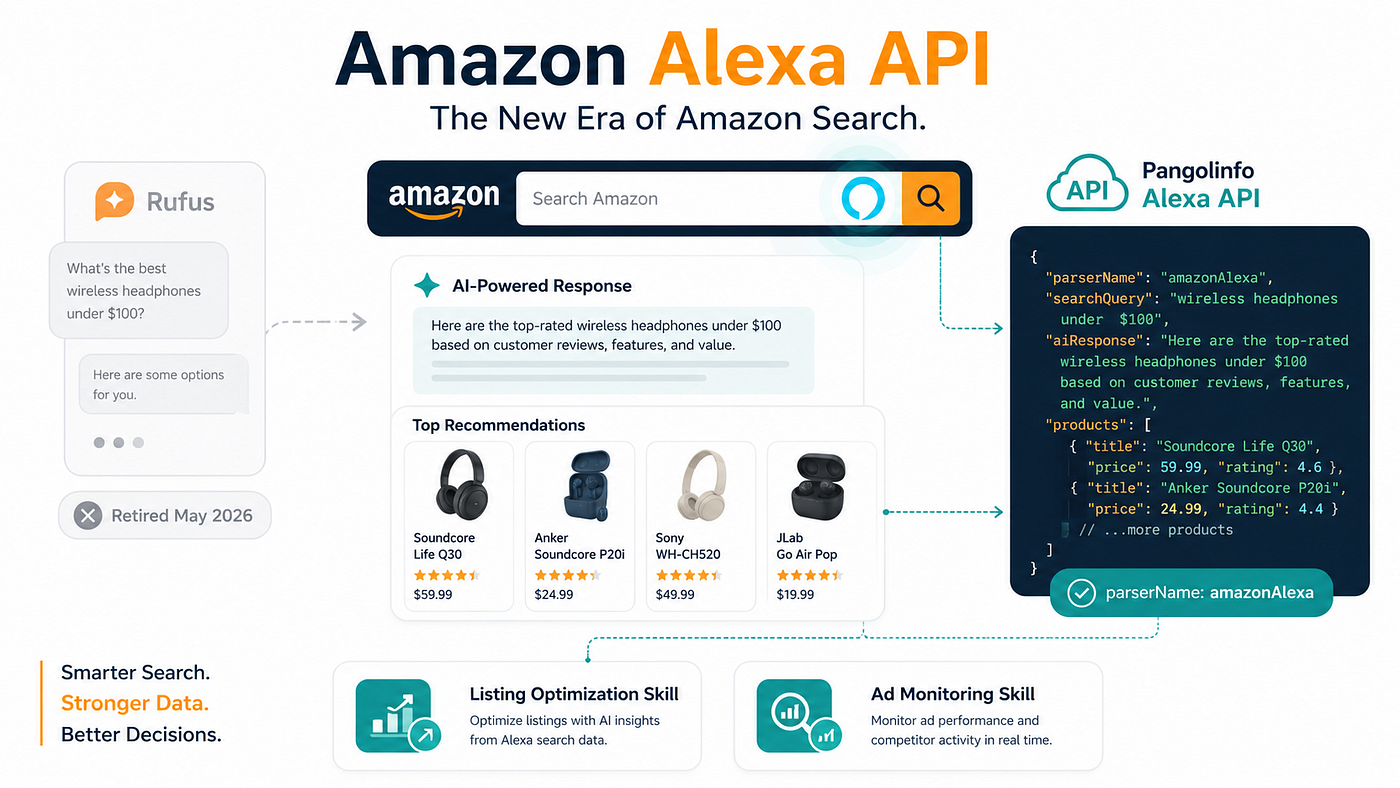
The API I’ve used extensively for this kind of work is Pangolinfo Scrape API. A few specific things about it that matter for product selection work: the sponsored product placement capture rate is 98%, which is genuinely unusual and directly relevant for competitive intensity assessment. It supports Customer Says extraction — Amazon’s AI-generated review summaries — which most tools don’t touch. It covers major Amazon marketplaces and supports postal code level collection for geographic pricing analysis.
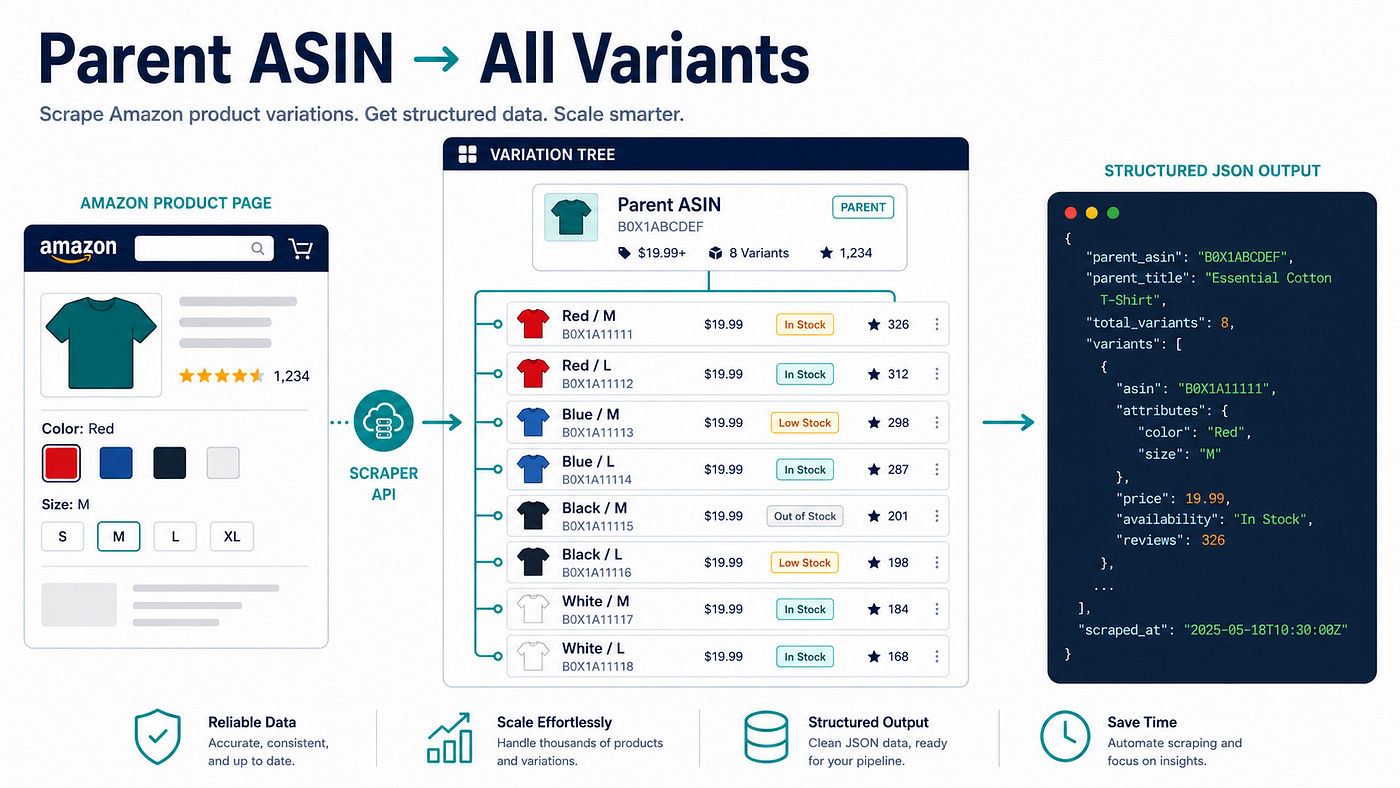
For review collection at scale, there’s a dedicated Reviews Scraper API that handles full review text, star ratings, timestamps, and helpful vote counts — the building blocks of meaningful review analysis rather than just aggregate score monitoring.
What changes when you get the framework right
The practical difference between a tool-dependent product selection process and a framework-driven one is significant. With a tool-dependent process, you’re limited to what the tool’s interface exposes. Your selection criteria are implicitly defined by whatever filters and sort options the tool’s product team decided to build. Your competitive analysis is bounded by the tool’s data coverage.
With a framework-driven process, backed by flexible data collection infrastructure, you define your own evaluation criteria. You monitor the specific signals that matter for your specific categories. You accumulate historical data over time, so you’re comparing today’s numbers against context — not just looking at point-in-time snapshots.
The philosophical reframe is this: Amazon product selection is not a task you perform periodically. It’s a continuous market sensing system you operate. The best product selectors aren’t people who do great research once every few months. They’re people who maintain a running, up-to-date understanding of the markets they compete in — and who make selection decisions as opportunities surface, rather than when they happen to schedule a research session.
Key Takeaways
- Product selection is probabilistic decision-making, not answer-finding. Define your framework before choosing your tools.
- The data you need spans five layers: trend, demand, competition, financial, and user insight — each with different freshness and accuracy requirements.
- Monthly sales estimates have 30–50% error rates. Use them for directional comparison only, never for financial modeling inputs.
- SP ad placement data accuracy varies dramatically across tools. Incomplete ad coverage leads to systematic underestimation of competitive intensity.
- Review semantic analysis — reading actual review text at scale — yields differentiation intelligence that aggregate metrics cannot provide.
- Real-time API collection solves the data freshness problem that subscription tools have structurally.
About Pangolinfo: Pangolinfo provides real-time Amazon data collection API infrastructure for sellers, SaaS tool developers, and AI-driven e-commerce teams. Products include the Scrape API, Reviews Scraper API, and Amazon Scraper Skill for AI Agent integration. Enterprise-scale collection up to tens of millions of pages per day.
메타데이터
- post_id
- f39f07372ec8
- slug
- everyone-is-looking-for-the-perfect-amazon-research-tool-f39f07372ec8
- url
- https://medium.com/@pangolinfo/everyone-is-looking-for-the-perfect-amazon-research-tool-f39f07372ec8
- canonical_url
- https://medium.com/@pangolinfo/everyone-is-looking-for-the-perfect-amazon-research-tool-f39f07372ec8
- author_url
- https://medium.com/@pangolinfo
- status
- ok
- fetched_at
- 2026-06-09 15:37:30