5 GeoGardenClub features for successful succession planting
Local insights and record-keeping tools make your garden goals a reality.
5 GeoGardenClub features for successful succession planting
Local insights and record-keeping tools make your garden goals a reality.
Succession planting, the practice of sowing the same crop multiple times through the season, is a great strategy for extending your harvest throughout the growing season. Depending on your region, certain crops will be better suited for succession planting than others. Generally, the best candidates are crops that have relatively short growing periods and can tolerate a range of temperatures. But to implement succession planting successfully requires local knowledge: Which crops are suited for succession planting in my area? Which varieties? When should I start them, and when must they be harvested?
Here in Bellingham, Washington, I highly recommend lettuce for succession planting. Most of us can only eat so much lettuce at a time, and it doesn’t store well. Having a large amount of lettuce ready for harvest all at once often leads to waste (unless you have a good way to share it!). By sowing smaller amounts every few weeks, you can enjoy a steady stream of fresh lettuce for a much longer period. Lettuce also has a relatively short time to maturity (typically between 30 and 60 days), so it’s possible to fit multiple plantings into my growing season. Some other quick-growing crops I’ve had success with succession planting are cilantro and radish.
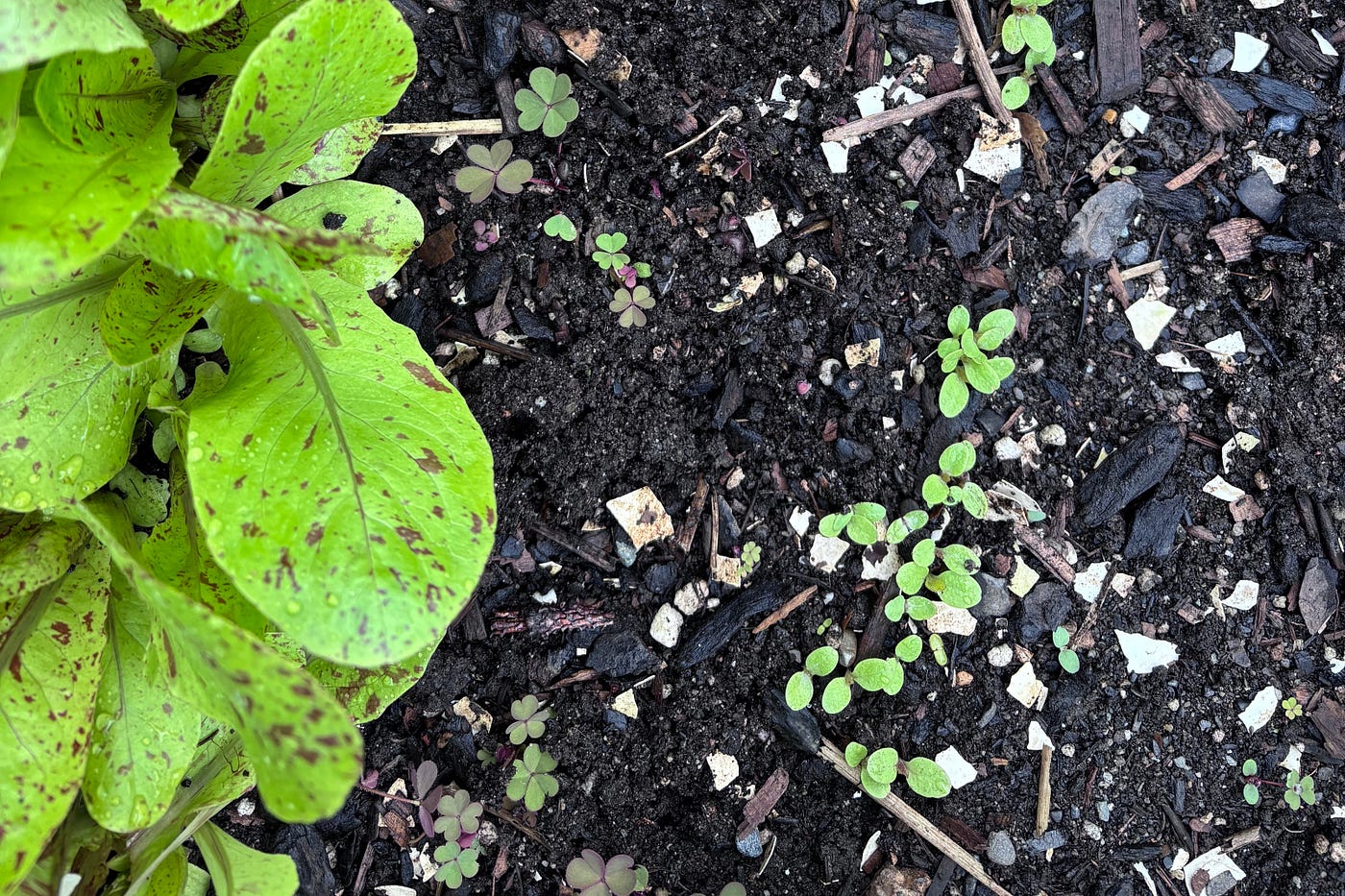
Lettuce at one month and ten days.
Carrots are another great crop for succession planting in my area. While they can take a bit longer to mature (typically 60 to 80 days), they have the advantage of storing well right in the garden. By leaving mature carrots in the soil, you can harvest them as needed, and they can tolerate cooler temperatures this way very well. However, because of their longer growing period, I usually only sow two rounds of carrots, while with lettuce I may plant 3 or 4 sowings.
Not every crop is a good candidate for succession planting. Some crops, like dry beans and winter squash, have growing seasons that are simply too long for my growing season - later plantings won’t have sufficient time to mature before temperatures begin to drop. Crops like spinach are less tolerant of heat and may bolt quickly when planted too late for our hot summers (yes, it does get hot in the Pacific Northwest!).
Getting local insights about which crops and varieties will work best for succession planting in your area is essential. Here are five ways GeoGardenClub supports successful succession planting:
1. Filter By Crop
The Filter by Crop feature allows you to see your full past history of planting dates for a crop and easily copy planting schedules that worked well from previous years. Adding plantings to your garden timeline automatically adds sowing and/or transplanting tasks to your task list, helping you remember when it’s time for additional sowings.
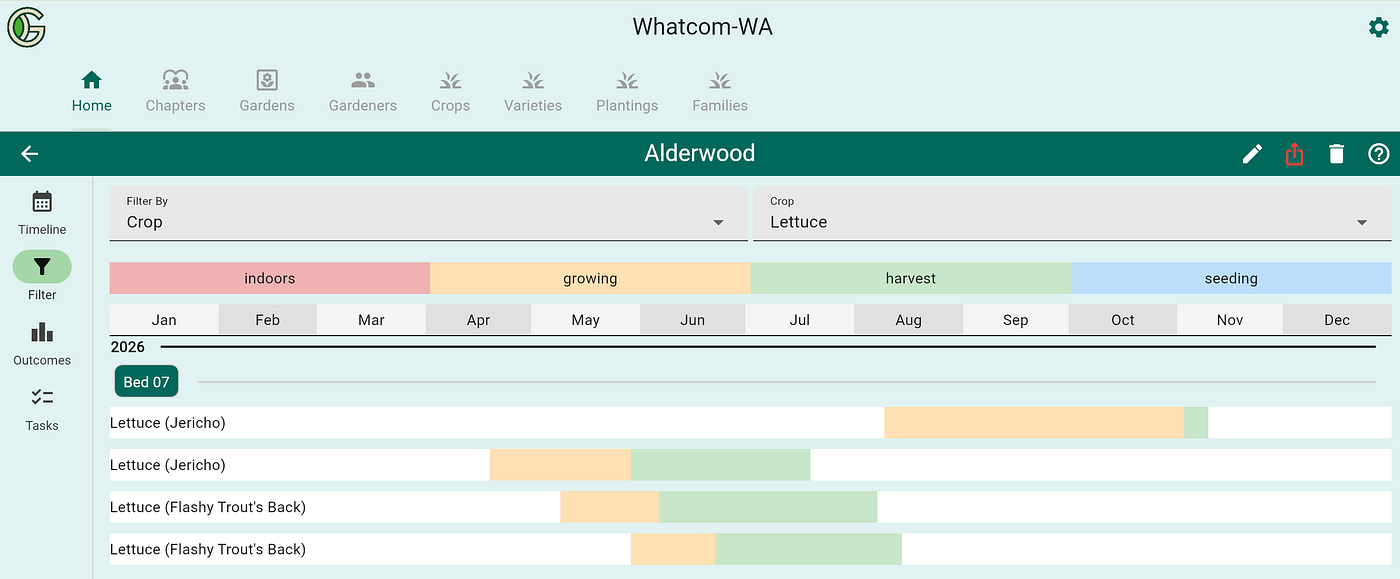
Succession planting of lettuce in author’s garden plans. I have three sowings of lettuce planned for the spring. I will also be experimenting with a fall crop once there is space in my garden bed from the pulling out of the spring lettuce plantings.
2. Copy Planting
If you haven’t planned out the succession plantings in advance, you can quickly create them in the moment by using GeoGardenClub’s Copy Planting feature. Copy Planting lets you copy an existing planting to quickly and efficiently add new plantings into your garden timeline. After the planting is copied, you can then adjust the dates to reflect the actual timing (or bed or variety) for this new planting.
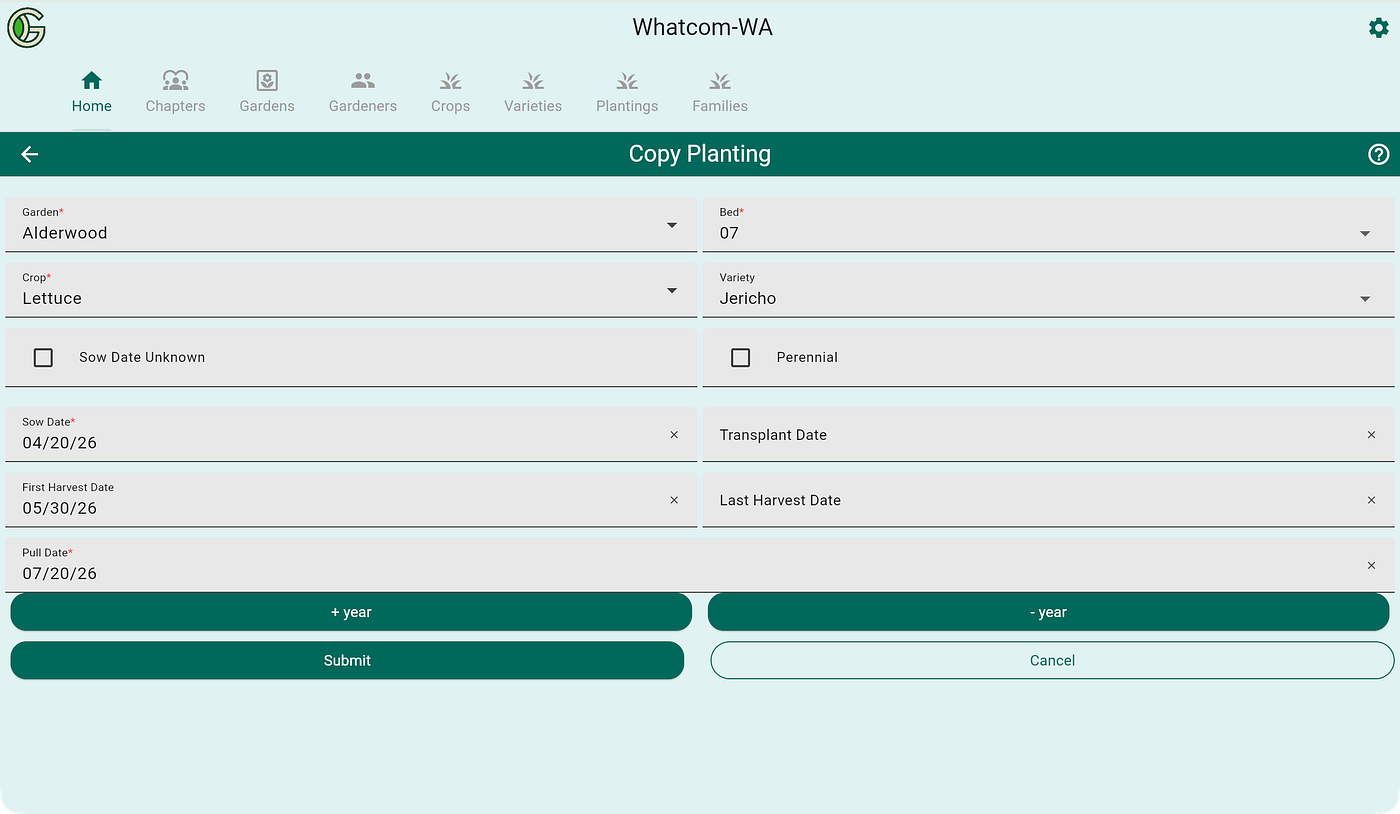
Using Copy Planting, adding new succession plantings is quick — just adjust the date fields to the new sow date and expected harvest and pull dates. You can also edit the variety or bed if needed.
3. Planting Index
The Planting Index lets you see which varieties are being planted in your area and when. It allows you to filter to display a specific crop to quickly see varieties and planting schedules. By tapping the planting bars, you can learn more about the planting, including which garden it’s growing in. If you have questions, you can message the gardener connected with that garden to learn more.
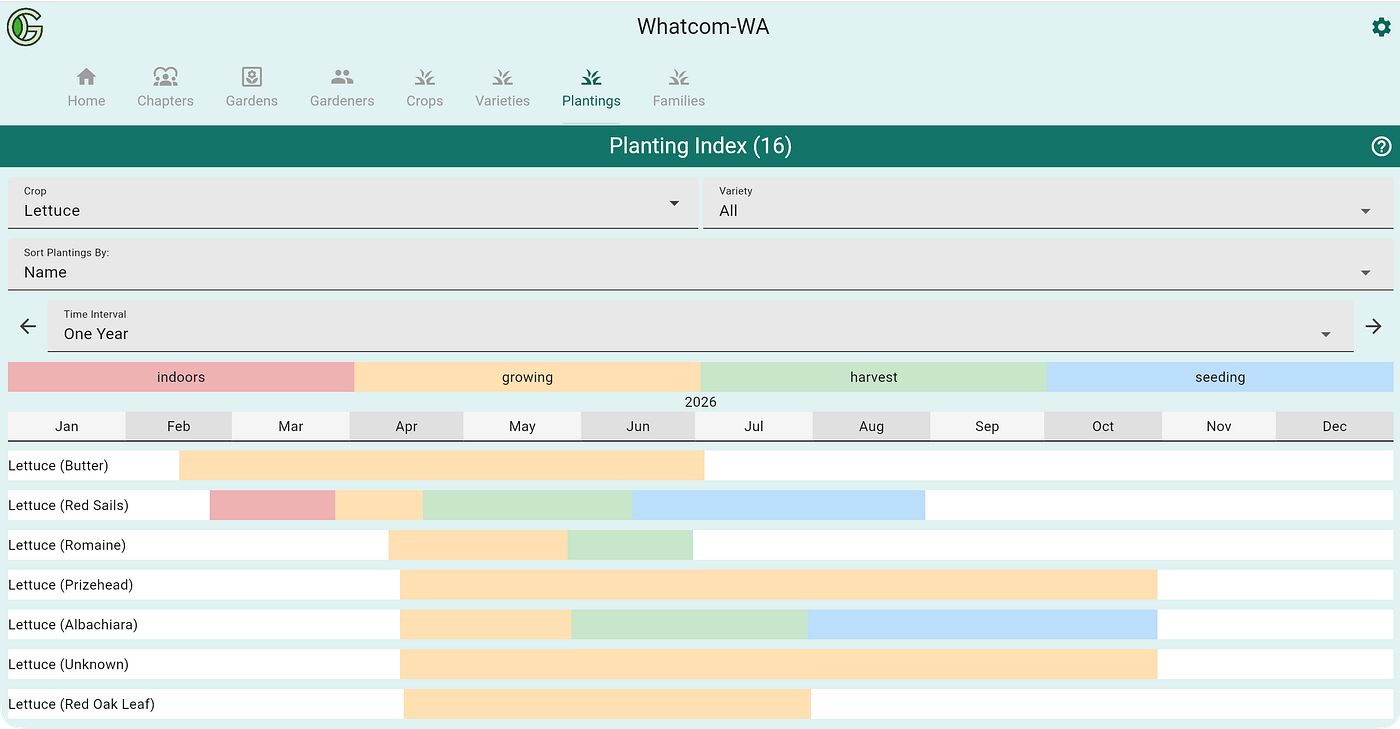
GeoGardenClub’s Planting Index displays all plantings for a local chapter. Here I have filtered to see only lettuce crops being grown in my area.
4. Filter By Bed
GeoGardenClub also helps you answer the question, " What bed should I plant in? Its Filter by Bed feature displays your plantings for each bed over the years, helping you plan for crop rotation to discourage disease and soil nutrient depletion. It can also help you identify which garden beds a crop has been most successful in.
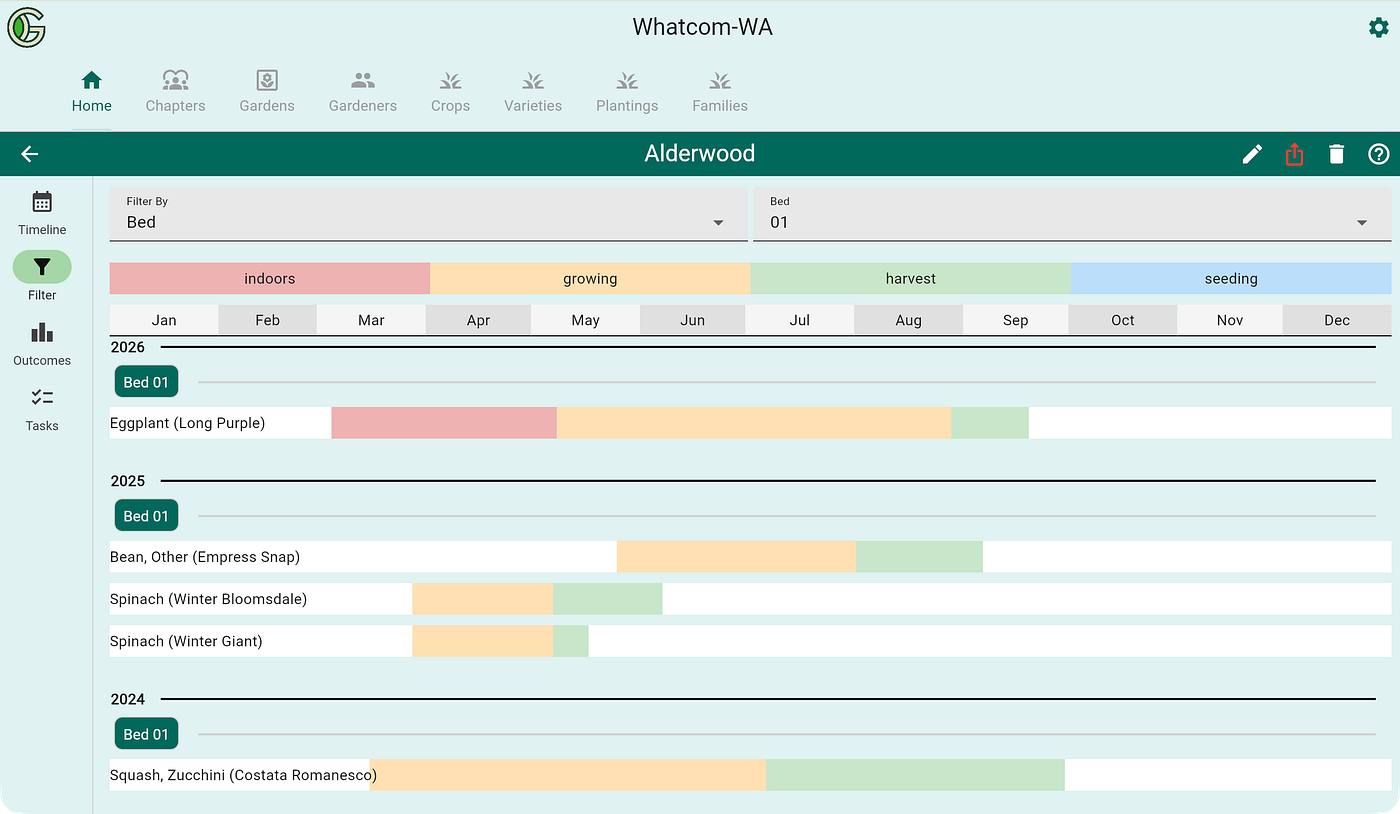
Filtering by garden bed shows a history of what has been planted in each garden bed. Here you can see in “bed 1” the author has rotated different crops over the last three years.
5. Local Wisdom
GeoGardenClub is not just a garden management tool; it’s also a community. It places gardeners into local chapters in which they can communicate through the chapter forum or private messages. By connecting with other gardeners in your area, the collective wisdom elevates everyone’s individual gardening level.
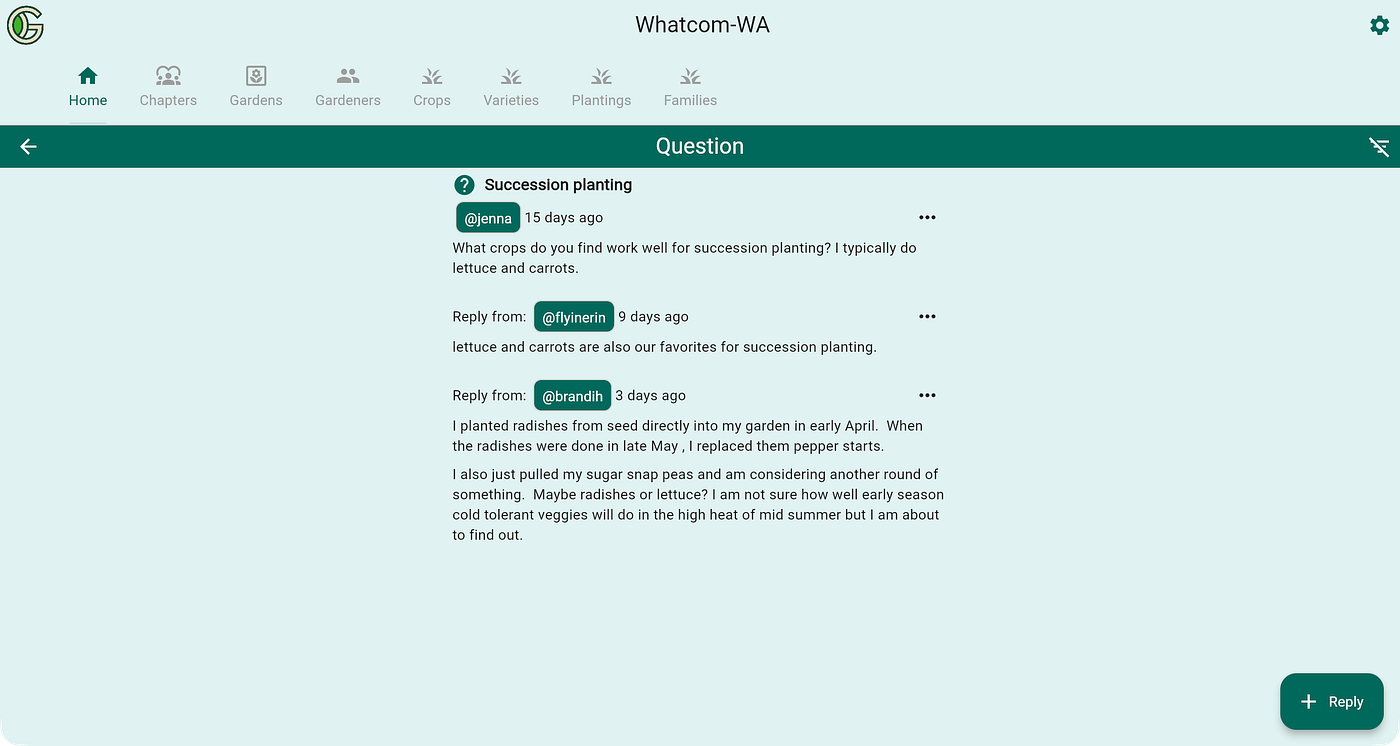
Chapter members use the Forums screen to chat about succession planting strategy.
As with many aspects of gardening, experimentation is key since what works in one garden may not work in another. GeoGardenClub is designed to help gardeners learn what works best in their area and in their garden. Explore other local garden plans to see varieties and planting schedules. Record your planting schedules and varieties to dial in on what works best in your garden. Future you will love how much easier it is with your garden data at your fingertips!
메타데이터
- post_id
- f3a1a4d543c7
- slug
- 5-geogardenclub-features-for-successful-succession-planting-f3a1a4d543c7
- url
- https://medium.com/gardening-birding-and-outdoor-adventure/5-geogardenclub-features-for-successful-succession-planting-f3a1a4d543c7
- canonical_url
- https://medium.com/gardening-birding-and-outdoor-adventure/5-geogardenclub-features-for-successful-succession-planting-f3a1a4d543c7
- author_url
- https://medium.com/@geogardenclub
- status
- ok
- fetched_at
- 2026-07-09 10:05:04