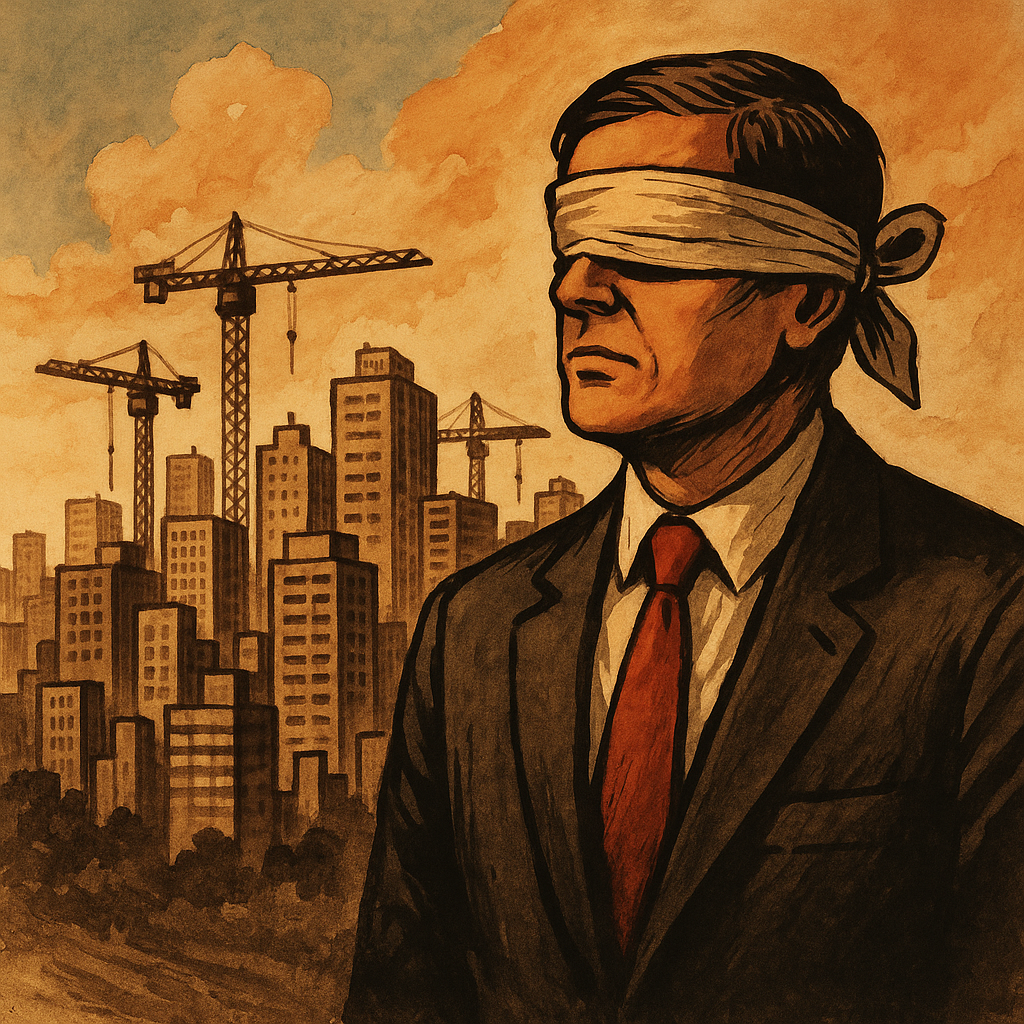
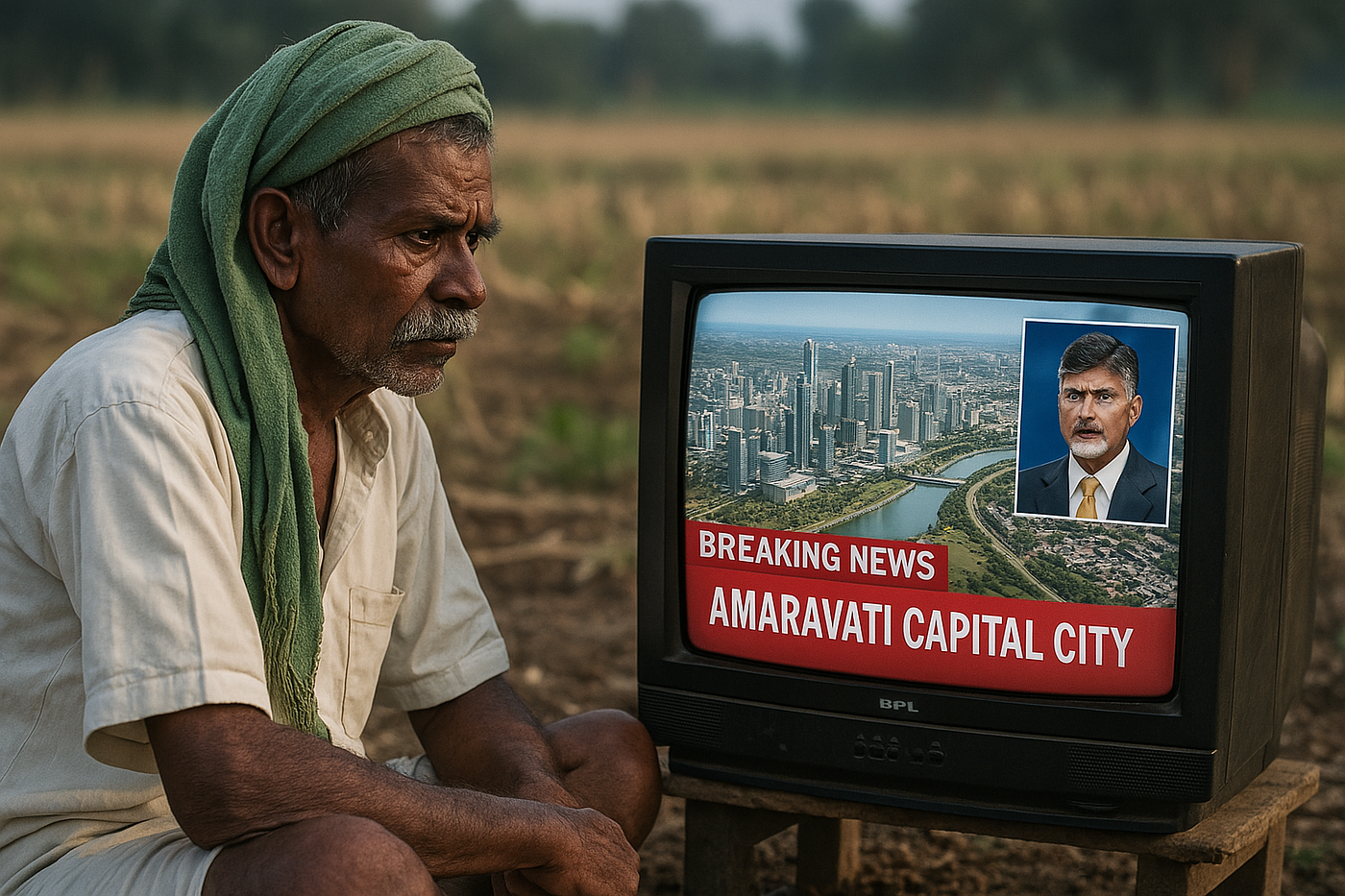
The Stolen Silence: How Democracies Are Lost Before the Vote Is Cast
When citizens are erased from the roll, democracy does not collapse with a gunshot. It vanishes quietly, one missing name at a time.
The Stolen Silence: How Democracies Are Lost Before the Vote Is Cast
When citizens are erased from the roll, democracy does not collapse with a gunshot. It vanishes quietly, one missing name at a time.

The Queue That Never Reached the Booth
On election morning, a citizen wakes before sunrise.
The clothes are washed. The voter slip is folded. The thumb is ready for ink. The body carries the ordinary dignity of participation — the quiet belief that, for one day, power must listen to the powerless.
But at the polling station, the ritual breaks. The name is not there.
No shouting happens first. There is only confusion. A volunteer checks another list. An officer looks bored. A policeman watches the line move. The citizen says the name again, slower this time, as if democracy is a machine that failed to hear properly.
Still nothing. The Republic does not apologize. It merely points to a missing entry.
This is how modern electoral manipulation often works. Not by cancelling elections, but by hollowing them out. Not by banning opposition, but by allowing it to participate inside a controlled architecture. Not by rejecting democracy, but by perfecting its imitation.
The ballot remains. The booth remains. The ink remains. The speeches remain. Only the citizen disappears.
And once enough citizens disappear, the election no longer needs to be stolen on counting day. It has already been altered before the first vote was cast.
The greatest threat to electoral democracy today is not merely rigging the result; it is the manufacturing of legitimacy through processes that erase voters, exhaust institutions, normalize participation in compromised systems, and turn disenfranchisement into a post-result debate rather than a pre-election emergency.
The Story We Are Told
We are told that elections are the sacred remedy.
If power becomes arrogant, elections will correct it. If institutions bend, elections will restore balance. If citizens suffer, elections will speak for them.
This is the civic myth every democracy teaches its children.
The textbook version is elegant. The people vote. The votes are counted. Representatives are chosen. Governments are formed. Courts remain available if something goes wrong. The Constitution stands above all.
But what happens when the very path to the vote is manipulated? What happens when citizens are deleted before they can participate? What happens when entire categories of voters are placed under technical doubt, bureaucratic uncertainty, or procedural limbo? What happens when the final result is treated as legitimate even though the electorate itself may have been altered?
Then the election becomes less a democratic exercise and more an administrative performance. The system does not need to openly deny the people power. It merely decides who counts as “people” before the election begins. This is the quiet genius of procedural capture.
They do not say: you cannot vote. They say: your name is not found.
They do not say: your citizenship is rejected. They say: your entry is under verification.
They do not say: the mandate is manufactured. They say: the process was followed.
That phrase — “process was followed” — has become one of the most dangerous sentences in modern democracy.
Because process without justice is not democracy. It is paperwork wearing the mask of consent.
The Architecture of Electoral Manipulation
Electoral manipulation is usually imagined crudely: stuffed ballot boxes, hacked machines, armed intimidation, fake counting.
But the more advanced form is quieter. It is not always located inside the voting machine. It is located inside the database. The modern voter is no longer only a citizen. The modern voter is an entry, a record, a field, a match, a deletion risk, a verification object.
Democracy now passes through software, lists, identity systems, local officers, political booth networks, data vendors, demographic maps, legal notices, and bureaucratic discretion.
Power no longer needs to seize the polling booth if it can shape the roll. This is the hidden battlefield.
The electoral roll appears neutral. It looks like a list. But every list is a political instrument if its inclusion and exclusion rules are controlled by power.
Who gets verified quickly? Who is marked doubtful? Who receives notice? Who never receives notice? Who has documents? Who lacks them? Who has the literacy, mobility, money, and confidence to contest deletion? Who simply disappears?
This is not merely administration. It is social sorting.
The poor are more deletable than the rich. Migrants are more deletable than settled elites. Tenants are more deletable than property owners. Minorities are more deletable than dominant communities. The elderly, disabled, landless, displaced, and informal workers are more deletable than the documented middle class.
The voter roll, therefore, becomes a mirror of structural inequality. But the manipulation is even deeper.
Once citizens are removed, political parties often convert the issue into an electoral grievance rather than a constitutional wound. They speak of stolen votes when they lose. They go silent when they win. They condemn deletions when margins hurt them. They ignore disenfranchisement when results favor them. This is where democracy suffers its second betrayal.
The first betrayal comes from the system that erases the voter. The second comes from political actors who treat erased voters as useful only when they affect victory.
The deleted citizen becomes a statistic after defeat, not a human being before the poll.
They called it election management. But it was citizenship management.
They called it revision. But it was erasure with stationery.
They called it verification. But it was suspicion distributed downward.
When the Deleted Citizen Stops Existing
The cruelty of voter deletion is not only that a person loses a vote. It is that the person loses public visibility.
After the election, cameras move to winners. Studios analyze swings. Experts discuss caste blocs, urban trends, youth turnout, women voters, welfare delivery, charisma, anti-incumbency, booth strategy, and alliance arithmetic.
But the deleted voter is not invited into the conversation. The deleted voter has no constituency because the system has already removed the evidence of their political existence.
A voter who never voted cannot be neatly measured in the result. This is how disenfranchisement becomes invisible.
The citizen stands outside the booth, but the debate moves inside the studio. The anchor asks why one side failed. The analyst explains why another side succeeded. The strategist says turnout was decisive. The court may ask whether the number of deletions exceeded the margin of victory.
But this logic is morally grotesque. A citizen’s right to vote cannot become relevant only if their absence changes the winner. That would mean democracy values the erased citizen only when the counted citizens make them electorally useful.
If one person is wrongly deleted, democracy has failed that person. If thousands are deleted, democracy has failed a community. If millions are deleted, democracy has failed itself.
The right to vote is not a margin-management tool. It is the doorway through which the citizen enters the Republic. Once that doorway is narrowed, the entire house becomes illegitimate — even if the furniture remains in place. This is why electoral manipulation cannot be reduced to “who won.”
The deeper question is: who was allowed to belong?
Participation as Legitimacy
Every controlled democracy depends on one strange ritual. The opposition must keep participating.
It must protest, but not withdraw. It must accuse, but still contest. It must shout fraud, but still take oath. It must claim theft, but still sit inside the chamber produced by the theft.
This is how stolen legitimacy is laundered.
The ruling system says: if the election was fraudulent, why did you participate? If the process was illegitimate, why did you accept the seats? If the mandate was stolen, why are you sitting in the legislature?
And the opposition often has no convincing answer. Because somewhere, beneath the outrage, there remains the gambler’s hope: perhaps we can still win. This hope is fatal.
It turns disenfranchisement into a tactical issue instead of a moral line. It tells the erased citizen: your deletion matters most when it hurts our arithmetic. If we win despite your erasure, the wound can wait.
That is not resistance. That is negotiation with illegitimacy.
In ordinary times, participation is democratic duty. In captured times, participation can become democratic anesthesia. It numbs the public into believing the game still works because all players remain on the field.
But what if the field has been tilted? What if the referee has been absorbed? What if the scoreboard is not the only thing manipulated — but the eligibility to enter the stadium?
Then the question changes. The question is no longer: how does one win the election? The question becomes: how does one deny legitimacy to a corrupted election without abandoning the Republic?
That is the hard question. The frightening question. The question political actors avoid because its answer requires sacrifice.
It may require resignations. It may require boycott. It may require refusing to normalize a chamber born from mass exclusion. It may require civil society to become the primary guardian of democracy when parties become trapped by their own ambition.
This is where the ideal and the practical meet. In ordinary politics, the ideal seems impractical. But in moments of constitutional danger, the ideal may be the only practical path left.
The Courtroom Problem: When Justice Arrives After Democracy Has Left
Courts are often imagined as the last temple of constitutional rescue. But electoral manipulation exposes a tragic delay inside legal remedy.
By the time a court examines deletion, the election may already be over. The government may already be formed. The legislature may already be seated. The erased citizen may already be converted into a footnote.
The legal system asks for evidence, margins, procedure, maintainability, jurisdiction, and remedy. The citizen asks for recognition. These are not always the same language.
A court may examine whether deletions affected the outcome. But a Republic must ask whether deletions affected citizenship itself. The gap between these two questions is where democracy bleeds.
Because electoral injustice is not only a dispute between candidates. It is a rupture between the citizen and the constitutional promise.
If the wrong candidate loses, the party suffers.
If the wrong citizen is deleted, the Republic suffers.
That distinction matters.
When electoral law treats disenfranchisement primarily through the lens of result impact, it reduces the citizen into an instrument of candidate victory. It asks: did your absence change the winner?
But the Constitution must ask something deeper: did your exclusion violate the idea that the state belongs equally to you?
The deleted voter is not merely evidence in someone else’s case. The deleted voter is the case.
The Election Is Not the Beginning of Democracy
We must stop thinking of democracy as something that begins on polling day. Polling day is only the visible ritual.
Democracy begins much earlier.
It begins when the voter roll is prepared. It begins when citizenship documents are recognized. It begins when notices are served fairly. It begins when public institutions behave without partisan fear. It begins when the poor are not punished for being mobile, undocumented, elderly, landless, displaced, or digitally invisible. It begins when every eligible citizen is treated as a sovereign participant, not a suspicious entry.
The vote is the fruit. The roll is the soil. If the soil is poisoned, the fruit cannot be called pure. This is why the struggle for democracy must move from event to infrastructure.
Not just “protect the vote.” Protect the voter.
Not just “count every vote.” Ensure every citizen is allowed to vote.
Not just “free and fair election.” Free and fair electorate.
The phrase “electoral reform” is too small for the crisis. Reform sounds like technical adjustment — better forms, cleaner databases, stronger audits, faster grievance systems.
All of that is necessary. But not enough. What is needed is a moral reconstruction of electoral legitimacy. A democracy must be judged not by how smoothly it counts the included, but by how fiercely it protects the vulnerable from exclusion.
The health of a Republic is not measured by the winner’s majority. It is measured by the deleted voter’s dignity.
The Civil Society Imperative
When political parties become prisoners of electoral arithmetic, civil society must recover the grammar of citizenship. The fight cannot remain only in press conferences, petitions, studio debates, or social media outrage.
It must become physical, peaceful, documented, relentless, and local.
Every village, ward, basti, colony, and mohalla must know who has been deleted. Every deletion must be converted from an invisible data point into a public testimony. Every missing name must become a constitutional alarm.
The movement must be Gandhian not as nostalgia, but as method.
Feet on the ground. Lists in hand. Doors knocked. Citizens verified. Officials questioned. Records preserved. Silence broken.
The Republic was not built by spectators. It cannot be rescued by spectators either.
Civil society must refuse the reduction of democracy into party competition. The right to vote does not belong to parties. It belongs to citizens. Parties may benefit from it, courts may adjudicate it, institutions may administer it — but the moral ownership of democracy rests with the people.
That ownership must now be reclaimed.
Not violently, Not chaotically, Not through hatred.
But through disciplined refusal.
Refusal to normalize mass deletion. Refusal to treat disenfranchisement as a post-result complaint. Refusal to allow stolen legitimacy to become business as usual. Refusal to let the erased citizen disappear twice — first from the roll, then from public memory.
The Republic Outside the Booth
Return to the citizen outside the polling booth.
The morning has become afternoon. The dust has settled on the road. The inked fingers have gone home. The loudspeakers have moved on to victory songs. Somewhere, television studios are preparing maps in red, blue, green, and saffron. Numbers will dance. Experts will explain. Mandates will be manufactured into meaning.
But the citizen is still there.
Holding a slip. Holding a memory. Holding a citizenship that the machine no longer recognizes.
No soldier came to the door. No dictator announced the end of democracy. No flag was lowered. No Constitution was burned.
Only a name disappeared. And that was enough.
This is how republics are hollowed in the modern age — not always by tanks on the avenue, but by clerks at a desk, databases in silence, notices never delivered, forms never understood, errors never corrected, and courts arriving after the wound has already become history.
They called it revision. But it was erasure.
They called it procedure. But it was punishment.
They called it mandate. But it was arithmetic performed on an altered people.
The tragedy is not that one citizen was denied a vote. The tragedy is that the Republic learned to continue without them.
Because once a nation accepts that some citizens can be made invisible and the ceremony may still proceed, democracy does not die in one dramatic moment. It becomes a stage play performed over an emptying audience.
The booth remains. The ballot remains. The anthem remains. The Constitution remains.
But somewhere beneath the paperwork, the old compact begins to crack — the compact that said this land belongs equally to every person who lives under its sky.
A republic is not destroyed only when power refuses to leave. It is destroyed when citizens are made to stand outside their own sovereignty, watching others decide whether their absence matters. And so the question is no longer whether the election was won or lost.
The question is older. More dangerous. More intimate.
When the state cannot find your name, are you still the people? Or has democracy finally discovered a cleaner way to rule without you?
메타데이터
- post_id
- f3e2619e4bbf
- slug
- the-stolen-silence-how-democracies-are-lost-before-the-vote-is-cast-f3e2619e4bbf
- url
- https://medium.com/oblivion-atlas/the-stolen-silence-how-democracies-are-lost-before-the-vote-is-cast-f3e2619e4bbf
- canonical_url
- https://medium.com/oblivion-atlas/the-stolen-silence-how-democracies-are-lost-before-the-vote-is-cast-f3e2619e4bbf
- author_url
- https://medium.com/@theramnutakki
- status
- ok
- fetched_at
- 2026-06-09 14:34:10