Strangelove Protocol
It sat in the middle of them. None of them reached for it
Fiction-Short Story
Strangelove Protocol
It sat in the middle of them. None of them reached for it

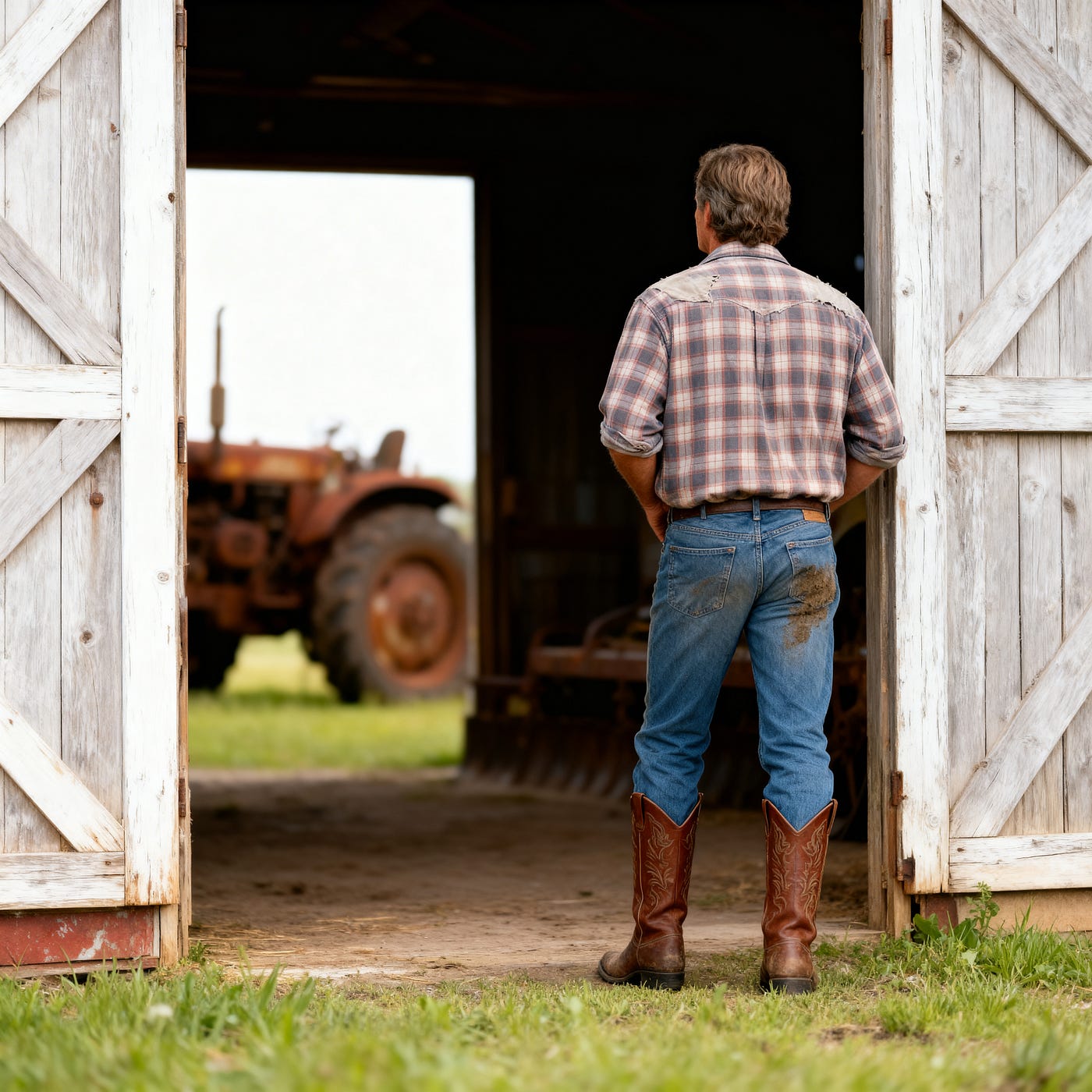
Image by upklyak on Magnific
The restaurant had not changed, and that was the first lie of the evening.
Don Newman noticed it the way he noticed everything now, slowly, a beat behind the moment. The brass lamp at table nine. The water stain on the ceiling shaped like Nebraska, which he had been watching for fifty years and which had never once grown or shrunk, as though the building itself had decided to hold its breath. The same maroon banquette, reupholstered twice in the same maroon. The management kept the table for them on the second Tuesday of every November without being asked, and the management thought it was sentiment. Don knew it was a kind of evidence.
He arrived first, as he always did. It was a habit from the silos, where being early meant being alive, where the man who relieved his post late was a man you did not trust again. Fifty years gone and his body still kept the clock. He had stood outside in the parking lot for six minutes before going in, watching his breath, letting the cold remind him he was still here to feel it.
He ordered the bourbon and turned the glass without drinking it. Outside, the lot lamps came on against the early dark, one of them buzzing the way it had buzzed for a decade, and he watched a younger man help an older woman from a low car, a hand under her elbow, the careful choreography of it. Don felt the particular ache of having outlived the version of himself that could do that without thinking about his own knees.
He was eighty-one. He had been promising himself for three years that he would stop coming, and he kept coming, because the table was the only place left where the three of them were still the men they had been, and because he was the one who had made them those men, and a man returns to his own construction the way a tongue returns to a broken tooth.
Leek came in at five past, stamping the cold from his shoes, too loud, the way he got when he was nervous and refused to be nervous out loud. Benjamin Leek had spent the better part of seventy years being the man who made the room easier, the one who laughed first so the others were allowed to. He crossed the floor with both hands already coming up, and he took Don’s hand in both of his, and held it a moment too long.
“You look terrible,” Leek said. “It’s good to see you.”
“You look like a man who read his mail,” Don said.
Leek’s face did something small and then dismantled the small thing with a laugh, because laughing was what Leek did with everything he could not set down. He lowered himself into the chair across, slower than last year, and waved at the waiter, and the evening began to assemble itself the way it always had, out of the bread and the water glasses and the careful, decades-old avoidance that had become its own kind of intimacy.
“Diane send her love?” Don asked.
“Diane sends her suspicion,” Leek said. “She thinks three old men who only see each other once a year are either in a cult or a conspiracy.” He smiled at the bread. “I told her cult. Conspiracies require more meetings.”
It was the kind of thing Leek said. Don let it pass over him and watched the man underneath it, and the man underneath it was not laughing.
Kesner was late. Kesner was always late, and they both understood it as deliberate, a way of arriving as an event rather than a guest, a habit he had carried out of the service and polished in boardrooms until it shone. When he came he came smiling, in the good coat, with the watch that had cost more than Don’s first car. Alex Kesner had done well for himself. He had taken the discipline of the silos and turned it into a consulting practice, then a board seat, then a foundation with his name on the letterhead and a wall of photographs in which he stood beside men whose names were in newspapers. He kissed nobody and gripped everybody and lowered himself into the third chair as though it had been built to receive him, which, for fifty years, it had.
“Gentlemen,” Kesner said. “The Order of the Closed Door.”
It was their joke. It had been their joke for five decades, the name they had given themselves on the third or fourth of these dinners, back when the wound was fresh enough to need a joke pressed against it. Tonight it landed wrong. All three of them heard it land wrong, the way you hear a familiar engine throw a sound it has never thrown, and none of them said so, and that silence was the second lie, and the night was not an hour old.
Leek ordered the same thing he always ordered and changed his mind twice while ordering it, the waiter waiting with the patience reserved for the old. He felt the letter in his jacket pocket the way you feel a stone you have swallowed, a weight that has no business being where it is and will not be reasoned out of being there.
He had not meant to bring it.
He had told himself, that morning, standing in his kitchen in the gray light, that he would leave the letter on the counter beside the fruit bowl and drive to the restaurant clean and empty-handed and let the dinner be what it had always been. Three men, a kept table, the comfortable liturgy of survival. And then his hand had gone to the counter on his way out the door, all on its own, the way a hand goes to a wound, and the letter had ridden against his ribs through the whole drive and now through the whole first course while Kesner described a trip to Lisbon, the light there, the tile, a restaurant on a hill.
Leek watched Don not drinking his bourbon and thought about the first night. The real first night, fifty years gone, when the three of them had invented the thing they came here every year to repeat.
It had been Don’s idea, though Don would never once in five decades have claimed it. After the night that did not yet have a name, the night of the garbled lines and the standing alarm and the long hours of not-knowing that had followed, the three of them had ended up in a bar off the base because not one of them could go home and lie down beside a sleeping wife and pretend his own heart was quiet. They had been young, impossibly young. Leek did the arithmetic sometimes and could not believe how young. He had been twenty-six. Kesner twenty-eight. Don, the old man even then, thirty-one. They had sat in a vinyl booth and not been able to say what they were afraid of, because the thing they were afraid of did not have words that a man could say out loud and then go on living.
And Don, turning a glass exactly like the one he turned now, had given them the words.
“We held because we knew what it would mean,” Don had said. “We’d read the books. We knew the after. The men who write the orders, the men up the chain, they read briefings. We read the after. We knew what a city is the day past. That’s why we held. Not protocol. We held because we couldn’t not know.”
It was not true.
It was not quite true, and Leek had known it even at twenty-six, in the vinyl booth, with the jukebox playing something he would never afterward be able to forget. But it was the kind of not-true that a frightened man builds a floor out of, a board laid across a hole he cannot bear to look down into, and the three of them had stepped onto that floor together, and it had held their weight for fifty years.
They were the men who had refused because they had imaginations. They were the men who had read the apocalypse on quiet afternoons and so could not bring themselves to author it on a loud night. It made them better than the order. It transformed a thing that had merely happened to them, the not-receiving, into a thing they had done, the choosing.
Leek had built a self on that floor. A whole one. He had explained his marriage with it, the gentleness he had managed with his son, the way he could stand in the aisle of a hardware store at seventy-six with a packet of wood screws in his hand and feel, underneath the ordinary day, that he had once, when it counted, when the whole weight of the world had hung on three men in three rooms, been good. Not lucky. Good. Leek had lived on that word for five decades.
The letter said the order never came.
Kesner saw the change in Leek before Leek said anything, the way a man on a ridge sees weather. He had built a life on reading rooms. He read this one now, over the rim of his water glass, while his mouth went on about Lisbon out of its own momentum.
Don was too still. Don was always still, but this was the other stillness, the silo stillness, the stillness of a man watching a board. And Leek was sweating in a cool room, and had changed his order twice, and kept touching his own jacket, checking that something was still inside it.
Kesner decided, before he had finished deciding, that whatever this was, it would not be permitted to land.
It was not a thought so much as a reflex, the same reflex that had carried him through forty years of rooms where the wrong word at the wrong moment cost a contract or a career or, once, long ago, in a different kind of room, possibly everything. The cold competence arrived under his good coat the way it always arrived, uninvited and welcome, an old colleague who never aged. He set down the water glass. He let Lisbon finish its sentence and die.
“You’ve gone quiet, Ben,” Kesner said. “Quiet’s not your color.”
Leek put down his fork. He reached into his jacket, and the reaching took a long time, and he took out a plain envelope, soft at the corners from handling, and set it on the white cloth between the bread basket and the salt cellar. The three of them looked at it as though it might move on its own.
The waiter chose that moment to approach. Kesner sent him away with a single look, a look that had ended meetings, a look that said not now and not soon, and the young man retreated and did not come back for a long while.
“A journalist sent it to me,” Leek said. “Barnes. Leah Barnes. She’s been in the archives.” He cleared his throat. “The declassified traffic. Everything from that period went open three years ago, the logs, the line recordings, the duty rosters. She’s writing about near-misses. The ones that never made the news. And she found us. She found our night.”
He stopped. He started again, and his voice was steadier than his hands.
“There was no launch order, Alex. That night. The lines were live, the alarm stood for four hours, there was traffic that nobody could parse, there were two men up the chain who later said they thought we were minutes from it. But there was never an order. To us. Down to the floor, to the three rooms. Nothing came down clear enough to be an order, which means there was nothing to refuse. We didn’t disobey anything. There was nothing there to disobey.”
Kesner felt the floor beneath him and pressed his feet down against it, the way you brace in turbulence.
“The lines were live,” Kesner said. “You were there. I was there. The board was lit.”
“The board was always lit,” Leek said. “That was the entire point of the board. The board being lit was the resting state of our lives.”
Kesner kept his face the way he had trained his face. “We held our posts through a confusing night. That is the story. That has been the story for fifty years, and it is a true story, and a confusing night is no small thing to hold through.”
“It’s a different story,” Leek said. “Stripped down. It’s three frightened men doing their jobs in the dark and getting lucky that the dark stayed empty. It’s not the other thing.”
The other thing.
None of them named the other thing. The other thing was the floor, and you do not say the word for the floor while you are standing on it, eighty feet above a hole, in the dark, at the end of a long road.
Don had not touched the envelope.
He looked at the front of it, where there was no writing, because it was not Leek’s envelope and Leek had not addressed it to anyone, and he understood from the softness of the corners that Leek had been carrying it for some days. Long enough to wear the paper. Long enough to take it out and put it back a dozen times. Long enough, finally, to bring it to the only two men alive who could tell him what it meant, because a man does not believe the thing that breaks his life until the witnesses to his life confirm it.
Don thought about the books, because the books, at least, were real. That part of the floor had been quarried from something solid. He had read them all, in the years before the silos and the years inside them, the slow careful ones and the loud cheap ones, anything that took him out past the wire and into the after. He had read the one with the children in the field, the field that came up green over everything, indifferent, and he had not slept for three nights, and he had gone back to his post the following week with the green field in him like a swallowed coal. That was true. The reading was true. He had not invented the reading.
What had never been true, what Don had known was never true the way a man knows there is a stone in his shoe and walks on it anyway because stopping to remove it would mean admitting he had felt it the whole time, was the line. The clean line they had drawn from the reading to the holding. He had not stood at his post that night composing the after in his mind, weighing the green field against the order, choosing the field. He had stood at his post terrified and superbly trained, his hands doing what ten thousand drills had made his hands do, his mouth dry, his ears straining at the garble on the line for one clear word, and the clear word had never come.
That was all. That was the whole of it.
The clarity had not come, and so the worst thing had not happened, and afterward, in the vinyl booth, three young men had needed the not-happening to be theirs. To be a deed. Because the alternative was to understand that they had survived the most important night of their lives as passengers.
So Don had given them the deed. He had handed it across the booth in a single sentence, we knew the after, and he had watched it take. He had watched it become, over the years, true for Leek, who believed it with his whole gentle heart. He had watched it become useful for Kesner, who had hung it on his wall beside the photographs. And he had watched it become load-bearing for all three of them, the central beam, the thing the house could not lose and stand.
He was the architect of the floor. Of the three of them, only Don had always known it was built and not found. He had carried that knowledge for fifty years the way you carry a thing too heavy to set down in any place you can reach, and he was tired past sleep, and the tiredness had stopped, some years ago, being about sleep.
“Say something,” Leek said to him. “You always say the thing. Whatever this is, say the thing.”
There it was.
Thirty-one years, and Leek still turned to him for the sentence. Don felt the old machinery want to engage, the smooth practiced turning of it, and he was appalled at how ready it was, how little it had rusted. He could do it right now. He could turn the glass, find the man’s eyes, and lay down the words that put the floor back. He could make the garbled lines into a test they had passed. He could say that an order half-heard and not obeyed is still an order refused in the heart, that they had stood ready to refuse and that the readiness was the virtue, that Barnes had found a technicality and they had lived a truth. The words were arranged and waiting. They had always been waiting. That was the curse of being good at it. The lie was never far. The lie was a tool he had kept sharp.
Kesner was watching him, and on Kesner’s face was something close to hope, which on Kesner looked almost exactly like impatience.
“The story doesn’t change what we did,” Kesner said, to fill the silence, to lay down runway for Don to land the plane they both knew he could fly. “We were good men in a bad place. That is worth keeping. You do not burn a house down because somebody tells you the deed was filed wrong.”
“You do,” Leek said, “if there are people living in it because they think it’s holding up the roof.”
He looked at his own hands when he said it, as surprised by the sentence as the other two were. Leek had not known he believed that until it was out of his mouth and lying on the table beside the envelope.
Leek turned it over inside himself. It frightened him, because the house was his house, and at seventy-six a man does not have another house in him to build.
“My wife,” Leek said. “Diane. The week we got engaged. I told her about that night, the way Don told it to us, and I told it to her as the thing that proved I was a man worth marrying. The man who would hold when holding was everything. She cried. We were on her father’s porch and she cried and said she’d known there was something in me, and I let her think the something was that.” He looked at the envelope. “If it was just a confused shift, just luck and good training, then I proposed to my wife with a story, and I have been her husband for forty-eight years partly on the strength of it. The whole marriage sits on top of it. Everything sits on top of it.”
“It sits on you,” Don said. They were the first words he had said in a long time, and they came out rougher than he meant. “Not the story. On you. You held. There was nothing clear to hold against, and you held anyway, for four hours, not knowing, your hand near the thing your hand was trained for, and you never moved it. That is not less than the story. That might be more than the story. The story gave you a reason. The truth is you did it without one.”
Leek wanted that. The wanting rose in him and the wanting made him afraid, because Don was good, was practiced, at giving men exactly what they wanted to hear, and Leek had already spent a life living inside one of Don’s gifts.
“Is that true,” Leek said, slowly, “or is that you doing the thing?”
Don was quiet for a moment. The lamp at table nine burned. Somewhere behind them a glass was set down on a bar.
“I don’t know anymore,” Don said. “I’ve done the thing so long I can’t always find the seam. I can’t always tell, when I say a true thing to a frightened man, whether I’m saying it because it’s true or because he’s frightened. That’s what it costs. I should have told you that a long time ago.”
It was the most honest sentence any of the three of them had said at that table in fifty years. It sat in the middle of them. None of them reached for it.
Kesner felt the table tilting, and he did what he had always done, which was move toward the high ground before the water reached it. He folded his hands on the white cloth. He used the voice he used in the rooms with the long tables, the one that made younger men stop talking.
“Here is what is real,” Kesner said. “We are three old men who served their country at the worst post the country had to offer. We kept our oaths. We did not break, on a night that broke better men further up the line, two of whom I could name and one of whom drank himself into the ground over it. The country is still standing. No city burned on our watch. Whatever was or was not on the wire fifty years ago, that much is not in dispute, and we are entitled to be at peace about it.” He let it settle, the way he let things settle in the rooms. “I am at peace about it. I would encourage you both to find your way back to being at peace about it.”
“You’re not at peace,” Leek said. “You’re managing the room. You’ve been managing this room since you walked in. You read Ben’s face and you read mine and you decided how the night was going to go before the bread came.”
“Somebody has to,” Kesner said.
And for exactly one second the mask slipped. It was not a long second. But Don saw it, and Leek saw it, and underneath the good coat and the expensive watch and the foundation letterhead there was a frightened young officer of twenty-eight in a lit room, hand near the board, mouth dry, and then the second closed and the mask was back and seamless and the young officer was gone.
“I have a foundation, Ben,” Kesner said. “I have a name on a building. I have two grandchildren who believe their grandfather is a man who once looked the end of the world in the face and did not blink. I am not going to take a journalist’s archive date and a recording nobody can parse and hand those children a confused old man who got lucky in the dark. I will not do it. I will not even hold the door open for the possibility of doing it.”
“That isn’t the same as deciding it’s false,” Don said quietly. “That’s deciding it doesn’t matter whether it’s false.”
“Yes,” Kesner said. He did not flinch from the word. “That is exactly what I am deciding. And I would have thought a man your age, this close to the end of the road, would understand the mercy in it.”
Don turned the glass and understood the mercy in it, and that was the part that took the wind out of him.
Kesner was not a fool, and tonight he was not even, in the simple sense, a liar. He had looked directly at the floor and directly at the hole beneath it and he had chosen the floor with his eyes fully open, the way you choose to let a dying man keep his medal pinned to the hospital gown, the way you choose not to correct the dementia-soft memory of someone you love because the correction would buy nothing but pain. There was a kind of courage in it Don could not bring himself to wholly refuse. Kesner had counted the cost of the lie and elected to pay it, on purpose, forever, and there was something almost clean in a man who lies that knowingly and that deliberately and never once lies to himself about the fact that he is doing it.
But Don was tired in the way that had stopped being about sleep. And he was the one who had built the floor, and a man who builds a thing carries it differently than a man who merely stands on it. He had carried it a long way, across fifty Novembers, and he found now, at the kept table, under the unchanging stain shaped like Nebraska, that he did not want to carry it the rest of the road, short as the rest of the road had become.
“I think she’s right,” Don said. “Barnes. I think it never came. I think I’ve known it never came since the night it didn’t, the way you know a thing you’ve decided, with all your strength, not to know.” He looked at Leek, only at Leek. “And I gave us the story. In the bar. After. You should hear that from me before whatever happens next. It was not found, Ben. It was made. I made it. I sat in that booth and I made it out of nothing because you were both shaking and your hands wouldn’t be still and I needed you to stop, and I could not think of anything truer that would do the job. So I used something that wasn’t true. And it worked. God help me, it worked for fifty years.”
The table went quiet, a long held quiet. The waiter, far off, decided again not to approach.
“That doesn’t mean we were nothing,” Don went on. “It means we were less than the story and more than the truth, both at once, the way men usually are. We were three frightened boys who stayed at their posts. That is not a small thing. It is just not a legend. I would like to be a frightened old man who stayed at his post, for whatever’s left of the road. I am too old to keep building floors over holes. My arms are done.”
Leek heard it, and felt the floor give beneath him, not all at once, not a collapse, but a settling, a giving-way that was somehow gentler than he had braced for.
And he found, to his great surprise, that he was not falling.
He was standing on the ground that had been under the floor the entire time, the actual ground, which was colder and harder and rougher than the smooth board he had stood on for five decades, but which was, beyond any argument, real.
A confused night.
Three men in three rooms doing their trained jobs in the dark. A marriage that turned out to rest not on a legend but on a smaller, truer, sturdier thing underneath the legend. Diane had married a frightened young man who stayed at his post when staying was all he could do. That was who she had married. That was who had stood on her father’s porch. The legend had only ever been the clothes laid over him. The man under the clothes had been there the whole time, and the man under the clothes was enough, had always been enough, and Leek felt something in his chest that he had not felt in fifty years and could not at first identify, and then identified, with a kind of vertigo, as relief.
He picked up the envelope from the white cloth and put it back inside his jacket, over his ribs, where it had ridden all night, and where it now weighed, he noticed, a little less.
“I’m going to tell Diane,” Leek said. “The real one. While there’s still time to tell her anything.” His voice was not steady, and this time he let it not be steady, did not laugh it away, did not make the room easier. “I don’t know what’s left standing after a man tells the truth at seventy-six. I suppose I’m going to find out. I suppose that’s the rest of the road for me.”
He looked at Kesner, and there was no anger in the look, which was somehow worse than anger would have been.
“You won’t, though,” Leek said. “Will you, Alex.”
Kesner did not answer for a moment.
He looked at the two of them, the man who had built the floor and was setting it down, and the man who had just stepped off it onto the cold ground and found that the ground held. And he understood, with the same clarity he had once brought to a board, that the Order of the Closed Door had ended at this table tonight, that the three of them would not sit here again as the men they had been, that he would go on alone now inside the only version of his own life that he was able to afford to keep standing in.
“No,” Kesner said. “I won’t.”
He said it without apology and without heat, and for a moment, saying it, he was almost magnificent. There is a particular magnificence in a man who has weighed a thing exactly and chosen to pay its full price on purpose and means to keep paying it to the grave without complaint. He picked up his glass. His hand did not shake. He had spent forty years training that hand not to shake, in rooms and on lines and over boards, and the training held now as it had held on the night they were all here, finally, to grieve.
“To the ones we read about,” Kesner said. “Who didn’t have the night we had.”
It was the toast they had always made, at the end, every year, three glasses raised over a kept table. It had meant one thing for fifty years and it meant three different things now.
Don raised his glass, because the dead in the books were real even if the reason he had given for them had not been. Leek raised his, because the men in the pages had still been worth grieving, the green field had still come up over everything, the after was still the after whether or not three young officers had ever truly chosen against it. And Kesner raised his because it was the final brick of the floor and he intended, with full knowledge and a steady hand, to set it in place.
They drank.
Three old men at a table the management kept for them out of a sentiment that was really evidence, holding three different versions of one night, and the November dark pressed flat against the windows, and from where they sat not one of them could see which of them had chosen rightly, or whether the word rightly meant anything at all to men this far from the silos and this near the end of the road they had walked together for so long and would now, in the morning, in the cold, finish walking apart.
Don set down his glass. The water stain on the ceiling was still shaped like Nebraska. The lamp at table nine still burned its small steady burn. The bread had gone cold in the basket. The restaurant had not changed at all.
But they had, at least two of them had, and the third had refused to change with his eyes wide open, which was, Don thought, its own kind of changing, the hardest kind, the kind that costs the most and shows the least.
Outside in the lot, under the buzzing lamp, a younger man was helping an older woman from a low car, a hand beneath her elbow, the slow careful choreography of it, and one of the three old men at the window watched.
메타데이터
- post_id
- f3fdd48c8d57
- slug
- strangelove-protocol-f3fdd48c8d57
- url
- https://medium.com/the-springboard/strangelove-protocol-f3fdd48c8d57
- canonical_url
- https://medium.com/the-springboard/strangelove-protocol-f3fdd48c8d57
- author_url
- https://medium.com/@nrw.scribe
- status
- ok
- fetched_at
- 2026-06-20 20:29:01