Measuring the ANZACS: A Crowd-sourced History Project
The project I chose to work on from Zooniverse is titled “Measuring the ANZACS,” which began in 2015, focuses on the classification and…
Measuring the ANZACS: A Crowd-sourced History Project
The project I chose to work on from Zooniverse is titled “Measuring the ANZACS,” which began in 2015, focuses on the classification and transcription of military records from New Zealand’s armed forces during World War I and the South African War. The ANZACS were the Headed by Evan Roberts, Kris Inwood, and Les Oxley, “Measuring the ANZACS” aims to achieve three primary objectives: firstly, to establish a comprehensive and detailed index of individuals who served in the New Zealand military during both conflicts; secondly, to facilitate academic research into the health of New Zealanders, led by a team of researchers from the Universities of Minnesota, Guelph, and Waikato; and finally, to provide an ongoing platform for historical and genealogical research on New Zealand’s World War I soldiers, accessible to both citizens and scientists worldwide.
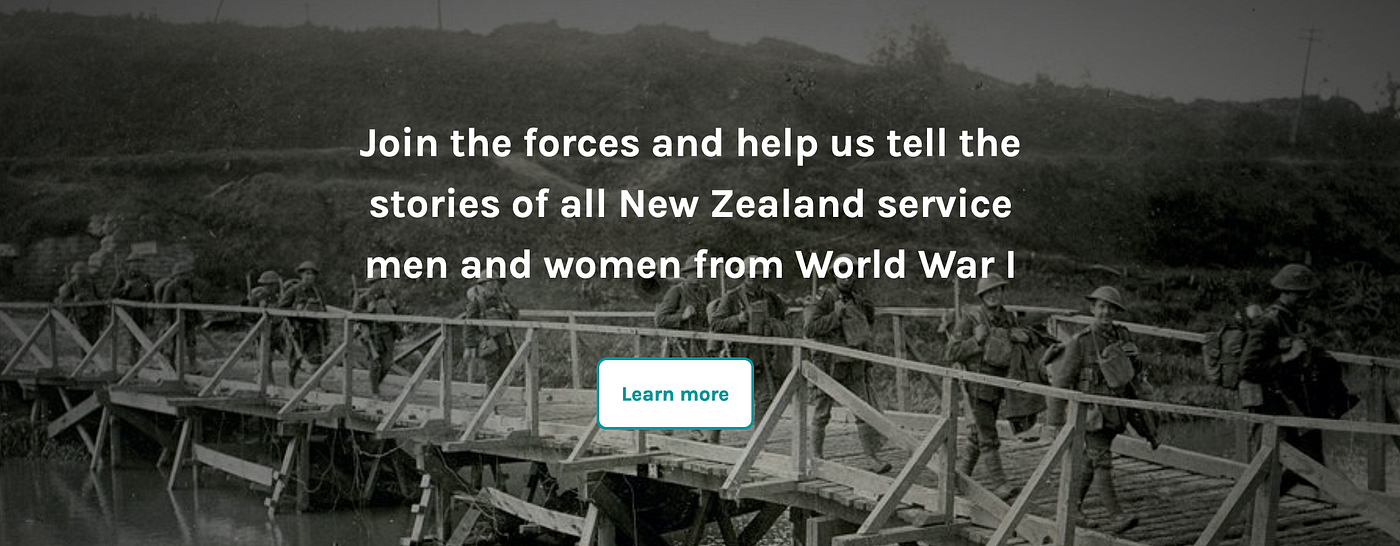
Measuring the ANZACS header on Zooniverse.
The project involves working with three different types of documents: attestation papers, history sheets, and death notifications. Each contributor may select if they would like to work with history sheets or attestation papers, then begins with a quick tutorial on classifying various document types, understanding any abbreviations, and transcribing each section. I elected to transcribe history sheets and after the tutorial was assigned a document to begin working on. The process was straightforward, requiring me to simply identify text within the various sections of the document and transcribe it. However, there were some challenges; many of the documents had entire sections obscured and at times deciphering the old and faded handwriting was incredibly difficult. In order to ensure accuracy, each document is reviewed at least three times.

Example of a history sheet from the workflow.
While my work on this project was fairly brief, given the limited amount of time I had, I did have the opportunity to classify and transcribe several documents. I worked on 11 different documents to varying degrees of success. Certain sections were easier to decipher than others, and certain sections were completely obscured or had been damaged or faded to the point of illegibility. I transcribed as much as I could, which was an insightful experience. It was like opening a time capsule and I was given the opportunity to make new discoveries. In many cases I was not able to learn the names of the soldiers whose files I encountered, but it felt sort of like I was bringing back their memory to honour it, and I feel like my small contribution was valuable.

A few of the documents I worked on.
Evan Roberts, one of the project leads emphasized that the collaborative efforts of the international community in annotating these documents could significantly expand research opportunities for professional historians, educational initiatives, and personal endeavours (2020, p. 263). The digitization of these materials and their accessibility to the public hold profound implications, not only for the study of New Zealand’s contributions to WWI, but also for understanding the broader experiences of English-speaking soldiers during WWI, as the majority of records from the USA were destroyed in a fire in 1973 (Roberts, 2020, p. 264). With assistance from the public, greater strides can be made in a shorter time frame, facilitating increased research and learning opportunities for the future.

Another history sheet with transcribed text.
This data has the potential to benefit historians, sociologists, genealogists, students, and other researchers interested in delving into the lives of the men and women who served in the ANZACS. The extensive information provided in these primary sources allows for the creation of individual soldier profiles, shedding light on their health, family connections, injuries, medals, deaths, and any other vital information collected for these documents. These documents are already being used as learning resources in classrooms worldwide, providing students access to primary sources they may not have had the opportunity to work with otherwise. Roberts suggests that engaging with primary sources “can rapidly develop students’ skills in independent analysis and original writing composition” (Roberts, 2020, p. 265). Given the nature of the information recorded in these documents, various types of projects can be undertaken. For example, since each soldier indicated a religion in their history sheets, these sources could be used to determine the religious demographics of the ANZACS. Similarly, since they contain some post-war information, they could shed light on the actions taken by soldiers in the aftermath of the war. Additionally, as the documents contain data related to sickness, injuries, and other medical information, they can be utilized to understand the physical impacts of the war on the soldiers’ bodies (Roberts, 2020, p. 265). Overall, this project holds the potential to uncover a significant amount of valuable information, opening up new and exciting avenues of research.

A filled in section of the transcription.
I have never worked on a project like this before and I was not aware that platforms such as Zooniverse exist, so I learned a lot from this experience. My background is in history so I was very interested in working on a project involving historic manuscripts and other types of documents. “Measuring the ANZACS” was actually not the first project I investigated on the site, as I was interested in some of the medieval manuscript projects. However, after spending an incredibly frustrating hour attempting to decipher a single medieval word, I decided to switch to a more modern project, which led me to “Measuring the ANZACS.” Employing Zooniverse for the project represents an exemplary strategy for engaging the public, providing them with an avenue to contribute meaningfully while simultaneously granting access to documents that might otherwise be beyond their reach. The workflows and detailed instructions make everything incredibly straightforward, which allows even complete beginners at transcription, such as myself, to contribute to the project.

Resources for transcription.
Accessing the documents pertaining to this project was an enriching experience. Prior to this endeavor, I possessed limited knowledge about the ANZACS, thus, engaging with the documents facilitated significant learning. Through the review and transcription of various history sheets, I gained insight into their military procedures. As someone with a keen interest in military history, this aspect of the project was particularly fascinating and contributed to my overall understanding of the subject matter. Overall, the opportunity to delve into the historical records of the ANZACS provided not only valuable insights but also deepened my appreciation for their contributions to history.
The transcription process proved to be remarkably insightful. While it initially required some time to confidently decipher the hundred-year-old handwriting, the resources and tips provided within the workflow proved invaluable. Moving forward, I anticipate utilizing these tools for any future work involving old handwriting, recognizing their efficacy in facilitating accurate transcription. This experience not only enhanced my transcription skills but also underscored the importance of accessible resources in historical research and preservation efforts.

Part of the classification process.
In the realm of museums and heritage, platforms like Zooniverse offer an exceptional avenue for community involvement. According to the Museums Association Manifesto (Anderson et al., 2021), museums should develop innovative engagement models that reflect the cultural context of their communities and nations, and that are bold and challenging. The manifesto emphasizes the value of community groups being fully engaged in all aspects of museum functions. Many museums are adopting this approach by engaging in outreach and collaboration with local communities to curate exhibits that authentically represent the people. By crowd-sourcing certain museum tasks, resources are freed up, allowing for more projects while directly involving the community.
On a more solemn note, Canada’s history is marred by indigenous mistreatment. In 2021, archaeologists began unearthing hundreds of unmarked graves near former residential school sites. Until 1998, indigenous children in Canada endured forced removal from their families and placement in residential schools, where they suffered abuse and cultural erasure (Cooper, 2023). Tragically, many children perished within the confines of the Canadian residential school system, with their families often left uninformed of their fate. In recent years, there has been a growing recognition of the need to confront Canada’s colonial legacy and address the ongoing impact of historical injustices on indigenous peoples. Truth and reconciliation efforts, such as the Truth and Reconciliation Commission of Canada, have sought to document the experiences of residential school survivors, acknowledge the harm inflicted, and chart a path forward towards healing and reconciliation (Government of Canada, 2022). The majority of records from these schools remain undisclosed due to the stigma surrounding them. Nonetheless, there exists potential for healing if a platform like Zooniverse were employed to make these records publicly accessible. Such an initiative could foster global community collaboration in transcribing these records, offering a path towards closure for the families of these children.
Overall, my experience with Zooniverse was deeply insightful. It emerged as a profoundly valuable platform for facilitating diverse forms of community-driven research. Encouraged by my positive encounter, I harbor hopes of witnessing its expanded utilization in the future and perhaps even embarking on my own project. Zooniverse’s capacity to engage and empower communities in meaningful research endeavours underscores its potential as a catalyst for innovative and inclusive scholarship.
Sources
Anderson, D., Cymru, A., Pering, D., Heal, S., and Somerset House. 2021. “A Manifesto for Museum Learning and Engagement.” Museums Association. Accessed December 29, 2023. https://www.museumsassociation.org/campaigns/learning-and-engagement/manifesto/#
Cooper, Anderson. “Canada’s Unmarked Graves: How Residential Schools Carried out ‘Cultural Genocide’ against Indigenous Children.” CBS News, February 2023. https://www.cbsnews.com/news/canada-residential-schools-unmarked-graves-indigenous-children-60-minutes-2023-02-12/.
Government of Canada; Crown-Indigenous Relations and Northern Affairs Canada. “Truth and Reconciliation Commission of Canada.” Government of Canada; Crown-Indigenous Relations and Northern Affairs Canada, September 29, 2022. https://www.rcaanc-cirnac.gc.ca/eng/1450124405592/1529106060525#chp2.
Roberts, Evan. 2020. Measuring the ANZACs: Exploring the Lives of World War I Soldiers in a Citizen Science Project, edited by Christopher J. Young, Michael Morrone, Thomas C. Wilson, and Emma Annette Wilson. Indiana University Press. doi:10.2307/j.ctv16rdcqh.39.
메타데이터
- post_id
- f40a2282cd17
- slug
- measuring-the-anzacs-a-crowd-sourced-history-project-f40a2282cd17
- url
- https://medium.com/@acaciamcclay_83127/measuring-the-anzacs-a-crowd-sourced-history-project-f40a2282cd17
- canonical_url
- https://medium.com/@acaciamcclay_83127/measuring-the-anzacs-a-crowd-sourced-history-project-f40a2282cd17
- author_url
- https://medium.com/@acaciamcclay_83127
- status
- ok
- fetched_at
- 2026-07-19 04:09:58