The Real Differences Between FDM, SLA, and SLS 3D Printing (Explained Simply)
Each technology has its strengths. Here’s how to pick the right one for what you’re actually trying to build.
The Real Differences Between FDM, SLA, and SLS 3D Printing (Explained Simply)
Each technology has its strengths. Here’s how to pick the right one for what you’re actually trying to build.
FDM, SLA, and SLS
You’re looking at 3D printing options, and you see three acronyms flying around: FDM, SLA, and SLS. They all sound fancy, but they work completely differently. And that difference actually matters for what you’re trying to build.
FDM: The affordable starter tech
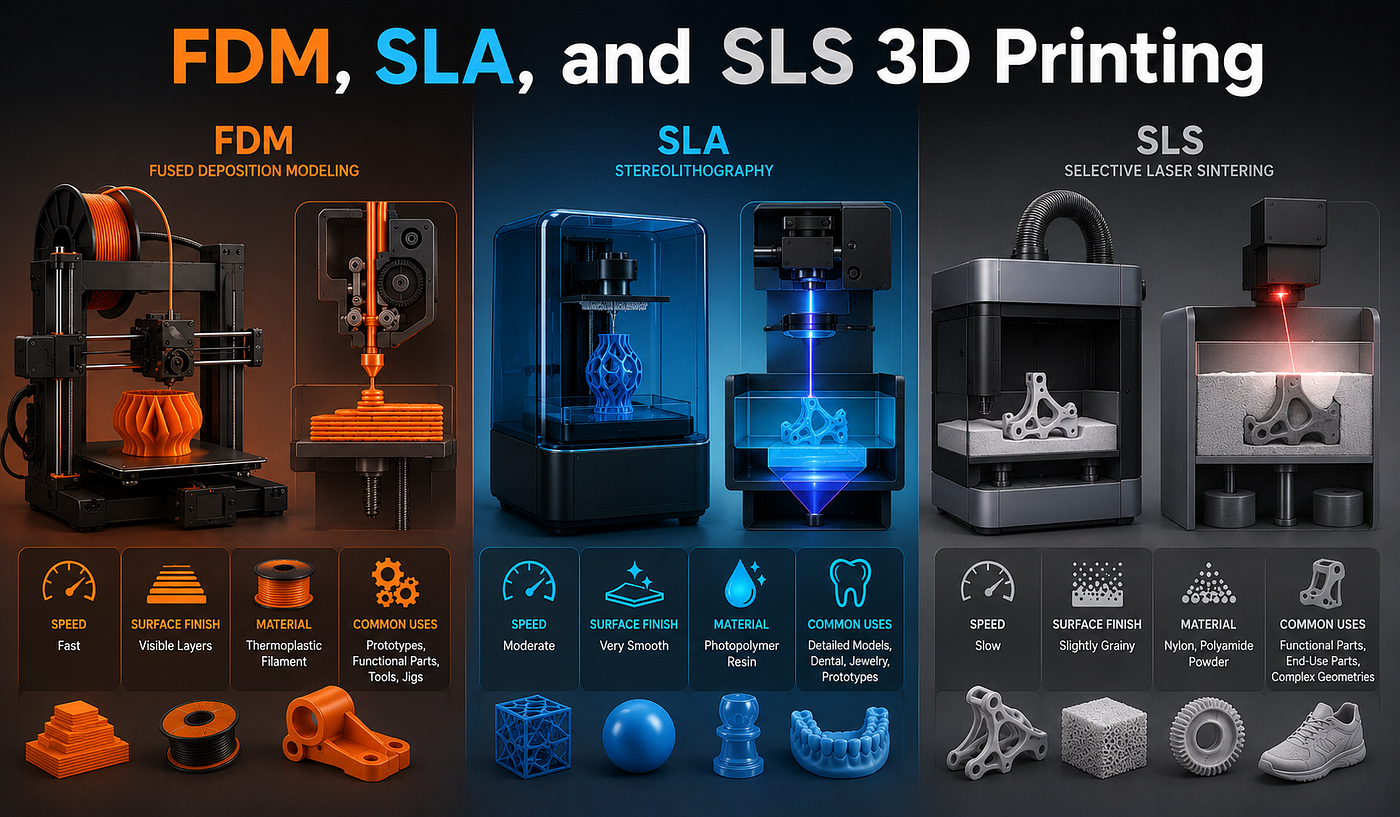
In FDM, the plastic filament is heated to deposit it in layers. It can be compared to the glue gun, with the only difference that it knows where to put the plastic. The process is cost-effective and fast and is best used in the production of models that don’t necessarily need to be of high quality. The drawback is that the models are rough and fragile.
When to use it? Quick iterations, cost matters, and aesthetics don’t need to be flawless.
SLA: The detail champion
SLA uses a laser to cure liquid resin. The detail you get is genuinely impressive. Smooth finishes. Tiny features that FDM can’t touch. But here’s the catch: SLA parts are brittle. They’ll crack under stress. So it’s perfect for display models, dental work, or anything where looks beat toughness.
When to use it? You need gorgeous detail and don’t need the part to survive impact testing.
SLS: The strongest performer
SLS lasers fuse nylon powder into solid parts. No support structures needed. The parts are genuinely strong, bend without breaking, and handle real stress testing. But it’s expensive and slower than the other two. And the surface finish needs finishing work.
When to use it? You need a part that actually performs under real conditions. Functional prototypes. End-use parts. Aerospace and automotive stuff.
So which one do you actually pick?
FDM if budget is tight and you’re iterating fast. SLA if detail is everything. SLS, if your part needs to work. At **Design Roots**, we help teams determine which technology best matches their actual needs. Your project determines the best choice, not the other way around.
메타데이터
- post_id
- f42fb5bdf665
- slug
- the-real-differences-between-fdm-sla-and-sls-3d-printing-explained-simply-f42fb5bdf665
- url
- https://medium.com/@designroots/the-real-differences-between-fdm-sla-and-sls-3d-printing-explained-simply-f42fb5bdf665
- canonical_url
- https://medium.com/@designroots/the-real-differences-between-fdm-sla-and-sls-3d-printing-explained-simply-f42fb5bdf665
- author_url
- https://medium.com/@designroots
- status
- ok
- fetched_at
- 2026-07-13 06:23:13