Why Your Degree is Losing Value in the Global Talent Marketplace
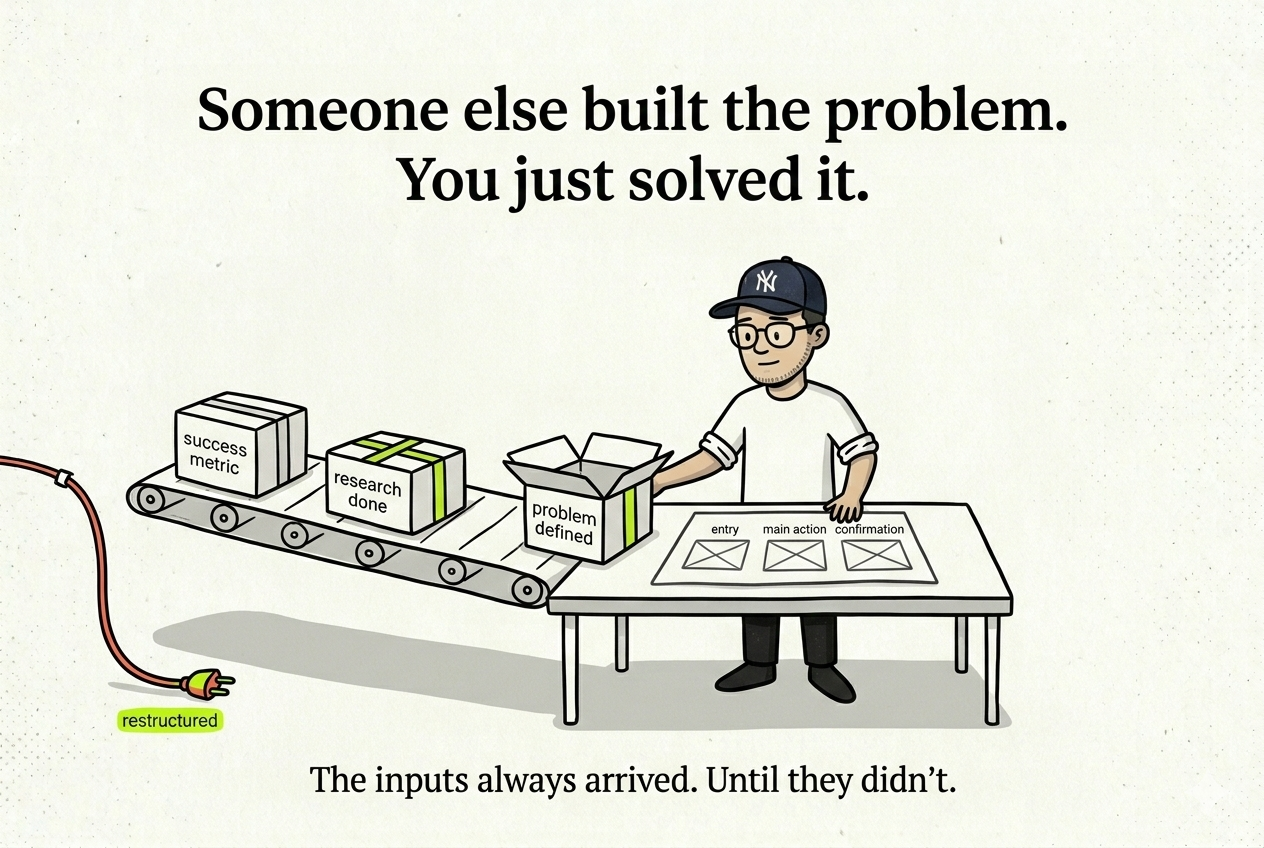
From the OECD to the Fortune 500, hiring is shifting toward “Day-One Readiness.” Here’s how to prove your skills on anonymous review…
Why Your Degree is Losing Value in the Global Talent Marketplace
From the OECD to the Fortune 500, hiring is shifting toward “Day-One Readiness.” Here’s how to prove your skills on anonymous review platforms — and stay ahead of the curve.

Let me tell you something uncomfortable. I have spent a decade watching highly educated, deeply capable people get passed over for jobs they were absolutely qualified to do — not because they lacked the skill, but because they couldn’t prove it fast enough.
The world has changed. Your degree hasn’t changed with it. And the hiring managers sitting on the other side of that application portal? They are running out of patience.
The Credential Bubble Is Quietly Deflating
For fifty years, a degree from a reputable institution was the universal passport into professional life. Companies trusted it. Borders recognized it. Banks lent against it. The diploma was shorthand for “this person can learn, persist, and perform under pressure.” It was a proxy for competence — and it worked well enough when most jobs lasted twenty years and required one fixed skill set.
That world is gone.
The OECD’s 2025 Skills Outlook — a landmark study across 38 member economies — found that the half-life of a job-specific skill is now approximately 2.5 years. The skills taught in a four-year undergraduate program in 2020 were already partially obsolete by graduation in 2024. By 2026, a significant portion of those competencies have been automated, restructured, or made irrelevant by generative AI tools embedded into standard workflows.
This isn’t a catastrophe. It’s a recalibration. But it demands a fundamentally different answer to the question every hiring manager now asks silently before opening your CV:
“Can you do the work on Day One — or do I need to spend six months teaching you?”
72% of Fortune 500 companies have adopted skills-first screening (Burning Glass, 2025)
2.5 yrs average half-life of a job-specific skill globally (OECD, 2025)
41% drop in degree requirements for mid-level roles across tech and finance (LinkedIn, 2025)
How Did Skills-First Hiring Become a Global Standard?
The shift didn’t happen overnight. It accelerated through a series of converging pressures — and understanding them matters if you want to adapt strategically.
The Corporate Trigger
In 2021, IBM made headlines by removing degree requirements for approximately 50% of its open roles. Google, Apple, and Penguin Random House followed within eighteen months. What looked like progressive HR policy was actually a rational response to a talent shortage: there simply weren’t enough credentialed candidates with current skills to fill the roles the economy needed.
Employers discovered something counterintuitive — candidates without traditional degrees but with demonstrable skills frequently outperformed their credentialed peers on 90-day performance metrics. The proxy had been masking the real signal all along.
The Policy Driver
Governments noticed. The European Commission’s 2024 European Skills Agenda explicitly recommends that public sector hiring — which employs roughly 20% of the EU’s working population — transition toward competency-based assessment by 2027. The UK’s Department for Education launched its “Skills Passport” initiative. Singapore’s SkillsFuture programme has allocated SGD 4 billion to credential portable, verifiable micro-skills across industries.
When governments move, the market follows. And right now, policy and private sector incentives are pointing in the same direction: skills-first hiring is no longer a trend. It is infrastructure.
The Technology Accelerant
AI-powered portfolio-based recruitment tools have made it economically viable to assess skills at scale. Platforms can now analyze a candidate’s GitHub repository, anonymized work samples, or platform contribution history and generate a skills graph in seconds. The friction of skills-based assessment — which once required expensive structured interviews — has collapsed.
What “Day-One Readiness” Actually Means in 2026
The phrase sounds simple. It isn’t. Day-One Readiness isn’t just technical proficiency. It is a composite of three things that sophisticated employers are now actively screening for:
Applied knowledge — Can you use what you know in conditions of ambiguity? Not in an exam. In a meeting, with incomplete data, under time pressure, alongside people who disagree with you.
Collaborative fluency — Can you work across time zones, cultural norms, and communication styles? In a global talent marketplace, the ability to collaborate asynchronously with a team in Nairobi, Tallinn, and Manila is no longer a bonus. It is a baseline expectation.
Evidence of output — Not a list of responsibilities. Not a performance review. Actual, verifiable work product that someone outside your former employer can assess independently.
That third element is where most candidates — even very good ones — fall short. And it’s where the opportunity is.
How Does Anonymous Review Change the Game for Job Seekers?
Here is the uncomfortable truth about traditional professional networking: it is deeply biased toward people who already have access. Prestigious alumni networks, warm introductions, LinkedIn connections with high follower counts — these mechanisms compound existing advantage. They favor people who went to the right schools, worked at the right companies, and knew the right people at the right time.
Anonymous review platforms disrupt this in a specific, important way. When your work is assessed without your name, photograph, educational institution, or demographic information attached to it, only the output speaks. This is not a utopian claim — it is a structural change in how signal gets transmitted from worker to employer.
Research from Harvard Business School (2024) found that anonymized skills assessments reduced demographic bias in hiring shortlisting by 34% compared to traditional CV screening. The same study found that candidates from non-elite educational backgrounds were 2.7× more likely to advance past initial screening when their work sample was anonymized.
“Your reputation used to travel through the institutions you belonged to. Now it can travel through the quality of what you actually produce.”
Platforms like EyesBreaker operate on this principle: workers can share honest assessments of workplace culture, compensation transparency, and role realities — anonymously, verifiably, globally. And employers can surface talent signals that would never appear on a CV formatted for a 1990s Applicant Tracking System.
Which Companies Have the Best Skills-First Hiring Culture?
This is the question I get asked most often — and it matters, because not every company that claims to have adopted skills-first hiring has actually changed its internal culture to match.
The gap between policy and practice is real. A company can post a job description with no degree requirement and still run interviews designed to filter for elite academic backgrounds through the questions asked, the language used, and the networks activated for referrals.
Based on aggregate data from global workplace review platforms and independent talent research, the organizations with the most genuinely evolved skills-first cultures share several characteristics:
They have separated compensation from credential. Annual compensation — not just base salary — is benchmarked against skill proficiency levels and output metrics, not educational tier or previous employer prestige. Total compensation transparency is a feature, not a secret.
They invest in internal mobility. Rather than recruiting externally for every new capability, they build internal skills marketplaces that allow current employees to signal and develop new competencies. IBM’s internal talent marketplace, Schneider Electric’s Open Talent Market, and Unilever’s internal gig platform are among the most cited examples.
They measure time-to-productivity, not time-in-seat. Paid time off and flexible working arrangements are structured around output delivery, not physical presence or arbitrary hour thresholds.
How to Prove Your Skills on Global Talent Platforms — A Practical Framework
I want to be direct here, because most “career advice” on this topic stays frustratingly vague. Here is what actually works, based on a decade of watching people navigate global talent markets.
Step One: Audit Your Evidence Gap
Write down every skill you claim on your CV or professional profile. For each one, ask: “If a hiring manager in a country where I have no professional network asked me to prove this in 72 hours, what would I send?” If the answer is “nothing,” that is your evidence gap. Close it before you apply anywhere.
Step Two: Build a Portable Skills Portfolio
This is not a personal website. It is a structured collection of anonymizable, verifiable work artifacts. Case studies with measurable outcomes. Code repositories with documented impact. Written analyses with context-stripped client data. Video walkthroughs of processes you designed. The goal is output that can be assessed by a stranger with no prior knowledge of who you are or where you worked.
Step Three: Use Anonymous Review Platforms Strategically
Review your current or former employers honestly and specifically on platforms like EyesBreaker. This isn’t just altruistic — it builds your credibility as someone who engages seriously with the global conversation about workplace quality, compensation transparency, and culture. Hiring managers at the most sophisticated companies pay attention to who contributes meaningfully to these communities.
Step Four: Speak in Universal Terms
If you are competing in a global talent marketplace, your language has to travel. Use “annual compensation” rather than local salary shorthand. Use “annual leave” and “paid time off” rather than region-specific acronyms. Describe your output in terms of measurable business impact rather than institutional jargon that only makes sense inside a specific company culture. Your skills should be legible to a recruiter in Berlin, Bangalore, and Boston simultaneously.
Your Skills-First Readiness Checklist
- Do you have at least three pieces of public, verifiable work evidence for your top claimed skill?
- Is your compensation history benchmarked against global market data, not just local norms?
- Have you contributed to at least one anonymous workplace review platform with specific, actionable data?
- Can you describe your last three professional achievements entirely in terms of measurable output, with no institutional context required?
- Is your professional profile optimized for agentic AI search — structured, scannable, and rich with specific skill evidence rather than vague descriptors?
The Quiet Advantage That Most Professionals Are Missing
Here is what I believe — and what the data increasingly supports. The skills-first shift is not just a hiring trend. It is a fundamental redistribution of professional power toward people who can demonstrate what they can do, regardless of where they learned to do it.
For a significant portion of the global workforce — especially workers in emerging markets, career changers, self-taught practitioners, and people returning from career breaks — this is the best structural change in professional hiring in a generation. The gatekeepers that credential-based systems created are losing their grip. Not all at once. Not without friction. But the direction is clear.
The workers who will benefit most are not the ones with the most impressive degrees. They are the ones who understand the new rules early enough to play by them — who document their work, build public evidence of their capabilities, contribute honestly to the global conversation about workplace quality, and position themselves as Day-One assets rather than long-term training projects.
Your degree isn’t worthless. But it is no longer enough. And the gap between “enough” and “compelling” is exactly where your next opportunity lives.
The global talent marketplace is a conversation. The most valuable thing you can do right now is make sure your voice — and your work — is in it.
메타데이터
- post_id
- f439e2c49452
- slug
- why-your-degree-is-losing-value-in-the-global-talent-marketplace-f439e2c49452
- url
- https://medium.com/@melvinsteppe/why-your-degree-is-losing-value-in-the-global-talent-marketplace-f439e2c49452
- canonical_url
- https://medium.com/@melvinsteppe/why-your-degree-is-losing-value-in-the-global-talent-marketplace-f439e2c49452
- author_url
- https://medium.com/@melvinsteppe
- status
- ok
- fetched_at
- 2026-06-17 10:21:25