The Fed’s Meeting Minutes Reveal Deep Divisions
Uncover the hidden debates shaping America’s monetary future and your financial stability.
The Fed’s Meeting Minutes Reveal Deep Divisions
Uncover the hidden debates shaping America’s monetary future and your financial stability.
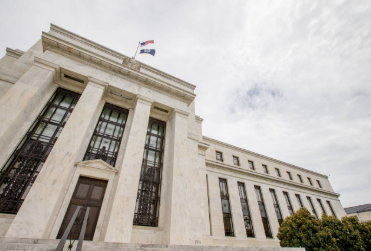
Image used from wsj
I’ve been going through the Federal Reserve’s latest meeting minutes since they dropped this afternoon, and I want to share what I actually found by reading the source document directly rather than waiting to see how various media outlets decide to spin it. Because honestly, the raw material here is more interesting than any single headline can capture.
The Fed is clearly divided, the language they used is carefully hedged in ways that matter, and there are a few things buried in these pages that I think deserve a lot more attention than they’re currently getting. So let me walk you through the highlights in plain English and tell you what I honestly make of it all.
The Federal Reserve Released Their Minutes From Their Last Meeting
Before we get into the substance, a quick note on what these minutes actually are and why they matter. The Federal Reserve holds regular meetings of its policy-setting committee, and a few weeks after each meeting, they release a detailed summary of what was discussed. This isn’t just a record of decisions made. It’s a window into the internal debate, the scenarios being considered, and the factors driving the thinking of the people who control the most powerful monetary lever in the global economy.
The meeting in question concluded on June 17th, and these minutes were released on July 8th. The document runs 15 pages and covers everything from inflation expectations to AI’s role in the economy to what the Fed actually voted to do about interest rates. I’m going to take you through the most significant parts in the order they appear, because I think the sequence itself tells a coherent story.
The first thing that jumped out at me: the Fed’s own internal survey of participants showed the median expectation is no changes to interest rates for the remainder of 2026, with rate cuts not anticipated until the second quarter of 2027. That’s the baseline the Fed itself is working from internally. Keep that in mind as we work through everything else.
What the Minutes Say About Treasury Demand (And Why It’s a Big Deal)
This is one of those details that gets buried in financial reporting but that I think is genuinely significant. The minutes contained a notable comment about who is now buying US Treasury bonds and how their behavior is changing.
The document specifically noted that the ownership composition of Treasury securities has shifted over the past several years, moving away from what it calls “relatively price-insensitive official sector holders” toward “more price-sensitive private investors.” What this means in plain language is that the buyers who used to just absorb US government debt without much concern about the price, mainly foreign central banks and sovereign wealth funds that held Treasuries for reserve currency reasons, have become a smaller share of the market. The buyers who are now picking up the slack are private investors who will push back, demand higher yields, or simply walk away if the price doesn’t work for them.
This is actually a really important structural observation. Historically, when geopolitical tensions rose, Treasury bonds would rally as investors fled to safety. That’s the classic “safe haven” dynamic. But when the Iran war broke out, the opposite happened. Treasury prices fell and yields went up. That’s not supposed to happen in a crisis. The fact that it did suggests that the old assumption about Treasuries being the automatic destination for scared money is becoming less reliable, at least at the margin. And the Fed is clearly aware of this and taking it seriously enough to put it in their official meeting summary.
Inflation Is Higher Than a Year Ago. Here’s What They Said About Why.
The minutes are direct on this: both total and core inflation are higher than they were a year ago. The Fed attributes this to a combination of factors including tariffs, higher energy costs from the Strait of Hormuz disruptions, and the surge in demand related to AI infrastructure buildouts.
I want to be honest about one thing I noticed in this list. The minutes don’t mention money printing as a contributing factor. They don’t reference the expansion of the Fed’s own balance sheet, which as I covered in a previous piece has been growing at over 6% annually this year. Whether that omission is an oversight or a deliberate choice, I’ll leave for you to decide. But it’s a notable gap when you’re trying to give a complete picture of what’s driving prices higher.
On the credit conditions front, the minutes drew a clear distinction that I think matters for a lot of people reading this. Financing conditions are described as “generally accommodative” for large businesses and municipalities. For small businesses and households, particularly those with lower credit scores, conditions remain “somewhat restrictive.” So if you’re a big corporation looking to borrow, the credit environment is reasonably friendly. If you’re a small business owner or an ordinary household trying to get a loan, the door is considerably narrower. That gap has real-world consequences that don’t get discussed enough.
AI Is Now Part of the Official Fed Conversation (In Two Different Ways)
This part of the minutes genuinely surprised me with how substantive it was. Artificial intelligence came up in two distinct and somewhat contradictory ways in the Fed’s discussion, and I think both deserve attention.
On the inflationary side, the minutes note that “the ongoing strong demand for AI infrastructure would likely sustain upward pressure on prices for technology products and electricity.” The buildout of AI data centers requires enormous amounts of power and specialized hardware. That demand is bidding up electricity prices and pushing up costs for tech-related capital goods, contributing to the inflation picture the Fed is trying to manage. Participants noted that business investment strength was heavily concentrated in AI-related expenditures and showed “no signs of slowing” as companies kept announcing capital expenditure plans that exceeded earlier expectations.
On the deflationary side, some participants argued that productivity gains from AI adoption would “eventually reduce production costs and increase aggregate supply” which should put downward pressure on inflation over time. Fed Chair Warsh has stated publicly that he believes AI will ultimately be disinflationary for exactly this reason. The argument is essentially that once AI is widely deployed and actually changes how work gets done, it should make production cheaper and more efficient, which pulls prices down.
Both of these things can be true simultaneously, and I think that’s actually the most honest way to read it. AI is currently inflationary because building it out requires enormous investment in power and hardware. It may eventually become deflationary once deployed at scale. The question is timing, and the Fed acknowledged that the productivity benefit “would likely take time to materialize.” How much time? Nobody knows, and the Fed didn’t speculate.
What’s interesting is that this connects directly to the broader question of whether America can grow its way out of its debt and fiscal problems. If AI delivers genuine productivity gains at national scale, the debt-to-GDP ratio becomes more manageable even without dramatic spending cuts or tax increases. That’s the optimistic scenario the government seems to be betting on. Whether it materializes is genuinely uncertain.
What the Fed Actually Voted to Do About Interest Rates
Let me be clear about what happened at the June meeting, because I want to separate the decision from the debate that surrounded it. All participants voted unanimously to keep interest rates unchanged at the current range of 3.5% to 3.75%, where they’ve been for all of 2026. Nobody pushed to change rates at this meeting.
But the internal discussion was considerably less tidy than that unanimous vote might suggest. The minutes reveal that “a few participants” specifically commented that there was actually a case for raising interest rates at this meeting. They ultimately supported holding, but the fact that rate hike arguments were being made out loud inside the committee is itself significant.
The broader interest rate debate was laid out in a kind of scenario analysis that I found revealing for what it tells you about how the Fed is thinking about the range of possible futures. If inflation comes down, almost all participants agreed it would likely be appropriate to maintain or eventually lower rates. That scenario had pretty clear implications.
The other scenario, where inflation stays elevated, was worded considerably more carefully and with much more wiggle room. If the labor market remains stable and inflation stays high, the minutes say “policy firming would likely be warranted.” But “policy firming” is a phrase that could mean holding rates where they are for longer, slowing down money creation, or actually raising rates. The deliberate vagueness there tells me the committee wasn’t ready to commit to a specific path if inflation proves stubborn.
There’s also a quirk in this document worth mentioning. The Fed simultaneously quoted two “many participants” groups with contradictory views on where rates should be at year end. One group said appropriate rates would be “within or slightly below” the current range. Another group said rates should be “above” the current range. Both groups were described as “many participants.” I don’t know exactly how you square those two statements, but it does tell you the committee is genuinely split rather than quietly converging on a consensus.

Image used from statista
How Market Expectations Shifted After the Minutes
Let me give you the concrete market reaction numbers, because I think they tell the story more efficiently than any commentary can.
Before the minutes were released, there was a 32.6% probability being priced into market odds of the Fed raising interest rates at the July 29th meeting. After the minutes were released, that dropped to 30.5%. A meaningful shift, but not a dramatic one. The minutes didn’t dramatically change the overall picture.
On the question of where rates end up by year end, the numbers barely moved at all. Before the minutes, there was an 85.8% probability that rates would be higher at year end than today. After the minutes, that moved to 85.1%. The market has already largely priced in higher rates by year end regardless of what happens in July.
What I find significant about this is that even after a meeting summary that described unanimous support for holding rates and an internal baseline of no changes for the rest of 2026, the market is still pricing in an 85% probability of rates being higher at year end. That tells you how much upward pressure on inflation the market is expecting to persist, and how little credibility the “no hike” scenario currently has with investors despite it being the Fed’s official internal baseline.
The New Communication Approach: The Fed Is Telling You Less on Purpose
One more thing that I think deserves attention before I wrap up. Under Chairman Warsh, the Fed is deliberately choosing to communicate less about its future intentions. The post-meeting statement that came out of the June meeting was about one-third the size of a typical release. Warsh has been explicit about wanting to move away from detailed forward guidance.
The minutes confirm that participants broadly supported this direction. A “majority of participants” noted they saw advantages in shortening the statement. A “number of participants” said it was a good time to consider “significant changes” to how the post-meeting statement is structured.
What this means in practice is that investors, businesses, and ordinary people making financial decisions based on Fed signals are going to get fewer clues about future moves. One major investment firm noted that “the Fed is choosing to tell markets less.” That shift in communication style has real implications for market volatility, because when the Fed is less transparent about its intentions, markets can react more sharply to incoming data since there’s less guidance to anchor expectations against.
My Honest Take on All of This
Let me tell you where I actually land after going through all 15 pages of this document directly.
The Fed is genuinely uncertain about what comes next, and I think the minutes reflect that honestly rather than papering over disagreement with diplomatic language. Inflation is elevated, the causes are real and varied, and the path back down is not obvious or guaranteed.
The AI story is simultaneously a source of inflationary pressure right now and a potential deflationary force later. Treasury demand dynamics have shifted in ways that create real long-term risks for government borrowing costs. And the internal split between participants who think rates should stay flat and those who think they need to go higher reflects genuine uncertainty about where the economy is headed.
What I keep coming back to is the gap between the Fed’s internal baseline, no changes through 2026, and the market’s pricing, 85% chance of higher rates by year end. Something has to give there, and which side turns out to be right will depend almost entirely on what happens to inflation in the next few months.
Energy prices coming down as the Iran situation evolves could pull inflation lower and validate the Fed’s hold-steady stance. But if supply disruptions persist or money supply growth continues at its current pace, the pressure for rate hikes will be very hard to resist regardless of what the minutes suggest.
What do you think? Does the Fed feel to you like it has a clear grip on where this is going, or does the mixed messaging in these minutes give you the same sense of genuine uncertainty that I’m reading into them? I’d love to hear your take in the comments.
Reference
메타데이터
- post_id
- f44ef834c06c
- slug
- the-feds-meeting-minutes-reveal-deep-divisions-f44ef834c06c
- url
- https://medium.com/geopolitics-beyond/the-feds-meeting-minutes-reveal-deep-divisions-f44ef834c06c
- canonical_url
- https://medium.com/geopolitics-beyond/the-feds-meeting-minutes-reveal-deep-divisions-f44ef834c06c
- author_url
- https://medium.com/@quotesnjokes07
- status
- ok
- fetched_at
- 2026-07-14 08:03:07