How I Successfully Implemented My Final Year Project as an Engineering Student
My Engineering Journey and Crucial Considerations for a Successful Project
Personal Opinion
How I Successfully Implemented My Final Year Project as an Engineering Student
My Engineering Journey and Crucial Considerations for a Successful Project
Photo by gibblesmash asdf on Unsplash
Are you about to start your final year and need some guidance on where to begin and how to excel? In this article, I will disclose what to expect from your final year project (FYP) as an engineering student. I’ll also explain my strategy for completing all the required tasks, becoming a nominee for the best FYP, and writing IEEE-based paper.
The Final Year Project (FYP): The Capstone of Your Degree
The Final Year Project (FYP) is the capstone of the 4-year educational program, requiring you to explore the practical aspects of the theoretical knowledge we’ve learned in classes. As students, we are tasked with conducting intensive research and acquiring additional skill sets to meet the FYP requirements.
Introduction: The Myth of the Unique Project
The capstone project of a degree is the ultimate test of using academic knowledge to solve practical problems. The often-held myth that securing a gold medal requires a unique project is untrue. Take a project, conduct deep research, execute it with full focus, and the outcomes will be what everyone dreams of.
Our Journey: From Concept to Execution
We grouped together as a team, driven by our mutual interest in exploring the practical applications of artificial intelligence, particularly its programming aspects. This interest was fueled by our challenging experiences with mechanical bots during our junior year as participants in NERC. Integrating those bots was a painful process, so this time, we decided to delve into the highs and lows of software, focusing on the specific application of artificial intelligence.
After teaming up and distributing work areas among ourselves, we approached research supervisors with expertise in our fields of interest. Two project ideas fascinated us: a prosthetic arm and a perception model for autonomous vehicles. We understood that both held significant market value and were supervised by excellent professors. However, given our inclination toward autonomous vehicles, we chose the latter.
In simple terms, our objective was to research and implement a Multi-Modal Sensor Fusion model for autonomous vehicles. We combined the output results of LIDAR and stereo cameras to create a more accurate perception module for self-driving cars. We employed an Extended Kalman Filter to refine the calibrated results obtained from the two different sensors.
FYP Dos and Don’ts
Do:
- Research: Conduct a thorough literature review of previous work.
- Team Interest & Supervisor Expertise: Align the project with both the team’s and the supervisor’s areas of interest.
- Estimated Budget: Plan your finances carefully.
- Scope & Market Value: Choose a project with significant market relevance.
- Material Accessibility: Ensure easy access to project materials from the market.
Don’t:
- Innovation for the Sake of It: Don’t chase innovation just to be unique. Focus on execution and outcomes.
Planning: The Key to Success
Planning is critical. For the successful implementation of the FYP, you need to plan the division of work, project deliverables, possible execution methods, and timelines to implement the project in multiple stages. My group was considerate of each individual’s time, catering to the constraints of day scholars and their limited availability after university hours by holding Zoom meetings in addition to face-to-face conversations. Keeping everyone on the same page was crucial, and our group leader meticulously ensured this.
Our meetings with supervisors were well-prepared, from deciding deliverables to approving next-day presentations at all stages. We remained in close contact with our supervisor, seeking timely consultation.
Regarding the procurement of hardware related to our project, we made a list of the required equipment after discussions with our supervisor and conducted thorough research on availability. We were fortunate to obtain major equipment like LIDAR, stereo cameras, and a protocar from our department, which expedited our work.
Implementation: Turning Plans into Reality
Final Year Projects encompass various aspects, from planning to researching and showcasing results.
Achieving Deliverables:
After finalizing our project title, we held an in-depth discussion with our FYP supervisor to outline the required deliverables. We divided the work among team members. My primary responsibilities included conducting literature reviews, thesis writing, and preparing the conference paper template.
Understanding the Deliverables:
- Sensor Calibration: Firstly, we calibrated sensors and acquired data. This involved generating depth maps from stereo cameras and LiDAR (Light Detection and Ranging), using Extended Kalman Filter techniques for more accurate sensor fusion.
- Data Integration: We integrated the collected data into the Jetson Nano embedded platform, and complied results on paper to write a comprehensive thesis.
Research and Exploration:
- We explored and employed previously used techniques to achieve similar results, focusing on the Jetson Nano platform for hardware integration.
- Our research found that stereo cameras are optimal for close-range depth mapping, while LIDAR performs better in long-range and adverse weather conditions.
- We developed a multi-modal fusion algorithm to create a precise depth map by combining data from both sensors.
Step-by-Step Process:
- Sensor Mounting and Data Acquisition: We mounted the sensors and collected data — point clouds from LIDAR and 2D images from the stereo camera.
- Sensor Calibration: Than, we calibrated both sensors to generate depth maps at the same coordinates.
- Extended Kalman Filter: Later, applied the Extended Kalman Filter to improve the accuracy of our future predictions.
- Jetson Nano Integration: Our data and code were transferred to the Jetson Nano platform. This step required setting up the necessary files, generating code, and optimizing the results for better accuracy.
- Results Documentation: Both qualitative and quantitative results were documented in our thesis and included in our IEEE conference paper.
Thesis and IEEE Paper
We started by writing our thesis, which involved an in-depth exploration of our research topic, complete with extensive data analysis and detailed findings. Once the thesis was complete, we faced the task of condensing this lengthy document into a more concise IEEE paper. We employed the Overleaf platform, an online LaTeX editor that allowed us to work together in real time, making it easier to ensure our paper adhered to IEEE’s formatting guidelines and to finalize a polished and professional document.
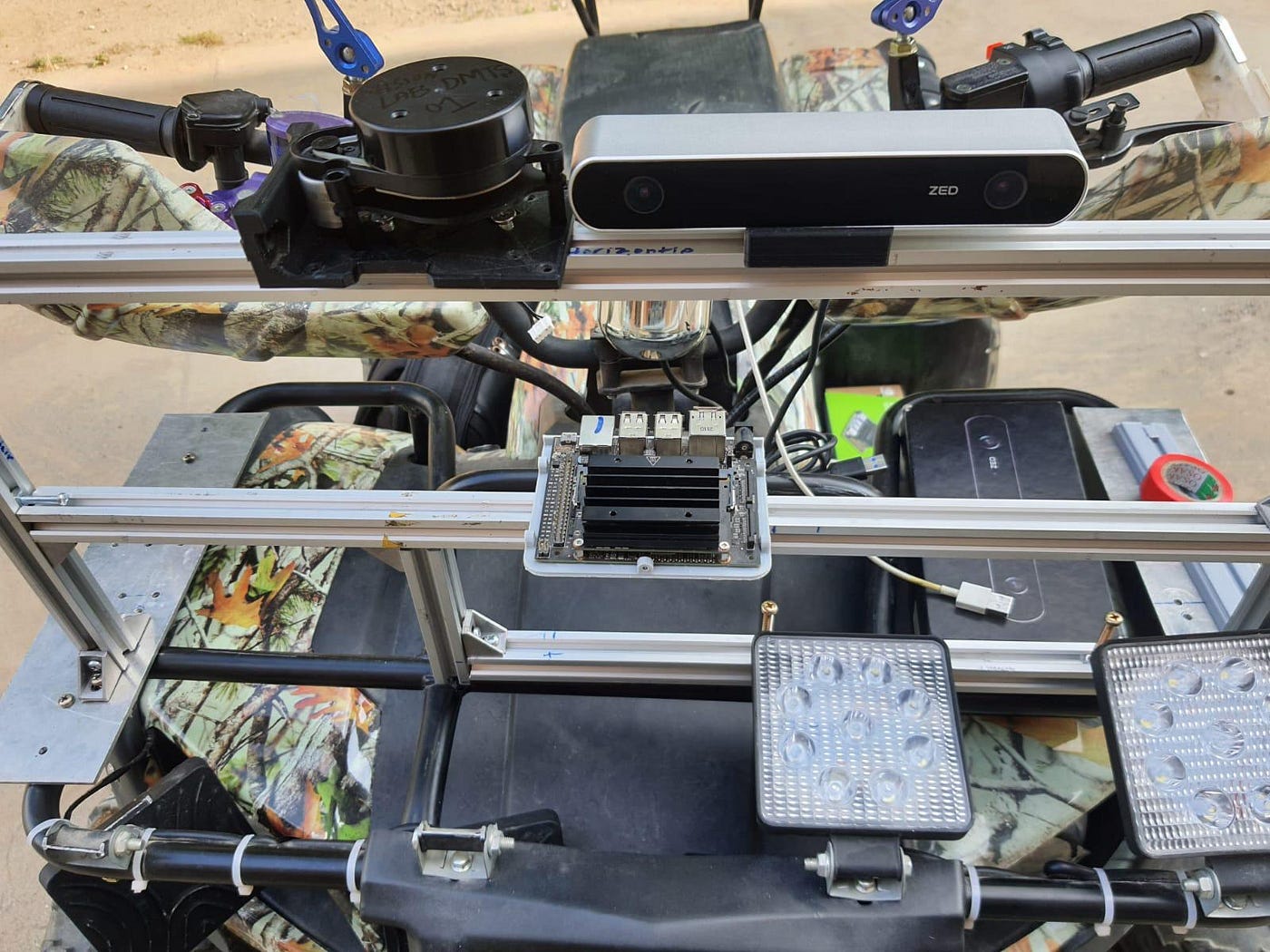
2D Lidar, Stereo Camera and Jetson Nano embedded on prototype automobile
Achievements Beyond Expectations
- Grade A: All team members received an A in our FYP.
- Nomination for Gold Medal: Our project was among the top 4 nominated for the gold medal.
- Secured Funding: We secured Eighty Thousand Rupees in funding from the National Grassroots ICT Research Initiative (NGRI) program
- Career & Scholarship Opportunities: The project provided valuable experience for applying jobs to automation industries and securing international scholarships.
- Effective Team Development: Our group coordination was excellent, and I learned immensely from my team members.

Final year Project
메타데이터
- post_id
- f455b7ddcd0d
- slug
- fyp-my-engineering-journey-and-crucial-considerations-for-a-successful-project-f455b7ddcd0d
- url
- https://medium.com/robolinks/fyp-my-engineering-journey-and-crucial-considerations-for-a-successful-project-f455b7ddcd0d
- canonical_url
- https://medium.com/robolinks/fyp-my-engineering-journey-and-crucial-considerations-for-a-successful-project-f455b7ddcd0d
- author_url
- https://medium.com/@hudamajid
- status
- ok
- fetched_at
- 2026-06-21 07:44:09





