Inside Kerala’s Coir Manufacturing Industry
Kerala is often celebrated for its lush coconut groves, serene backwaters, and rich cultural heritage. However, one of its most remarkable…
Inside Kerala’s Coir Manufacturing Industry
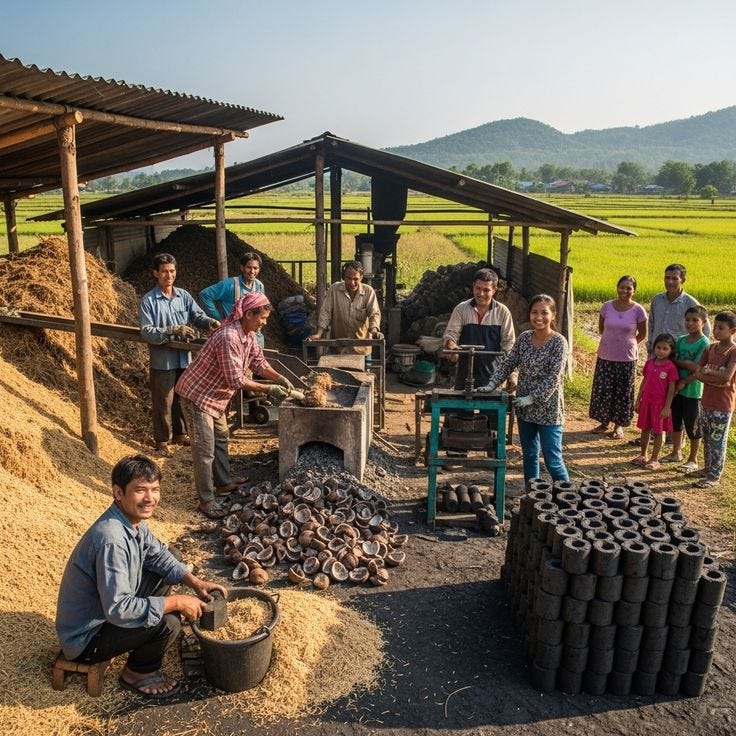
Kerala is often celebrated for its lush coconut groves, serene backwaters, and rich cultural heritage. However, one of its most remarkable contributions to India’s economy lies in an industry that transforms what was once considered agricultural waste into valuable products. The coir manufacturing industry has been an integral part of Kerala’s identity for centuries, providing employment to thousands of artisans while promoting sustainable production practices.
Made from the fibrous husk of coconuts, coir is a natural, biodegradable material used to create a wide range of products, including ropes, mats, carpets, brushes, mattresses, and erosion control solutions. Today, Kerala continues to be one of the world’s leading producers of high-quality coir products, blending traditional craftsmanship with modern manufacturing techniques.
From Coconut Husk to Valuable Products

The journey of coir begins after coconuts are harvested for their water, milk, or oil. Instead of discarding the husk, manufacturers collect it and process it into durable natural fibers. Traditionally, the husks are soaked in water for several months to soften them before the fibers are separated. Modern factories now use mechanical methods that significantly reduce processing time while maintaining fiber quality.
Once extracted, the fibers are cleaned, dried, and sorted based on their length and strength. Long fibers are spun into ropes and yarn, while shorter fibers are compressed into coir pith blocks or used in products such as mattresses and cushions.
The yarn is then woven or braided into a variety of finished goods. Skilled artisans create decorative doormats, floor coverings, wall hangings, baskets, and handcrafted home décor items, while industrial manufacturers produce geotextiles that help prevent soil erosion and support environmental restoration projects.
Why Kerala Leads the Coir Industry

Several factors have helped Kerala become the heart of India’s coir industry. The state has abundant coconut cultivation, ensuring a steady supply of raw materials throughout the year. Generations of artisans have preserved specialized weaving and spinning techniques, making Kerala’s coir products known for their durability and craftsmanship.
The industry also supports thousands of small-scale businesses, self-help groups, and rural households, particularly empowering women by providing employment opportunities in spinning, weaving, processing, and finishing work. This makes coir manufacturing not only an important economic activity but also a source of social development in many coastal communities.
In recent years, manufacturers have introduced advanced machinery to improve production efficiency while maintaining the traditional quality that buyers appreciate. Growing international demand for eco-friendly alternatives to synthetic materials has further strengthened Kerala’s position in global export markets.
Sustainability and the Future of Coir Manufacturing

As consumers become more environmentally conscious, coir has emerged as an ideal sustainable material. Unlike plastic-based products, coir is renewable, biodegradable, and produced using a by-product of coconut farming that might otherwise go to waste. Its natural strength and water-resistant properties make it suitable for both household and industrial applications.
Innovations have expanded the use of coir beyond traditional products. Today, coir pith is widely used in horticulture as a growing medium, while coir geotextiles are used in road construction, riverbank stabilization, and land restoration projects. Research continues to develop new applications that increase the value of this natural fiber.
Although the industry faces challenges such as rising labour costs, competition from synthetic products, and fluctuating export demand, increased investment in technology, branding, and sustainable manufacturing offers promising opportunities for future growth.
Kerala’s coir manufacturing industry demonstrates how traditional knowledge and sustainable practices can create products valued around the world. By transforming coconut husks into useful, eco-friendly goods, the industry supports rural livelihoods, preserves cultural craftsmanship, and contributes to environmental conservation. As global demand for sustainable materials continues to grow, Kerala’s coir sector is well positioned to remain an important symbol of innovation rooted in tradition.
— Bansi Joshi
메타데이터
- post_id
- f47778477fcd
- slug
- inside-keralas-coir-manufacturing-industry-f47778477fcd
- url
- https://hanomatimes.com/inside-keralas-coir-manufacturing-industry-f47778477fcd
- canonical_url
- https://hanomatimes.com/inside-keralas-coir-manufacturing-industry-f47778477fcd
- author_url
- https://medium.com/@bansihanoma
- status
- ok
- fetched_at
- 2026-07-09 05:26:43