Can the House Still Stand?
Lincoln’s twin warnings — and what they demand of Americans in 2026
Can the House Still Stand?
Lincoln’s twin warnings — and what they demand of Americans in 2026

Wikimedia Commons, “Abraham Lincoln circa 1858
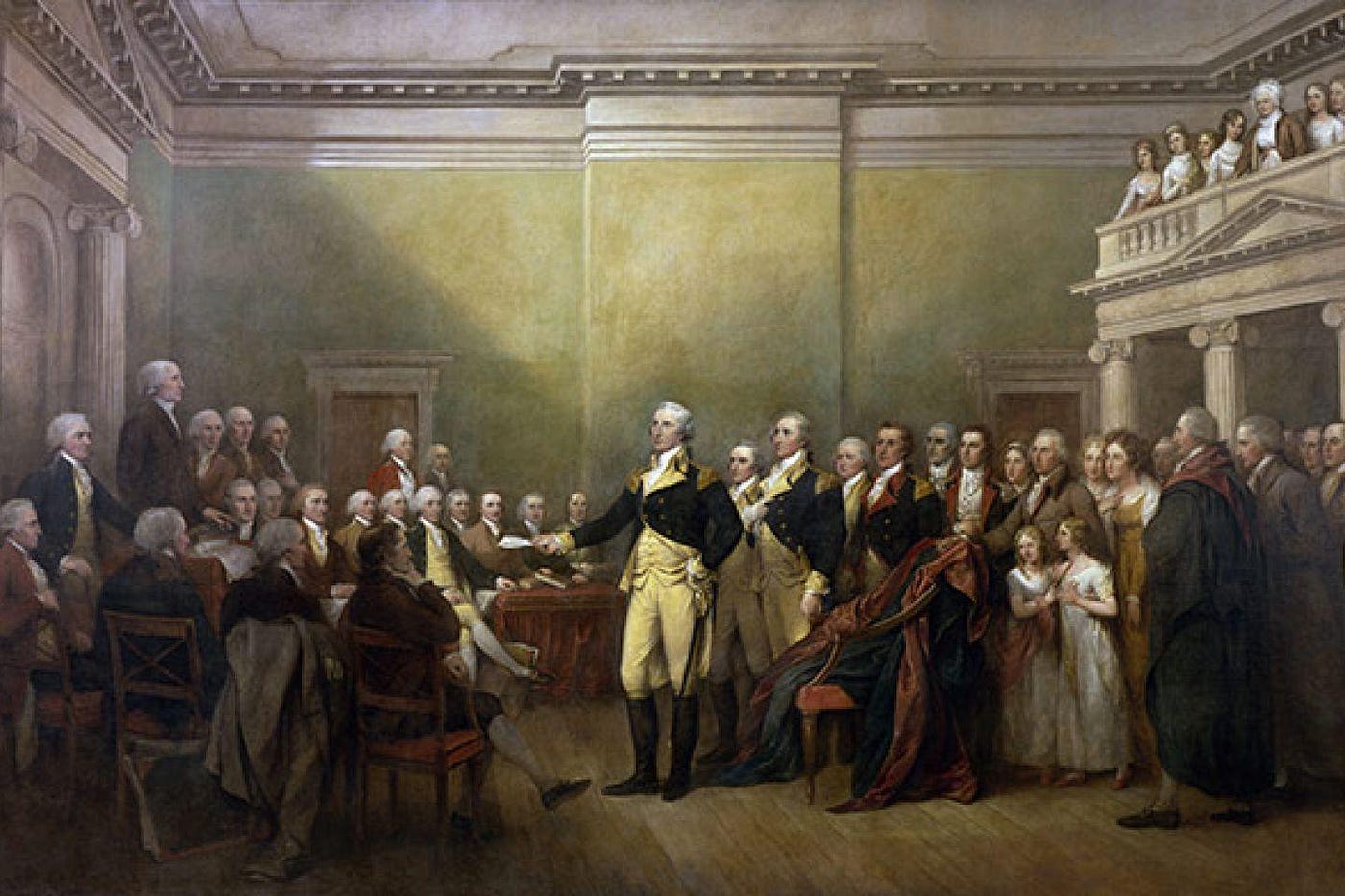
On June 16, 1858, the Illinois Republican Party held its state convention to nominate candidates for the fall election. The delegates chose a Springfield lawyer and former Whig Congressman, Abraham Lincoln as their candidate for the U.S. Senate, setting up a direct challenge to the Democratic incumbent, Stephen Douglas.
Before the adoption of the 17th Amendment in 1913, U.S. Senators were chosen by state legislatures, not by popular vote. Public campaigns for a Senate seat were rare; candidates typically lobbied party bosses and state legislators behind closed doors, after the fall elections.
Lincoln and his Illinois Republican allies saw an open, public campaign as essential to stopping the expansion of slavery into the western territories like Kansas and Nebraska. Lincoln used his acceptance speech that night to argue that Douglas’ doctrine of **“popular sovereignty”** — allowing settlers to vote on whether to permit slavery posed a grave threat to the republic.
Lincoln understood that a republic survives not by accident but by the character and commitment of its citizens — a truth that feels newly relevant in 2026.
That night, Lincoln declared that “a house divided against itself cannot stand,” his biblical reference was not a mere rhetorical flourish. He described a nation locked into two incompatible systems — one free, one enslaved — and warned that the country would eventually become “all one thing, or all the other.”
He argued that the crisis had been building for years. A national policy that promised to quiet the slavery debate had instead “constantly augmented” it. The institutions meant to stabilize the republic — especially Congress and the Supreme Court — were pushing the nation toward a single, extreme outcome: the nationalization of slavery. He warned that Americans might “lie down pleasantly dreaming” their state was becoming free, only to awaken and find the Supreme Court had made it a slave state instead.
Lincoln’s message was structural, not partisan: a republic cannot survive when its political identity splits into two incompatible visions of its future.
He issued a moral warning. Stephen Douglas, he argued, was not dangerous because he was pro-slavery, but because he “don’t care anything about it” and sought to shape the public mind to “care nothing” about the issue at all. Indifference, Lincoln insisted, was not neutrality — it was surrender.
And he closed with a call to civic responsibility: the cause must be entrusted to those “whose hearts are in the work — who do care for the result.”
The warning is unmistakable: a divided nation can endure only if its citizens remain committed to the moral core of the republic.
If you’re interested in the deeper roots of Lincoln’s thinking, my earlier essay, *Lincoln Warned Us About This*, on the 1838 Lyceum Address examines his belief that the gravest threats to the republic would come from within.
Lincoln’s Lyceum Address: The Danger of Internal Decay
Twenty years earlier, in his 1838 Lyceum Address, Lincoln diagnosed a different but related danger: the slow erosion of civic memory and the rise of political violence. Speaking to a young audience in Springfield, he warned that the generation of the Founders’ — the “pillars of the temple of liberty” — was passing away. With their deaths, the nation was losing the living memory that had bound Americans together in a shared understanding of the Constitution and our foundational principle that “all men are created equal,” and the sacrifices required to preserve it.
In place of that unifying memory, Lincoln saw troubling forces emerging, He feared that mobs were beginning to replace the rule of law, that violence was becoming a political language rather than an aberration. He worried that demagogues would exploit division for personal gain, appealing to passion rather than principle.
Lincoln warned that citizens, no longer anchored by a shared constitutional compass, might drift into factions defined by resentment rather than civic purpose. And he saw the danger of ambition unmoored from restraint — leaders who might seek power not by defending the Constitution, but by inflaming the very divisions that threatened it.
Lincoln argued that the greatest threat to the United States would not come from foreign enemies but from within — from Americans forgetting who they were, what they had inherited, and what the Constitution and the Declaration of Independence required of them.
A nation that once relied on the memory of the Revolution to sustain its civic spirit would now need something stronger: a deliberate, reasoned, commitment to the rule of law and to the institutions that protect liberty.
If the House Divided speech is Lincoln’s warning about structural fracture — a nation split between incompatible systems — the Lyceum Address is his warning about moral and civic decay. One describes the danger of a republic pulled apart by opposing visions; the other describes the danger of a republic hollowed out from within,
Together, they form a single argument: A republic collapses when its institutions fracture and its people forget their constitutional purpose.
2026: The Two Warnings Converge
The United States in 2026 is not the United States of 1858. We have not seen the level of violence within the halls of Congress that marked the decades before the Civil War. As historian, Joanne B. Freeman documents in *The Field of Blood: Violence in Congress, *“Between 1830 and 1860, there were more than seventy violent incidents between congressmen in the House and the Senate Chambers or on nearby street.” We have not reached that stage.
But the underlying dynamics Lincoln described are hauntingly familiar.
Just as the country once split over slavery, today it fractures over the meaning of democracy itself — truth, constitutional limits, federalism, and the legitimacy of institutions. Lincoln’s insight that a nation cannot endure “permanently half” one thing and half another applies to any era where the political identity fractures into irreconcilable halves.
Lincoln warned that national institutions were accelerating the crisis rather than restraining it. For decades Congress had attempted to contain the expansion of slavery through the Missouri Compromise of 1820, the Compromise of 1850, and the Kansas-Nebraska Act of 1854. Each measure was designed to appease competing factions; each ultimately inflamed tension further. The Supreme Court’s decision in the Dred Scott case that Black Americans, enslaved or free, could never be citizens and that Congress lacked the authority to restrict slavery in the territories — deepened the divide and pushed the nation closer to rupture.
Many Americans feel the same today. Courts, Congress, the presidency regardless of who occupies the office, and the media ecosystems often seem to intensify polarization rather than stabilize the republic. During the first Trump Administration, Kellyanne Conway’s phrase “alternative facts” became shorthand for the growing willingness to dispute even the most basic realities.
Cable news panels, social media feeds, and partisan influencers now routinely talk past one another, contesting not just interpretations but the underlying facts themselves. The result is a deeper wedge between red and blue America, and a public increasingly unsure what — or whom — to trust.
Lincoln’s critique of Douglas — a leader who treated a moral crisis as a procedural inconvenience — resonates in an era where some political actors treat democratic norms, political violence, or constitutional boundaries with indifference. The danger is not only in the actions of leaders but in the habits of the public.
Lincoln feared a public numbed into apathy. Today, the constant churn of outrage, misinformation, and performative conflict can desensitize Americans to threats that would have once shocked the nation. Conduct and speech that was once unthinkable becomes normal; what was once alarming becomes background noise.
His Lyceum warning about forgetting the Founders’ principles is visible in today’s battles over history, civic education, and national identity. Without a shared story — without a common understanding of the constitutional experiment in self-governance, a republic loses its center of gravity.
In 2026, the structural warning of House Divided and the moral warning of the Lyceum Address converge into a single crisis: a nation struggling to remember what holds it together.
The Civic Choice Before Us
Lincoln believed the Union would not simply collapse under the weight of its divisions — but it would not remain divided forever. It would become “all one thing, or all the other.” The direction the nation would take depended not on fate or inevitability, but on the courage, clarity, and commitment of ordinary citizens who understood what the republic required of them.
Lincoln chose the metaphor of a house divided deliberately. A house is not merely a structure; it is a shared dwelling, a place built on cooperation, mutual responsibility, and a common purpose. A house stands only when those within it recognize that they are bound together by something larger than their disagreements.
For Lincoln, that “something larger” was the bedrock principle that “all men are created equal,” a truth he eloquently reaffirmed in the Gettysburg Address. The Union, he believed, could endure only if it rested on that foundation — a moral commitment to human equality and the rule of law.
Those ideals feel increasingly distant in today’s political climate, where nearly every issue is filtered through intense partisan agendas and the widening cultural gulf between red and blue states. The spirit of shared purpose that Lincoln saw as essential to the survival of the republic is often overshadowed by zero-sum politics, performative outrage, and a refusal to grant legitimacy to opposing views.
The house metaphor reminds us that a republic is not sustained by victory over one’s political rivals, but by the willingness to inhabit a common civic space with them.
Lincoln’s message for 2026 is the same as it was in 1858. A republic survives only when its people care enough to defend it — not just in moments of crisis, but in the daily habits of citizenship. Institutions alone cannot save a nation whose citizens abandon their constitutional responsibilities or retreat into cynicism and distrust.
Democracy is not self-executing. It requires public virtue, civic memory, and a moral clarity about the principles on which the nation was founded.
The House can still stand — but only if we choose, together, to keep building it.
메타데이터
- post_id
- f47e420187f9
- slug
- can-the-house-still-stand-f47e420187f9
- url
- https://medium.com/the-political-prism/can-the-house-still-stand-f47e420187f9
- canonical_url
- https://medium.com/the-political-prism/can-the-house-still-stand-f47e420187f9
- author_url
- https://medium.com/@dhughes241
- status
- ok
- fetched_at
- 2026-06-21 12:17:11