WHY YOU WALK INTO THE GROCERY STORE WITH NO PLAN (YOUR ADHD BRAIN WANTS YOU TO)
WHY YOU WALK INTO THE GROCERY STORE WITH NO PLAN (YOUR ADHD BRAIN WANTS YOU TO)
You pull into the parking lot. You have no plan. You have a vague idea. You’re going to walk in and figure it out. Here’s why that strategy is costing you money every single week and what your ADHD brain is actually doing when it decides to just go.
It’s Wednesday evening. You stopped at the store on the way home because you’re out of something — you’re not sure what, but you’ll know it when you see it. You wander the aisles. You put some things in the cart. You get to the register, swipe your card, and go home. Three hours later you’re standing in front of the fridge and the rotisserie chicken you bought is already in your stomach because you forgot you were going to cook, and you still don’t know what you came home with or what you were missing in the first place.
WHAT YOUR ADHD BRAIN IS ACTUALLY DOING
Here’s the part that nobody tells you: your brain isn’t being lazy when it walks into a grocery store without a plan. It’s executing a strategy. It’s just a bad one.
The problem is working memory — the mental workspace your brain uses to hold information while you’re working with it. For most people, working memory can hold somewhere between four and seven items at once. For ADHD brains, the capacity is lower and the signal-to-noise ratio is worse. Things fall out of working memory faster, and they get replaced by new information more easily. In a grocery store, where every shelf is a new display of potential things you might need, want, or never knew existed, your working memory gets filled with what’s in front of you instead of what you came for.
Here’s the specific failure pattern. You think “I need groceries.” Your brain says “great, I’ll remember that at the store.” You get to the store. You see bread. Bread goes in the cart. You see cereal. Cereal looks good. You’re now holding cereal and bread and you’ve completely forgotten what you were supposed to get. This isn’t a character flaw. This is working memory being exactly as unreliable as it always is when you give it a task it was never designed to do alone.
“Your brain is not a bad grocery list. It’s a brain. And brains are not designed to hold a running inventory of your kitchen while navigating a building full of distractions.”
WHY “I’LL KNOW IT WHEN I SEE IT” ALWAYS FAILS
There are three specific ways this strategy breaks down every time.
First, you forget what you needed before you get there. The intention to buy milk, chicken, and vegetables was made at home, in a different context, with no visual cues. By the time you’re standing in the dairy section, your brain is processing the cold case, the prices, the other shoppers, and the fact that there’s a sale on something you don’t need. The milk is gone from working memory. It’s not gone from your life — you still need it — but it’s gone from the part of your brain that’s currently operating.
Second, seeing products replaces remembering products. The rotisserie chicken you bought last week is at home in the fridge. You can’t see it right now. But you can see the rotisserie chicken on the warming tray. Your brain, drawn to what’s present and concrete, defaults to what it can sense in the moment. So you buy another one. You now have two. You will forget about one of them by tomorrow.
Third, novelty-seeking overrides necessity. ADHD brains have lower baseline dopamine, which makes novel stimuli more attractive. A store you haven’t been to in a few weeks is full of new products, new seasonal displays, new items that weren’t there last time. Your brain says “this is exciting!” — in the cereal aisle, while you’re holding a box of something you’ve never tried. Your brain is treating a grocery store the way it was designed to treat a new environment full of new resources. It’s an ancient pattern that served survival for tens of thousands of years and is currently serving you very poorly in aisle seven.
HOW TO STOP IMPROVISING YOUR GROCERY TRIP
The fix isn’t trying harder. The fix isn’t a better paper list that you’ll forget to bring. The fix is building an external system that holds the information your brain can’t hold reliably in the moment — and building it before you ever get to the parking lot.
NoThinkList works because it gives your brain something to react to instead of something to remember. The fridge photo is the habit that makes the difference. Before you leave, you snap a photo of your fridge and pantry. The app captures what’s already there. Now when you walk into the store, you’re not walking in blank. You’re walking in with a running inventory of your own kitchen. You’re not trying to remember what you need — you’re checking off what you already have. The store still gives you all its cues, all its organization, all its familiarity. But you’re working with information instead of against a blank wall.
When you use NoThinkList, you stop the cycle of arriving at the store with no information and leaving with the wrong things. The trip stops being improvisation. It becomes a mission — specific, bounded, and completable. You get what you came for. You skip what you don’t need. You get home and there’s actually food that matches what you thought you were buying.
FREQUENTLY ASKED QUESTIONS
Why can’t I remember what I need at the grocery store even when it’s important?
Because working memory is not the same as long-term importance. Working memory holds what’s actively in your mind right now. When you walk into a grocery store, your brain is processing the environment, the list you didn’t write down, the list you did write down but can’t read, and everything else competing for attention. What you need gets crowded out — not because it doesn’t matter, but because your brain has a limited workspace.
Doesn’t a grocery list fix this?
A list helps, but a list on your phone or a scrap of paper still requires working memory to use. You have to remember you have the list, remember to look at it, and then cross-reference it with what’s in front of you. For ADHD brains, that three-step sequence is where it breaks down. The list has to be faster and easier than improvising — otherwise your brain defaults to “I’ll figure it out in the store.”
Why does ADHD make planning groceries feel impossible?
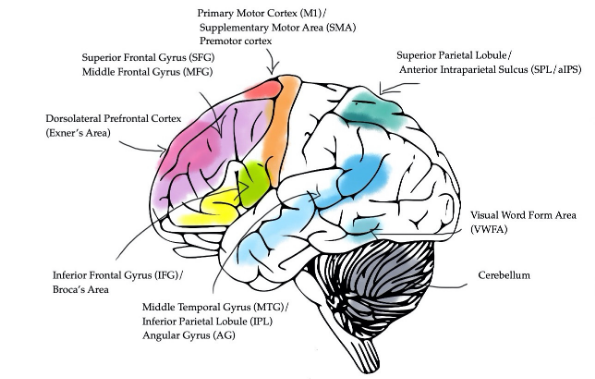
ADHD affects the prefrontal cortex — the part of your brain responsible for planning, prioritizing, and holding information in mind while you do something else. Planning groceries requires all three at once. Most people can do this without thinking. For ADHD brains, each of those steps takes more effort, which means the whole task feels disproportionately hard compared to the actual simplicity of “buy food.”
ABOUT THE AUTHOR
My name is Micah and I have ADHD. I’ve stood in front of my fridge at 6 PM wondering why I have nothing to eat after spending $90 at the store three days earlier. I built NoThinkList because the existing system required a level of mental inventory management my brain wasn’t wired to do. The fridge photo is the habit that made the difference.
Download NoThinkList: https://apps.apple.com/us/app/nothinklist-store-brain-dump/id6757319033
메타데이터
- post_id
- f48c9b0c98ff
- slug
- why-you-walk-into-the-grocery-store-with-no-plan-your-adhd-brain-wants-you-to-f48c9b0c98ff
- url
- https://medium.com/@johnnychange/why-you-walk-into-the-grocery-store-with-no-plan-your-adhd-brain-wants-you-to-f48c9b0c98ff
- canonical_url
- https://medium.com/@johnnychange/why-you-walk-into-the-grocery-store-with-no-plan-your-adhd-brain-wants-you-to-f48c9b0c98ff
- author_url
- https://medium.com/@johnnychange
- status
- ok
- fetched_at
- 2026-07-23 03:36:26