How Cars Work for Beginners (Complete System Breakdown 2026)
Cars in 2026 are no longer just mechanical machines — they are integrated systems of electronics, sensors, combustion or electric power…
How Cars Work for Beginners (Complete System Breakdown 2026)
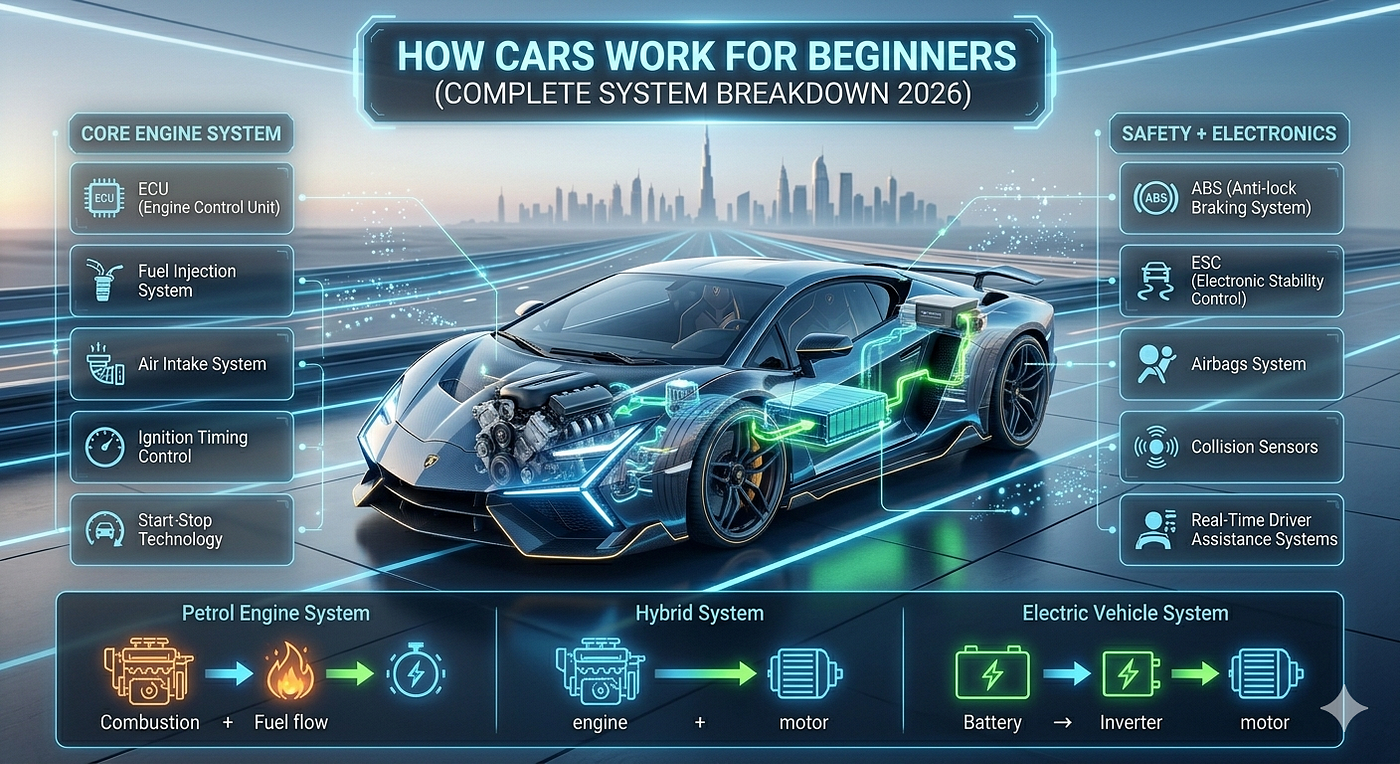
Futuristic cutaway diagram of a modern hybrid car showing engine, ECU, battery, safety systems, and electric motor with holographic educational panels explaining how cars work.
Cars in 2026 are no longer just mechanical machines — they are integrated systems of electronics, sensors, combustion or electric power, and intelligent control units.
For beginners, understanding how cars work starts with one simple idea:
👉 A car is a system that converts energy into motion while controlling safety, comfort, and performance through multiple interconnected components.
Modern vehicles combine:
mechanical engineering electrical systems software control units AI-assisted driving systems Main Working Principle of a Car
Every car, whether petrol, diesel, hybrid, or electric, follows this basic principle:
Energy → Power → Motion
Step Function Energy source Fuel or electricity Power generation Engine or motor Transmission Transfers power to wheels Wheels Convert power into movement
Core Components of a Car System
1. Engine (or Electric Motor)
The heart of the car.
- Petrol cars: internal combustion engine
- EV cars: electric motor
Insight:
Modern engines are now controlled by ECU (Electronic Control Unit) which adjusts fuel, air, and performance in real time.
2. Fuel System / Battery System
Petrol/Diesel:
- fuel tank
- fuel pump
- injectors
Electric Vehicles:
- lithium-ion battery
- battery management system (BMS)
- charging module
Micro Insight:
Battery systems in 2026 are smarter than ever — they self-monitor heat, load, and efficiency.
3. Transmission System
This system controls how power reaches wheels.
Types:
- Manual transmission
- Automatic transmission
- CVT (Continuously Variable Transmission)
Insight:
CVT systems are becoming common because they improve fuel efficiency and smooth driving experience.
4. Wheels and Drivetrain
Drivetrain includes:
- axles
- differential
- driveshaft
It ensures power is distributed to wheels properly.
5. Braking System
Modern cars use:
- disc brakes
- ABS (Anti-lock Braking System)
- electronic brake distribution
Safety Insight:
ABS prevents wheels from locking during emergency braking.
6. Electrical System
Cars today are heavily electronic:
- ECU (brain of car)
- sensors
- wiring system
- infotainment system
Insight:
A modern car has over 50–100 microcontrollers controlling different functions.
7. Sensors & AI Systems (2026 Technology)
Modern vehicles include:
- lane assist sensors
- parking sensors
- collision detection
- adaptive cruise control
Future Insight:
Cars are now moving toward semi-autonomous driving systems.
Basic Working Flow of a Car
- Driver starts ignition
- ECU activates systems
- Fuel or electricity is used
- Engine/motor generates power
- Transmission sends power to wheels
- Wheels rotate → car moves
Beginner Insight
Most beginners think a car is only engine + wheels, but in reality:
👉 A car is a network of intelligent systems working simultaneously
Advanced Car Systems Explained for Beginners (Fuel Efficiency, Safety & Real Driving 2026)
Understanding Modern Driving Systems Beyond the Engine
Once you understand the basic structure of a car, the next step is learning how modern systems improve efficiency, safety, and driving experience.
In 2026, cars are no longer purely mechanical — they are smart machines controlled by data, sensors, and automation systems.
1. Fuel Efficiency System (How Cars Save Energy)
Modern cars are designed to use fuel or electricity in the most efficient way possible.
Key Technologies:
- ECU fuel mapping control
- Start-stop system (engine shuts at signals)
- aerodynamic design
- lightweight materials
- hybrid energy recovery systems
Insight:
Even small improvements in aerodynamics can increase fuel efficiency by 10–20% in modern vehicles.
2. Safety Systems in Modern Cars
Safety is one of the biggest advancements in automotive technology.
Core Safety Features:
- ABS (Anti-lock Braking System)
- ESC (Electronic Stability Control)
- Airbags (front, side, curtain)
- Lane departure warning
- Collision avoidance system
Micro Insight:
Modern cars can apply brakes automatically if a collision risk is detected — even if the driver doesn’t react.
3. Hybrid Vehicle System (Combination Technology)
Hybrid cars combine:
- petrol engine
- electric motor
- battery system
How it works:
- low speed → electric motor
- high speed → petrol engine
- braking → energy recovery
Insight:
Hybrids are currently the bridge technology between petrol cars and full EVs.
4. Electric Vehicle Working System (EV Basics)
EVs work completely differently from petrol cars.
Core Components:
- battery pack
- inverter
- electric motor
- charging port
Working Flow:
- battery stores electricity
- inverter converts power
- motor rotates wheels
- regenerative braking recharges battery
Insight:
EVs have fewer moving parts, which reduces maintenance complexity significantly.
5. Real Driving System Behavior (Urban vs Highway)
City Driving:
- frequent braking
- low speed
- high fuel consumption (petrol cars)
- better efficiency for EVs
Highway Driving:
- constant speed
- better fuel efficiency
- higher aerodynamic impact
Micro Insight:
Driving style can change fuel consumption by up to 30%.
6. Breakdown Understanding (Why Cars Fail)
Most car breakdowns happen due to:
- battery failure
- overheating engine
- oil shortage
- sensor malfunction
- electrical faults
In such situations, quick roadside support becomes essential.
For emergency automotive assistance in real-world situations, services like: 👉 https://euroswiftautoservices.ae/
help in handling breakdown-related issues efficiently.
For instant jumpstart or emergency recovery support: 👉 https://carjumpstart.ae/
7. Smart Sensors & Driving Intelligence
Modern cars use advanced sensors to:
- detect obstacles
- maintain lane position
- adjust speed automatically
- assist parking
Insight:
A modern car processes thousands of data points per second while driving.
8. Driving Comfort Systems
Comfort is now a major part of automotive engineering.
Includes:
- climate control
- adaptive suspension
- noise reduction systems
- infotainment AI systems
Insight:
Luxury cars now adjust suspension automatically based on road conditions in real time.
9. Fuel vs Electric Cost Efficiency
Feature Petrol Cars Electric Cars Running Cost High Low Maintenance Medium Low Efficiency Moderate High Refueling Time Fast Slower
10. Beginner Insight (Important Concept)
A modern car is not just transportation — it is:
👉 a combination of mechanical engineering + software intelligence + energy management system
메타데이터
- post_id
- f4b3607ff07a
- slug
- how-cars-work-for-beginners-complete-system-breakdown-2026-f4b3607ff07a
- url
- https://medium.com/@ubaidseoexpert.7/how-cars-work-for-beginners-complete-system-breakdown-2026-f4b3607ff07a
- canonical_url
- https://medium.com/@ubaidseoexpert.7/how-cars-work-for-beginners-complete-system-breakdown-2026-f4b3607ff07a
- author_url
- https://medium.com/@ubaidseoexpert.7
- status
- ok
- fetched_at
- 2026-06-25 07:00:49