Understanding Decentralized Finance (DeFi): Basics and Functionality
The financial industry has traditionally relied on banks, brokers, payment providers, and other centralized institutions to manage…
Understanding Decentralized Finance (DeFi): Basics and Functionality
The financial industry has traditionally relied on banks, brokers, payment providers, and other centralized institutions to manage transactions and financial services. Decentralized finance, commonly known as DeFi, introduces a different approach by using blockchain networks and smart contracts to provide financial services without depending entirely on traditional intermediaries.
From lending and borrowing to trading and earning returns on digital assets, DeFi is creating new ways for people to interact with financial applications. At the same time, it introduces technical, financial, and regulatory considerations that users need to understand before participating.
This guide explains what DeFi is, how it works, its major use cases, potential benefits and risks, and whether it may be worth exploring.
What Is Decentralized Finance (DeFi)?
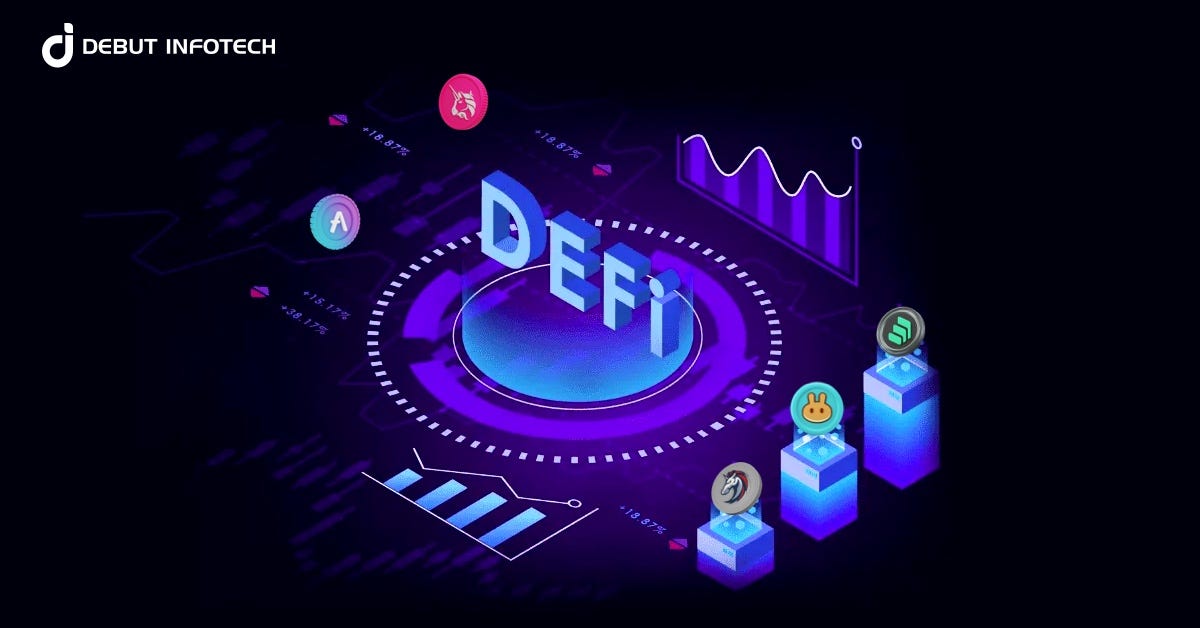
Decentralized Finance (DeFi) refers to a collection of financial applications and services built on blockchain networks. Instead of relying on centralized institutions to process transactions or manage funds, DeFi applications use smart contracts and decentralized protocols to automate many financial activities.
Users can typically interact with DeFi applications directly through a compatible crypto wallet. Depending on the platform, they may be able to exchange tokens, lend assets, borrow funds, provide liquidity, or participate in other blockchain-based financial activities.
One of the defining characteristics of DeFi is that transactions and smart-contract activity can often be viewed publicly on the underlying blockchain. However, transparency does not necessarily mean that every DeFi application is safe or trustworthy. Users remain responsible for understanding the protocols they interact with.
How Decentralized Finance (DeFi) Works
DeFi applications generally operate through smart contracts — programs deployed on a blockchain that automatically execute predefined rules when certain conditions are met.
For example, a lending protocol can use smart contracts to connect borrowers and lenders. A user may deposit supported digital assets into a liquidity pool, while another user can borrow against eligible collateral. The protocol can automatically calculate interest, enforce collateral requirements, and process transactions according to its programmed rules.
A typical DeFi interaction may involve:
- Connecting a crypto wallet: Users connect a compatible wallet to a DeFi application.
- Selecting a service: The user chooses an activity such as swapping, lending, borrowing, or providing liquidity.
- Approving a transaction: The wallet requests authorization for the blockchain transaction.
- Smart-contract execution: Once confirmed, the smart contract processes the transaction.
- Blockchain recording: The resulting transaction is recorded on the relevant blockchain network.
The exact process varies depending on the protocol, blockchain, and type of financial service.
How Blockchain Powers DeFi
**Blockchain technology** provides the infrastructure that allows many DeFi applications to operate without a conventional centralized database or intermediary.
A blockchain maintains a distributed record of transactions across a network of participating computers. Smart contracts can then be deployed on compatible blockchain networks to automatically execute financial rules.
Several blockchain characteristics are particularly important for DeFi:
- Transparency: On many public blockchains, transaction and contract activity can be independently inspected.
- Programmability: Smart contracts allow financial rules to be encoded into software.
- Accessibility: DeFi applications can potentially be accessed by anyone who meets the protocol’s technical requirements.
- Interoperability: Different protocols can interact, enabling developers to create more complex financial applications.
- Automation: Smart contracts can perform predefined actions without requiring manual processing by a traditional intermediary.
These characteristics make blockchain a foundational component of the DeFi ecosystem.
Goals of DeFi
The broader goal of DeFi is to create financial infrastructure that is more open, programmable, and accessible.
Some commonly associated goals include:
- Reducing reliance on traditional financial intermediaries
- Providing direct access to financial applications
- Enabling programmable financial services
- Increasing transparency of transactions and protocol activity
- Supporting global access to digital financial services
- Creating new ways to exchange, lend, borrow, and manage assets
DeFi does not necessarily replace traditional finance in every situation. Instead, it provides an alternative financial infrastructure with different advantages and trade-offs.
Steps to Start Using DeFi
Getting started with DeFi requires more than simply connecting a crypto wallet to a decentralized application. Users should first understand how the specific protocol works and what risks are involved.
A basic starting process includes:
1. Learn the Fundamentals
Understand wallets, blockchain networks, tokens, smart contracts, transaction fees, and common DeFi terminology before committing funds.
2. Choose a Compatible Wallet
A self-custody wallet allows users to interact directly with decentralized applications. Users should carefully protect their private keys and recovery information.
3. Select a Blockchain Network
Different DeFi applications operate on different networks. Transaction fees, supported assets, liquidity, and application availability can vary significantly.
4. Research the Protocol
Review the protocol’s documentation, smart-contract information, supported assets, fees, liquidity, and potential risks.
5. Start With a Small Amount
Beginners may want to start with an amount they can afford to lose while becoming familiar with transactions and wallet interactions.
6. Monitor Transactions and Positions
Keep track of transaction confirmations, fees, token balances, collateral requirements, and other relevant activity.
Security should remain a priority throughout the process. Users should avoid unknown links, suspicious applications, and requests for sensitive wallet information.
Real-World Example of DeFi
Consider a user who owns a digital asset but does not want to sell it. Through a DeFi lending protocol, the user may be able to deposit that asset as collateral and borrow another supported asset.
At the same time, another participant could supply assets to the protocol and potentially receive interest based on the protocol’s rules and market conditions.
The smart contracts manage the relevant transactions and collateral conditions. Depending on the protocol, users may not need a conventional bank or loan officer to facilitate the interaction.
This illustrates how DeFi can transform a traditional financial process into a blockchain-based, programmable service.
Popular Uses for DeFi Technology
DeFi encompasses a wide range of applications. Some of the most prominent categories include decentralized trading, liquidity provision, lending, yield strategies, prediction markets, and blockchain-based digital assets.
Decentralized exchanges
Decentralized exchanges (DEXs) allow users to trade digital assets directly through blockchain-based protocols rather than relying on a centralized exchange to custody and match every transaction.
Many DEXs use automated market makers and liquidity pools. Users interact with smart contracts to swap one token for another, while liquidity providers supply assets to help facilitate trading.
Liquidity providers
Liquidity providers contribute digital assets to liquidity pools used by decentralized applications. In return, they may receive a portion of trading fees or other protocol incentives, depending on the platform.
However, providing liquidity involves risks. Changes in token prices can affect the value of deposited assets, and users should understand concepts such as impermanent loss before participating.
Lending/yield farming
DeFi lending protocols allow users to supply assets and potentially earn interest while other users borrow against collateral.
Yield farming generally refers to strategies where users move or allocate digital assets across DeFi protocols to pursue potential returns, incentives, or fees.
For organizations building such financial products, **DeFi lending platform development** can involve designing smart contracts, liquidity mechanisms, user interfaces, asset management features, and security controls.
Returns can vary substantially, and higher advertised yields may come with significantly higher risks.
Gambling/prediction markets
Blockchain-based prediction markets allow participants to take positions based on the potential outcome of future events. Some decentralized applications have also explored blockchain-based gambling models.
These applications can raise additional legal, regulatory, and consumer-protection concerns depending on the jurisdiction and the nature of the service. Users should understand the applicable rules before participating.
NFTs
Non-fungible tokens (NFTs) represent unique digital assets on blockchain networks. Although NFTs are not exclusively a DeFi application, they can interact with decentralized financial systems.
For example, NFT holders may explore lending against NFTs, NFT-based financial products, or other applications that combine digital ownership with blockchain-based financial mechanisms.
Navigating the Hype Around DeFi
DeFi has attracted significant attention because of its potential to reshape financial services. However, market enthusiasm can sometimes make projects appear more established or reliable than they actually are.
Users should distinguish between genuine technological innovation and promotional claims.
Before interacting with a DeFi project, consider:
- Whether the project’s purpose is clearly explained
- Whether its smart contracts have undergone credible security reviews
- How the protocol manages user funds
- Whether liquidity is sufficient
- What fees apply
- What risks are associated with the assets
- Whether the team and development activity are transparent
- What regulatory considerations may apply
Businesses entering this space may also work with a **blockchain application development company** to design, develop, test, and deploy blockchain-based financial applications.
Approaching DeFi with research rather than speculation can help users make more informed decisions.
Concerns About Decentralized Finance
Despite its potential, DeFi comes with several important concerns.
Smart-contract risks
A coding error or vulnerability in a smart contract can potentially result in financial losses. Audits can reduce certain risks but cannot guarantee that a protocol is completely secure.
Market volatility
Digital assets can experience significant price fluctuations. Sudden market movements can affect collateral values, liquidity positions, and investment returns.
Private-key responsibility
Self-custody means users generally have greater control over their assets, but it also places greater responsibility on them. Losing access credentials can result in the loss of access to funds.
Liquidity risks
Some DeFi markets may have limited liquidity. This can make it difficult to execute large transactions without significant price impact.
Regulatory uncertainty
Rules governing cryptocurrencies, decentralized applications, lending, trading, and related services differ between jurisdictions and continue to evolve.
Scams and malicious projects
The open nature of blockchain development means that users may encounter fraudulent tokens, fake applications, phishing websites, and other malicious schemes.
For businesses considering entry into this market, professional **DeFi development services** can help address areas such as architecture, smart-contract implementation, user interfaces, testing, and security planning.
Is Decentralized Finance Worth It?
Whether DeFi is worth exploring depends on the individual’s goals, technical understanding, risk tolerance, and financial situation.
For some users, DeFi offers an interesting alternative to traditional financial infrastructure. It can provide direct access to programmable financial applications and new methods of managing digital assets.
For others, the risks — including smart-contract vulnerabilities, market volatility, liquidity issues, security responsibilities, and regulatory uncertainty — may outweigh the potential benefits.
The most important point is that DeFi should not be viewed as a guaranteed way to make money. High yields often come with corresponding risks, and users should never commit funds they cannot afford to lose.
Final Thoughts
Decentralized finance represents one of the most significant applications of blockchain networks beyond simple digital-asset transfers. By combining smart contracts, digital assets, decentralized protocols, and programmable infrastructure, DeFi enables users to access a growing range of financial services.
Its development is still evolving, and the ecosystem includes both promising innovations and substantial risks. As the technology matures, security, usability, compliance, scalability, and responsible development will remain important factors in determining its long-term impact.
For anyone interested in exploring DeFi, the best approach is to understand how the technology works, research individual protocols carefully, recognize the risks, and make decisions based on informed analysis rather than market hype.
메타데이터
- post_id
- f4c0f74659ed
- slug
- understanding-decentralized-finance-defi-basics-and-functionality-f4c0f74659ed
- url
- https://medium.com/@jackfarris003/understanding-decentralized-finance-defi-basics-and-functionality-f4c0f74659ed
- canonical_url
- https://medium.com/@jackfarris003/understanding-decentralized-finance-defi-basics-and-functionality-f4c0f74659ed
- author_url
- https://medium.com/@jackfarris003
- status
- ok
- fetched_at
- 2026-08-10 19:02:55