Elastomer Comprehensive Guide: Properties, Types, Applications & Selection
Elastomers are versatile polymeric materials defined by exceptional viscoelasticity — combining liquid-like viscosity and solid elasticity…
Elastomer Comprehensive Guide: Properties, Types, Applications & Selection
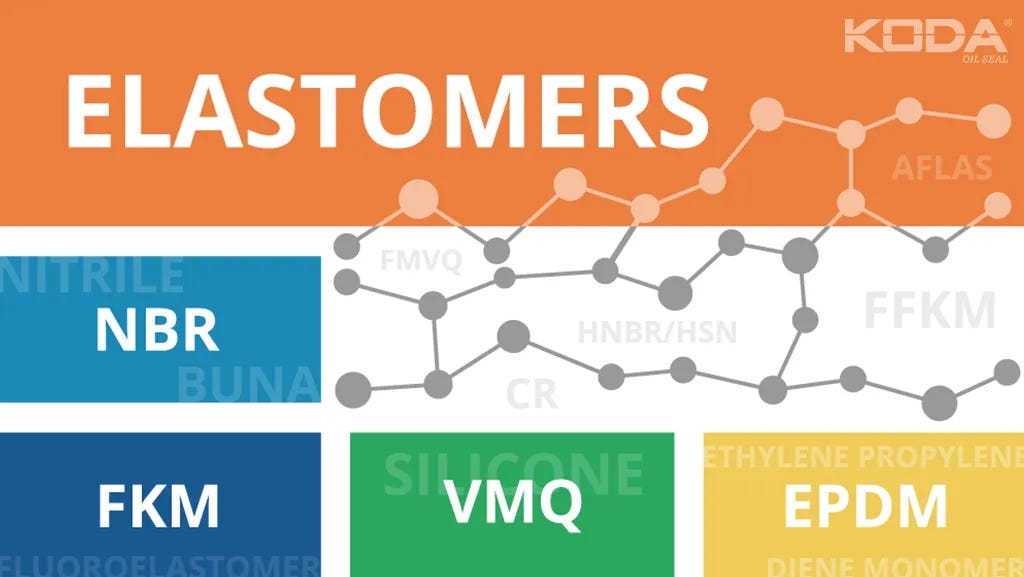
Elastomers are versatile polymeric materials defined by exceptional viscoelasticity — combining liquid-like viscosity and solid elasticity — that enable large, reversible deformations under stress. Often referred to as “rubbers,” they form the backbone of modern engineering, sealing, and manufacturing, offering unique flexibility, resilience, and environmental resistance unmatched by rigid plastics or metals. This guide explores elastomer science, classifications, key properties, industrial applications, material selection, and critical FAQs to support engineers, designers, and procurement teams in making informed decisions.
What Are Elastomers? The Science of Elasticity
At the molecular level, elastomers consist of long, flexible polymer chains with light cross-linking (via vulcanization or curing) that create a loose, spaghetti-like network. Under stress, chains uncoil and align; when stress is removed, cross-links pull chains back to their original random-coil state, enabling complete shape recovery. This structure delivers:
- High elongation: Typically 100–1,000% strain before failure (vs. <10% for rigid plastics)
- Low Young’s modulus: Soft, deformable, and shock-absorbent
- Viscoelasticity: Balances elastic energy storage and viscous energy dissipation, ideal for vibration damping
- Compression set resistance: Maintains sealing force under prolonged pressure
Elastomers are categorized as thermosets (permanently cross-linked via vulcanization, non-recyclable) or thermoplastics (TPEs) (reversible physical cross-linking, melt-processable and recyclable). Thermosets dominate high-performance industrial sealing, while TPEs excel in consumer goods and overmolding.
Key Elastomer Types: Properties & Industrial Uses
Dozens of elastomer formulations exist, each tailored for temperature, chemical, and mechanical demands. Below are the most widely used types, with critical performance attributes and applications:

1. Nitrile Butadiene Rubber (NBR/Buna-N)
- Core properties: Excellent oil/fuel/petroleum fluid resistance; good abrasion and water resistance; cost-effective; temperature range -40°C to +120°C
- Acrylonitrile (ACN) content: 18–50% — higher ACN boosts oil resistance but reduces low-temperature flexibility
- Applications: O-rings, gaskets, fuel hoses, oil seals, conveyor belts (automotive, industrial machinery)
- Limitations: Poor ozone/UV resistance; unsuitable for polar solvents (ketones, esters)
2. Fluoroelastomers (FKM/Viton®)
- Core properties: Premium high-temperature (-20°C to +230°C) and chemical resistance; excellent oil, fuel, acid, and ozone resistance; low compression set; long-term aging stability
- Applications: Aerospace seals, automotive fuel systems, chemical processing, high-temperature engine components
- Limitations: High cost; poor low-temperature flexibility; not for steam/ketones
3. Ethylene Propylene Diene Monomer (EPDM)
- Core properties: Superior weather/ozone/UV/steam resistance; excellent water and alkaline stability; temperature range -50°C to +150°C
- Applications: Automotive weather seals, coolant hoses, roofing membranes, electrical insulation, water systems
- Limitations: Poor oil/petroleum fluid resistance
4. Silicone Rubber (VMQ)
- Core properties: Extreme temperature resistance (-60°C to +230°C); food/medical-grade purity; good electrical insulation; flexible at low temps
- Applications: Medical devices, food processing seals, baking molds, electrical gaskets, infant products
- Limitations: Low abrasion/tear resistance; high cost
5. Hydrogenated Nitrile Rubber (HNBR)
- Core properties: NBR’s oil resistance + enhanced heat/ozone/chemical stability; temperature range -30°C to +160°C; high tensile strength
- Applications: High-performance oil seals, automotive timing belts, hydraulic components
6. Thermoplastic Elastomers (TPE/TPU/TPV)
- Core properties: Melt-processable (injection molding/extrusion); recyclable; good flexibility; moderate temperature/chemical resistance
- Applications: Consumer goods, phone cases, soft-touch grips, footwear, medical tubing
7. Natural Rubber (NR)
- Core properties: Exceptional tensile strength, tear resistance, and resilience; low heat build-up
- Applications: Tires, shock mounts, vibration isolators, non-oil gaskets
- Limitations: Poor oil/ozone/UV resistance
Critical Elastomer Properties for Performance Evaluation
Selecting elastomers requires evaluating 5 core performance metrics to match application conditions:
1. Temperature Resistance
- Continuous use range: Avoid exceeding upper limits (causes permanent hardening/cracking) or dropping below lower limits (temporary brittleness)
- Safety margin: Design for 10–15°C below max temperature to prevent thermal degradation
2. Chemical Compatibility
- Non-polar fluids (oils/fuels): NBR, FKM, HNBR
- Polar fluids (water/steam/alcohols): EPDM, silicone
- Harsh chemicals/acids: FKM, FFKM (perfluoroelastomers)
3. Mechanical Properties
- Hardness (Shore A): 30–90 (soft = flexible; hard = wear-resistant)
- Tensile strength/elongation: NR, polyurethane (PU) excel; silicone is low
- Compression set: Critical for seals — FKM, EPDM perform best; NBR is moderate
4. Environmental Stability
- Ozone/UV: EPDM, FKM, silicone resist degradation; NBR, NR require additives
- Abrasion/tear: PU, NR, HNBR top performers; silicone is poor
5. Cost & Processability
- Budget: NBR, SBR (styrene-butadiene rubber) = low-cost; FKM, FFKM = premium
- Manufacturing: Thermosets need vulcanization; TPEs use standard plastic processing
Industrial Applications of Elastomers

Elastomers enable functionality across 10+ sectors, with sealing, damping, and flexibility as core value propositions:
- Automotive: Seals, hoses, tires, suspension components (NBR, EPDM, FKM)
- Aerospace: High-temperature seals, fuel system components (FKM, FFKM)
- Medical/Pharmaceutical: Sterile seals, tubing, implants (silicone, medical-grade TPE)
- Food & Beverage: FDA-compliant gaskets, conveyor belts (silicone, EPDM)
- Construction: Roofing, window seals, expansion joints (EPDM, neoprene)
- Electronics: Insulation, gaskets, connectors (silicone, EPDM)
- Oil & Gas: Downhole seals, pipeline gaskets (FKM, HNBR)
- Consumer Goods: Footwear, toys, soft-touch parts (TPE, NR)
Elastomer Selection: A Step-by-Step Framework
Follow this structured approach to avoid material mismatches and premature failure:
- Define operating conditions: Temperature min/max, chemical exposure, pressure, dynamic/static stress
- Prioritize critical properties: Sealing (compression set), wear (abrasion resistance), flexibility (low-temp performance)
- Screen material candidates: Use compatibility charts to narrow 2–3 options
- Test samples: Validate performance under real application conditions (temperature cycling, chemical immersion)
- Evaluate total cost: Balance material price with service life (premium elastomers often reduce replacement costs)
- Check compliance: Meet industry standards (FDA, USP, NSF, automotive specs)
Common Mistakes to Avoid
- Overtesting: Selecting high-cost FKM for low-temperature, non-oil applications (EPDM/NBR suffice)
- Underspecifying: Using basic NBR in high-temperature engine bays (leads to cracking)
- Ignoring chemical interactions: A single incompatible solvent can cause swelling/breakdown
- Skipping testing: Datasheet values don’t replace real-world performance validation
- Neglecting shelf life: Elastomers degrade in storage — rotate inventory and follow supplier guidelines
Conclusion
Elastomers are irreplaceable in modern engineering, delivering elastic performance that bridges rigid materials and flexible functionality. From NBR’s cost-effective oil sealing to FKM’s extreme chemical resistance, each formulation solves unique challenges. Success lies in aligning material properties with application demands — temperature, chemicals, mechanical stress, and regulations — to ensure durability, reliability, and cost efficiency.
메타데이터
- post_id
- f4d461f2dee1
- slug
- elastomer-comprehensive-guide-properties-types-applications-selection-f4d461f2dee1
- url
- https://medium.com/@autopartskoda/elastomer-comprehensive-guide-properties-types-applications-selection-f4d461f2dee1
- canonical_url
- https://medium.com/@autopartskoda/elastomer-comprehensive-guide-properties-types-applications-selection-f4d461f2dee1
- author_url
- https://medium.com/@autopartskoda
- status
- ok
- fetched_at
- 2026-07-10 17:18:11