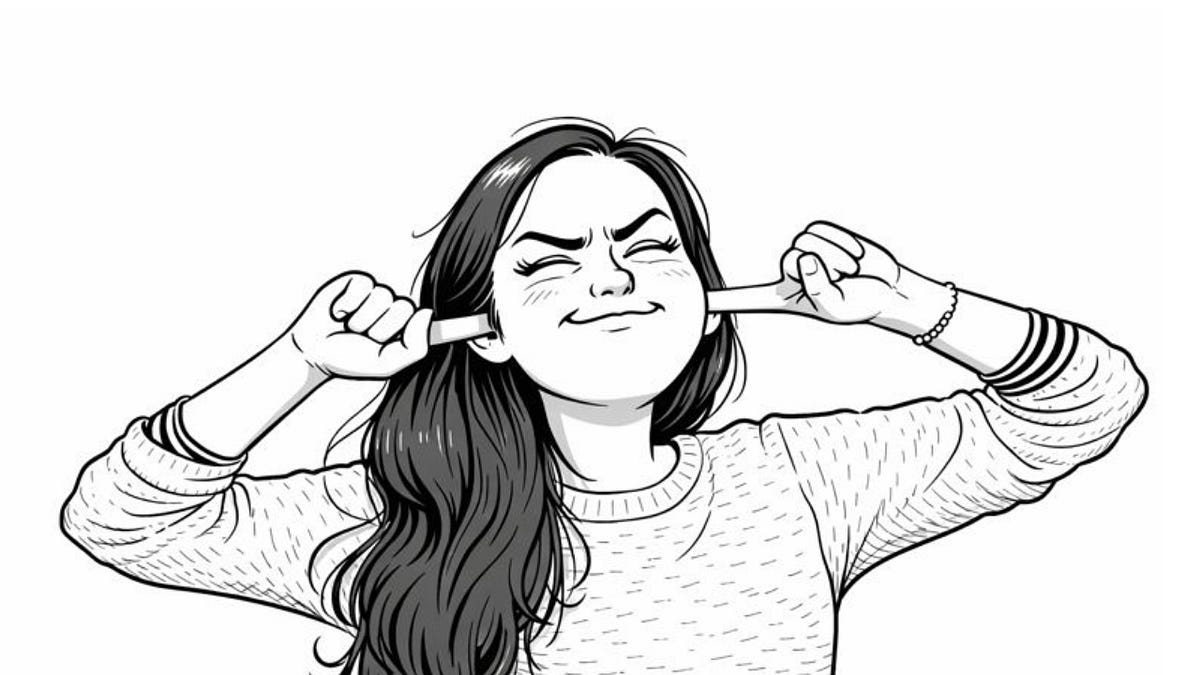
Most Traders Do Not Need a Better Journal. They Need a Better Debrief.
The trading journal is not the problem. The problem is that most traders only write things down after the lesson has already gone cold.
Most Traders Do Not Need a Better Journal. They Need a Better Debrief.
The trading journal is not the problem. The problem is that most traders only write things down after the lesson has already gone cold.
I used AI tools to help organize this article, tighten the structure, and edit for clarity. The core ideas, trading perspective, examples, opinions, and final article are my own.
Most traders do not fail at journaling because they are lazy. They fail because the normal journaling process asks for too much effort at the exact moment when the trader has the least mental energy left.
After a long session, especially after a frustrating one, the last thing most traders want to do is open a spreadsheet and perform an autopsy on every decision they made. So the journal gets skipped, rushed, or reduced to a few useless notes like “bad discipline” or “need to wait for confirmation.”
That is not a trading journal. That is a confession booth.
The better question is not “How do I force myself to journal more?”
The better question is:
How do I make the debrief so easy that I actually do it while the trade is still fresh?
The problem with most trading journals
Most trading journals are built around record keeping.
They track entries, exits, tickers, contracts, risk, reward, P&L, screenshots, and maybe a short note about the setup. That information matters, but it is only part of the picture.
The part that usually gets missed is the decision process.
Why did you take the trade?
What did you see?
What did you ignore?
Were you following the plan, or were you reacting to the last candle?
Did you cut the winner because you were scared, or did you exit because the trade thesis changed?
Did you break a rule because the setup was strong, or because you were trying to get back what you lost earlier?
That is where the useful information lives. The numbers tell you what happened. The debrief tells you why it happened.
And if you do not capture the why, your journal becomes a graveyard of trades instead of a feedback loop.
The timing problem
The best trade review happens close to the session.
Not three days later.
Not at the end of the month.
Not when you are already in a better mood and rewriting the story in your head.
The closer you are to the session, the more honest the review tends to be. You still remember the pressure. You remember the hesitation. You remember the moment you moved the stop, chased the entry, ignored the rule, or did the right thing even though it felt uncomfortable.
That is the raw material a trader needs.
But that is also the moment when most traders are emotionally cooked.
That is why manual journaling breaks down. The workflow depends on discipline after the discipline has already been spent.
A better debrief starts with voice
For me, the more natural starting point is not typing. It is talking.
A trader can usually explain their session out loud faster than they can write it cleanly. The voice note does not need to be polished. It just needs to be honest.
Something like:
“I had a decent read on the market early, but I hesitated on the first setup. Then I chased the second move because I felt like I missed the real trade. My entry was late, so my stop was wider than planned. I knew it in the moment, but I still took it. After that, I spent the next two trades trying to get back to flat.”
That paragraph is more valuable than a spreadsheet row with entry, exit, and P&L.
Why?
Because it shows the actual pattern:
- hesitation
- chase entry
- poor stop placement
- awareness ignored in real time
- recovery-mode trading after the mistake
That is reviewable. That can be graded. That can become a plan for tomorrow.
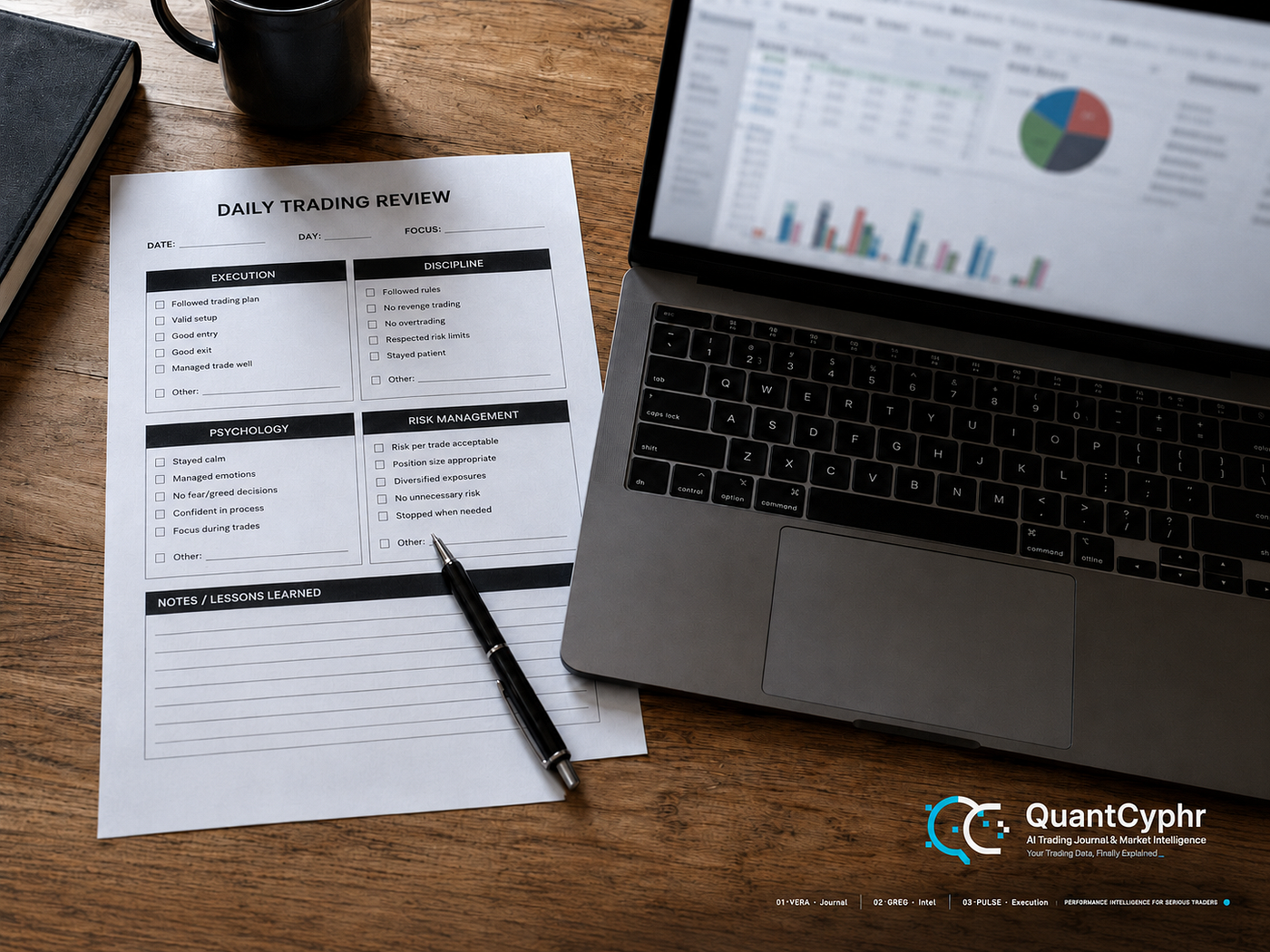
The debrief should produce a report card, not just notes
A journal entry is useful, but a report card is better.
The difference is structure.
A note says, “I need to be more disciplined.”
A report card asks:
- Did I follow my entry criteria?
- Did I respect my invalidation level?
- Did I manage risk correctly?
- Did I trade from a plan or from emotion?
- Did I stop when my rules said to stop?
- Did I repeat a known mistake?
- What is the one adjustment for the next session?
That structure matters because traders are very good at being vague with themselves.
“Bad discipline” is vague.
“I moved my stop after entry because I did not want to realize the loss” is specific.
“Overtraded” is vague.
“I took three trades after my max-loss rule should have shut me down” is specific.
Specific feedback creates a behavioral target. Vague feedback creates shame.
What AI should and should not do in a trading journal
This is where AI can be useful, but the boundary matters.
AI should not become the trader.
It should not make the decision for you. It should not turn your journal into a signal service. It should not tell you that one bad day means your strategy is broken or that one good day means you have found the answer.
The useful role for AI is structure.
It can take a messy voice note and turn it into something reviewable. It can separate execution from psychology. It can catch recurring language. It can help identify whether the issue was trade selection, risk management, emotional control, or rule adherence.
That is not outsourcing judgment.
That is making the review process harder to avoid.
The trader still owns the decisions. The trader still owns the risk. The trader still has to decide what changes tomorrow.
AI just helps turn the session into usable feedback before the lesson disappears.
The real goal is a tighter feedback loop
A trading journal should not exist so you can say you journaled.
It should exist so you can close the loop between what you planned, what you did, what happened, and what needs to change.
That loop gets weaker when the review happens late, when the notes are vague, or when the journal becomes a storage system instead of a coaching system.
The goal is not more data for the sake of data.
The goal is better self-awareness under pressure.
A trader who can clearly see their own patterns has a better chance of correcting them. Not because a journal magically creates discipline, but because the same mistake becomes harder to rationalize when it shows up in plain language every day.
Where QuantCyphr fits
This is the idea behind Vera, the voice-first AI trading journal inside QuantCyphr.
Vera is built around a simple belief: your post-session debrief should become structured feedback quickly, while the session is still fresh.
You talk through the trading day. Vera helps turn that debrief into a Daily Report Card across areas like execution, psychology, discipline, P&L, and rule adherence.
That matters because the trader does not just need a place to store trades.
The trader needs a mirror.
Not a motivational quote. Not another spreadsheet that gets abandoned. A repeatable review process that makes the real pattern easier to see.
The question I would ask every trader
If your journal is not changing tomorrow’s behavior, what is it actually doing?
That is the standard I care about.
Not whether the journal looks impressive.
Not whether it has every metric possible.
Not whether it produces a perfect monthly summary.
The first test is simpler:
Can you finish a trading session, explain what happened honestly, and walk into the next session with one clearer behavioral adjustment?
If the answer is yes, the journal is doing its job.
If the answer is no, you probably do not need a more complicated journal.
You need a better debrief.
메타데이터
- post_id
- f4d6e05afc93
- slug
- most-traders-do-not-need-a-better-journal-they-need-a-better-debrief-f4d6e05afc93
- url
- https://medium.com/@quantcyphr/most-traders-do-not-need-a-better-journal-they-need-a-better-debrief-f4d6e05afc93
- canonical_url
- https://medium.com/@quantcyphr/most-traders-do-not-need-a-better-journal-they-need-a-better-debrief-f4d6e05afc93
- author_url
- https://medium.com/@quantcyphr
- status
- ok
- fetched_at
- 2026-06-17 08:20:12