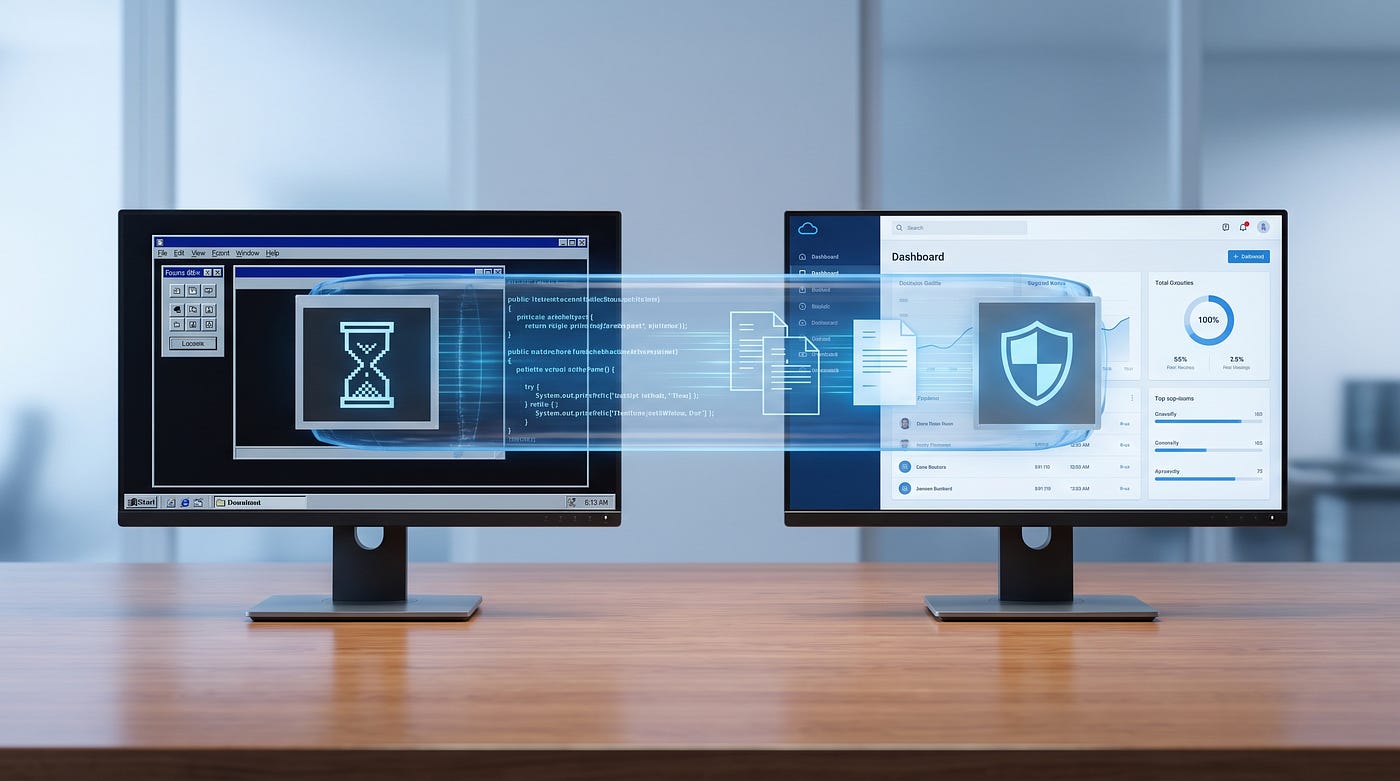
Enterprise AI in 2026: Why the Data Foundation Decides the Outcome
Why 60% of enterprise AI projects fail at the data layer, and the four-pillar foundation that moves ML into production.
Enterprise AI in 2026: Why the Data Foundation Decides the Outcome

Enterprise AI in 2026: Why the Data Foundation Decides the Outcome
How CTOs and technical architects are rebuilding the data layer, so AI/ML Development actually works at scale.
Most enterprise AI projects do not fail because the model is wrong. They fail because the data underneath the model is wrong.
Gartner predicts that through 2026, 60% of AI projects will be abandoned if they lack AI-ready data. RAND Corporation’s analysis of more than 2,400 enterprise AI initiatives puts the broader failure rate at around 80%. The investment is real. The dashboards look fine. The model passes offline benchmarks. Then production traffic hits, and nothing moves.
The cause is consistent across BFSI, healthcare, manufacturing, retail, and logistics. The data foundation was built for reporting, not for machine learning.
Why Is Most Enterprise Data Still Not Ready for AI?
For two decades, enterprise data strategy has focused on dashboards, business intelligence, and quarterly reviews. Those systems work for looking backward. They do not work for AI systems that operate in real time.
A recent **Gartner survey of 248 data management leaders found that 63% of organizations either lack the right data management practices for AI or are unsure if they have them**. Only about 12% of organizations have data of quality sufficient to support AI applications.
The mismatch is structural. Traditional data quality runs on monthly or quarterly cycles. AI models in production need quality signals measured in hours.
What Does AI-Ready Data Actually Mean?
The operational definition is direct. AI-ready data is:
• Aligned to specific use cases, not stored “in case it matters later.”
• Actively governed at the individual data asset level
• Supported by automated pipelines with built-in quality gates
• Managed through live metadata, not static catalogs
• Continuously quality-assured, not reviewed once a quarter
The last point separates the 40% of organizations that will succeed from the 60% Gartner predicts will fail.
The Four Pillars of a Working Enterprise AI Data Foundation
CTOs who move programs from pilot to production tend to share a common structure. Four pillars repeat across successful enterprise AI/ML Development programs.
1. Domain-owned data products. Treat data like a product, with an owner, a contract, and a service-level agreement. The owner sits inside the business domain, not inside a central team. This is the operating model behind data mesh.
2. Federated governance. Central policy. Local execution. Compliance sets rules for privacy, lineage, and audit. Domain owners enforce them locally. The phased EU AI Act rollout and the NIST generative AI risk profile now make this approach mandatory for most regulated industries.
3. AI-specific quality KPIs. Accuracy, completeness, and timeliness are measured against the model’s needs, not the dashboard’s. A feature store feeding a churn model needs different SLAs than a quarterly revenue report.
4. Readiness scoring per domain. Score each data domain on AI-readiness before picking the use case. Most failed programs reversed this order, picked a use case first, and discovered the data problem six months in.
This four-pillar approach is the same operating discipline mature **enterprise AI/ML development** programs use to sequence the work. Data foundation first. Models second.
How Do CTOs Get Results in the First 90 Days?
Boards want momentum. Engineering wants stability. Both are achievable if the first 90 days follow a tight sequence.
Days 1 to 30. Score three to five priority domains for AI-readiness. Pick the one with the highest score and the clearest business sponsor. Stand up a single data product team for that domain.
Days 31 to 60. Build the first data product end-to-end. Contracts, lineage, quality monitors, observability. No model work in this window.
Days 61 to 90. Connect the first ML use case to the new foundation. Measure accuracy against the AI-specific KPIs defined in week one. Ship to a controlled production environment.
This sequence works because it forces honest conversations early. A domain that fails the readiness score in week two saves the program from a 12-month dead end.
Why Does Governance Belong at the Center, Not the Edge?
Two regulatory shifts changed the calculus in the past year. The phased rollout of the EU AI Act and the wider adoption of ISO/IEC 42001 for AI management systems. NIST’s generative AI risk guidance added a third pressure point.
Governance, documentation, and oversight now sit at the center of every credible enterprise AI program. Teams that treat governance as a final-stage checklist are already losing audit cycles. Embedding lineage and policy from sprint one is also cheaper than retrofitting them after a finding.
What Should Technical Leaders Do Differently in 2026?
The decision is rarely about which model to use. The decision is about which data domain is ready to feed it. The enterprises that win in 2026 sequence the work in this order:
• Score the data
• Govern the highest-value domain
• Build the foundation as a product
• Then call the data scientists
Reversing that order is the most expensive mistake currently being made in enterprise IT. Partners working on **AI integration services **increasingly start with a data readiness audit instead of a model demo, for exactly this reason.
The teams that lead in 2026 will not be the teams with the most models. They will be the teams whose data is finally ready to support them.
메타데이터
- post_id
- f4e24c1c2f0f
- slug
- enterprise-ai-in-2026-why-the-data-foundation-decides-the-outcome-f4e24c1c2f0f
- url
- https://medium.com/@oliviawatson0123/enterprise-ai-in-2026-why-the-data-foundation-decides-the-outcome-f4e24c1c2f0f
- canonical_url
- https://medium.com/@oliviawatson0123/enterprise-ai-in-2026-why-the-data-foundation-decides-the-outcome-f4e24c1c2f0f
- author_url
- https://medium.com/@oliviawatson0123
- status
- ok
- fetched_at
- 2026-06-09 15:37:30