Goa Deposit Refund Scheme Influences Packaging Waste Behavior
Before sunrise, near the water’s edge in Goa, people gathered to tidy the beach. Light spreading across the sky showed how much trash…
Goa Deposit Refund Scheme Influences Packaging Waste Behavior
Before sunrise, near the water’s edge in Goa, people gathered to tidy the beach. Light spreading across the sky showed how much trash coated the shore — drinks containers, food packets, bits of plastic tossed about by waves. A few pieces were dropped there late at night by tourists unwinding after dark. The rest slipped down city gutters, floated miles inland, finally washed up where land meets ocean.
Lately, spots like these show up more often around the area. Not far from where waves meet shorelines stands Goa — known for lush woods, flowing rivers, and towns full of life. Still beneath that postcard look hides something troubling — garbage from wrappers piling up. Day after day brings near 800 metric tons of city trash, much of which sticks around thanks to plastics, jars made of glass, and complex wrapping layers.
It starts before the bin even comes into play — right there, when someone holds an empty container and chooses what happens next. That split decision matters most. The Goa Deposit Refund Scheme (Goa DRS) steps in just at that point, quietly shaping outcomes. Not after. But right then.
The Behavior Behind Packaging Waste
Litter piles up where trucks roll through every morning. Still, habits at home decide what vanishes into bins and what gets tossed aside. In spots like Goa, routines shape the mess more than machines ever could.
Paper stacks up at home — often saved, not tossed. Most folks keep old boxes tidy, waiting to sell them off. Worth something? That idea sticks. Scrap collectors get regular visits, thanks to that habit. Value changes how things move through a house.
Litter isn’t always handled the same way. Take plastic bottles — they sit on sidewalks just like snack wrappers tossed near bus stops. Beverage cans get left behind at parks while glass jars roll into gutters. Places like beaches see trash pile up when people walk away without a second thought. Markets fill with scraps when nobody collects what’s dropped. Tourist spots gather clutter fast because few return things once used.
This gap in behaviour? That’s what the Goa DRS system sets out to meet.
Behavior Over Infrastructure
Trash handling in Goa has gotten better over time. Still, plastic junk plus wrappers often slip past cleanup efforts because people toss them carelessly.
Around a hundred lakh visitors come to Goa every year, so demand for bottled drinks jumps. Because of this, more wrappers and containers pile up, sometimes tossed carelessly around.
This approach works because systems such as Goa Deposit Refund Scheme hit the root of actions directly.
Goa Deposit Refund Scheme Alters Behavior
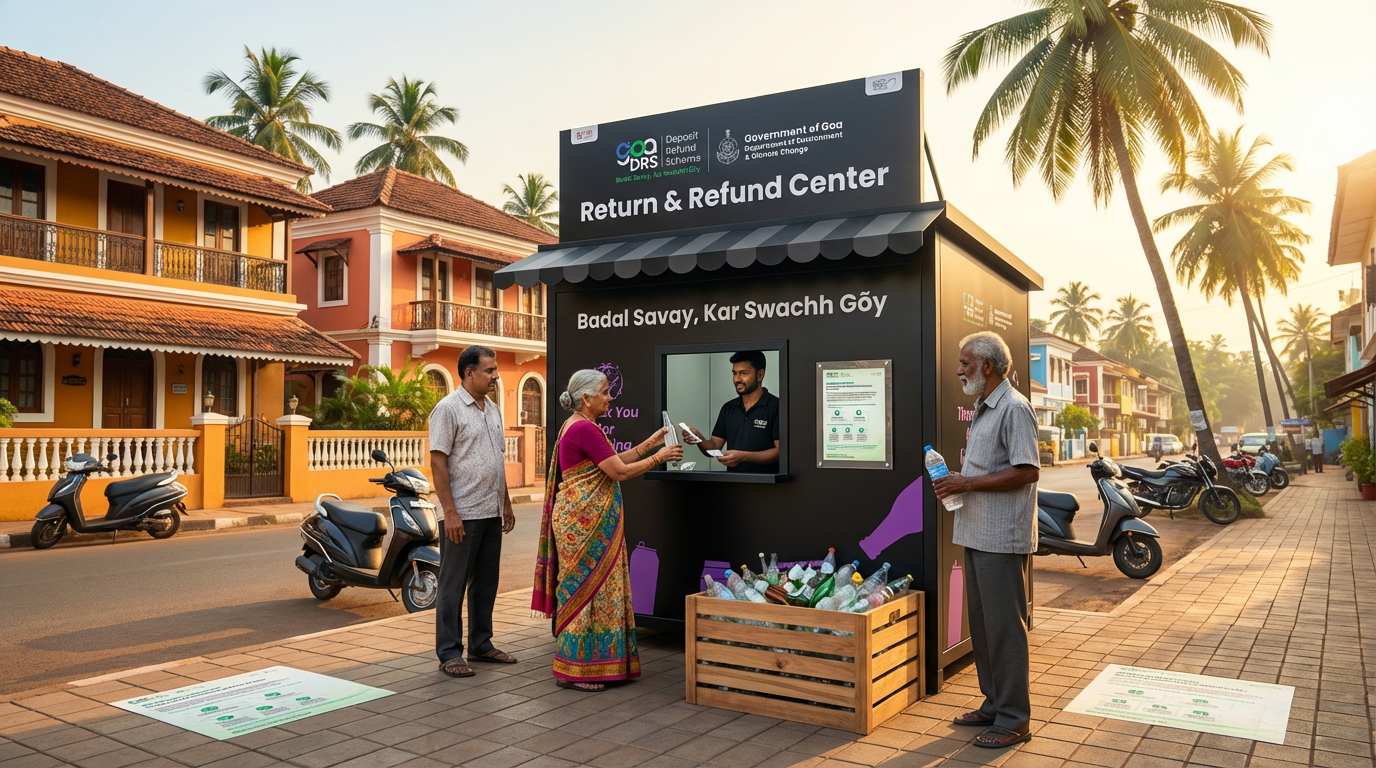
A small extra charge tags along when someone buys drinks in plastic, glass, or metal holders there. This bit of money comes back once the container is returned. The system running in Goa counts on that return loop to keep things moving. People hand them back, get their cash, close the cycle.
Once used, the containers go back via collection points in Goa DRS — money returns when they do.
Becoming useful instead of tossed away, packaging gains new worth through this shift.
Money waiting makes folks choose returns over tossing stuff away.
Behavioral Change Happens
Worldwide, systems that refund deposits often recover more than nine out of ten items.
One way to make it happen lies in the Goa DRS project, which pulls used packaging back into circulation using organized methods.
Consumers can return containers through:
- Collection centres
- Retail return points
- Reverse Vending Machines (RVMs)
- Doorstep collection services
Getting to DRS in Goa feels smooth, open to all kinds of people.
From Waste to Worth
A key benefit? The Goa Deposit Refund System turns packaging trash into something valuable again — waste gets another life instead of vanishing into landfills. What happens is people return containers, then those materials re-enter use rather than pile up. Containers once seen as garbage now hold worth because they can be reused or recycled efficiently. This shift means less litter, plus fewer raw resources pulled from nature. Value hides where it was ignored before: inside what we used to throw away.
If a bottle gets thrown away, somebody else might still bring it back for the refund. Because of that, recycling packaging in Goa grows without force.
With better pay on the line, trash pickers working off the books find new ways to earn.
A Different View on What We Throw Away
What sets the Goa DRS apart isn’t merely how it handles trash. Instead, its core lies in shifting habits. While many systems focus on disposal, this one reshapes routines. Because of that, actions evolve alongside infrastructure. Yet behind bins and collection routes sits something less visible: a quiet redesign of daily choices.
Putting worth on containers makes folks pause before tossing them aside.
Now they bring it back rather than toss it out.
One change might cut down litter across Goa. Trash gets sorted better because of it. A cycle where materials get reused gains strength this way.
Finding out extra details happens at this spot Deposit Refund System in Goa
Frequently Asked Questions
Goa Deposit Refund Scheme Explained?
Back at designated spots, people get their money back after returning used drink containers through the Goa Deposit Refund Scheme. This setup asks buyers to chip in a small extra fee upfront. That amount comes back only once the bottle or can is dropped off properly. Places approved by the program handle these returns. The idea ties payment to bringing packaging full circle.
Understanding Goa’s Deposit Refund System?
Most people hand over a small amount of money when buying drinks. Once finished, empty containers go back via drop-off spots, reverse vending machines, or shops — cash comes right after. Refunds happen only if the container makes it to one of these places.
Goa DRS Packaging Types Covered?
A drink container program often covers items made of plastic, plus those built from glass. Metal versions also fall into this setup, especially when holding liquids people consume.
Goa DRS Container Return Locations?
Some containers go back to drop-off spots. Others make their way into shops that take them. Machines that give credit after scanning show up in malls sometimes. A few get picked up right from home if scheduled ahead of time.
Goa Introduces Deposit Refund System?
Starting with less trash from wrappers, that is what Goa DRS targets. Recycling gets a boost when more people return containers. Litter finds fewer places to stick around under this system. People start thinking differently about disposal, one bottle at a time.
Is the deposit refundable?
Once you send back the packaging and it gets checked in the system, your money comes right back. The full amount goes into your account after they confirm everything’s there.
How does Goa DRS reduce plastic waste?
Picking up on empty packages becomes worth it when they carry a small refund, nudging folks to bring them back rather than toss them aside — so more get collected.
Can someone else return my container?
A refund waits for whoever brings back the container — this step keeps packaging out of landfills. Someone returns it, recycling follows.
메타데이터
- post_id
- f4f51555c91b
- slug
- how-the-goa-deposit-refund-scheme-can-drive-behavioural-change-in-packaging-waste-f4f51555c91b
- url
- https://medium.com/@shivamaduka/how-the-goa-deposit-refund-scheme-can-drive-behavioural-change-in-packaging-waste-f4f51555c91b
- canonical_url
- https://medium.com/@shivamaduka/how-the-goa-deposit-refund-scheme-can-drive-behavioural-change-in-packaging-waste-f4f51555c91b
- author_url
- https://medium.com/@shivamaduka
- status
- ok
- fetched_at
- 2026-06-14 17:09:17