How AI is Transforming Employee Mental Health Support (2026)
Introduction
How AI is Transforming Employee Mental Health Support (2026)
Introduction
Employee mental health is no longer just a personal concern — it has become a critical business priority. In 2026, increasing workloads, hybrid work environments, digital overload, and constant connectivity are making it more difficult than ever for employees to maintain a healthy work-life balance. These ongoing pressures can gradually contribute to chronic stress, emotional exhaustion, and eventually burnout if they are not addressed early.
To respond to these challenges, organizations are increasingly adopting Artificial Intelligence (AI) to strengthen workplace mental health support. AI-powered wellness platforms, virtual assistants, and wearable devices can analyze patterns such as work habits, sleep quality, recovery trends, and stress-related indicators to identify potential warning signs before they become more serious.
However, AI is not designed to replace psychologists, therapists, or other mental health professionals. Instead, it serves as a supportive tool that provides timely insights, encourages healthier habits, and helps employees access appropriate support earlier.
In this guide, you’ll learn how AI is transforming employee mental health support, how the technology works, its key benefits and limitations, important privacy and ethical considerations, and what the future of AI-powered workplace wellness may look like between 2026 and 2030.
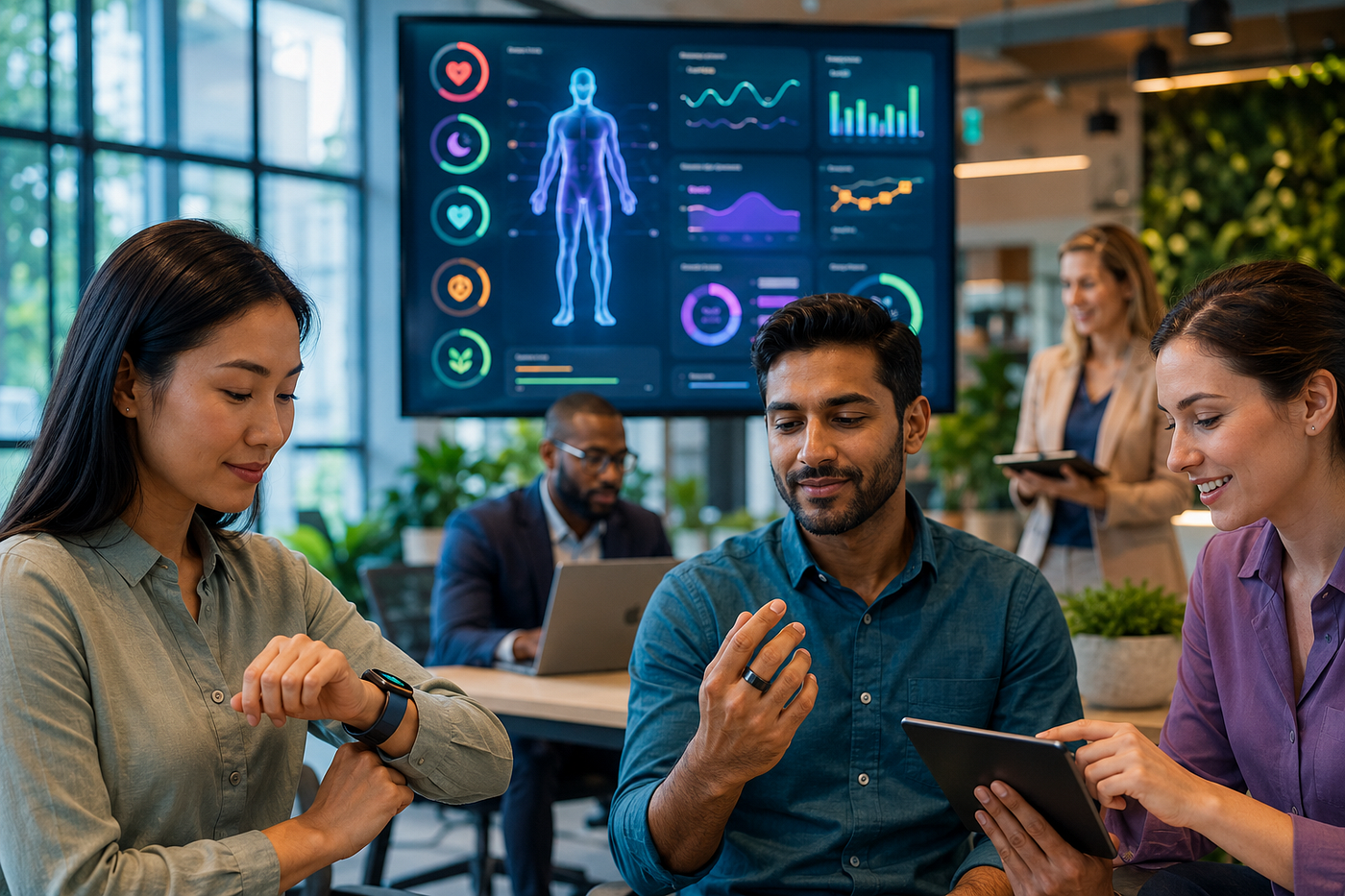
AI-powered workplace wellness helps organizations identify stress trends early while supporting healthier work habits.
What You’ll Learn
By the end of this article, you’ll understand:
- How AI supports employee mental health in 2026
- How AI detects early signs of stress and burnout
- Popular AI tools used in workplace wellness
- The benefits and limitations of AI-powered mental health support
- Privacy, ethics, and responsible AI practices
- Best practices for implementing AI in the workplace
- Future workplace wellness trends from 2026–2030
Quick Answer
AI helps improve employee mental health by analyzing work habits, stress indicators, sleep quality, recovery patterns, and wearable health data to identify possible signs of emotional strain. While AI cannot diagnose mental health conditions or replace professional care, it can provide personalized wellness insights, encourage healthier behaviors, and support earlier intervention. When combined with human expertise, AI contributes to healthier, more balanced, and more resilient workplaces.
Why Employee Mental Health Matters More Than Ever
Employee mental health has a direct impact on productivity, creativity, teamwork, decision-making, and long-term business success. Employees who feel mentally healthy are generally more engaged, collaborate more effectively, and are more likely to remain with their organizations over time.
Modern workplaces also present new challenges that can increase stress levels, including:
- Heavy workloads
- Long working hours
- Remote and hybrid work
- Meeting overload
- Digital fatigue
- Poor work-life balance
- Job insecurity
- Limited recovery time
When these pressures continue for extended periods without adequate support, they can increase the risk of chronic stress, anxiety, emotional exhaustion, and burnout.
As a result, many organizations are shifting from reactive mental health support to preventive workplace wellness, focusing on identifying potential problems early rather than responding only after employees begin to struggle.
Why Traditional Mental Health Programs Are No Longer Enough
Many organizations still rely on annual wellness surveys, occasional employee check-ins, or voluntary requests for support. Although these approaches remain valuable, they often identify problems only after employees have already experienced significant stress or burnout.
AI introduces a more proactive approach by continuously analyzing long-term workplace patterns, including workloads, work schedules, recovery trends, and wellness indicators. This allows organizations to recognize potential concerns earlier and offer timely support before challenges become more severe.
Even so, technology alone is not enough. The most effective workplace mental health strategies combine AI-driven insights with compassionate leadership, open communication, and access to qualified mental health professionals.
Information Gain
Workplace stress is not the same across every industry. Healthcare professionals often experience emotional fatigue from patient care, manufacturing employees may face physical strain and shift-related stress, while technology professionals commonly struggle with digital overload, constant connectivity, and meeting fatigue. Recognizing these industry-specific differences allows organizations to develop more targeted and effective mental health strategies instead of relying on a one-size-fits-all approach.
What Is AI-Powered Employee Mental Health Support?
AI-powered employee mental health support uses artificial intelligence, machine learning, and data analytics to help employees and organizations better understand workplace well-being. Unlike traditional wellness programs that rely mainly on surveys or employees asking for help, AI can identify long-term behavioral patterns and provide personalized wellness insights before problems become more serious.
Common AI-powered workplace mental health solutions include:
- AI wellness assistants
- Virtual mental health chatbots
- Wearable health monitoring
- Stress analysis platforms
- AI wellness coaching
- AI-enhanced Employee Assistance Programs (EAPs)
The goal is not to judge employees or replace human care. Instead, AI is designed to recognize early warning signs, encourage healthier habits, and help connect employees with appropriate support when needed.
How AI Detects Early Signs of Stress
Unlike humans, AI does not judge emotions based on a single event or difficult day. Instead, it analyzes long-term patterns across multiple workplace and wellness indicators to identify changes that may suggest increasing stress levels.
Depending on the system and the data employees have chosen to share, AI may analyze:
- Work schedules
- Overtime patterns
- Meeting overload
- Break frequency and recovery time
- Sleep quality from wearable devices
- Heart Rate Variability (HRV)
- Employee wellness check-ins
- Stress-related health indicators
Rather than relying on one measurement, AI combines multiple signals to create a broader picture of an employee’s overall well-being. This allows organizations to recognize potential concerns earlier and encourage preventive support before stress develops into burnout.
It is important to remember that AI recognizes patterns — not emotions. Human empathy, professional judgment, and mental health expertise remain essential for understanding an individual’s unique circumstances.

AI combines multiple wellness indicators to identify possible early signs of workplace stress.
AI Supports Employees — It Doesn’t Replace Human Care
One of the most common misconceptions about workplace AI is that it will eventually replace psychologists, counselors, or mental health professionals.
In reality, AI performs best as a supportive technology rather than a replacement for human care.
AI can help organizations:
- Identify potential early warning signs
- Provide personalized wellness recommendations
- Encourage healthier daily routines
- Offer immediate access to mental health resources
- Monitor workplace wellness trends over time
For example, an AI wellness assistant might recommend taking regular breaks after detecting consistently long working hours or reduced recovery. However, if an employee is experiencing ongoing emotional distress, anxiety, depression, or burnout, professional mental health support remains essential.
The future of workplace wellness is built on Human + AI Collaboration, where technology provides timely insights while healthcare professionals, managers, and counselors provide empathy, understanding, and appropriate care.
How AI Detects Employee Stress and Burnout
AI identifies potential workplace stress by analyzing long-term behavioral and wellness trends rather than reacting to isolated events.
Depending on the platform, AI may evaluate:
- Working hours and overtime patterns
- Meeting frequency
- Break and recovery time
- Productivity changes
- Sleep quality
- Heart Rate Variability (HRV)
- Daily activity levels
- Employee wellness check-ins
Instead of making assumptions from one stressful day, AI looks for consistent changes over weeks or months.
For example, if an employee regularly works late, skips breaks, experiences poor sleep, and shows declining recovery scores, the system may recommend healthier work habits or suggest additional wellness support.
These recommendations are designed to encourage prevention — not to diagnose mental health conditions.
Wearable Devices and AI Monitoring
Wearable technology has become one of the most valuable sources of wellness information for AI-powered workplace health programs. Devices such as smartwatches and smart rings continuously collect health-related data that can help AI identify long-term recovery and stress patterns.
Common wellness indicators include:
- Heart Rate Variability (HRV)
- Resting heart rate
- Sleep duration
- Sleep quality
- Daily physical activity
- Recovery scores
- Breathing patterns
When analyzed together over time, these indicators provide a more complete understanding of overall wellness than any single measurement alone.

Wearable devices provide valuable health insights that support AI-powered wellness monitoring.
Why HRV Matters
Heart Rate Variability (HRV) measures the variation in time between consecutive heartbeats. It is widely used as one indicator of how the body responds to stress and how well it recovers.
In general:
- Higher HRV is often associated with better recovery, resilience, and adaptability.
- Lower HRV may be associated with stress, fatigue, illness, or inadequate recovery.
However, HRV should never be interpreted in isolation. Exercise, sleep quality, illness, hydration, medications, age, and lifestyle can all influence HRV.
For this reason, responsible AI systems combine HRV with multiple health and behavioral indicators before providing wellness recommendations.
AI Uses Communication Trends Responsibly
Some workplace AI platforms use Natural Language Processing (NLP) to analyze anonymous workplace feedback and broader communication trends.
These systems may evaluate:
- Employee satisfaction surveys
- Anonymous feedback
- Workplace engagement responses
- Overall organizational sentiment
The objective is not to read employees’ private conversations or monitor individuals. Instead, AI looks for organization-wide patterns that may indicate increasing workplace stress, declining morale, or widespread burnout risks.
These insights help leaders improve workloads, communication practices, and employee wellness initiatives while respecting privacy.
AI Helps Prevent Burnout
One of AI’s greatest advantages is its ability to support early burnout prevention.
Rather than waiting until employees become overwhelmed, AI can identify gradual changes that may indicate increasing risk.
Potential warning patterns include:
- Increasing workloads
- Extended working hours
- Poor sleep quality
- Reduced recovery
- Lower physical activity
- Declining workplace engagement
When several indicators consistently appear together, AI may recommend additional breaks, healthier work routines, or access to available wellness resources.
However, these recommendations are based on risk patterns — not medical diagnoses. Burnout is influenced by many personal, social, and workplace factors that AI cannot fully understand.
AI Supports Employees — Not Labels Them
Ethical AI should always be designed to improve employee well-being — not to monitor, judge, or penalize individuals.
A responsible AI wellness system should:
- Encourage healthier work habits
- Recommend wellness resources
- Improve workload balance
- Promote healthier work-life balance
- Support early intervention when appropriate
AI should never be used to:
- Punish employees
- Make hiring or termination decisions
- Replace meaningful human conversations
- Judge an individual’s abilities or performance solely through AI-generated scores
Successful workplace wellness programs use AI to strengthen trust, transparency, and employee support — not workplace surveillance.
AI Tools Transforming Workplace Mental Health
Modern workplace wellness platforms combine several AI-powered technologies that help employees access support earlier while encouraging healthier daily habits.

AI wellness assistants provide personalized guidance that complements human mental health support.
AI Mental Health Chatbots
AI chatbots provide immediate, accessible support by offering:
- Mental health education
- Stress management strategies
- Guided mindfulness exercises
- Emotional well-being check-ins
- Self-care recommendations
- Links to professional mental health resources
Although available 24/7, these chatbots are educational support tools and cannot diagnose mental health conditions or replace licensed therapists.
AI Wellness Coaching Platforms
AI wellness coaching platforms analyze work habits and lifestyle patterns to provide personalized recommendations that adapt over time.
They may suggest:
- Better sleep routines
- More regular work breaks
- Healthier daily habits
- Improved workload management
- Practical stress-reduction techniques
Because recommendations are tailored to individual patterns, AI coaching often provides more relevant guidance than general wellness advice.
Microsoft Viva Insights
Platforms such as Microsoft Viva Insights help employees build healthier work habits by analyzing:
- Meeting overload
- Focus time
- Work-life balance
- After-hours work
- Collaboration patterns
The objective is to reduce unnecessary workplace pressure and improve productivity in a healthier way — not to measure employee value or performance.
Google AI Workplace Features
Google’s AI-powered workplace features help employees stay organized by:
- Managing workloads more efficiently
- Prioritizing important tasks
- Improving scheduling
- Reducing digital overload
Better organization can reduce unnecessary stress and support a healthier work experience.
AI-Enhanced Employee Assistance Programs (EAPs)
Modern Employee Assistance Programs increasingly combine AI with traditional support services to provide:
- Faster access to assistance
- Personalized wellness resources
- Mental health education
- Early guidance
- Connections to qualified professionals
The strongest EAP solutions combine the speed and convenience of AI with the empathy and expertise of human mental health professionals.
Smartwatches and Smart Rings
Wearable devices play an increasingly important role in AI-powered wellness systems by tracking:
- Sleep patterns
- Heart Rate Variability (HRV)
- Daily activity
- Recovery trends
- Stress-related physiological signals
When these indicators are analyzed over weeks or months, employees gain valuable insights into how daily habits influence their overall physical and mental well-being.
Benefits of AI for Employee Mental Health
When implemented responsibly, AI enables organizations to shift from reactive mental health support to proactive workplace wellness.

Responsible AI can help employees build healthier routines and reduce long-term workplace stress.
Some of its most significant benefits include:
Early Detection
AI can identify patterns that may indicate rising stress or burnout risk, allowing earlier support before problems become more severe.
Personalized Support
Instead of offering generic advice, AI provides recommendations based on each employee’s work habits, lifestyle, and wellness patterns.
Better Burnout Prevention
By recognizing unhealthy workload trends early, AI encourages healthier routines before long-term exhaustion develops.
Greater Self-Awareness
Employees gain a clearer understanding of how sleep, recovery, physical activity, and workload influence their overall well-being.
Improved Support for Remote and Hybrid Work
AI helps organizations recognize challenges such as digital fatigue, isolation, meeting overload, and poor work-life balance across distributed teams.
Better Organizational Decision-Making
Leaders can use aggregated wellness insights to improve workplace policies, balance workloads, and create healthier work environments.
Faster Access to Mental Health Resources
AI-powered platforms make educational materials, wellness guidance, self-care tools, and professional support easier to access whenever employees need them.
Challenges and Limitations of AI Mental Health Support
Although AI is transforming workplace wellness, it is not a complete solution. Mental health is deeply personal and influenced by emotional, social, psychological, and environmental factors that technology cannot fully understand.
Some of the most important limitations include:
- AI recognizes patterns but cannot truly understand human emotions.
- Predictions are based on probabilities rather than certainty.
- Poor-quality or biased data may reduce the accuracy of AI recommendations.
- Excessive monitoring can negatively affect employee trust.
- Protecting sensitive health and workplace data requires strong privacy and cybersecurity measures.
- AI cannot diagnose mental health conditions or replace professional therapy.
These limitations highlight why AI should always be viewed as a supportive tool rather than a substitute for qualified mental health professionals.
Privacy, Ethics, and Responsible AI
Employee trust is one of the most important foundations of any successful AI-powered wellness program. Without transparency and responsible data practices, even the most advanced technology can create concerns instead of confidence.
Organizations should follow clear ethical principles, including:
- Obtaining employee consent before collecting personal data
- Explaining what information is collected and how it will be used
- Protecting sensitive data with strong cybersecurity measures
- Limiting access to confidential information
- Including human oversight when interpreting AI recommendations
- Regularly testing AI systems for fairness, accuracy, and bias
The purpose of workplace AI should always be to support employees — not to create unnecessary surveillance or pressure.

Privacy, transparency, and security are essential for responsible AI-powered workplace wellness.
How Companies Can Implement AI Responsibly
Organizations can maximize the benefits of AI by placing employee well-being at the center of every decision.
Best practices include:
- Define clear wellness goals before implementing AI.
- Select employee-focused AI solutions rather than productivity-monitoring tools.
- Communicate openly about how AI works and what data it collects.
- Protect employee privacy with strong security practices.
- Train managers to interpret AI insights responsibly.
- Allow employees to choose whether they want to participate whenever possible.
- Combine AI with Employee Assistance Programs (EAPs) and professional mental health services.
- Regularly evaluate whether AI is genuinely improving employee well-being.
Common Mistakes to Avoid
Organizations should avoid using AI in ways that reduce trust or create unnecessary pressure.
Common mistakes include:
- Treating AI as an employee surveillance system
- Making hiring, promotion, or termination decisions based only on AI-generated scores
- Ignoring employee feedback
- Presenting AI as a replacement for psychologists, counselors, or therapists
The most successful workplace wellness strategies combine technology with transparency, empathy, and supportive leadership.
Can AI Replace Human Mental Health Support?
The short answer is: No.
AI can:
- Identify patterns associated with stress
- Provide wellness education
- Recommend healthier daily habits
- Encourage early intervention
- Improve access to mental health resources
However, AI cannot:
- Understand emotions the way humans do
- Show empathy and compassion
- Diagnose mental health conditions
- Replace therapy or professional counseling
- Build meaningful human relationships
The strongest workplace mental health programs combine AI-powered insights with human expertise, creating a balanced approach that supports both employees and organizations.
Practical Tips for Employees
Employees can benefit most from AI wellness tools by using them responsibly.
Here are a few practical recommendations:
- Use AI as a self-awareness tool — not as a medical diagnosis.
- Develop healthy habits such as quality sleep, regular physical activity, and a balanced work-life routine.
- Protect your personal information and review privacy settings before sharing health data.
- Avoid becoming overly focused on stress scores or wellness metrics.
- Maintain regular communication with managers, colleagues, friends, and family.
- Seek professional support if stress or emotional difficulties continue over time.
Technology should help people build healthier habits — not replace professional medical advice or human judgment.
Common Myths About AI and Mental Health
Myth 1: AI Can Read Human Emotions
Reality: AI identifies behavioral and physiological patterns. It does not truly understand human emotions or feelings.
Myth 2: AI Can Predict Burnout Perfectly
Reality: AI estimates burnout risk based on multiple indicators, but it cannot predict burnout with complete certainty.
Myth 3: AI Will Replace Psychologists
Reality: AI supports mental health professionals by providing useful insights, but it cannot replace clinical expertise, empathy, or therapy.
Myth 4: AI Always Means Employee Surveillance
Reality: Ethical AI focuses on improving employee well-being while respecting privacy, transparency, and informed consent.
Myth 5: More Data Always Produces Better Results
Reality: High-quality, relevant, and responsibly collected data is far more valuable than collecting large amounts of unnecessary information.
Measuring the Success of AI Wellness Programs
Organizations should evaluate workplace wellness programs using meaningful health and engagement outcomes rather than productivity alone.
Useful indicators include:
- Employee engagement
- Employee feedback
- Improved work-life balance
- Higher workplace satisfaction
- Reduced stress-related concerns
- Increased use of wellness resources
- Strong employee trust and privacy protection
Regular evaluation helps organizations improve AI systems while ensuring they continue meeting employee needs responsibly.
The Future of AI and Employee Mental Health (2026–2030)
Over the coming years, AI is expected to become more personalized, predictive, and integrated into everyday workplace wellness programs.
Key trends may include:
- More accurate stress and burnout risk assessment
- Personalized AI wellness assistants
- Greater adoption of wearable health technology
- Better support for remote and hybrid workforces
- Stronger privacy regulations and ethical AI standards
- Closer collaboration between AI, healthcare professionals, and workplace leaders
For example, future AI wellness platforms may combine wearable devices, workplace analytics, and personalized coaching to provide more proactive mental health support. Instead of reacting after employees experience burnout, these systems could identify early warning signs and recommend personalized interventions while giving employees greater control over their personal data and privacy.
Rather than simply measuring productivity, the future of AI will focus on helping people build healthier, more sustainable working lives.
Key trends may include:
- More accurate stress and burnout risk assessment
- Personalized AI wellness assistants
- Greater adoption of wearable health technology
- Better support for remote and hybrid workforces
- Stronger privacy regulations and ethical AI standards
- Closer collaboration between AI, healthcare professionals, and workplace leaders
For example, future AI wellness platforms may combine wearable devices, workplace analytics, and personalized coaching to provide more proactive mental health support. Instead of reacting after employees experience burnout, these systems could identify early warning signs and recommend personalized interventions while giving employees greater control over their personal data and privacy.
Rather than simply measuring productivity, the future of AI will focus on helping people build healthier, more sustainable working lives.

Future AI workplace wellness will combine intelligent technology with personalized human-centered care.
Frequently Asked Questions (FAQs)
Can AI predict employee burnout?
AI can identify long-term patterns that may indicate an increased risk of burnout. However, it cannot predict burnout with complete certainty or diagnose mental health conditions.
How does AI monitor workplace mental health?
AI analyzes information such as work habits, wellness surveys, wearable health data, sleep quality, activity levels, and recovery trends to provide personalized wellness insights.
Can AI detect stress and anxiety?
AI can recognize patterns commonly associated with stress, but it cannot diagnose anxiety or other mental health disorders.
Is AI safe for workplace mental health?
Yes — provided organizations use transparent policies, obtain employee consent, protect privacy, and maintain human oversight.
Can AI replace psychologists?
No. AI is designed to support mental health care by providing useful insights, but professional psychologists and therapists remain essential for diagnosis, treatment, and emotional support.
Key Takeaways
- AI helps identify possible early signs of stress and burnout.
- AI supports workplace wellness but cannot replace human care.
- Privacy, transparency, and ethical AI practices are essential for building employee trust.
- The most effective mental health strategies combine AI insights with professional human expertise.
- Responsible AI can help create healthier, more balanced, and more supportive workplaces.
Conclusion
Artificial intelligence is reshaping workplace mental health by helping organizations recognize stress earlier, provide personalized wellness support, and encourage healthier daily habits. Rather than replacing psychologists, managers, or healthcare professionals, AI works best as a complementary tool that strengthens existing employee wellness programs.
As AI continues to evolve, successful organizations will focus on responsible implementation, employee privacy, transparency, and trust. By combining intelligent technology with compassionate leadership and professional mental health care, workplaces can create healthier environments where employees feel supported, valued, and empowered to perform at their best.
Ultimately, the future of workplace mental health is not about choosing between AI and humans — it’s about combining the strengths of both to create healthier, more supportive workplaces.

The future of workplace mental health depends on collaboration between AI and human expertise.
Call to Action
How do you see the future of AI in workplace mental health?
Do you believe AI can help employees reduce stress and prevent burnout, or do you think human support will always remain the most important factor?
Share your thoughts in the comments below and join the conversation. Your perspective could help others better understand the future of AI-powered workplace wellness.
메타데이터
- post_id
- f51118fa2fa9
- slug
- how-ai-is-transforming-employee-mental-health-support-2026-f51118fa2fa9
- url
- https://medium.com/@sultanatalibt/how-ai-is-transforming-employee-mental-health-support-2026-f51118fa2fa9
- canonical_url
- https://medium.com/@sultanatalibt/how-ai-is-transforming-employee-mental-health-support-2026-f51118fa2fa9
- author_url
- https://medium.com/@sultanatalibt
- status
- ok
- fetched_at
- 2026-08-07 21:31:56





