5 Myths About Poland Everyone Still Believes
Debunking everything you’ve heard online
5 Myths About Poland Everyone Still Believes
Debunking everything you’ve heard online

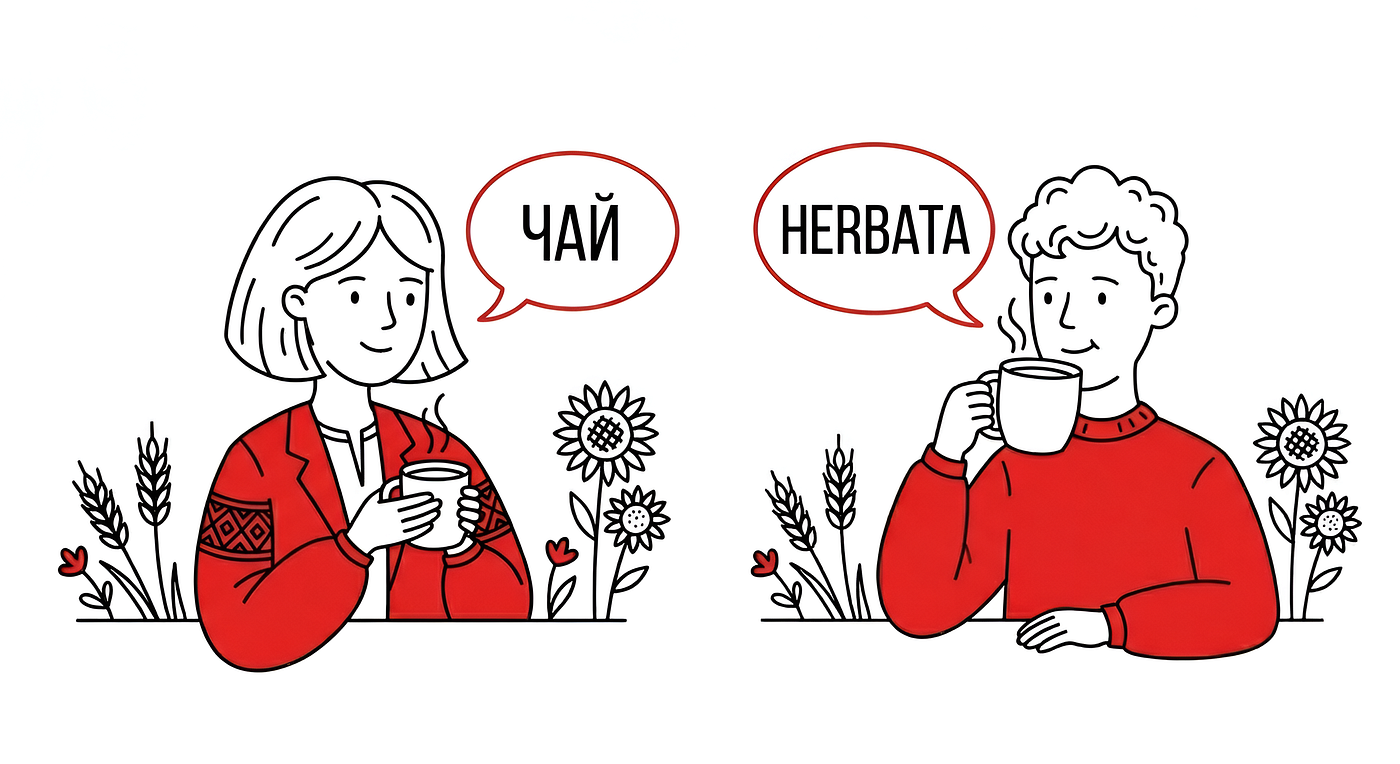
Image generated by the author with Gemini
Bóbr! Ja pierwszy raz w życiu widzę bobra!
Every few months, a new thread explodes on Reddit or Facebook.
Someone posts a screenshot of a Polish word, usually something like *Szczebrzeszyn,* and the comments spiral into hundreds of crying-laughing emojis.
“HOW DO PEOPLE SPEAK THIS???” writes one user.
“This looks like a keyboard smash,” adds another.
The post gets 40,000 likes, and everyone walks away convinced that Polish is some ancient curse language spoken only by wizards and people who avoid vowels.
Let’s fix that real quick.
Here are the biggest myths about Poland and the Polish language straight from forums, Reddit threads, and Facebook comment sections.
Myth #1: Polish Is Impossible
What the internet says:
“I took one look at Polish grammar, and my brain just left my body.” — r/languagelearning, approximately every Tuesday
“Polish is impossible. It has 7 cases, 3 genders, and zero mercy.” — Facebook, every single week
Most people today don’t encounter Polish through a textbook.
They encounter it through memes.
Specifically, through a beaver.
Bóbr — the Polish beaver meme — started on YouTube, and by 2023, it had exploded across TikTok, with one video alone pulling in 31 million views.
Suddenly, millions of people who had never thought about Poland before that knew one Polish word.
Then came jeż (hedgehog), małpa (monkey), and an entire ecosystem of Polish wildlife content that somehow became the unofficial cultural ambassador of a country of 40 million people.
So, your first word in Polish might be a swear word shouted at a rodent. Worse entry points exist.
The truth about the language itself:
Polish only has 3 verb tenses — past, present, and future — compared to English’s 16.
Polish is also a phonetic language, meaning words are read exactly as they are written.
Once you know the rules, you can pronounce any word you see — unlike English, where “tough,” “through,” “though,” and “cough” are apparently a decade-long practical joke.
The Polish alphabet uses Latin letters, just mapped to different sounds than English speakers expect.
That word dziękuję (thank you) that looks terrifying on screen? Once you learn that “dzi” is one sound and “ę” is a nasal vowel, it clicks.
Hard? Yes.
Cursed? Absolutely not.
By the way, if you’re curious to learn a bit more about the difficulties of the Polish language and its status as one of the most challenging in the world, you can read my article:
[embed]Is Polish Really the Hardest Language in the World? Discover what makes Polish uniquemedium.com
Myth #2: Poland Is Dangerous — I Saw It on Reddit
What the internet says:
“I imagine Poland as grey, rundown, post-communist… not sure it’s worth visiting.”
This myth has two flavors.
Version A: Poland is generally sketchy and Eastern European — dangerous.
Version B: Poland is near a war zone.
Both versions keep circulating on Reddit travel threads, Facebook groups, and in the minds of relatives who read one scary headline.
The truth:
Poland consistently ranks as one of the safest countries in Central Europe, with low violent crime rates, clean and walkable cities, and tourism-friendly infrastructure.
Travelers who visited reported that life was completely business as usual, the food was amazing, and their fears disappeared quickly once they arrived.
The most common dangers tourists actually face in Kraków? Pickpocketing, petty theft, and overcharging at tourist spots.
You should definitely stay home instead of risking someone bumping into you near the Main Square.
Myth #3: The Slavic Stare Is Real
What the internet says:
You’ve seen the meme.
The Slavic stare — that deeply unimpressed, thousand-yard gaze deployed at tourists holding maps and smiling too much.
Reddit and Tumblr turned it into an art form.
And there’s that one Facebook thread that asked:
“Why do Polish people look at you like you owe them money — and have owed it for a long time?”
The truth:
Polish people split the world into public and private spheres. Sarcasm and sharp wit form the very core of Polish dark humor, so what sounds blunt to a foreigner is often just how they show affection.
The famous Slavic stare is the face of someone who has decided not to show happiness to strangers. Deeply relatable, honestly.
In reality, if a person doesn’t smile at you, it doesn’t mean they’re evil or angry.
Once you’re in?
You’re in.
Poles are genuinely amazed when foreigners try to learn Polish. They’ll laugh at your mistakes, but not at you
That’s not cold. That’s a great story and a friendship origin.
Myth #4: Poland Is Just Pierogi and Grey Skies
“I imagine Poland as just fog, cabbage soup, and someone looking disappointed at me.” — the general vibe on travel forums
The truth:
Poland is the kind of country that quietly has everything and somehow never brags about it. Here’s what it’s actually working with.
The food genuinely holds up.
- Pierogi — dumplings stuffed with everything from potato-cheese to wild mushrooms to meat.
- Żurek is a sour rye soup with a soft-boiled egg inside that sounds deeply wrong and tastes extraordinary.
- Bigos is a hunter’s stew slow-cooked with sauerkraut and whatever.
- Zapiekanka is an open-faced baguette with toppings — essentially Poland’s answer to pizza.
- Oscypek, a smoked sheep cheese from the Tatra Mountains that you’ll eat standing up at a market in Zakopane and think about for years.
Nature is where Poland really catches people off guard, because it quietly fits like five completely different countries into one.
- Mountains in the south — the Tatra Mountains near Zakopane, with dramatic rocky peaks, glacial lakes (Morskie Oko being the crown jewel), hiking trails in summer, and ski slopes in winter that actually feel alpine.
- The Baltic Sea coast in the north — from the calm of Sopot to the port city of Świnoujście, with clean, surprisingly empty beaches where you can walk for kilometers without seeing crowds.
- Białowieża Forest in the east — one of the last remaining primeval forests in Europe, home to the largest population of European bison on Earth. And yes, the beaver from the meme lives here too. Full circle.
- The Masurian Lakes in the northeast — over 2,000 glacial lakes connected by rivers and canals, perfect for sailing, kayaking, and that specific kind of peaceful getting-lost-in-nature feeling.
- The Bieszczady Mountains in the southeast — wilder, quieter, and almost untouched by international tourism, where it genuinely feels like the edge of the known world.
Not bad at all, I’ll tell you that.
In one week, you can visit the sea, the mountains, and the lakes — and it won’t cost you the world.
Myth #5: Poland Has Never Produced Anything Culturally Significant
“Name one Polish thing that changed the world.” — the classic Reddit challenge, delivered with full confidence
This is the myth that deserves the most dramatic takedown. Because the person posting that Reddit comment has almost certainly, at some point in their life, spent 80+ hours playing a game made in Warsaw.
The truth:
Let’s start with the books.
Andrzej Sapkowski — a Polish author from Łódź — began writing fantasy short stories in the 1980s about a monster hunter named Geralt of Rivia. The stories were rooted in Slavic mythology, moral ambiguity, and the kind of dark literary tone that made most Western fantasy look like a children’s birthday party.
Then came the games.
CD Projekt — a Warsaw-based studio — acquired the rights to Sapkowski’s Witcher books and built one of the most celebrated RPG franchises in gaming history. The Witcher franchise has now sold a total of 85 million copies, with The Witcher 3: Wild Hunt alone accounting for 60 million units.
For context: that’s more than the entire population of Poland, multiplied by 1.5, all choosing to spend 100+ hours exploring a world invented by a Polish writer.
But wait — it gets better.
Following the massive success of The Witcher 3, CD Projekt became the most valuable video game company in Europe in 2020, surpassing Ubisoft.
And then there’s Cyberpunk 2077. CD Projekt Red’s next title became one of the most anticipated video games of all time, with Keanu Reeves on the poster and the entire gaming world holding its breath at every trailer.
And Dying Light, by Polish studio Techland, adds another 20 million to the tally.
Three of the top-selling Polish games sit at 60, 35, and 20 million copies sold respectively.
So the next time someone on Reddit asks you to name one Polish thing that changed the world, you have options: the game they’re probably procrastinating with right now, the book series it was based on, or the studio that became Europe’s most valuable games company.
Take your pick.
The Final Verdict
Polish is hard. Nobody is pretending otherwise.
The US Foreign Service Institute ranks it as a Category 4 language, estimating roughly 1,100 hours to reach proficiency. But those are 1,100 hours that could just as easily be spent doom-scrolling, so the trade-off isn’t that bad.
What Polish is not: impossible, pointless, or some kind of linguistic punishment.
It’s a rich, ancient, phonetically consistent language spoken by over 50 million people worldwide — the same language that gave us Geralt of Rivia, Night City, and a beaver that broke the internet.
Next time you see someone screaming about Szczebrzeszyn online — a real town, and locals are extremely proud — you’ll know what’s actually going on.
And I think I’ll go replay Cyberpunk again, but this time for the happiest ending possible.
Thank you for reading!
메타데이터
- post_id
- f52c236f8a9a
- slug
- 5-myths-about-poland-everyone-still-believes-f52c236f8a9a
- url
- https://medium.com/activated-thinker/5-myths-about-poland-everyone-still-believes-f52c236f8a9a
- canonical_url
- https://medium.com/activated-thinker/5-myths-about-poland-everyone-still-believes-f52c236f8a9a
- author_url
- https://medium.com/@polskizleo
- status
- ok
- fetched_at
- 2026-06-09 14:34:10