Here are the top 10 journalism collaborations of 2025
Every year, the Center for Cooperative Media at Montclair State University tracks journalism collaborations through its database, the…
Graphic by Joe Amditis.
Here are the top 10 journalism collaborations of 2025
Every year, the Center for Cooperative Media at Montclair State University tracks journalism collaborations through its database, the collaborative journalism website, and its newsletter. And every year, I spend time in December reflecting on the collaborations that broke new ground, generated impact, or were otherwise noteworthy.
This year’s list showcases the continued evolution of collaborative journalism, with partnerships tackling everything from cryptocurrency crime to climate action, from transnational repression to immigrant news infrastructure. What stands out in 2025 is how collaborations are maturing — not just producing one-off investigations, but building sustained networks and shared infrastructure that serve communities over the long term.
As always, this list was compiled with input from the Center’s team — especially Mariela Santos-Muniz and Joe Amditis, who track these projects throughout the year.
In no particular order, here are our picks for the top 10 collaborations of 2025:
1. The 89 Percent Project (Covering Climate Now)
The 89 Percent Project is a year-long global journalism collaboration that launched in April 2025 to explore a “a pivotal but little-known fact about climate change: The overwhelming majority of the world’s people — between 80 and 89%, according to recent science — want governments to take stronger action.”
Led by Covering Climate Now with The Guardian as its lead partner, the project organized two joint coverage weeks — one around Earth Day and another ahead of the COP30 UN climate summit in November. The collaboration asked crucial questions: Who are the 89%? Why don’t they know they’re the overwhelming global majority? And what’s causing the climate democracy deficit when governments aren’t delivering the action people want?
What makes this collaboration particularly innovative is its focus on solutions journalism — not just documenting the problem but exploring what tools and approaches exist to close the gap between public will and political action.
2. Damascus Dossier, China Targets and The Coin Laundry (International Consortium of Investigative Journalists)
The International Consortium of Investigative Journalists delivered three massive investigations in 2025 that exemplify the power of cross-border collaboration.
Damascus Dossier, published in December, exposed the inner workings of former Syrian President Bashar Assad’s system for detention, torture and murder. CIJ worked with 24 media partners in 20 countries, drawing on more than 134,000 classified Syrian intelligence files and 70,000 photographs documenting the deaths of more than 10,200 prisoners.
China Targets, published in April, involved interviews with more than 100 victims across 23 countries and revealed how Beijing uses international institutions like Interpol to target critics and extend repressive tactics worldwide.
The Coin Laundry, launched in November, exposed how cryptocurrency platforms profit from the proceeds of crime. More than 100 journalists from ICIJ and 37 news outlets in 35 countries traced tens of thousands of cryptocurrency transactions and found major exchanges moving hundreds of millions of dollars tied to illicit actors — even after some had pleaded guilty to crimes related to money laundering.
Together, these investigations demonstrate ICIJ’s unmatched ability to coordinate complex, data-driven reporting across continents.
3. Climate News Task Force
Twelve climate-focused newsrooms joined forces in March 2025 to launch the Climate News Task Force, a new initiative aimed at enhancing collaboration in climate journalism. The task force includes Canary Media, Drilled, Floodlight, Grist, High Country News, Mississippi River Basin Ag & Water Desk, Mountain West News Bureau, Planet Detroit, Sentient, Wisconsin Watch, and Mother Jones/Reveal and The Xylom.
Led by Floodlight’s Emily Holden and backed by grants from the MacArthur Foundation, Walton Family Foundation, and Meliore Foundation, the task force is developing new tools and platforms to facilitate content sharing, measure impact, and create a funding roadmap for philanthropy interested in supporting climate journalism. The initiative recognizes a critical gap: in 2023, climate stories accounted for less than 1% of total major network content, even as public demand for climate coverage has grown exponentially.
4. Immigrant News Coalition
In July 2025, four immigrant-serving nonprofit newsrooms and the Listening Post Collective announced the formation of the Immigrant News Coalition, enabled by a three-year, $1.5 million grant from Press Forward and a $350,000, two-year grant from Democracy Fund.
The coalition brings together Documented (New York), Conecta Arizona, Sahan Journal (Minnesota), and El Tímpano (Bay Area) to collaborate on stabilizing and scaling their work. This comes at a critical time: the group noted that more than 150 ethnic media outlets have shuttered since 2020, leaving immigrant communities without reliable news in their languages. Meanwhile, polling from KFF shows nearly half of immigrants in America lack information about how U.S. immigration policies impact their lives.
What makes this collaboration significant is its focus on building sustainable infrastructure for immigrant-serving newsrooms, not just producing stories. It intends to create scaffolding for long-term success in this vital sector of journalism.
5. The Trump/Africa Divide (Center for Collaborative Investigative Journalism)
The Trump/Africa Divide is a multi-part investigation examining the devastating consequences of President Trump’s foreign aid cuts to Africa. The Center for Collaborative Investigative Journalism coordinated reporting that found at least $5 billion in aid lost and projected that more than 570,000 people may die due to cuts in medical aid.
The investigation revealed pregnant women losing access to needed medicines and the chaos created across the continent as life-saving medications were no longer delivered. One story focused on Kyuntu John, a mother of three who walks to a spot where she boards a motorcycle to a junction, then takes a cab to get her antiretroviral therapy medication — a journey made more precarious by aid cuts.
By combining data journalism, on-the-ground reporting, and visual storytelling, CCIJ created a comprehensive picture of how policy decisions in Washington directly impact lives thousands of miles away.
Editor’s note: Andrew Lehren, an employee of the Center, was a reporter on this series for CCIJ.
6. Wichita housing investigation (Kansas Local Journalism Collaboration)
The Wichita Journalism Collaborative — a coalition of 10 organizations including KMUW and The Journal — spent part of 2025 investigating why finding a home in Wichita has become so difficult, particularly for first-time buyers.
The investigation analyzed 20 years of building permit data and found that Wichita is missing 17,000 single-family homes that would have been built if the community had maintained its pre-recession construction pace. The city’s current housing shortage sits somewhere between 20,000 and 50,000 units. The data also revealed how the Great Recession fundamentally reshaped Wichita’s homebuilding industry.
The collaborative’s reporting —which included sophisticated data analysis by journalist Janelle O’Dea and involved navigating Kansas Open Records Act requests — put human faces on the statistics by following first-time buyers Natalie and Alex Beauchamp through their six-week search for a home. The investigation demonstrates how local collaboratives can use data journalism to illuminate complex housing issues affecting their communities.
7. Federal ICE investigation (Six Chicago-area newsrooms)
In one of the most illuminating local collaborations of 2025, six Chicago-area newsrooms and independent journalists investigated federal agents’ use of chemical weapons during Operation Midway Blitz.
Block Club Chicago, Cicero Independiente, the Investigative Project on Race and Equity, Invisible Institute, South Side Weekly, and The TRiiBE collaborated to document at least 49 uses of tear gas and pepper spray across 18 incidents.
The investigation found that federal agents repeatedly used chemical weapons on nonviolent protesters — even after a judge placed restrictions on their use. Videos and photos gathered through a collaborative tip line showed agents tossing tear gas from moving vehicles and deploying gas with little warning, including incidents where tear gas seeped into residential homes through air-conditioning vents.
The collaboration demonstrated the power of local newsrooms pooling resources to hold federal authorities accountable, with reporters conducting video analysis and creating detailed maps of chemical weapon deployments. A U.S. District Court judge later found that Border Patrol Chief Greg Bovino had lied about his use of tear gas.
8. OCCRP’s 2025 investigations: Bad Practice, Dear Compatriots, and Scam Empire
The Organized Crime and Corruption Reporting Project delivered three major cross-border investigations in 2025 that exposed global corruption and crime.
Bad Practice, published in October, examined what happens when patients’ trust in doctors is abused, investigating medical professionals who exploit their positions.
Dear Compatriots, launched in May, revealed how a state-backed Russian foundation claiming to provide legal aid to Russians abroad has for years advanced the Kremlin’s global agenda.
Scam Empire, published in March, investigated scam call centers that have conned ordinary people around the world out of hundreds of billions of dollars, revealing the infrastructure and networks behind these operations.
OCCRP continues to set the standard for sophisticated, multi-country investigations that combine document analysis, data journalism, and on-the-ground reporting.
9. Sowing Resilience (Institute for Nonprofit News Rural News Network)
Sowing Resilience is a collaboration between the Institute for Nonprofit News’ Rural News Network and The Associated Press that published nine stories in September 2025 examining food insecurity in rural America.
The series revealed how rural communities across the country are grappling with a food crisis compounded by government cuts and soaring costs. Stories explored how Kentucky kicked people off food benefits using flawed data, how the Osage Nation in Oklahoma is combating uncertainty in federal support, and how Black women are driving a food revolution in rural Mississippi. Nine nonprofit newsrooms participated, and the series demonstrates how the Rural News Network — which INN launched in 2023 — has matured into a powerful collaborative force.
10. MLK50’s Creator-in-Residence program (MLK50: Justice Through Journalism and Amber Sherman)
(Hat tip to Adriana Lacy of Adriana Lacy Consulting for this one!) In March 2025, MLK50: Justice Through Journalism in Memphis launched a Creator-in-Residence program with Amber Sherman, a local policy organizer and TikTok creator with 45,500 followers across platforms. The year-long collaboration pairs Sherman’s authentic community voice with MLK50’s investigative mission to address poverty, power and policy.
What makes this collaboration significant is how thoughtfully MLK50 navigated the ethical complexities. Sherman is a newsmaker — someone journalists frequently quote and feature — which raised immediate concerns. The newsroom addressed this by co-designing clear guidelines: Sherman would focus on civic education, with branding that reinforced her independence. When she was briefly detained during a police operation, MLK50 responded with the same care it would for any staff member while maintaining editorial distance by not covering the incident itself.
The results speak to a new model of journalism collaboration.
🏅 Collaboratives to watch, honorable mentions
There are too many to name, but here are a few more collaborative initiatives and reporting projects you should know about or keep an eye on in 2026:
- The continued growth and evolution of **URL Media**, which has now become a powerhouse network supporting BIPOC media organizations across the country.
- The Granite State News Collaborative and its “Know your news” initiative — such a unique idea.
- The** Collaborative Journalism Resource Hub**, based here at the Center for Cooperative Media, which is in the process of launching four new collaboratives in the U.S. — on track to hit 20 in five years — and is supporting sustainability coaching for four others.
👋 Want to learn more about collaborative journalism?
Sign up for our biweekly newsletter or visit collaborativejournalism.org
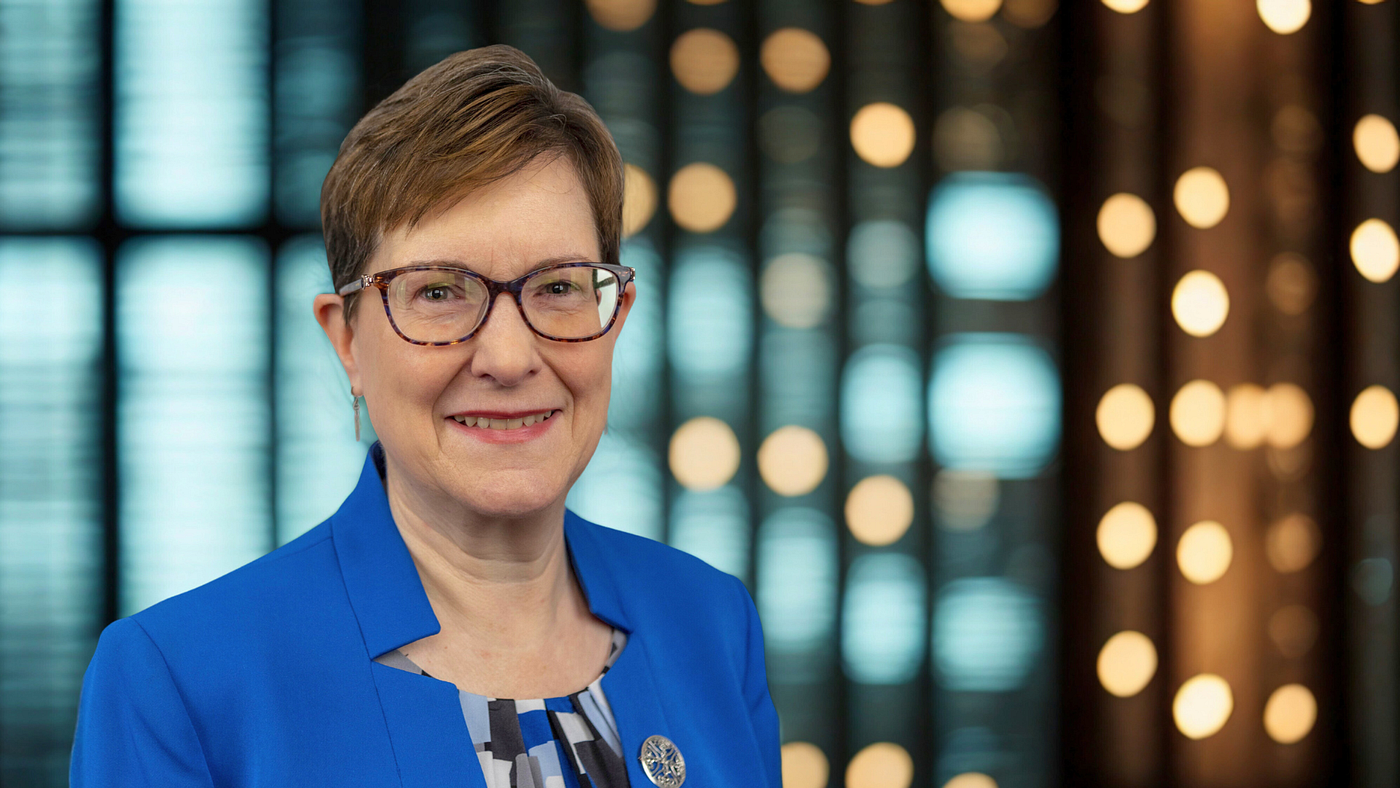
Stefanie Murray is the director of the Center for Cooperative Media at Montclair State University. Contact her at murrayst@montclair.edu.
About the Center for Cooperative Media: The Center is a primarily grant-funded program of the College of Communication and Media at *Montclair State University. Its mission is to grow and strengthen local journalism and support an informed society in New Jersey and beyond. The Center is supported with funding from Montclair State University, Robert Wood Johnson Foundation, Democracy Fund, the New Jersey Civic Information Consortium, Rita Allen Foundation, [Inasmuch Foundation](https://inasmuchfoundation.org/), Google News Initiative, and John S. and James L. Knight Foundation. For more information, visit centerforcooperativemedia.org.*
메타데이터
- post_id
- f58a6cb7b0df
- slug
- here-are-the-top-10-journalism-collaborations-of-2025-f58a6cb7b0df
- url
- https://medium.com/centerforcooperativemedia/here-are-the-top-10-journalism-collaborations-of-2025-f58a6cb7b0df
- canonical_url
- https://medium.com/centerforcooperativemedia/here-are-the-top-10-journalism-collaborations-of-2025-f58a6cb7b0df
- author_url
- https://medium.com/@stefaniemurray
- status
- ok
- fetched_at
- 2026-08-17 07:11:18