Fox vs Wolf
My interpretation of the unique interaction between Mr. Fox and the wolf
Fox vs Wolf
My interpretation of the unique interaction between Mr. Fox and the wolf
The notion of individualism plays a crucial role in the film, as it not only shapes the characterization of certain members of the cast but also provides the audience with a framework for understanding narrative progression. Additionally, this theme encourages connections between the characters and the audience, ultimately facilitating introspection that otherwise would have been considered irrelevant. Before diving deeper, Individualism is seen as ‘an approach to life that emphasizes the essential right to be oneself and to seek fulfillment of one’s own needs and desires’, according to the American Psychological Association and other scholars. This definition perfectly sums up a crucial aspect of Mr. Fox’s character, his selfishness and desire to satisfy his own ego by being the ‘ideal ‘animal.

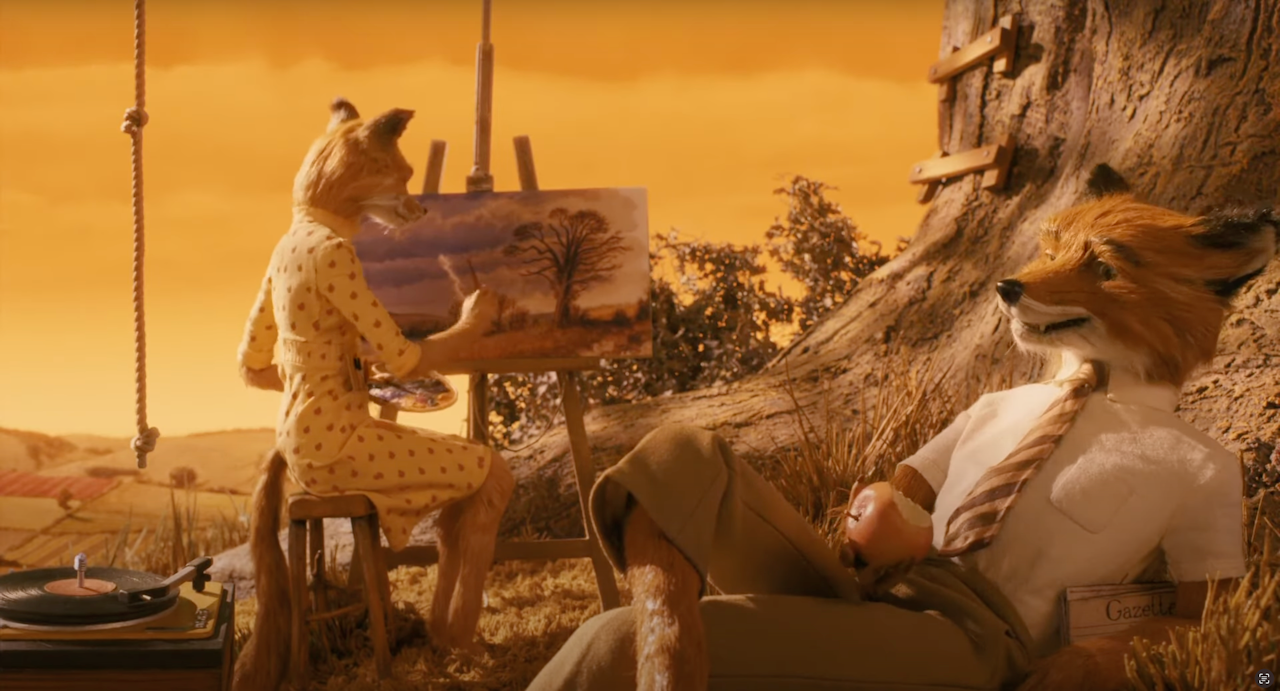
Mr. Fox reading the Morning Paper
One impactful scene that not only stands out to me but also delves into Mr. Fox’s individualism comes near the end of the film when he encounters a wolf, a creature that stands in contrast to the anthropomorphized world of Mr. Fox, his family, and his friends. The scene is visually striking, immediately setting the stage for its deeper meaning. The wolf is depicted in a stark, icy environment, with a more realistic and primal design compared to the stylized characters of the film. This divide, presented without excessive dialogue, symbolizes the separation between Mr. Fox’s civilized, ego-driven persona and his raw, animalistic nature.
The wolf never speaks, even as Mr. Fox addresses it with continuous questioning, yet the two manage to connect in a profound and understated way. Their silent communication culminates in a unified fist pump, a simple gesture that showcases the mutual understanding reached between them. While some viewers may find the scene unusual, it serves as a key moment of introspection for Mr. Fox. The wolf acts as a symbol of his fragile ego and his intrinsic need to pursue greatness, an embodiment of the primal instincts he has been grappling with throughout the story.
The framing during this scene is interesting. Mr. Fox often looks toward the audience after speaking, breaking the fourth wall in a subtle way that bridges the gap between his internal conflict and the viewer’s perception. The questions he poses to the wolf, such as “Where did you come from?” and “Why are you here?” reflect his own uncertainty about his identity and purpose. Despite receiving no verbal replies, Mr. Fox persists in his attempts to communicate, showcasing his willingness to confront his fears and grow beyond his ego-driven tendencies, even in the face of the unknown.
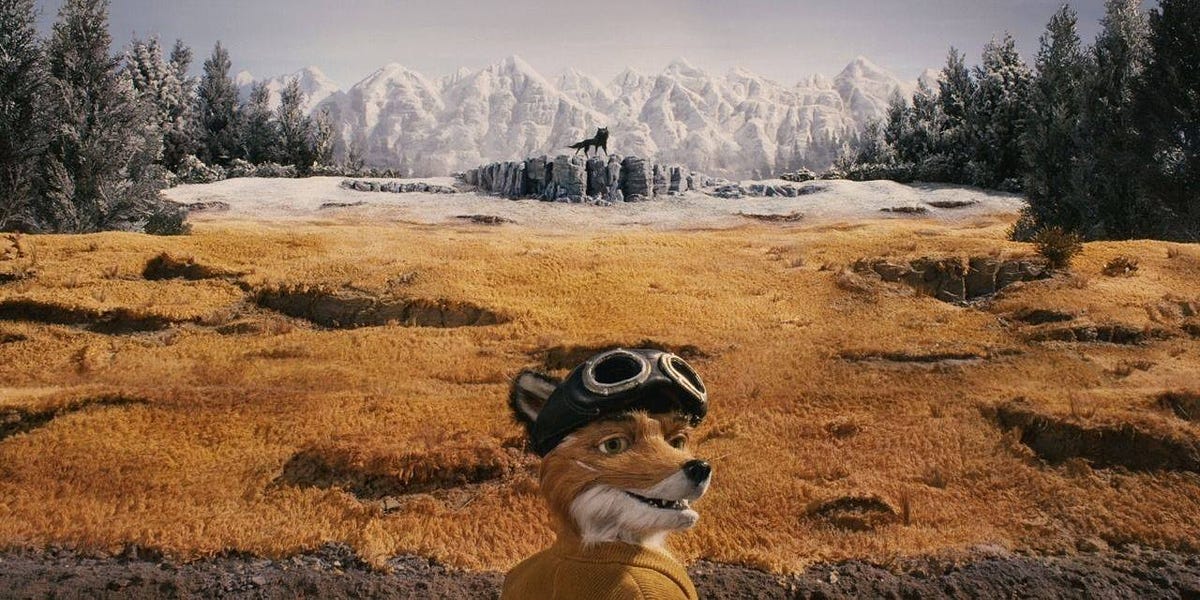
Mr. Fox Looking at the Viewer
One of the most significant moments in this scene occurs when Mr. Fox asks, “Are we in for a hard winter?” This question is layered with meaning, serving as a metaphor for his internal struggle. In essence, It is Mr. Fox asking himself whether the mental and emotional changes he is undergoing will be painful or rewarding. The wolf does not respond. Mr. Fox interprets this answer as general uncertainty, which in turn mirrors the unpredictable nature of personal growth and change. Next, Mr. Fox admits, “I have a phobia of wolves,” it hints at a deeper fear, his anxiety about confronting his own ego and the consequences of his actions. The wolf, in this context, represents not just his primal instincts but also his apprehension about facing the unknown aspects of his identity. The scene concludes with tears in Mr. Fox’s eyes and the shared fist pump, symbolizing not only unity between the two but also Mr. Fox’s acceptance of his flaws and his readiness to embrace the uncertainties of change. This scene provides a rare glimpse into Mr. Fox’s psyche from a point of view not experienced in the film, allowing the audience to empathize and support the protagonist as he undergoes this change
[embed]Mr. Fox Meeting the Wolf
Towards the end of the film, these individualistic traits begin to fade away as he finally realizes the importance of community and the joy of being accepted without the need to be special. The ending scene where the characters are dancing in the supermarket perfectly encapsulates this, as we see an expression of happiness that goes beyond fear and shame.
Wes Anderson was able to achieve this level of animation spectatorship by enhancing the viewing experience of the audience through the use of various stimuli that draw upon the shared memories of the spectators These stimuli range from the doll-like movement and design of the cast, which evokes a sense of nostalgia that transports the audience to periods in their youth, to the unique voice acting, which brings a level of naturalism that not only perfectly contrasts the surreal aesthetic of the film but also bridges the gap between the crazy world of Mr. Fox and the grounded reality familiar to the audience.

Modeling of Mr. Fox
메타데이터
- post_id
- f5e68b0a6dd1
- slug
- fox-vs-wolf-f5e68b0a6dd1
- url
- https://medium.com/@Martyr213/fox-vs-wolf-f5e68b0a6dd1
- canonical_url
- https://medium.com/@Martyr213/fox-vs-wolf-f5e68b0a6dd1
- author_url
- https://medium.com/@Martyr213
- status
- ok
- fetched_at
- 2026-07-18 18:54:24