Human Infrastructure and the Myth of Persuasion
By Daniel Forkkio, Represent Justice
Human Infrastructure and the Myth of Persuasion
By Daniel Forkkio, Represent Justice
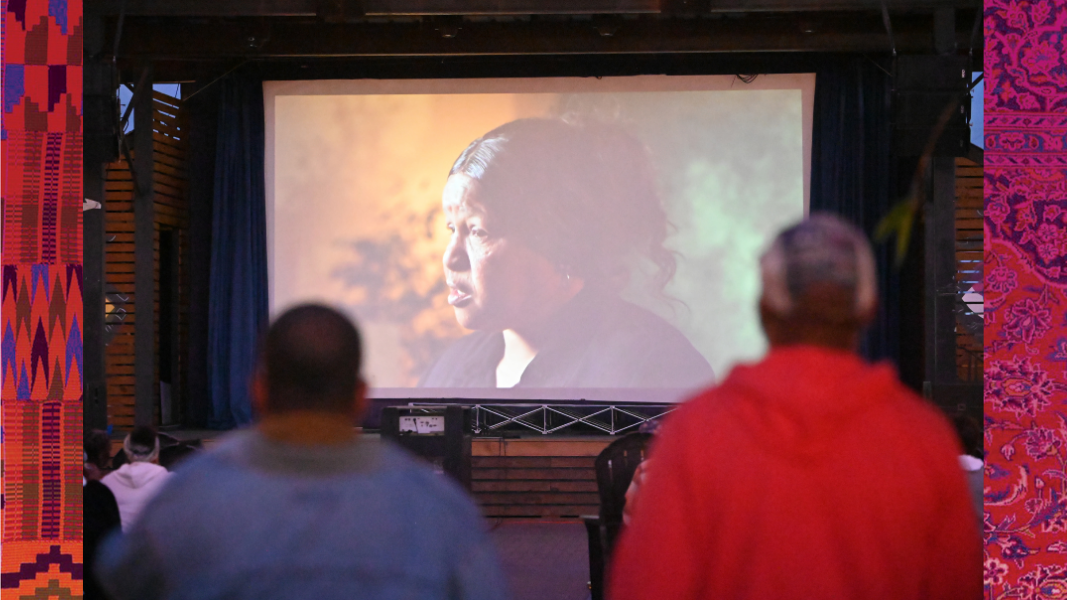
Photo from an “Over Punitive” short documentary screening.
Growing up in Washington D.C., politics consumed nearly every aspect of my daily professional life. Like most of the public, when I thought of changing systems, I thought mostly about changing the minds of people in elected office. Politicians, political pundits, and others in the policy ecosystem were who I thought of as the primary audience for changing the world. Every tactic, including storytelling, was molded to fit that paradigm — storytelling for policy sake, storytelling to persuade the “elites.”
The dominant assumption in American politics is that culture follows policy and that storytelling exists primarily to influence political outcomes. We build campaigns around persuading decision-makers, changing public opinion, and moving polling numbers. Success is measured by what happens in legislatures, courtrooms, and election cycles. As a result, most stories are told in silos, stripped of their complexity and boiled down to the basics of a short message, facts & statistics, and a credible messenger. Stories that are seen as too pluralist, or as encompassing too many uncomfortable ideas, are therefore risky, ineffective, and not ideal for changing systems.
We’ve forgotten the primary function of storytelling altogether.
In our rush to influence institutions, we often overlook the infrastructure that makes institutions possible in the first place: relationships, trust, shared memory, cultural identity, belonging, and collective imagination. Before storytelling was a communications tool, it was human infrastructure. It was how we preserved our collective memory, warned one another, codified our values, and imagined the world together. It was how we healed, celebrated, and established a connection with one another.
This overemphasis on politics is one that not only affects our tactics, it affects the way we design our strategies. In a world where punditry and policy is the primary way we view change, only a few skilled people are deserving of narrative power. Sharing stories becomes a matter of placing Op Eds in the most prestigious outlet. Stories that contain too much joy, too much anger, too much humanity and too much unresolved tension are considered risky because they don’t fit a political framework. Our surveys focus on opposition, not on the collective power of our proponents. But as we see with the recent Emmy wins by films like Songs from the Hole and The Strike, audiences are complex, and community CAN be the priority audience. Building narratives within a community can be just as important as persuading audiences outside of the community.
As CEO of Represent Justice, with every trauma-informed film produced, impact campaign designed, and human experience connected to community through our programming, it becomes increasingly clear that narrative is not being shifted within communities. Instead, it is being awakened from decades of fear, apathy, and distance. What is most vital is a human infrastructure of connection and empowerment, not just a political infrastructure of persuasion.
Take, for example, the Represent Justice campaign around the film Kemba, a fictionalized account of Kemba Smith Pradia, who was sentenced to over 24 years in prison in 1995 due to mandatory minimum drug laws before finally being pardoned in 2000. While Kemba’s story has a direct message of resentencing those convicted during the failed War on Drugs, her story more deeply highlights the disproportionate impact of mass incarceration on women, especially women of color, and survivors of abuse. Kemba both used her story at the highest political levels of change by achieving a Presidential commutation for fellow survivor Michelle West, but as importantly, Kemba brought her story to college campuses, partnered with Delta Sigma Theta sorority chapters across the country, and established a unique moment of solidarity around the incarceration of Black women & girls nationwide. For the Deltas, Kemba’s story was a moment of collective acknowledgment for a new audience — that young Black girls on college campuses have been swept up into extreme prison sentences due to the actions of their partners, and that intimate partner violence has a major role in mass incarceration.
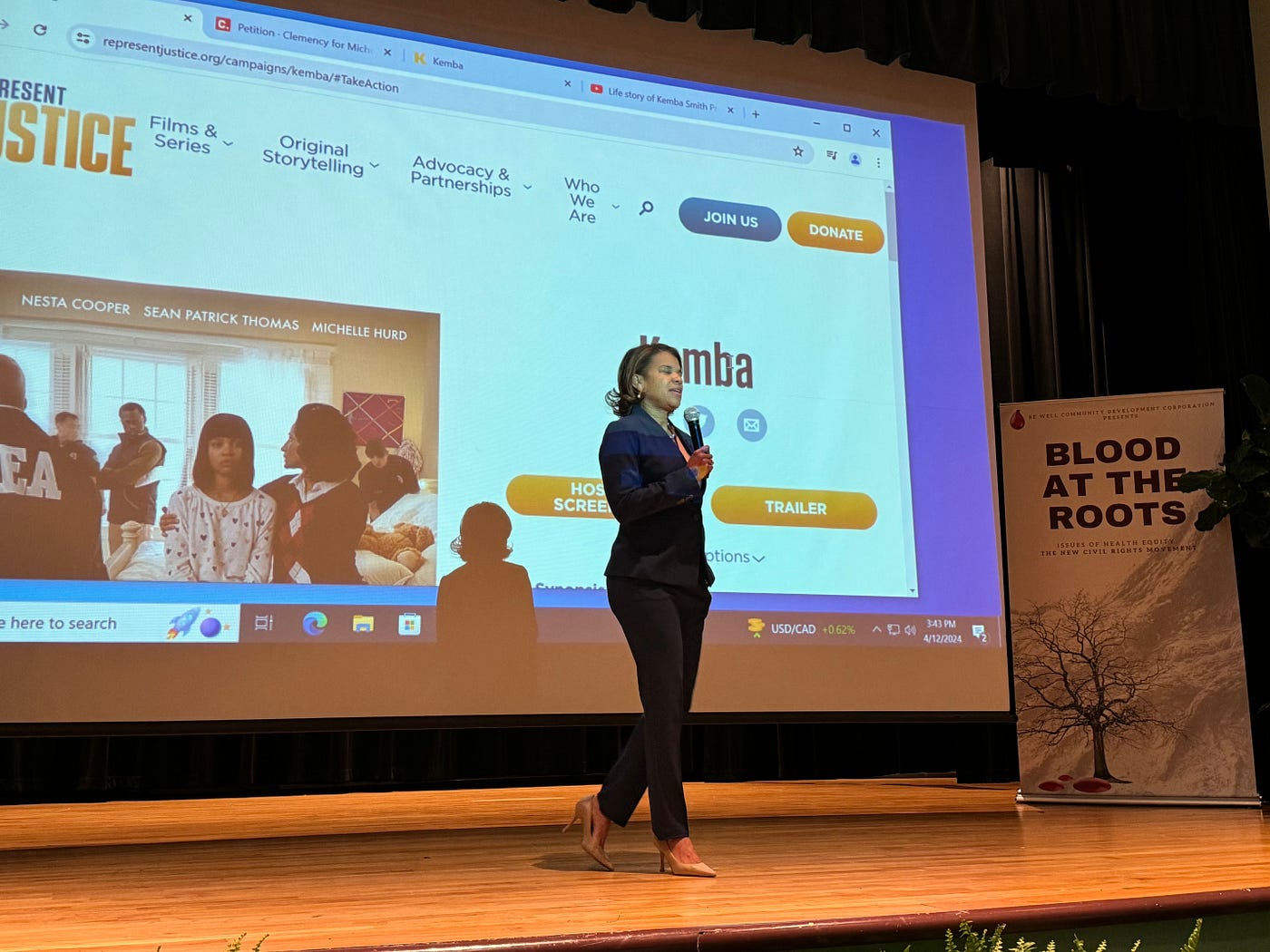
Kemba Smith Pradia speaking at a screening of “Kemba”.
Narrative, therefore, is more of an act of reclamation than it is persuasion. And, there are organizations leading this shift towards solidarity. One of the most powerful examples is the BLIS Collective, founded and led by Trevor Smith and Savannah Romero, two of our peers in the narrative justice space. BLIS Collective is focusing on the “Hope Gap” and challenging communities to mobilize in solidarity by taking back the narrative, being intersectional in our storytelling, and using storytelling as a tool for the reclamation of our society by Black, Indigenous, and transformative movements. The focus is on unlocking and creating a shared understanding of the power we already have, and not on persuading those who aren’t interested in our success.
BLIS is not just researching and reframing — they’re putting it into practice, something desperately needed in the field of narrative change. Two weeks before the U.S. marks its 250th Anniversary celebration, BLIS Collective is hosting “Reclamation Day” on June 20th in New York City. Rather than a day of policy debate and persuasion, it’s a day of art, music, films, performances, and creative fellowship around our shared history. Reclamation Day promises to connect people who are searching for something bigger than what they see in government debate.
We see this truth at Represent Justice every day. That the process of storytelling is just as important as the end result, and that reach starts with community connection, not with major platforms and media outlets. But most importantly, that narrative change is not a function of polling, but renewed relationships and beliefs within the community.
It’s one of the reasons we are proud members of Color Congress — a network of committed organizations led by people of color that serve nonfiction filmmakers, leaders, and audiences of color across the United States and US islands, with a vision for a thriving storytelling sector where the barriers between filmmakers, our stories, and audiences are dismantled and where accessibility is centered.
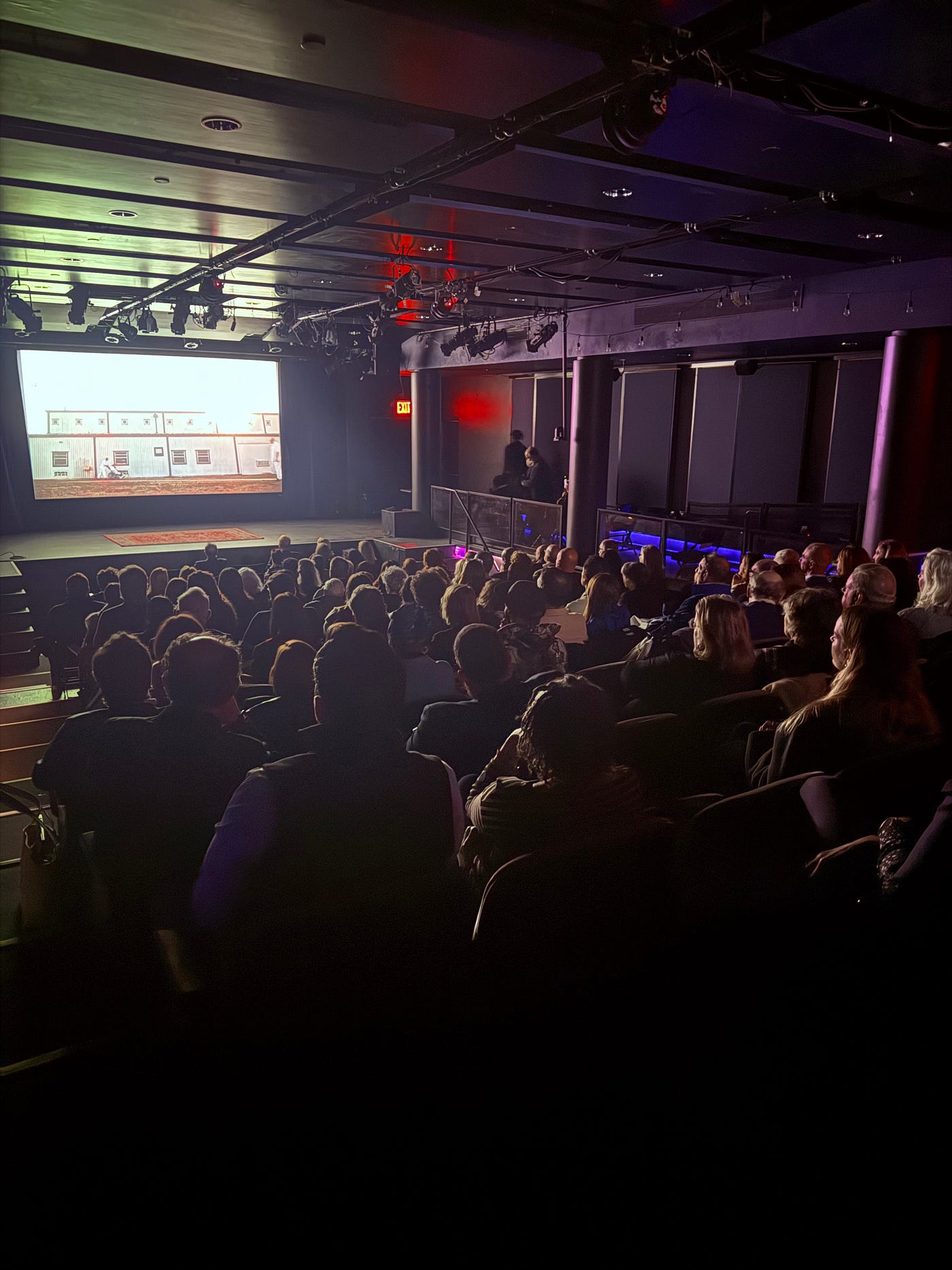
Film screening at the Center for Community Alternatives.
People often ask whether policy shifts downstream, or upstream, from narrative change — the correct answer is both, policy is the “top” of the stream. Narrative experts understand that these policy decisions are just snapshots — not to be overstated as true beliefs of the public. Rinku Sen of the Narrative Initiative, the premier organization researching and transforming beliefs with social movements, discusses narrative change as happening over decades, broken into small chunks. At the top of the narrative ocean are policy debates and stories, which consume most of our daily lives. But deeper, are the core values and worldviews that shape those messages. And that is precisely where we must reclaim with audiences. It won’t happen within legislative sessions, and it can’t be reactive to the latest from Capitol Hill.
The work is already happening. Organizations are shifting towards solidarity and connections across different justice movements, and storytelling for narrative change must take the same road. Disability justice and human rights are tied together through films like Crip Camp. Climate justice and criminal justice are tied together through films like For Venida, for Kalief. Solidarity requires infrastructure in order to gather, reach consensus, build trust and take action. From that infrastructure, the most beautiful and well-told films with community can reach scale.
This is where the vital work of Color Congress comes in. Each member organization brings a unique perspective, but shares a value set and belief in the role that storytelling plays in building the future we deserve as a society. The relationships, trust, and norms built through Color Congress help us build stories together, with a deeper awareness of the world we are trying to create. The decisions that emanate out of Washington D.C. will continue to be polarizing, discouraging, and reflect the needs of only a few powerful.But communities like Color Congress are doing the slow and deliberate work of helping filmmakers remember that their futures are connected. This is human infrastructure.
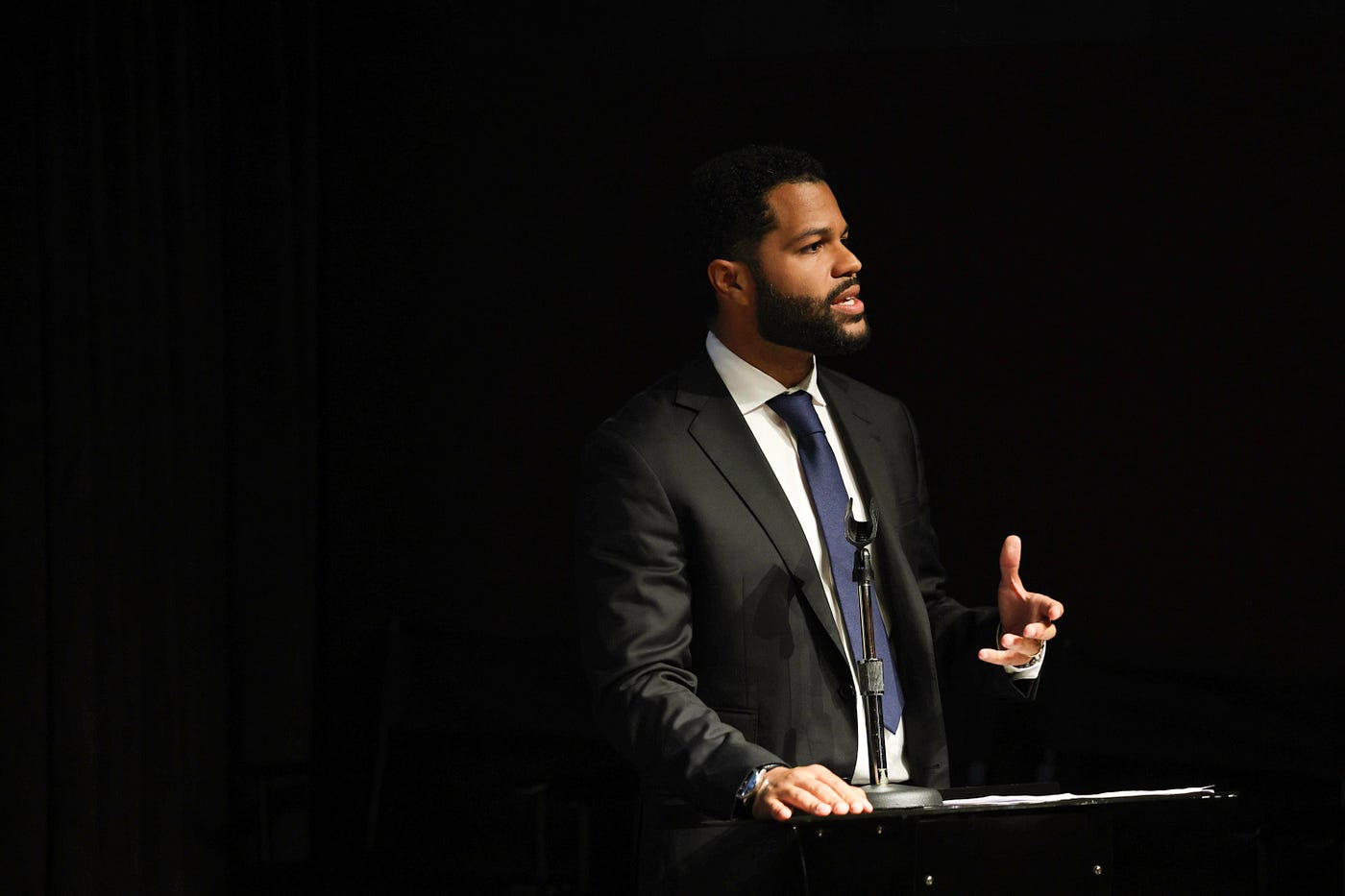
Daniel Forkkio is the CEO of Represent Justice, a national nonprofit that harnesses the power of film and storytelling to uplift the voices of formerly incarcerated people and spark public action for legal system reform. Over the past 6 years under Daniel’s leadership, Represent Justice has become a force for cultural change. Its campaigns have reached millions of people with firsthand stories of the legal system, inspired thousands of advocacy actions, cultivated a community of more than 200,000 engaged supporters, and elevated the visibility and influence of dozens of system-impacted leaders and organizations nationwide. Daniel’s work centers storytelling not just as a tool for systems change, but as a catalyst for empathy, human dignity, and building collective power.
메타데이터
- post_id
- f6352fcd1906
- slug
- human-infrastructure-and-the-myth-of-persuasion-f6352fcd1906
- url
- https://medium.com/@colorcongress/human-infrastructure-and-the-myth-of-persuasion-f6352fcd1906
- canonical_url
- https://medium.com/@colorcongress/human-infrastructure-and-the-myth-of-persuasion-f6352fcd1906
- author_url
- https://medium.com/@colorcongress
- status
- ok
- fetched_at
- 2026-07-29 07:58:23