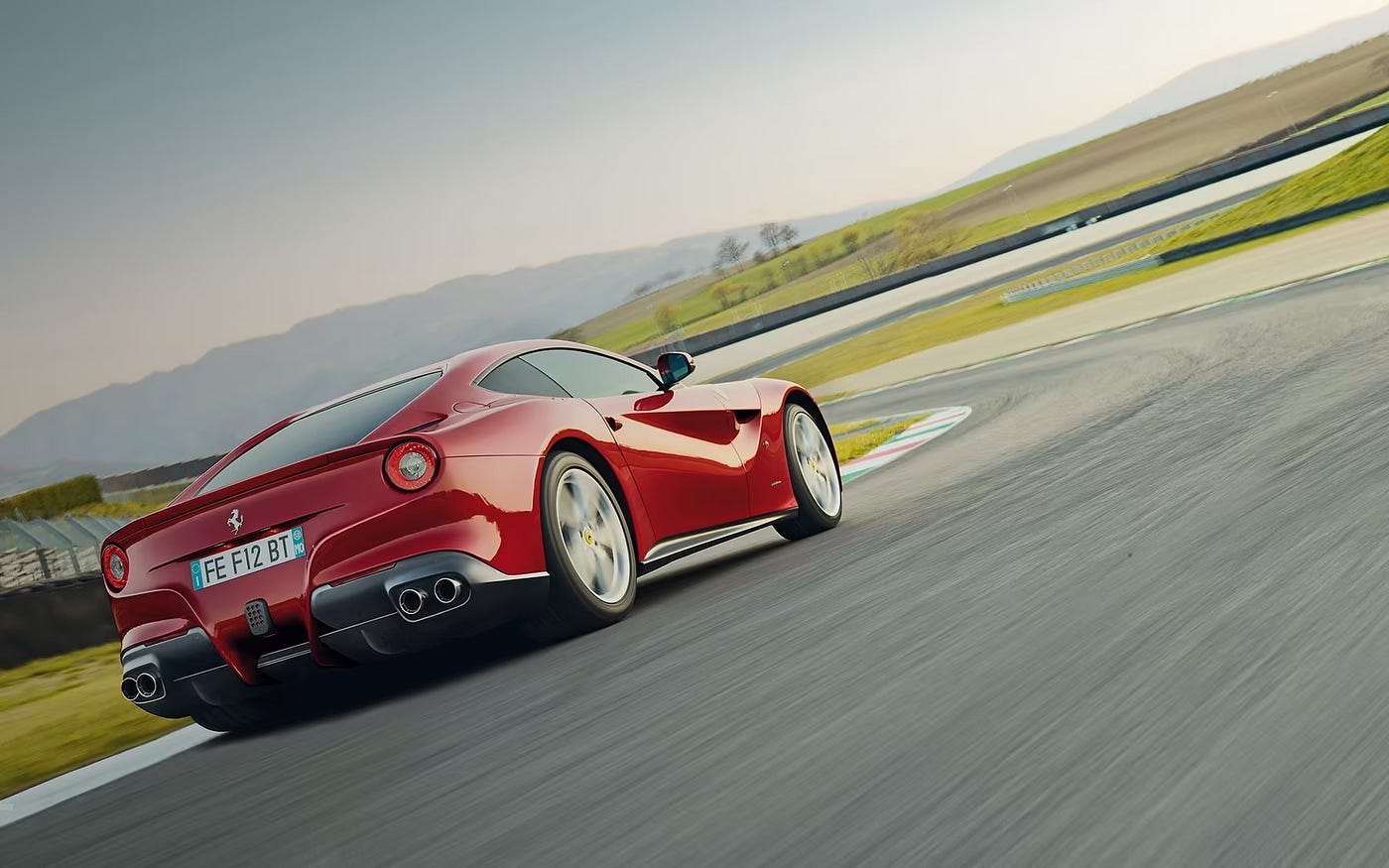
Lancia And Alfa Romeo — Looking Forward
Dwelling on the reasonable steps Lancia and Alfa Romeo could take going forward.
Lancia And Alfa Romeo — Looking Forward
As discussed in a previous article, I strongly believe Alfa Romeo and Lancia have been terribly (TERRIBLY!) mismanaged over the past 30 years or so under the tenure of the Fiat Group (or whatever is left of it nowadays). But I don’t like complaining. Assuming someone cared and asked me what I would do with the brands in their current form, I would reply with the following.
Please note, this is an imaginary scenario deeply detached from reality.
Starting from the Giorgio platform, I would build a lineup of 5 vehicles for each of the two brands, for a total of 10 vehicles. Vehicles based on the standard Giorgio platform (underpinning Giulia and Stelvio):
- 4.45 m (2.82-m wheelbase, 1.45-m height, 10-cm ground clearance): Giulietta and Delta hatchbacks;
- 4.50 m (2.82-m wheelbase, 1.60-m height, 15-cm ground clearance): Romeo and Musa crossovers.
Vehicles based on the “Giorgio Sport” platform (underpinning Maserati GranTurismo and GranCabrio):
- 4.75 m (2.93 m wheelbase, 1.45-m height, 10-cm ground clearance): Giulia and Fulvia sedans and estates (station-wagons);
- 4.80 m (2.93 m wheelbase, 1.60-m height, 15-cm ground clearance) Giorgio and Flavio three-row crossovers.
All platforms could generally be revised to foresee more aluminum in the chassis and for components.
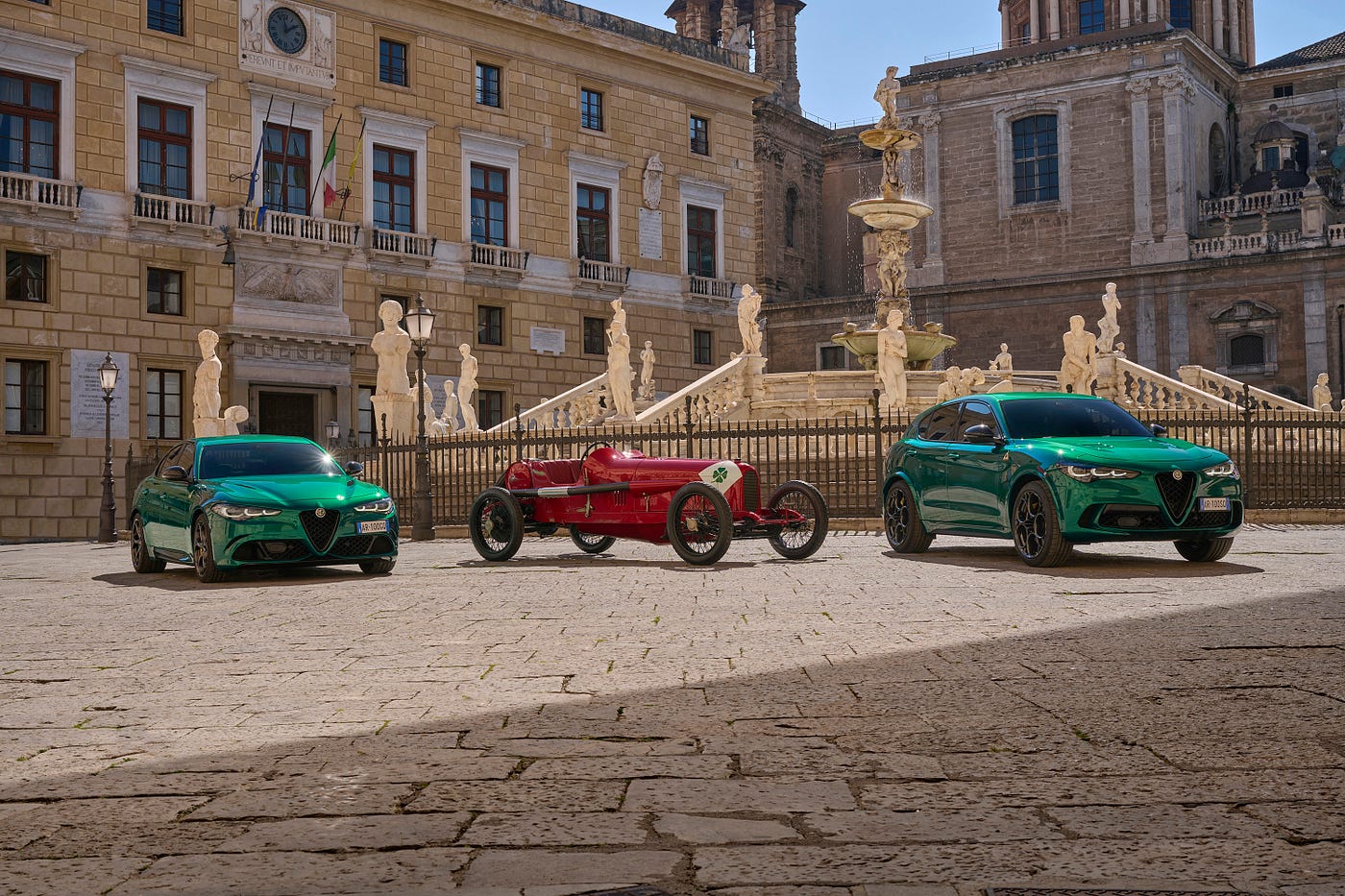
2024 Alfa Romeo Giulia and Stelvio Quadrifoglio.
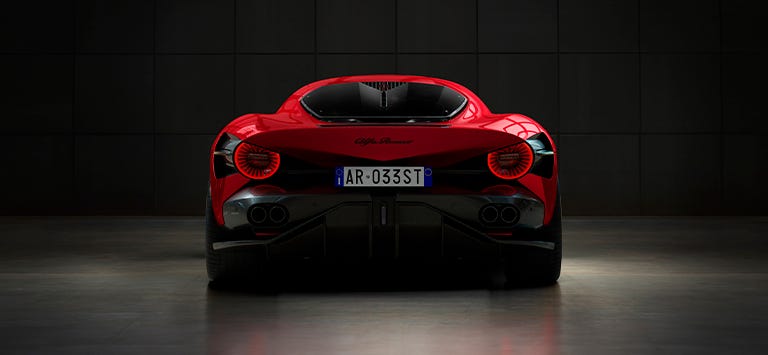
In addition, limited-production-run vehicles (e.g. maximum 1000 units per vehicle) based on the Alfa 33 Stradale such as an Alfa 6C or a Duetto or a Lancia Stratos or Beta Montecarlo could be envisaged over the next decade or so.
Special editions of standard road vehicles with carbon-fibre monocoque chassis may also be sold under the “Abarth” marque. Vehicles could be offered in a standard automatic-gearbox and full-hybrid setup or in a separate “vintage” package including a physical gauge-cluster, a manual gearbox, a manual handbrake and mechanical braking (instead of brake-by-wire). Abarth versions, at the very least, would ship with unequal-length-headers exhausts from the factory.
Engine options for the short-term foreseeable future might include:
- 2.2L I4 Multijet Diesel Engine: turbocharged 150 kW (~204 hp);
- 2.0L I4 GME-T4 Petrol Engine: turbocharged 150 kW (~204 hp), turbocharged 200 kW (~272 hp), turbocharged and supercharged 300 kW (~408 hp);
- 3.0L V6 Nettuno Petrol Engine: twin-turbocharged wet-sump 400 kW (~544 hp), twin-turbocharged dry-sump 500 kW (~680 hp).
Alfa Romeo and Lancia could consider partnering with other automotive brands for developing designs and halo cars. For example, Nissan could approach Lancia-Alfa to develop a 4-door Silvia sedan or a 2-door GT-R gran-tourer, both of which would feature Nissan’s upcoming design language meant for all of their vehicles. Such design language would be determined or at least influenced by the Centro Stile of Lancia and Alfa.
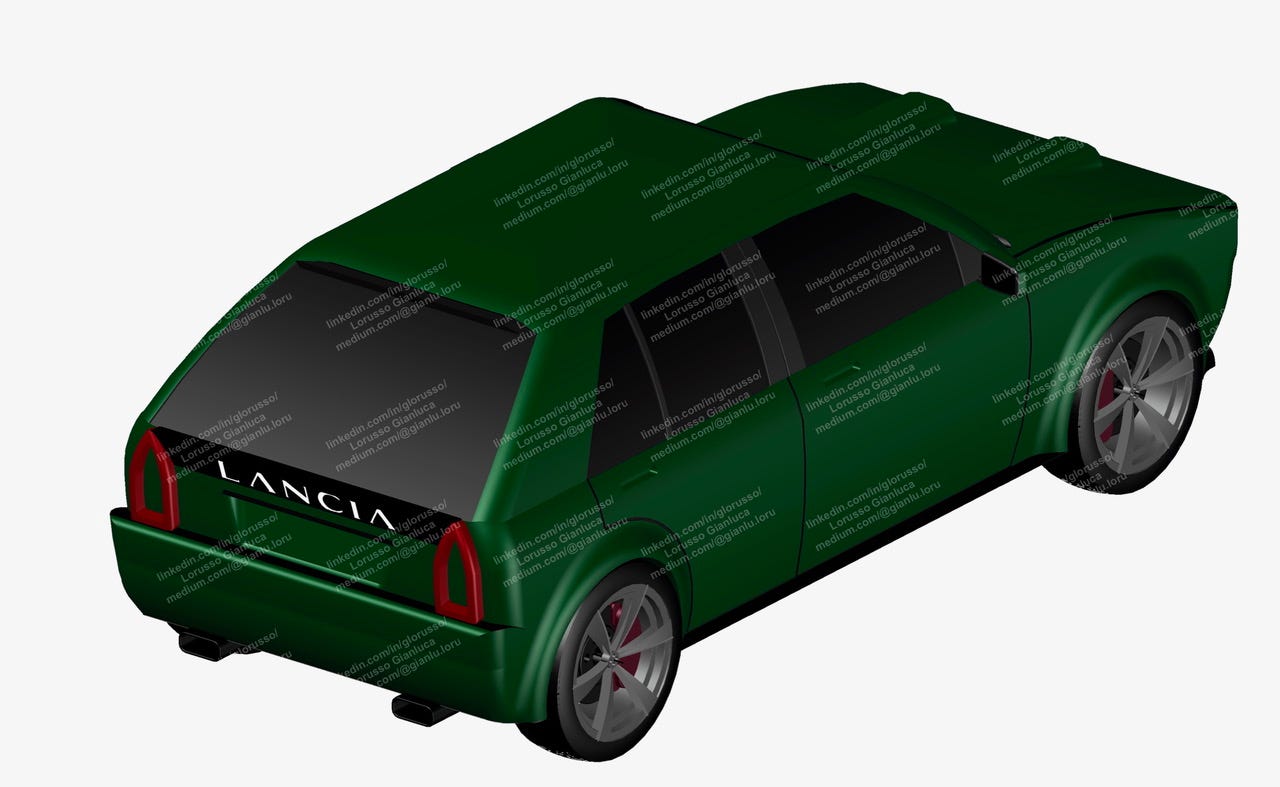
Lancia Delta Concept.
In the long term, Alfa Romeo and Lancia may also partner with Maserati by forming a joint-venture for developing and producing long-wheelbase EVs meant exclusively for the Chinese market. The partnership could also extend to Ferrari in such a way that the next generation of petrol engines could be developed, namely a 65° V12 (4.5L), a 65° V8 (3.0L) and an I4 (1.5L), all starting with power figures of 125, 250 and 375 kW respectively, in a naturally-aspirated form factor, and reaching 175, 350 and 525 kW respectively for the turbocharged and/or supercharged applications.
Otherwise, a partnership with MOPAR might ensue for developing a 3.0L V8 outputting 250 kW in a naturally-aspirated form or 350 kW in a supercharged layout. Power figures below those would be Diesel-only for Alfa and Lancia, whereas higher power figures would be obtained with (plug-in) hybrid systems. A 150-kW Diesel option (with a 2.2L I4 engine) would still be present in the lineup alongside the petrol V8s.
Alternatively, for the very long-term (post-2035), Alfa and Lancia could consider developing a mid-engined platform with the engine placed under the rear passenger seats and before the rear axle, in a similar fashion to the last-gen Smart ForFour. This would make sense, assuming that engines no larger than a 2.0L I4 will be used. In this case, vehicles would be adopting a standard RWD setup (manual transmission) or a virtual-AWD system (hybrid, automatic transmission).
Nonetheless, the focus would be placed on making vehicles lighter than their predecessors.
In conclusion, saying that there’s hope for the staple Lancia and Alfa Romeo brands would be an understatement on my side.
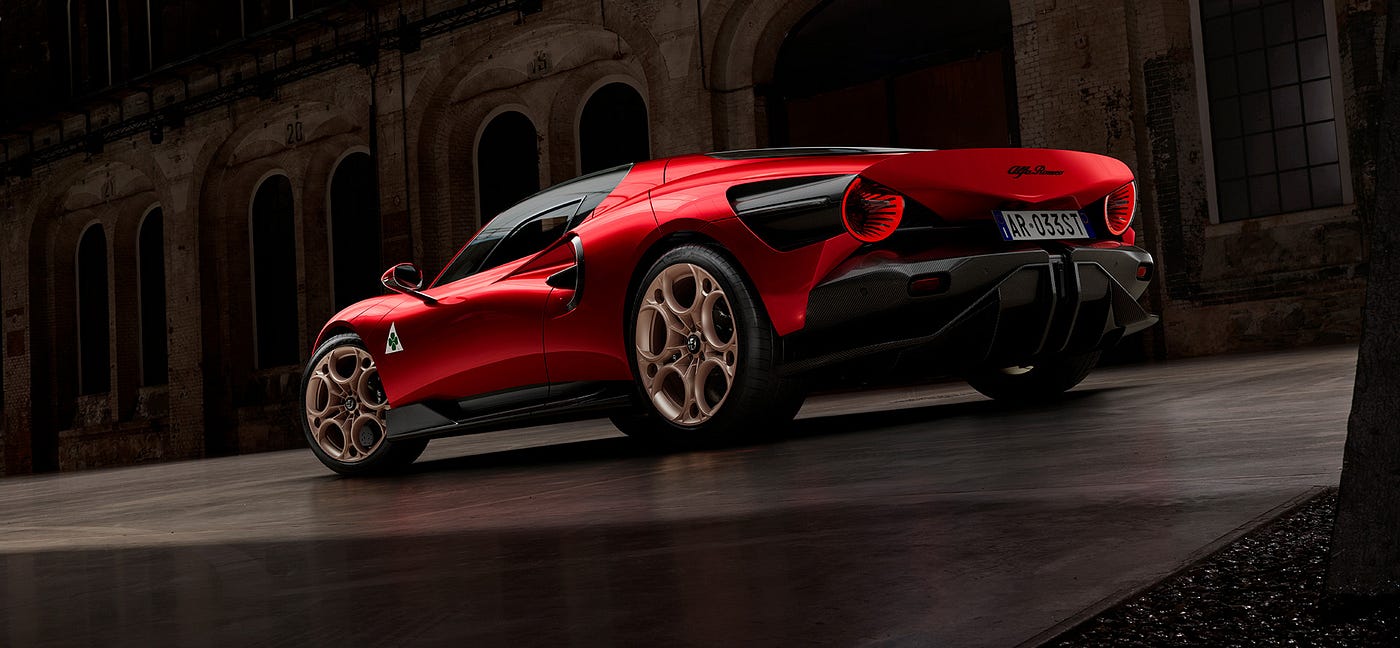
2024 Alfa Romeo 33 Stradale.
Sources: Stellantis Media (2024 Giulia and Stelvio Quadrifoglio), Alfa Romeo.
메타데이터
- post_id
- f64e46b7ccdb
- slug
- lancia-and-alfa-romeo-looking-forward-f64e46b7ccdb
- url
- https://medium.com/@carterai/lancia-and-alfa-romeo-looking-forward-f64e46b7ccdb
- canonical_url
- https://medium.com/@carterai/lancia-and-alfa-romeo-looking-forward-f64e46b7ccdb
- author_url
- https://medium.com/@carterai
- status
- ok
- fetched_at
- 2026-07-19 18:24:08