Understanding Aggression in Young Children
During one of my classroom observations, I witnessed an intriguing dynamic between two four-year-old girls, A and B. Girl A, a reserved…
Understanding Aggression in Young Children
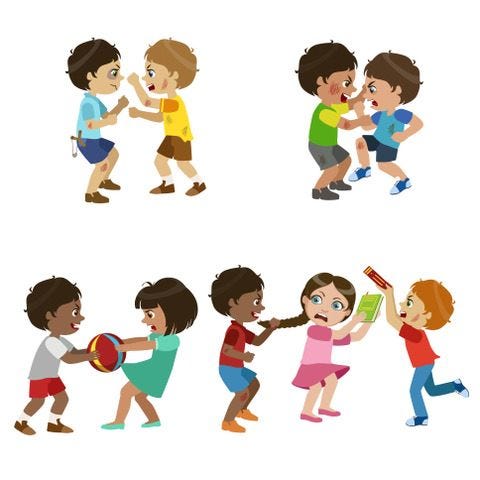
During one of my classroom observations, I witnessed an intriguing dynamic between two four-year-old girls, A and B. Girl A, a reserved child, values her personal space, while Girl B, a more physically affectionate child, expresses her fondness for Girl A by hugging or clinging to her frequently. Girl B felt a strong connection with Girl A and preferred spending most of her time with her.
Despite Girl A’s visible discomfort, expressed through body language and crying to the adult, the situation persisted. The adult consistently reminded Girl B to respect Girl A’s boundaries, but the issue remained unresolved. Over time, Girl A began biting Girl B — not just when upset with her, but also when frustrated with other children. Interestingly, Girl B never reported these incidents, enduring them quietly. The issue only came to light when another child informed the adults.
The adults acted promptly by comforting Girl B, who was reluctant to discuss her experience, and speaking with Girl A, who was unable to articulate why she was biting. The solution implemented involved separating the girls except during specific group activities like circle time, snacks, and free play. The adults also reinforced the rule, “We don’t bite our friends,” while maintaining a consistent approach with both girls.
Although the biting stopped, Girl A became more reclusive and struggled to connect with other children. Even when she tried, her attempts were often ignored. This raised a vital question: Was the solution addressing the root cause, or was it a temporary fix?
This incident inspired me to delve deeper into the nature of aggression in young children. I discovered that aggression is often a natural behavior in early childhood, primarily because children lack the language skills to express their emotions. Frustration, anger, sadness, fear, or anxiety can overwhelm them, and their underdeveloped logical brains struggle to regulate these feelings.
While biting is more common in infants and toddlers, older children may resort to it when experiencing intense emotional overload. For example, my 14-month-old non-verbal nephew would bite or scratch when his needs weren’t met or when his personal space was invaded.
In my first year as a Montessori guide, I encountered a toddler who bit others whenever limits were set, as he found these limits frustrating. I vividly remember my panic upon seeing bite marks and my inability to handle the situation calmly. Initially, I reacted by imposing strict rules and unfairly judging the child. However, one day, the same child ran to me in tears after breaking a glass, seeking comfort and protection. His trust in me changed my perspective. I realized children don’t act out of malice; their actions reflect their immediate feelings and needs.
Lessons Learned
Through my experiences, I’ve come to some key conclusions:
- Observation is Critical: Understanding a child’s behavior requires keen observation of what happens before, during, and after an incident. This helps identify developmental stages, temperament, and the root cause of the behavior.
- Self-Reflection Matters: Adults need to evaluate their own reactions. Are we responding to the child’s behavior calmly, or are we letting our biases and assumptions influence us? A constructive response is vital to help the child grow.
- Kindness with Consistency: Adults must maintain a consistent, positive approach while addressing aggressive behavior with kindness and firmness. Overly aggressive responses can model undesirable behavior, while passive ones may inadvertently encourage misbehavior.
Actionable Strategies
- Acknowledge Emotions: Focus on the child’s feelings rather than the misbehavior. Validate their perspective by saying things like, “I see that you’re upset. Let’s talk about it.” Let them not feel abandoned or misunderstood.
- Use Positive Language: Guide children with phrases like, “We keep our hands to ourselves,” or “We hug our friends.”
- Avoid Bias or Punishment: Punishment can confuse children as they often don’t understand why they’re being reprimanded. Address the behavior without judgment.
- Teach Emotional Expression: Help children articulate their emotions. For example, when you notice aggression, provide phrases like, “This made you angry. Do you want to talk about it or take a break?”
- Introduce a Calming Corner: Create a safe space for children to self-regulate. For non-verbal children, provide sensory objects like teething toys or stress balls. For toddlers, activities like tearing paper or punching pillows can be helpful.
For example, in my daughter’s elementary class, her teacher encouraged her to use a calming corner to draw circles in different colors, labeling each with an emotion. This activity helped her recognize and regulate her feelings.
Final Thoughts
When these steps are consistently implemented, children develop routines that foster self-regulation and emotional growth. Addressing aggression thoughtfully and proactively not only resolves conflicts but also nurtures a child’s ability to navigate their emotions in a healthy way.
메타데이터
- post_id
- f671617d0fda
- slug
- understanding-aggression-in-young-children-f671617d0fda
- url
- https://medium.com/@madhuriprasad/understanding-aggression-in-young-children-f671617d0fda
- canonical_url
- https://medium.com/@madhuriprasad/understanding-aggression-in-young-children-f671617d0fda
- author_url
- https://medium.com/@madhuriprasad
- status
- ok
- fetched_at
- 2026-07-21 15:40:34




