Some insights on public transport
I’ve lived decades in Nairobi, Kenya where public transportation exists in the form of buses and minibuses generally referred to as…
Some insights on public transport
I’ve lived decades in Nairobi, Kenya where public transportation exists in the form of buses and minibuses generally referred to as matatus.

Typical 33-seat matatu
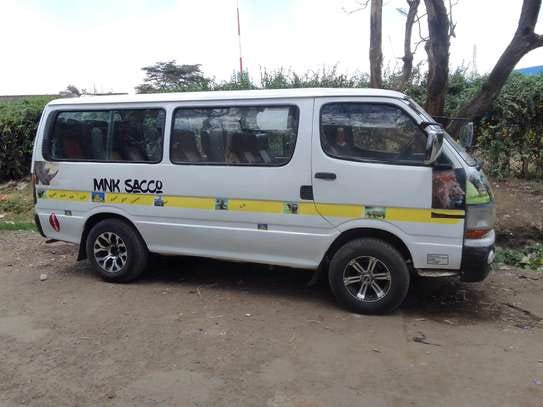
Typical 14-seater minibus matatu
Matatus are relatively cheap to use, operate on an almost exclusively cash basis, are run by private individuals and have no schedule or timetable. They operate on semi-official routes with semi-official pickup and dropoff points. The fare fluctuates depending on weather, traffic, demand, fuel prices, police crackdowns and so on. In the absence of a schedule, they will leave a stop when they are full (which may take time especially outside of the peak times) and generally the travel time is a tossup — one day you get to your destination quickly, another day you get there an hour late. So by European standards it would seem like chaos.
Attempts to reform the sector or replace it with a government-run public transport system have so far failed because matatus are very lucrative. Many middle-class Kenyans have therefore resorted to either buying cars or using taxi apps like Uber and Bolt. Nairobi is not a particularly walkable city as there are no dedicated lanes for cyclists and pedestrians, and in many places even paved sidewalks are non-existent. Additionally, walking comes with risks of petty crime such as pickpocketing, snatching of phones and bags or outright robbery with violence.
On matatus you can also face crime — usually phones snatched at the window when there’s some traffic jam and pickpocketing. Less common is hijackings where the matatu is diverted and passengers are robbed at gunpoint. These kind of incidents have put many people off public transport when they have other options.
Dar es Salaam in Tanzania has a rapid bus transit system known as mwendo kasi which is very efficient and does have a timetable. Addis Ababa has a light rail system which is similarly efficient. These are still cash-based and have no mobile apps but it’s a huge leap from the matatus.
My experience in Europe has been very different. Every new city I go to, I just do a quick Google search to find the public transit app, download it, buy a ticket based on need — 1hr, 24hr, 1 month etc. And away I go. Route planning, integration with maps and so on are standard features. From Stockholm to Vienna, majority of cities have a convenient app and transport options that include tram, bus, ferry, subway and train usually all covered by the same ticket.
Even in Eastern Europe such as in Bratislava there may be a lack of an app, but there are ticketing machines at each bus stop where you can quickly buy a ticket to use on the bus. Schedules and timetables are a given. When it comes to walkability, European cities are famously walkable, something which even North Americans look upon with envy.
It is clear that the success of a city especially as the world moves towards more sustainable cities depends on a working and well-run public transit system. This coupled with proper provisions for cyclists and pedestrians leads to a lot more satisfaction among residents. When people can walk and jog, less cars are on the roads and the public transit is electrified, the benefits to public health are undeniable.
Governments across the global south would do well to invest in better public transit along with crime prevention and reduced dependence on fossil fuels. Companies such as Roam are leading the charge in Nairobi when it comes to electrified public transit, but private efforts can only go so far. The case has already been made for eliminating matatus, the political courage needs to follow.
메타데이터
- post_id
- f69ff1eea2db
- slug
- some-insights-on-public-transport-f69ff1eea2db
- url
- https://medium.com/@robertovichk/some-insights-on-public-transport-f69ff1eea2db
- canonical_url
- https://medium.com/@robertovichk/some-insights-on-public-transport-f69ff1eea2db
- author_url
- https://medium.com/@robertovichk
- status
- ok
- fetched_at
- 2026-07-25 15:01:39