UK fiscal crisis looms as debt interest hits £130bn and growth stalls
With gilt yields threatening to double the interest bill and 30% youth unemployment, the Treasury's arithmetic has become unsustainable.
UK fiscal crisis looms as debt interest hits £130bn and growth stalls
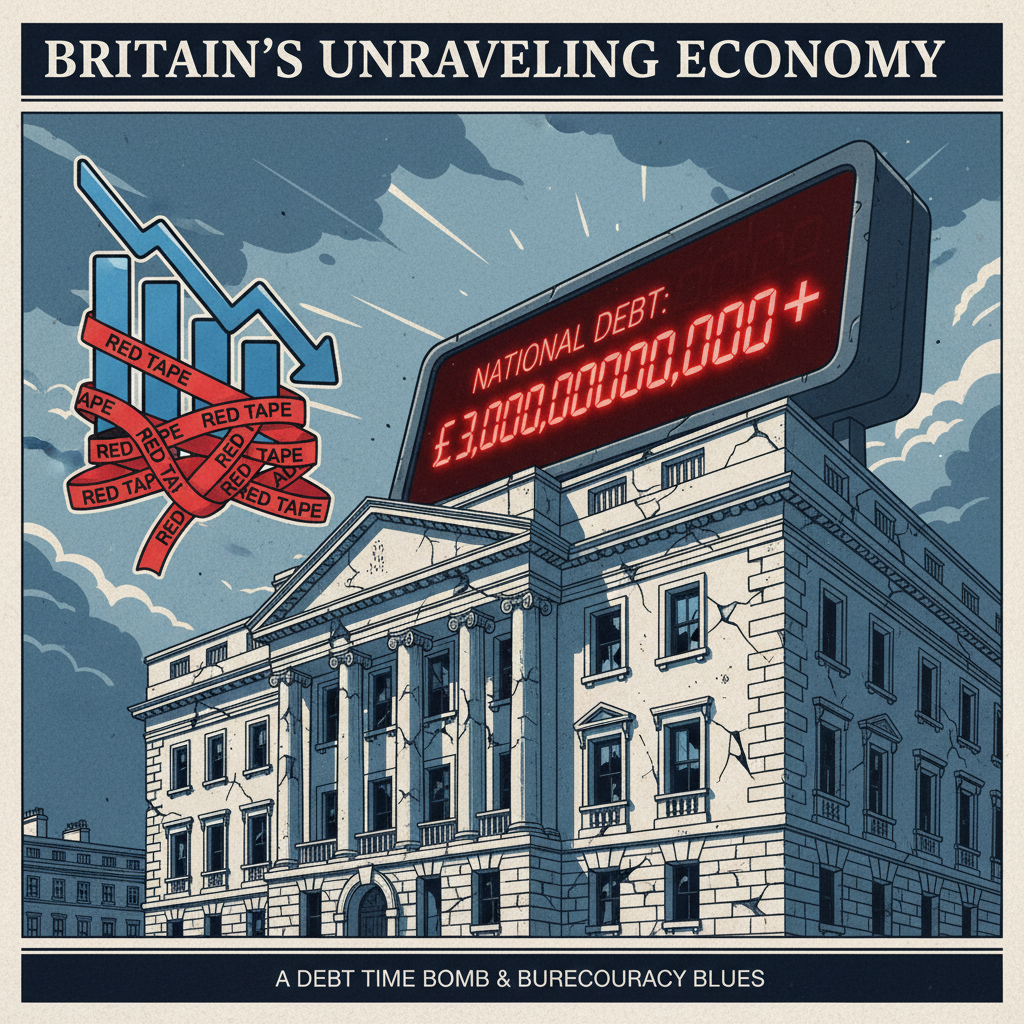
With gilt yields threatening to double the interest bill and 30% youth unemployment, the Treasury's arithmetic has become unsustainable.
The numbers are almost too absurd to print. In the last fiscal year, the British government spent more on debt interest — £130 billion — than on the entire defence budget and all primary schools combined. That’s the cost of servicing a national debt that has passed 100% of GDP, a threshold once considered the preserve of banana republics in the throes of hyperinflation. And the Bank of England’s own stress tests now suggest that if gilt markets take fright, that figure could double within three years.
I attended a meeting in Canary Wharf last month with a group of institutional bond investors. The mood was not so much worried as grimly resigned. One fund manager, who oversees £40 billion of fixed-income assets, put it bluntly: “The UK is not Italy yet. But we’re trading like it could be.” He was referring to the widening spread between UK gilts and German bunds, now at its highest since the 1976 IMF bailout. The last time a Labour government faced this sort of market discipline, Denis Healey was begging the Americans for a loan.
The debt trap tightens
Let’s walk through the mechanics, because they matter. UK government debt stands at £2.7 trillion. Roughly a quarter of that is index-linked, meaning payments rise with inflation. With RPI still hovering around 4%, that is a ticking time bomb. The Office for Budget Responsibility’s central forecast already assumes debt interest will absorb 8% of tax revenues this year — up from 3% a decade ago. If long-term gilt yields rise by just one percentage point, the annual interest bill jumps by £25 billion.
The Chancellor, Rachel Reeves, has limited room to move. She has already broken her own fiscal rules once, pushing the target for debt-to-GDP to fall by two years. The markets noticed. Sterling dropped 3% against the dollar in a single week in March. The IMF’s latest Article IV report, published in April, contained a pointed warning about “sustained fiscal consolidation” — diplomatic code for “stop spending money you don’t have.”
Meanwhile, the tax burden is at its highest since Clement Attlee left office. Corporation tax at 25%, national insurance at 13.8% on employers, and a stealth freeze on income tax thresholds that has dragged two million more people into the higher rate band. And still the deficit yawns. Borrowing in the first quarter alone was £48 billion, £6 billion more than the OBR predicted.
The welfare state that ate itself
The social security budget has ballooned to £280 billion a year. That is more than the entire NHS budget. The fastest-growing component is incapacity benefits, driven not by an epidemic of workplace injuries but by a surge in claims for “mental health conditions” — up 250% since 2019. The former pensions minister, Sir Steve Webb, told me last year that the system has become “a back door for early retirement for people in their 30s and 40s.” He wasn’t joking.
Consider this: 52% of working-age adults now pay no net income tax. That is not a measure of generosity; it is a measure of dependency. When half the potential tax base contributes nothing, the other half has to carry the whole load. And when that load becomes intolerable, they leave — or stop working harder. That is precisely what is happening. Self-employment has fallen by 400,000 since 2020. Incorporations are down. The number of high-earning doctors and consultants emigrating to Australia or the UAE has doubled.
Youth unemployment stands at 30% among 16-to-24-year-olds not in full-time education. That is not a statistic — it is a social time bomb. In Margate, where I grew up, you can walk through the high street and see boarded-up shops and betting shops side by side. The young men hanging around the bus station are not lazy; they are unemployable, having been failed by a school system that prioritises passing grades over actual skills.
Regulation as economic sabotage
The Atlantic piece by @disco___cat linked to a devastating analysis of Britain’s regulatory sclerosis. It’s worth repeating the numbers: planning approval for a new onshore wind farm now takes an average of seven years. Grid connection dates are being quoted for 2035. Building a data centre in west London requires sign-off from 14 separate agencies. The London Stock Exchange has lost 90% of its IPO market share to New York since 2015.
The chief executive of abrdn, Stephen Bird, told the Treasury Select Committee last month that “the UK has become structurally unattractive for capital formation.” He was being polite. The reality is that pension funds, insurance companies, and sovereign wealth funds have been quietly rotating out of UK equities for years. The MSCI UK index now accounts for just 3.5% of global market capitalisation, down from 10% in 2000.
And the civil service? It now employs 540,000 people — up 30% since 2016. Yet productivity in Whitehall has fallen by 12% over the same period, according to the ONS. We have more admirals than warships, more commodores than fighter jets. The Ministry of Defence has 1,200 people working in HR alone. You cannot make this stuff up.
The Milei moment?
There is a grim logic to the Reform UK supporter’s tweet. The only thing that will force genuine reform is a crisis. Argentina’s Javier Milei cut public spending by 30%, slashed the number of ministries from 18 to 8, and abolished the central bank’s ability to print money. His approval rating is now 55%. The British establishment thinks such measures are unthinkable. But so was a 30% gilt yield in 1976.
The Treasury is currently modelling what it calls “severe downside scenarios.” One of them involves a loss of market confidence that forces the Bank of England to raise interest rates to 8% while the government imposes an emergency budget with £50 billion of cuts. That would mean real-terms reductions in welfare, defence, and public sector pay. The political fallout would be immense.
But the alternative — continuing on the current path — is worse. The debt spiral feeds on itself. Higher interest costs mean more borrowing, which means higher debt, which means higher interest costs. The only exit is growth. And growth requires deregulation, tax reform, and a willingness to let unproductive parts of the state shrink.
The question is whether any government, Labour or Tory, has the nerve to do it. Or whether we will simply wait for the markets to force our hand.
메타데이터
- post_id
- f6b6a78b45b4
- slug
- uk-fiscal-crisis-looms-as-debt-interest-hits-130bn-and-growth-stalls-f6b6a78b45b4
- url
- https://medium.com/@worldnews99/uk-fiscal-crisis-looms-as-debt-interest-hits-130bn-and-growth-stalls-f6b6a78b45b4
- canonical_url
- https://medium.com/@worldnews99/uk-fiscal-crisis-looms-as-debt-interest-hits-130bn-and-growth-stalls-f6b6a78b45b4
- author_url
- https://medium.com/@worldnews99
- status
- ok
- fetched_at
- 2026-06-25 07:00:49