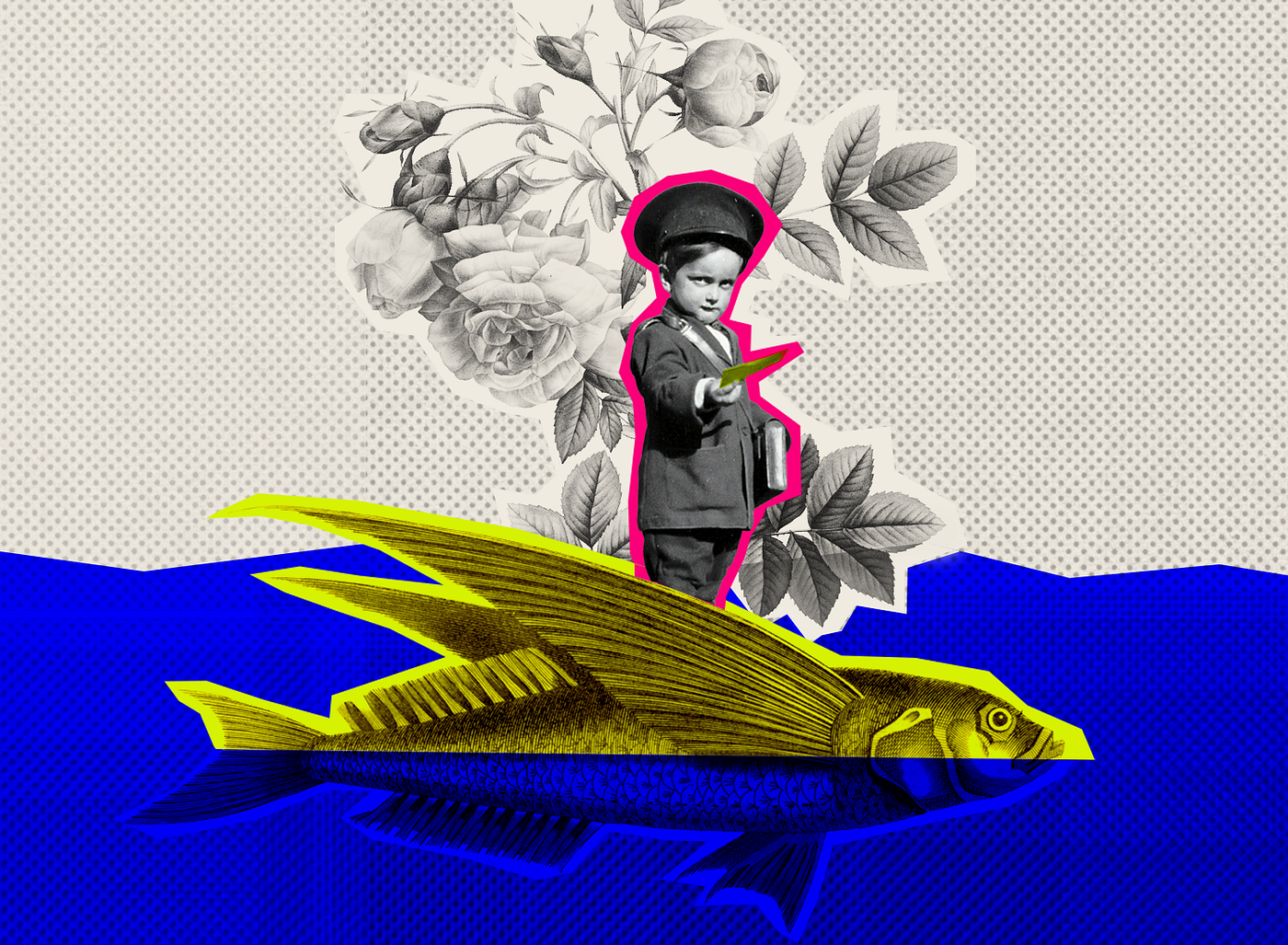
The awe factor, or a crusade against the agenda
When we stop chasing answers and start noticing the unexpected — real insight begins.
The awe factor, or a crusade against the agenda
When we stop chasing answers and start noticing the unexpected — real insight begins.

I’m getting ready for my next travels. I listen to friends’ stories, read about “Three Days in Riga”, the best mochi in Kyoto, and the perfect insta photo spot among the vineyard-covered hills of Czech Moravia. I’ve got a must-taste list backed by guides and opinions from those who’ve already lived through the exact same thing — revised, refined, and rated. The risk of culinary disappointment (or maybe rather the risk of something unplanned — something my taste buds haven’t met yet) has been reduced to the absolute minimum.
And suddenly, somewhere between guidebooks, recommendations, and carefully pre-planned attractions, I realize that traveling is no longer about discovering — it’s become about collecting. Checking boxes on a list, each one reachable by smooth roads and oversized parking lots. “Put on a kimono, join a calligraphy class, and wrap it up with a tea ceremony” — all in just two hours, to give you the illusion of experiencing the full essence of Japan with all your senses.
But when we travel like this — are we really learning anything new about “the other”? Are we giving ourselves a chance to be truly changed? To discover something that might challenge our beliefs, stretch our perspectives, or even shake the way we see the world — or ourselves? To look at the world through someone else’s eyes?
Maybe the problem lies in our culture of efficiency — the pressure to fill every moment and “extract value” from every second. Maybe that’s exactly what turns even travel — once synonymous with the unknown and unpredictable — into a perfectly designed consumption process.
Yes, this text will be about the agenda. But our consumption-driven approach to travel is actually a perfect metaphor for how we tend to approach the unfamiliar, the other, the unimaginable — and how easily we can flatten those encounters into a controlled script, losing sight of what they could really mean, and how close they might bring us to the essence of the unknown.
Agenda, timeboxing, deliverables — I know exactly what I’m buying.
Let’s pause for a second and notice the contradiction. On one hand, we’re obsessed with precise agendas, rigorous timeboxing, and clearly defined deliverables. Everything — costs, ROI, risk management — is perfectly buttoned up. I get it. All those “5 ways to run an efficient meeting” really do create a sense of control and safety. Participants feel more prepared, there’s less chaos, and we protect time for what matters most. Efficiency. Control. Prioritization. Predictability. The holy grail of work culture, right?
But then there are discovery workshops — currently trendy and oh-so-sexy. And as the name suggests, they’re supposed to be about discovery. Curiosity. Exploration. Mental wandering. Experimentation. And yet what should be spontaneous and open to the unknown gets squeezed into rigid structures of frameworks, detailed agendas, and 17-minute coffee breaks. We jump from one bullet point to the next, ticking boxes, as if discovery were just another item on the checklist.
So what does this lead to?
We don’t see anything beyond what fits into our pre-defined assumptions. Our (loudly declared) experience and “workshop skills” often boil down to neatly trimming threads, organizing findings, and aligning them with a predetermined outcome.
The agenda is bold — even arrogant.
It keeps us focused on achieving our goals — the ones that stroke our ego and reaffirm our belief in our own effectiveness and planning mastery. We don’t go deeper into relationships with the client (hell, with another human being) — relationships that might allow us to uncover something truly unexpected. Each bullet point becomes a tourist sight: visited, checked off, packed away as “done.” And what isn’t on the agenda doesn’t exist. There’s no space for it to emerge — no matter how many “buffer blocks” you schedule.
The finiteness of the agenda becomes the boundary of our perception — and it flattens everything. Only what escapes the plan preserves the excitement of mystery, and opens us up to what is, as of now, still unimaginable.
Rigidly structuring discovery workshops is like licking ice cream through glass.
You sort of see it, feel the chill, maybe even mimic the act of tasting — but do you really taste anything? The agenda makes sure I know exactly what I’m buying. Nothing will surprise me. And I get it — I really do. Creativity is risky. It takes courage. It means being ready for consequences, even the uncomfortable ones. Because discoveries can be difficult. They demand a shift in thinking. And change — well, change is neither safe nor predictable.
Full stop. Deep breath. Let’s take a moment.
I know the problem isn’t the agenda itself — it’s how we’ve come to fetishize it. Not every workshop participant feels at home in wide, messy spaces full of ambiguity. And then there are real constraints: time, budget, feasibility — the basic realities that decide whether the product gets made at all, never mind whether it succeeds.
So no, this isn’t a call to throw out structure altogether. It’s an invitation to rethink how we build it — and how we use it.
Areas of interest — not linear agendas
Instead of rigidly following a step-by-step plan laid out in linear fashion (Do we really believe discoveries fit neatly between 11:17 and 11:42?), we might try a different approach: preparing for discovery workshops by mapping out areas of interest — acting more like a compass than a fixed itinerary.
Rather than prescribing the order and method of work, we identify spaces that call for our attention. It could be a topic, a problem, a client need — or something more abstract, like an emotion, a hunch, or a mood. These areas are fluid — we can return to them, shift between them, even discover new ones as the process unfolds. It’s not about locking them into predefined boxes, but about opening up space for exploration and response to what shows up in the moment.
To create such a map of interest areas, visual tools like a Miro board can be helpful — but a large sheet of paper and a bunch of sticky notes work just as well. At first, we sketch the areas, cluster them, mark shared points and possible links. What matters most, though, is treating the map as a living organism — something that grows, shifts, and adapts depending on the discoveries made by workshop participants.
This kind of map acts as a supporting structure — one that helps organize our thinking, but isn’t a checklist or a goal in itself. As the workshop unfolds, areas may shift in meaning, grow in importance, or merge into new constellations. In this way, the map not only supports the process, it documents it — becoming a trace of the journey from first questions to a deeper, more complex understanding of the challenge.
In the image below, you can see how such a map evolves — from a few scattered notes to a more developed structure, full of interconnections and emerging insights.

The break as a space for reflection and distance
One of the most important — and often underrated — elements of a workshop is the break. Not just the quick moment for coffee, but the time to take a step back. During intense work, we’re too close to the topic, too immersed in the new world — and in each other. But deep understanding is rarely instant. It needs time and space.
Think of a fight with your partner, or that first-date fascination. Every emotion in those moments feels intense, almost overwhelming — and that’s beautiful. There’s a richness in it. But when it comes to workshops, it’s worth introducing moments for distance. Just like a few deep breaths during an argument can stop us from saying something hurtful, a break in a workshop allows all the creators in the room to find balance and gain a fresh perspective.
A break gives time to gather thoughts, reflect, check in with others, or even challenge our own conclusions. Buffers stop being just scheduled slots for coffee or lunch — they become moments to process what’s already been uncovered, and to open ourselves to what might still surprise us.
Changing context as a way to breathe
One powerful way to pause is not just taking a traditional snack break, but giving the mind space to fully detach from the topic. It could be a walk in the woods, a quiet look at the park from a terrace, or even a few silent minutes away from the room where workshop conversations are happening. The point is a change of context — both physical and mental — that gives the mind room to rest and reorganize.
This kind of distance doesn’t require hours. Workshops can be designed to take up two-thirds of the day, leaving the final third for reflection. What matters is that this time not be filled with other work tasks — it should be a true moment to look at the process from a fresh perspective.
A break, then, becomes a moment where the mind doesn’t rest passively, but operates on a different level — reorganizing thoughts, connecting new insights with prior experience, noticing things that may have slipped by earlier. This kind of intentional distance turns a workshop into something more mature, more thoughtful, and ultimately more valuable.
Travel companions and allies on the journey
In larger organizations, the people who facilitate discovery workshops are often not the same ones who sell them — or who first speak with the client. There are often marketers, salespeople, or managers ahead of us, shaping a more or less accurate picture of expectations. What’s crucial here is education — treating these people as allies who, in order to act effectively, need to understand our approach. It’s up to them to frame discovery properly and prepare the ground before the workshops even begin. They are the bridges, connecting our way of working with the client’s expectations.
When we treat participants as companions, we also change the role of the facilitator. No longer a “guardian of the agenda,” but a co-guide on the journey. The responsibility for discovery is shared, and the space for collaboration becomes more genuine — because everyone involved in the process, whether they’re in the room or supporting from the outside, becomes part of the shared journey. And that journey — like discovery itself — is not a linear path, but a network of interdependencies in which we collectively uncover what’s hidden in plain sight.
Shared space, personal space
There’s one more essential element we can add to this entire puzzle: physical space. The arrangement of tables, chairs, and boards to reflect the areas on our interest map can actively support the thinking process. By moving between them — thematically and quite literally — we shift context, and with each shift, new perspectives open up.
It’s worth making use of spacious, interesting environments that invite the body into motion. Exploring ideas doesn’t have to happen while sitting still. We can think while standing, walking, or maybe even sitting on the floor or on a swing. A body in motion, blood flowing — that’s a more active mind. Better oxygenated. Better thinking.
What’s key, though, is to keep these spaces alive and open. We don’t tidy them up. We don’t shut them down. Boards, tables, and notes stay right where they are, forming a living map we can return to — moving between topics, connecting threads, and discovering things we may have missed the first time around. This allows us to see the process as a whole. The space becomes more than a tool — it becomes a dynamic landscape of thought, evolving alongside the workshop itself. In this living space, discoveries become more tangible.
The Awe Factor — the rebellious art of discovery
Discovery isn’t about conquest. It’s about uncovering — stepping into unfamiliar territory without a map, and sometimes without even knowing what we’re looking for. And that’s the beauty of it. That uncertainty holds the awe factor — those moments that change the way we think, break our patterns, and open our eyes to things we couldn’t have imagined before.
But to get there, we need courage. A rebellious kind of courage. The kind that lets us ignore perfect agendas and step willingly into the muddy ground of not-knowing. The kind that asks: “What if I let go of all the safe structures and allow the process to surprise me?”
Yes, creativity is risky. Sometimes you have to get lost to find anything real. But isn’t that what we’re after? That moment of wonder, when we come across something bigger than our assumptions? That little electric thrill when we discover something we thought was impossible?
Poverty of imagination begins when we cling too tightly to what’s known and safe. We tick the boxes and tell ourselves: “This will do.” But it won’t do. If we want the real awe, we have to risk it. We have to allow ourselves to wander, to experiment — and sometimes to fail.
Let’s be brave. Break the mold. Make room for the unpredictable. Because that’s where it lives — in that space beyond control — everything that’s truly worth discovering.
메타데이터
- post_id
- f6cda248c8ca
- slug
- the-awe-factor-or-a-crusade-against-the-agenda-f6cda248c8ca
- url
- https://medium.com/design-bootcamp/the-awe-factor-or-a-crusade-against-the-agenda-f6cda248c8ca
- canonical_url
- https://medium.com/design-bootcamp/the-awe-factor-or-a-crusade-against-the-agenda-f6cda248c8ca
- author_url
- https://medium.com/@ulakluz
- status
- ok
- fetched_at
- 2026-06-16 19:09:56