KBEar KS2 Review
Dime a Dozen

KBEar KS2 Review
Dime a Dozen
Yet another budget hybrid, you can never have enough of them after all.
KBEar has released the KS2 just a few months after releasing the KB04 (which I hope to review soon). Both of them are 1BA + 1DD hybrids. They are also priced fairly closely ($22 vs $25 respectively). This saturation of their own product range amuses me, but let’s just judge the KS2 in isolation.
Is it another budget hybrid that’s about to get lost in the sea? Or shall it endure the tidal waves?
Note: the ratings given will be subjective to the price tier. Wendy Li of KBEar was kind enough to send out a review unit. **Disclaimer**
Sources used: LG G7, iPhone SE
Price, while reviewed: $22. Can be bought from KBEar AliExpress store.

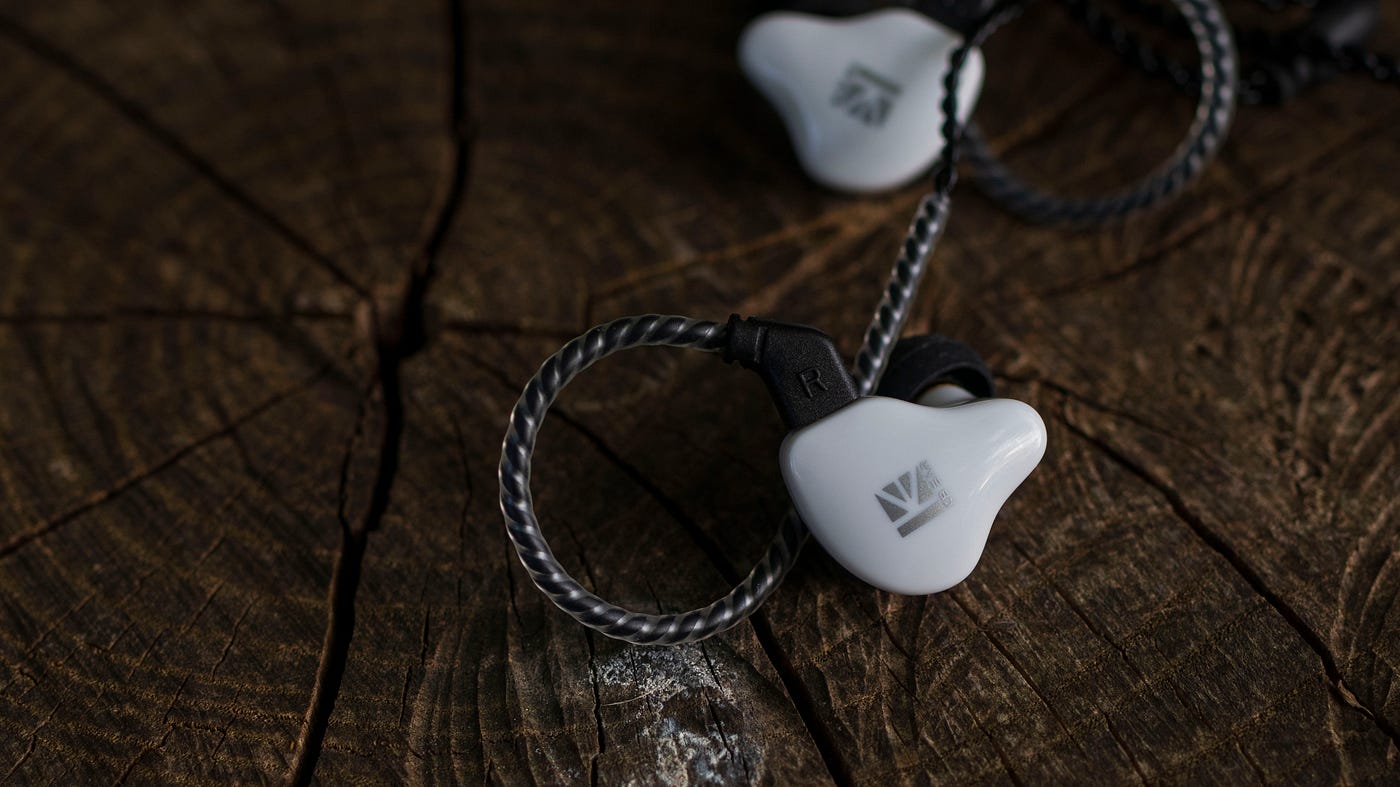
Build: The entire IEM shell is plastic with the ever-popular pseudo-custom shape. It does look and feel fragile, even though the finish in general is pretty good for the price (cutouts are precise, vents are well drilled, shell-joints are smooth). The nozzle is metal fortunately and has an angled lip to grip onto tips along with facilitating a secure fit.
There are two vents on the inner-side, placed on the same axis. Channel markings are on the side of the shell. The 2-pin connectors protrude from the shell unfortunately and should be handled with care.
So yeah, at this price, I can’t complain with the build, fit and finish but KBEar themselves have a metal shelled IEM for just a few bucks extra, so… 4/5
Accessories: You get the barebones i.e. tips and cable and the IEMs themselves. No fancy extras. The tips are decent and might not need replacing. Same goes for the cable, though I did use an aftermarket cable I had lying around. 3/5
Comfort/Isolation: Due to the pseudo-custom shape, lightweight plastic and moderate nozzle length the KS2 is very comfortable overall. Isolation is average with the stock tips but if you change to more isolation tips (e.g. Final E Type, Radius Deep Mount) isolation gets better. Also the stock tips are a bit uncomfortable for long sessions so if possible try something else (Starline tips are good on a budget). 4/5

Now, onto the sound.
KBEar opted for a hybrid setup once again, with a 10mm composite diaphragm DD handling the lows and a custom BA driver (sitting in the nozzle as usual, likely the same old 30095) handling the mids/treble. Pretty much a routine driver configuration nowadays.
The KBEar KS2 has a typical V-shaped sound with boosted upper-mids and lower-treble. As a result you get this exciting sound that can get fatiguing/grating based on the track being played or your own tolerance.
Bass: KS2 has a boosted low-end, esp from 70Hz and below. So you do get the thump and rumble until 20Hz (though rumble at 20Hz is not as prominent). The bass lacks texture and turns boomy on fast-paced tracks/tracks where the bass is already boosted in mastering. For regular Pop/Rock songs it’s fine though.
Those who prefer a boosted low-end and are mostly after the thump of the bass rather than fine texture will likely be alright with the KS2’s low end. Those who want more subtlety in the bass department will be disappointed. 4/5
Mids: The upper-mids are boosted as is very common nowadays, with the typical 2Khz and 4Khz boosts in place. This makes female vocals too upfront and higher-pitched vocals end up being shouty and fatiguing at times. There are also hints of sibilance, as can be found on Avril Lavigne’s I’m With You.
This upper-mid boost is usually felt the most in baritone vocals as the lower-mids are more recessed in comparison. As a result, baritone vocals sound husky rather than hefty, case in point: Colin Hay’s I Just Don’t Think I’ll Get Over You. String instruments also sound thin and lacks the usual reverb you’d hear in reality. In short: the usual weaknesses of such tuning manifests here again and I don’t quite get why manufacturers are adamant at continuing a clearly flawed tuning philosophy. 3/5
Treble: The lower-treble doesn’t slope naturally and there are some peaks around 7–8KHz (depending on insertion depth). This results in sibilance and also certain instruments like violins, cello sounds peaky and tiring. The resolved detail is also nothing of note. Cymbals sound a bit splashy (a typical weakness of this particular BA driver model), just listen to The Winery Dogs’ You Saved Me to get a feel for it. KS2 doesn’t sound as splashy as certain other KZ models though so I guess that’s something.
Nonetheless, the sibilance issue rears its ugly head and lack of resolved detail despite a peaky treble is unfortunate. 3/5
Soundstage: Soundstage height is larger than the typical budget IEM which is quite curious and definitely aids while watching movies and such. Soundstage width is moderate but stage depth is pretty poor. 3.5/5
Imaging: Imaging is not too bad given the budget (it’s better than Tin T4 so there’s that) but it won’t knock your socks off like, say, Final E500. Instruments are placed mostly in a flat plane. Left/right separation is good but corner-imaging is pretty poor. Central imaging however is slightly better which was curious. Nonetheless, it’s a mixed bag, and there are other stuff in the price bracket that does imaging better. 3.5/5
Bang-for-Buck: The biggest adversary of the KS2 is its own brethren: KB04. I find the KB04 to be better at every single aspect, perhaps only comfort is a bit better on the KS2. If we take into account the other options in the range KS2 doesn’t really seem like an exciting option. Alas. 2.5/5
Source and Amplification: The KS2 runs off of everything.

Select Comparisons
vs KBEar KB04 ($25): The KB04 costs just $5 more but is better on every aspect: build quality, bass, detail retrieval. It does suffer from the same upper-mid peak issue as the KS2 but it’s more palatable on the KB04. And the bass response is KB04’s calling card so if you’re after good bass in a budget KB04 should definitely be in your shortlist.
vs Kinera Tyr ($25): Kinera Tyr is a single micro-driver IEM and lacks the detachable cable of the KS2. Fit and finish is better on the Try along with the build of the housing, however. Tyr also comes with much better accessories. Bass is similarly boosted on the Tyr but lacks the sub-bass rumble of the KS2. It does have more textured bass with less bleeding in the lower mids. The midrange is less shouty on the Tyr and the treble is more controlled. Soundstage is similar but imaging is better on the Tyr.
Overall, the Tyr is a better choice as well if you don’t mind the non-detachable cable (you do get nice Final E-type tips).

Conclusion
KBEar did impress me with the Diamond, which despite its flaws was an interesting IEM that was built like a tank. Then the KB04 showed up with some of the best bass and detail retrieval in the budget range (though I don’t like the overall tonality myself). KS2 seems like a backward step. It doesn’t differentiate itself in any manner. The tuning is generic, the design is dime-a-dozen, and worst of all its own brethren consumes it. The sound isn’t bad per se but it’s fatiguing for me and not really something I find natural or ideal for long-listening.
From my perspective, it’s back to the drawing board for KBEar. They sure can employ more palatable tunings (as evident on the Diamond) so if they can forego the tendency of putting dual 2/4KHz peaks, make the lower treble a bit less prominent and make the bass less boomy in their next release, we might have something to talk about.
For now though, there isn’t much to talk about.
Overall rating: 3/5
[embed]Review Test Tracks Listen to Review Test Tracks on TIDALtidal.com
[embed]
메타데이터
- post_id
- f6d7b3560f72
- slug
- kbear-ks2-review-f6d7b3560f72
- url
- https://medium.com/10hztech/kbear-ks2-review-f6d7b3560f72
- canonical_url
- https://medium.com/10hztech/kbear-ks2-review-f6d7b3560f72
- author_url
- https://medium.com/@kmmbd
- status
- ok
- fetched_at
- 2026-07-28 21:39:13