What Environmental Salmonella Taught Me About Public Health Threats
The environment may tell us more about antimicrobial resistance than we think
What Environmental Salmonella Taught Me About Public Health Threats
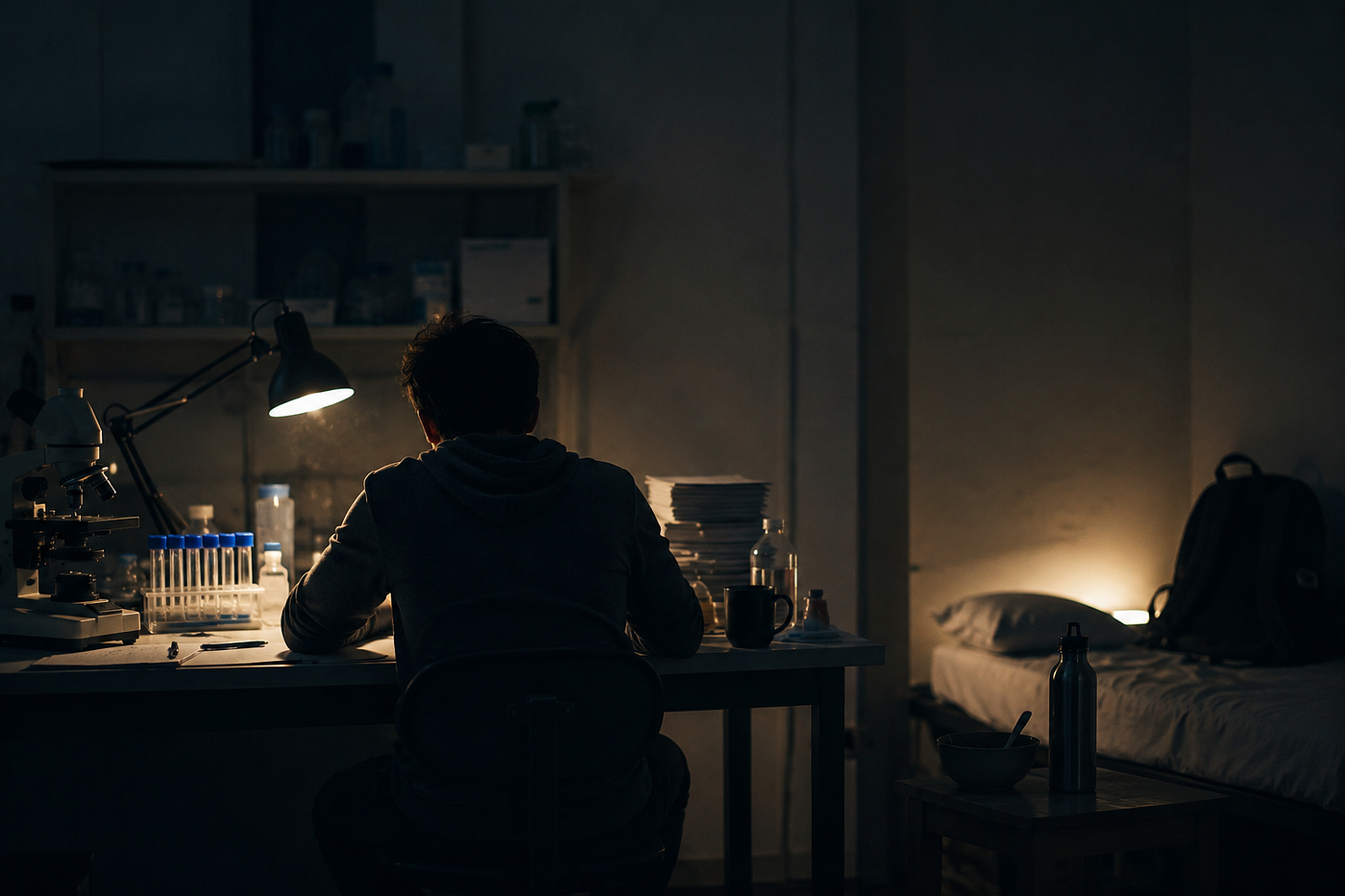
Photo by Casey Horner on Unsplash
The environment may tell us more about antimicrobial resistance than we think
Most people think of Salmonella as a food poisoning story.
A contaminated meal. An outbreak traced back to eggs or poultry. A hospital report. A familiar pathogen appearing at the point where something has already gone wrong.
That is still part of the story. But it is no longer the whole of it.
Working on environmental Salmonella changed the scale of that picture. Instead of looking only at isolates linked to disease, the focus shifted to bacteria recovered from water, soil, and other environmental settings that rarely receive the same public attention as hospitals, farms, or food recalls. Seen from that angle, Salmonella looked less like a pathogen that simply appears at the end of a chain and more like one that can persist, adapt, and circulate beyond the clinical spaces where it is most often discussed.
That shift changed the way antimicrobial resistance itself came into focus.
By the time a resistant pathogen shows up in a patient, a clinic, or a public-health alert, part of its ecological story may already have unfolded elsewhere, in wastewater, rivers, agricultural runoff, and contaminated soils that are still too often treated as background rather than as active microbial habitats.
The environment is not just where pathogens are found
Public-health conversations tend to focus on the places where the consequences of infection are easiest to see: hospitals, food systems, outbreaks, clinical isolates, treatment failures.
That makes sense. Those are the settings where the damage becomes visible.
But microbes do not spend their lives waiting for us to notice them.
They survive in water. They persist in soil. They move through sewage systems, agricultural environments, animal interfaces, and contaminated landscapes. They encounter antibiotics, metals, disinfectants, and other selective pressures. They exchange genes. They adapt.
And yet the environment is still often described as if it were passive, a place where pathogens are found, rather than a place where they can persist, retain adaptive traits, and continue circulating.
The more closely environmental Salmonella genomes were examined, the harder that passive picture became to defend.
These were not microbiologically trivial isolates
Our recent work brought together newly sequenced environmental isolates from India with a much larger global collection of environmental Salmonella genomes. The result was a large-scale genomic study of environmental *Salmonella* designed to examine population structure, resistance genes, virulence-associated determinants, and plasmids across environmental lineages.
The technical details mattered. But the bigger impression came from something simpler: these isolates did not behave like microbiological background noise.
Many of the Indian isolates were multidrug-resistant.
That alone should be enough to make anyone pause.
These were not hospital isolates recovered from critically ill patients. They came from environmental settings, especially water and soil, the kinds of places that often sit outside the center of public-health attention. Yet many already carried resistance to multiple antibiotics. That does not mean every environmental isolate is poised to become a clinical threat, but it does make one thing difficult to ignore: environmental reservoirs can contain bacteria with traits that matter well beyond the environment itself.
Biofilms make the story harder to dismiss
Another finding that stayed with me was how many of these isolates were strong biofilm formers.
Biofilms sound technical, but the underlying idea is straightforward. Bacteria living as surface-attached communities inside a self-produced protective matrix can be harder to eliminate, more resilient under stress, and better able to persist in difficult conditions.
In environmental settings, that matters.
A strong biofilm-forming bacterium is not simply passing through. It has a strategy for staying put.
That changes the feel of the story. Instead of imagining environmental Salmonella as transient contamination, the data suggest that at least some strains are well equipped to persist in the kinds of places where surveillance is often sparse and selective pressures are complex.
Resistance in the environment should not feel routine
One of the strange things about genomic work is how quickly alarming findings can start to look ordinary on a screen. A resistance gene becomes an annotation. A plasmid becomes a row in a table. A virulence-associated determinant becomes another colored block in a heatmap.
But some findings resist becoming routine.
Among the more unsettling signals in the dataset was the detection of colistin resistance genes in environmental Salmonella genomes. Colistin is often treated as a last-resort antibiotic for certain multidrug-resistant infections. So the appearance of mobilized colistin resistance genes in environmental reservoirs is not the kind of detail that should be easy to shrug off.
That does not mean every detection predicts an imminent clinical crisis. It does mean that clinically important resistance determinants are not confined to hospitals or patient isolates. Environmental reservoirs may provide opportunities for such traits to persist and circulate long before they come to attention through routine clinical surveillance.
Plasmids are part of the real story
The study also sharpened how I think about plasmids.
In microbiology, plasmids are familiar characters: mobile DNA elements that can shuttle useful traits between bacteria. But familiarity can sometimes flatten their significance. Looking at environmental Salmonella at scale brought them back into focus as one of the most important parts of the story.
Plasmids can carry resistance genes, virulence-associated determinants, and other adaptive cargo that helps bacteria survive antibiotics, tolerate environmental stress, or interact with hosts in new ways. In our dataset, they repeatedly appeared at the center of the genomic picture. Some plasmid backbones carried multiple adaptive traits at once, making them more than passive accessories to the chromosome. They were part of the machinery that helps bacteria become more flexible, persistent, and difficult to contain.
That is one reason antimicrobial resistance is never just a list of genes. It is also a problem of mobility, of how useful traits move, accumulate, and persist across populations.
Global datasets also reveal global blind spots
Another lesson from this work had less to do with Salmonella itself and more to do with how science sees the world.
“Global” genomic datasets are rarely as global as they sound. Some countries contribute enormous amounts of sequencing data because they have stronger surveillance systems, better infrastructure, and more consistent investment in genomics. Other regions, including those with intense human-animal-environment interactions and heavy environmental burdens, remain comparatively underrepresented.
That matters because scientific conclusions are only as good as the sampling behind them.
If some regions are studied in depth while others are sampled only lightly, then the resulting map of pathogen diversity, resistance, and risk will be distorted. Something may appear rare not because it is rare, but because it has not been looked for carefully enough.
That is part of why environmental genomic data from India matter. India is not peripheral to the story of antimicrobial resistance. It is one of the places where human, animal, and environmental health intersect constantly through wastewater, agriculture, food systems, dense populations, and uneven environmental sanitation. Under-sampling such settings does not just leave geographic gaps. It leaves scientific blind spots.
The deeper lesson was about timing
The strongest takeaway from this work was not only about Salmonella. It was about timing.
Antimicrobial resistance is usually discussed as a crisis of treatment, surveillance, and public-health response. It is all of those things. But it is also a crisis of when attention begins.
Too often, attention starts at the point of clinical visibility: when a resistant infection reaches a patient, when a hospital laboratory flags it, when an outbreak becomes difficult to contain, when the health system is finally forced to react.
But bacteria do not begin their ecological story at the moment we notice them.
They persist in environmental reservoirs. They form biofilms. They acquire mobile genetic elements. They circulate across ecological boundaries. They adapt under pressures that are often invisible to clinical surveillance.
If that is true, and the environmental genomic evidence increasingly suggests that it is, then environmental surveillance cannot be treated as a side branch of public health. It is not peripheral science. It is part of the frontline.
Salmonella is still a foodborne pathogen. But that is no longer the whole story.
That may be the clearest thing this work changed for me.
Salmonella is still linked to foodborne disease, outbreaks, and hospital reports. None of that disappears. But it now also calls to mind rivers, wastewater channels, soil, and the quieter environments where bacteria persist whether anyone is watching or not.
Public health often works from the visible end of the story because that is where the consequences are easiest to measure. But the earlier chapters matter just as much.
If resistant pathogens only come to attention once they reach hospitals, then an important part of their ecological story has already unfolded elsewhere. By then, public health is already playing catch-up.
Further reading
This essay draws on our recent research on the global genomic surveillance of environmental Salmonella. If you’d like to read the paper behind it, you can find it here: Global genomic surveillance of Salmonella in the environment: assessing virulence and antimicrobial resistance at scale
메타데이터
- post_id
- f6eeff55d0e7
- slug
- what-environmental-salmonella-taught-me-about-public-health-threats-f6eeff55d0e7
- url
- https://medium.com/illumination/what-environmental-salmonella-taught-me-about-public-health-threats-f6eeff55d0e7
- canonical_url
- https://medium.com/illumination/what-environmental-salmonella-taught-me-about-public-health-threats-f6eeff55d0e7
- author_url
- https://medium.com/@bandsodeviraj21
- status
- ok
- fetched_at
- 2026-07-08 06:24:15