The Moment That Cannot Be Replayed
A fight does not move forward.
The Moment That Cannot Be Replayed
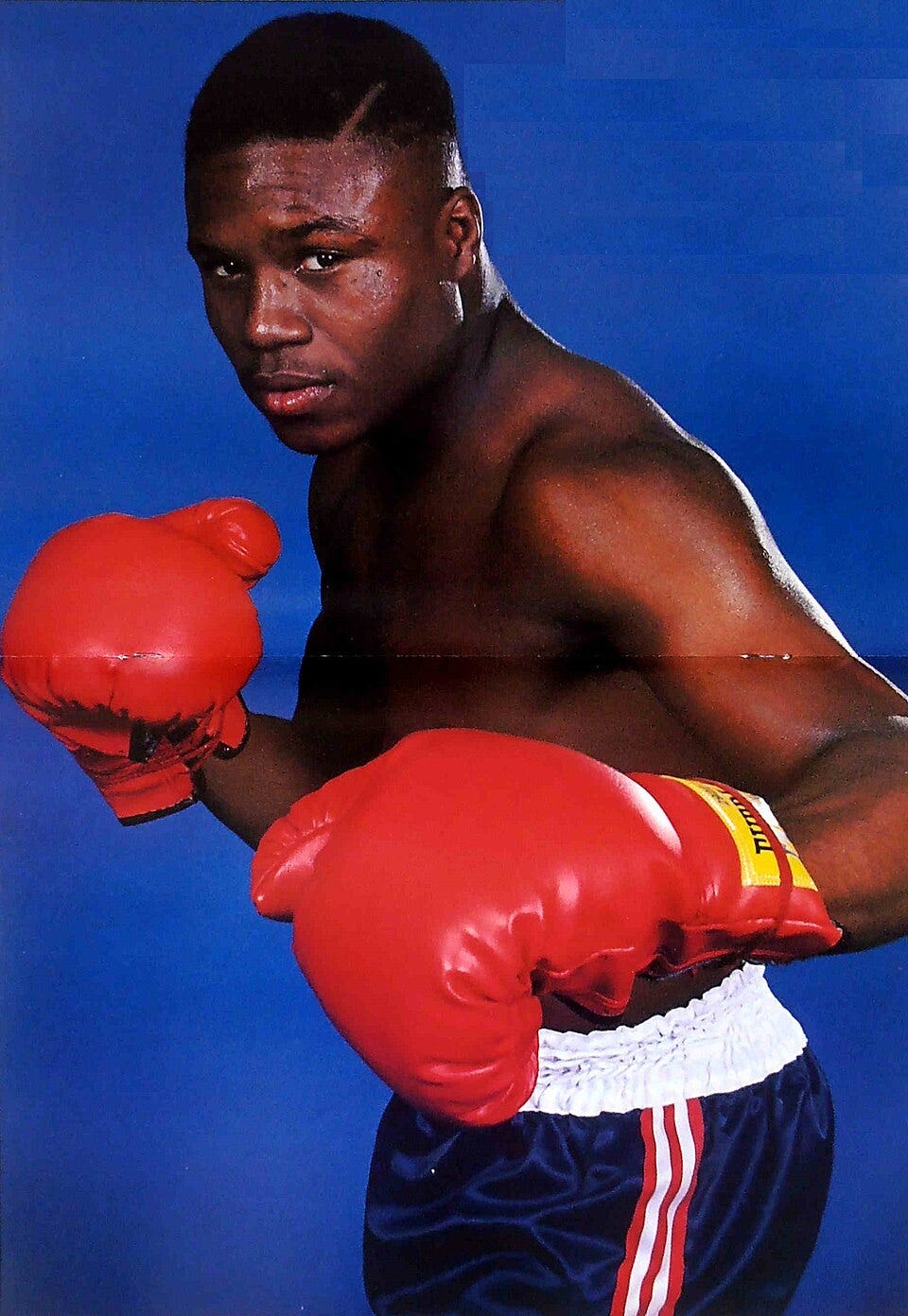
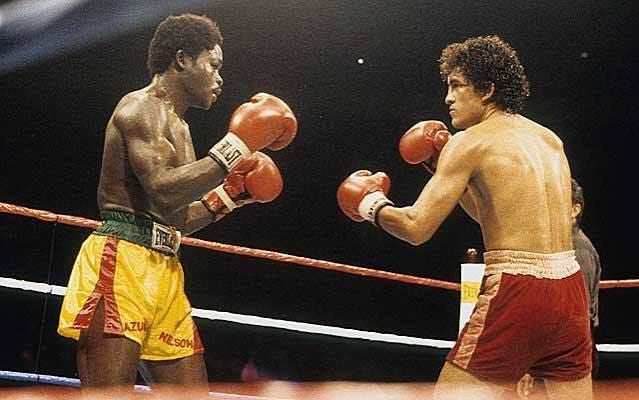
Meldrick Taylor, one of the fastest boxers ever
A fight does not move forward.
It disappears.
Not all at once, not in some dramatic collapse of time, but in fragments — seconds that arrive, exist briefly, and then vanish without residue. Each moment carries within it a possibility, a narrow window through which action can pass. If taken, the fight advances. If missed, the window closes.
And it does not open again.
This is the quiet cruelty of boxing. Not the punches, not the damage, and not even the defeat — but the irreversibility of time. What is not done when it can be done cannot be recovered later. The fight does not allow revision. It does not return to unfinished questions.
It simply moves on.
Timing, in this sense, is not about speed. It is about alignment — between recognition and action, between perception and commitment. A fighter may see the opening, may understand exactly what is available, but if the action arrives a fraction too late, the opportunity dissolves.
The knowledge remains.
The moment does not.
This is why hesitation is more than a delay. It is a form of loss.
The opening that presents itself is not a static object, waiting patiently to be used. It exists in motion, shaped by the opponent’s position, rhythm, and intention. It appears as part of a sequence, tied to a specific configuration of space and time.
When that configuration changes, even slightly, the opening ceases to exist in the same form.
A jab that could have been intercepted becomes protected. A right hand that could have landed clean now meets a guard. A step that would have created angle now leads into congestion. The difference is not always visible, but it is decisive.
The fight has moved.
And what was available a moment ago is no longer there.
This is what distinguishes early decisions from late ones. An early decision meets the moment at its point of emergence. It acts within the narrow space where possibility and execution overlap. A late decision arrives after that overlap has begun to close, forcing the action into a space where it no longer fits.
The result is not merely inefficiency.
It is failure of alignment.
The punch is thrown, but into a version of the fight that has already changed.
This is why two identical actions can produce entirely different outcomes depending on when they occur. A counter thrown at the precise moment of the opponent’s extension lands with clarity. The same counter, thrown a fraction later, meets withdrawal or defense. The mechanics are unchanged.
Only the timing has shifted.
And that shift is enough to separate success from absence.
Fighters live within this shifting landscape of moments. Each exchange presents a brief opportunity to act, to impose, and to alter the direction of the fight. But these opportunities are not evenly distributed, nor are they predictable. They arise from the interaction itself — from the way movements intersect and from the way rhythms align or disrupt.
To recognize them requires awareness.
To act on them requires commitment.
And commitment must be immediate.
Because time in boxing does not pause for certainty. There is no space for prolonged evaluation, no luxury of confirmation. The fighter must decide within the moment, not after it. He must trust the recognition enough to act before doubt can intervene.
This is where hesitation takes its toll.
Not as fear, not as indecision in the abstract, but as a failure to bridge the gap between seeing and doing. The fighter perceives the opening, registers its potential, but does not move quickly enough to inhabit it. The mind arrives first. The body follows too late.
And in that delay, the moment is lost.
What remains is often deceptive. The fighter may still throw, still attempt the action he intended, but it occurs in a different context. The opponent has adjusted, the distance has shifted, or the angle has closed. The action is no longer a response to the opening.
It is an echo of it.
From the outside, this can appear as poor execution. A missed punch, a blocked attempt, and a sequence that fails to produce effect. But the deeper issue is temporal, not technical. The action did not fail because it was wrong.
It failed because it was late.
This is why missed opportunities accumulate in ways that are difficult to quantify. Each one is small, almost negligible in isolation. A jab not thrown, a step not taken, and a counter delayed by a fraction. But over the course of a fight, these moments form a pattern.
A pattern of absence.
The fighter who consistently acts within the moment builds continuity. His actions connect, his sequences develop, and his presence in the fight feels sustained. He moves from one opportunity to the next, not perfectly, but sufficiently to maintain direction.
The fighter who hesitates experiences something different. His actions are intermittent and disconnected. He engages, then withdraws, not by design but by delay. The fight passes through him in segments, never fully held.
He is present.
But not in time.
This distinction becomes more pronounced as the fight progresses. Fatigue narrows the margin for correct timing. Recognition slows and reactions lag. The windows of opportunity do not widen to compensate. If anything, they become more fleeting, as both fighters operate closer to their limits.
Late in the fight, the cost of hesitation increases.
Because there is less time to absorb it.
An opportunity missed in the early rounds may be offset by another later. But as the fight approaches its conclusion, each moment carries greater weight. There are fewer chances remaining, fewer sequences in which to act, and fewer openings to exploit.
Time, having been generous at the start, becomes restrictive.
And what has been lost cannot be reclaimed.
This is why some fights are decided not by what was done, but by what was not done in time. The cleaner punch, the sharper sequence, and the more visible success may belong to one fighter. But beneath that lies a quieter ledger — the accumulation of moments taken versus moments missed.
The difference is not always dramatic.
But it is decisive.
Because boxing does not allow for correction across time. It does not permit a missed opportunity to be revisited under the same conditions. Each moment is unique, shaped by a specific alignment of movement and intention that will not recur in exactly the same way.
The fighter must meet it as it is.
Or let it pass.
When the final bell sounds, the record reflects what occurred. Actions taken, rounds scored, and outcomes determined. But the deeper structure of the fight includes what never materialized — the openings that appeared and vanished, the decisions that arrived too late, and the sequences that remained incomplete.
These are not visible in the numbers.
But they are embedded in the result.
Because in boxing, the fight is not only a test of skill.
It is a test of time.
And time does not forgive hesitation.
It does not pause for reconsideration.
It does not return what has been missed.
It offers a moment.
And then it takes it away.
메타데이터
- post_id
- f701cdfd22a8
- slug
- the-moment-that-cannot-be-replayed-f701cdfd22a8
- url
- https://medium.com/@ibrahimkimathi/the-moment-that-cannot-be-replayed-f701cdfd22a8
- canonical_url
- https://medium.com/@ibrahimkimathi/the-moment-that-cannot-be-replayed-f701cdfd22a8
- author_url
- https://medium.com/@ibrahimkimathi
- status
- ok
- fetched_at
- 2026-06-09 15:37:30