The Cultural Impact of Iconic Animated Films and Series: How Cartoons Changed the World
From Saturday morning rituals to late-night binge sessions, animated films and series have been far more than entertainment.
The Cultural Impact of Iconic Animated Films and Series: How Cartoons Changed the World
From Saturday morning rituals to late-night binge sessions, animated films and series have been far more than entertainment.
They’ve shaped generations, influenced language, challenged social norms, and even altered how we see ourselves and the world. In an era where Disney, Pixar, Studio Ghibli, and adult animations like The Simpsons dominate cultural conversations, it’s worth asking: how deep has animation’s impact really been?
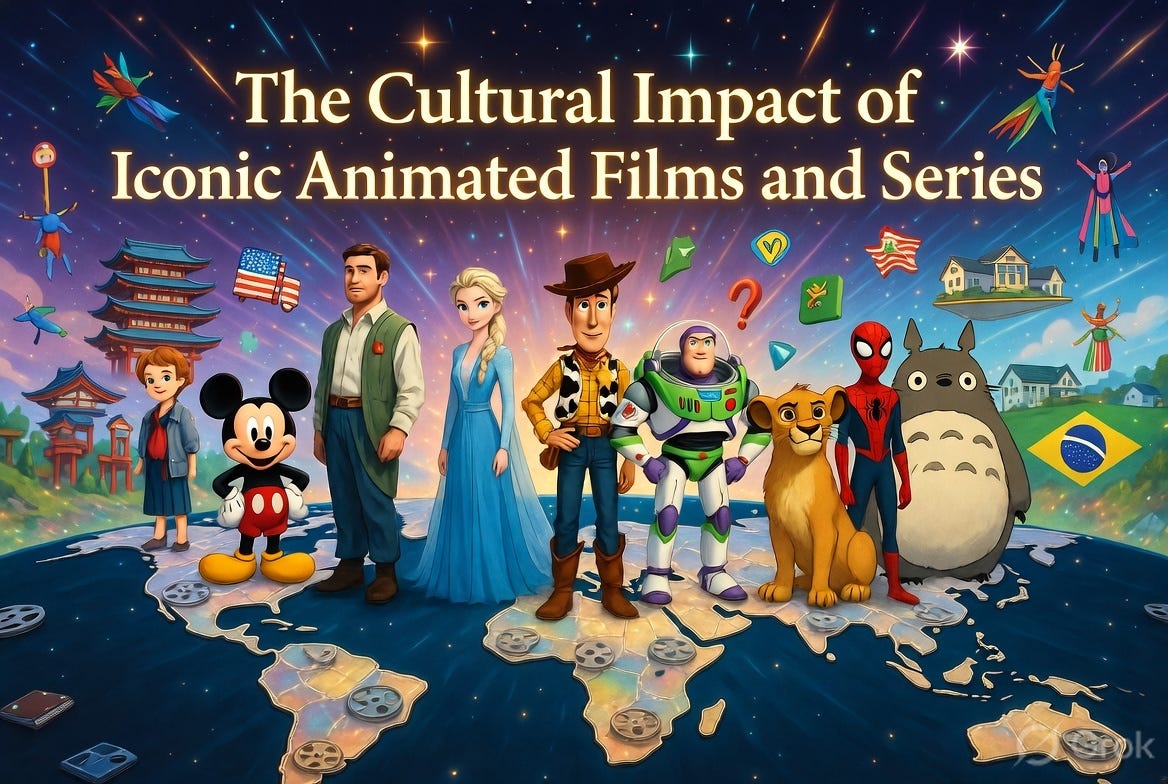
Image is Generated by Chatgpt
The Early Foundations: Disney and the Birth of Shared Mythology
When Walt Disney released Snow White and the Seven Dwarfs in 1937, few could have predicted its lasting cultural footprint. It wasn’t just the first full-length animated feature film it created a template for storytelling that blended magic, music, and moral lessons. Phrases like “happily ever after” and characters like Mickey Mouse became global symbols of optimism and creativity.
Disney’s princess films Cinderella, Sleeping Beauty, The Little Mermaid defined childhood aspirations for decades. While modern critics debate their gender roles, there’s no denying their power in popularizing fairy tale archetypes worldwide. Songs like “Let It Go” from Frozen (2013) didn’t just top charts; they became anthems for emotional resilience, especially among young girls navigating identity and pressure.
The cultural ripple effect extended beyond children. Adults found nostalgia and comfort in these stories. Disney parks became pilgrimage sites, turning animation into lived experience. The company’s acquisition of Pixar in 2006 only amplified this influence.
Pixar: Teaching Emotional Intelligence Through Pixels
Pixar revolutionized animation by proving that computer-generated stories could hit harder than live-action. Toy Story (1995) wasn’t just technically groundbreaking it explored friendship, obsolescence, and growing up with profound tenderness. Woody and Buzz became cultural shorthand for loyalty and adaptability.
Films like Up (2009) tackled grief and adventure in old age with such emotional precision that even hardened adults reached for tissues. Inside Out (2015) gave children (and parents) a visual language for complex emotions like sadness, anger, and anxiety. In therapy sessions and parenting books today, you’ll frequently hear references to Riley’s mind headquarters.
These stories normalized vulnerability. In a fast-paced, often emotionally repressed world, Pixar helped millions process feelings they couldn’t name. This emotional intelligence training through animation may be one of its most underrated cultural contributions.
Studio Ghibli and the Poetry of Nature
While Western animation dominated for decades, Japanese anime brought a different flavor one steeped in environmentalism, spirituality, and moral ambiguity. Hayao Miyazaki’s Studio Ghibli films like Spirited Away (2001), My Neighbor Totoro, and Princess Mononoke introduced global audiences to Shinto-inspired worlds where spirits coexist with humans.
Spirited Away remains the highest-grossing film in Japan and won the Oscar for Best Animated Feature. Its themes of identity, greed, and growing up resonated across cultures. Young viewers learned environmental responsibility long before climate activism became mainstream. Ghibli’s hand-drawn aesthetic also sparked a renewed appreciation for traditional animation techniques in the digital age.
Anime’s influence exploded further with series like Dragon Ball Z, Naruto, and Death Note, creating dedicated fandoms that influenced fashion (cosplay culture), language (borrowing terms like “kawaii”), and even work ethic discussions around “hustle culture” inspired by shonen protagonists.
The Simpsons, South Park, and Animated Social Commentary
Not all impactful animation targets kids. The Simpsons, which premiered in 1989, became the longest-running scripted television series for a reason. Its satirical take on American family life, politics, and consumerism predicted countless real-world events — from smartwatches to Trump’s presidency — with eerie accuracy.
The show popularized catchphrases (“D’oh!”, “Excellent”) that entered everyday vocabulary. It normalized dysfunctional yet loving families on screen, influencing everything from Family Guy to Rick and Morty.
South Park took this further, using crude animation to deliver razor-sharp commentary on everything from politics to celebrity culture. While controversial, these shows proved animation could be a powerful vehicle for free speech and cultural critique when live-action might face heavier backlash.
Representation and Modern Animation’s Evolution
Recent years have seen animation lead in diversity and inclusion. Avatar: The Last Airbender and its sequel The Legend of Korra created rich, multicultural worlds with deep spiritual themes. Spider-Man: Into the Spider-Verse (2018) and its sequel revolutionized superhero storytelling with innovative visuals while celebrating different versions of heroism across race, gender, and dimension.
Encanto (2021) brought Colombian culture, intergenerational trauma, and magical realism to global audiences, sparking conversations about family dynamics in immigrant households. Series like The Boondocks, BoJack Horseman, and Arcane (based on League of Legends) tackled mental health, addiction, racism, and the cost of ambition with sophistication rarely seen in other mediums.
These stories matter because they allow marginalized voices to reach wide audiences through accessible, visually stunning formats. A child in Delhi watching Coco learns about Mexican Día de los Muertos traditions. A teenager in Brazil connects with African-inspired elements in Black Panther’s animated spin-offs.
The Meme Culture and Digital Immortality
In today’s internet age, animation’s cultural power has multiplied. SpongeBob SquarePants memes dominate social media. Characters from Rick and Morty fuel philosophical debates about nihilism. Disney adults proudly display their love for “kid stuff,” challenging outdated notions of maturity.
Animation also influences mental health conversations. Shows like Steven Universe model healthy emotional processing and queer representation. During the pandemic, comfort rewatches of classics provided collective solace.
The Future: Animation as Cultural Bridge
As technology advances with AI-assisted animation and virtual reality, the medium’s potential grows. We’re likely to see even more personalized, culturally specific stories reaching global audiences.
Yet the core appeal remains human: stories that make us laugh, cry, and reflect. Animation’s ability to depict the impossible while exploring very real emotions gives it unique power.
Whether it’s a child learning empathy from The Lion King, a young adult finding comfort in Avatar: The Last Airbender’s themes of balance, or millions quoting The Office… wait, no BoJack Horseman on depression, these works have become part of our shared cultural DNA.
What’s your favorite animated film or series that shaped you?
Drop your thoughts in the comments. In our increasingly divided world, animation continues to unite us through universal stories told in extraordinary ways.
메타데이터
- post_id
- f70ec7d25c1e
- slug
- the-cultural-impact-of-iconic-animated-films-and-series-how-cartoons-changed-the-world-f70ec7d25c1e
- url
- https://medium.com/illumination/the-cultural-impact-of-iconic-animated-films-and-series-how-cartoons-changed-the-world-f70ec7d25c1e
- canonical_url
- https://medium.com/illumination/the-cultural-impact-of-iconic-animated-films-and-series-how-cartoons-changed-the-world-f70ec7d25c1e
- author_url
- https://medium.com/@lalitkumarmba23-25
- status
- ok
- fetched_at
- 2026-06-09 15:37:30