AI-Driven O-RAN Security: How Operators Are Closing the Open Interface Threat Gap
5GWorldPro 7 min read · 1 day ago
AI-Driven O-RAN Security: How Operators Are Closing the Open Interface Threat Gap
5GWorldPro 7 min read · 1 day ago
AI-Driven O-RAN Security: How Operators Are Closing the Open Interface Threat Gap
Open RAN’s biggest strength is also its biggest security challenge. By disaggregating the radio access network into open, multi-vendor components connected through standardized interfaces, O-RAN created unprecedented flexibility and an attack surface that traditional RAN architectures never had to deal with. Operators deploying AI-driven security monitoring across their O-RAN stacks are now closing that gap, and the results are reshaping how the industry thinks about telecom security.
Why O-RAN Changed the Security Equation
Traditional RAN architectures from a single vendor came with security built into a closed, proprietary stack. There was less flexibility, but also fewer places for an attacker to get in. The interfaces between components were undocumented and vendor-specific, which made them difficult to target.
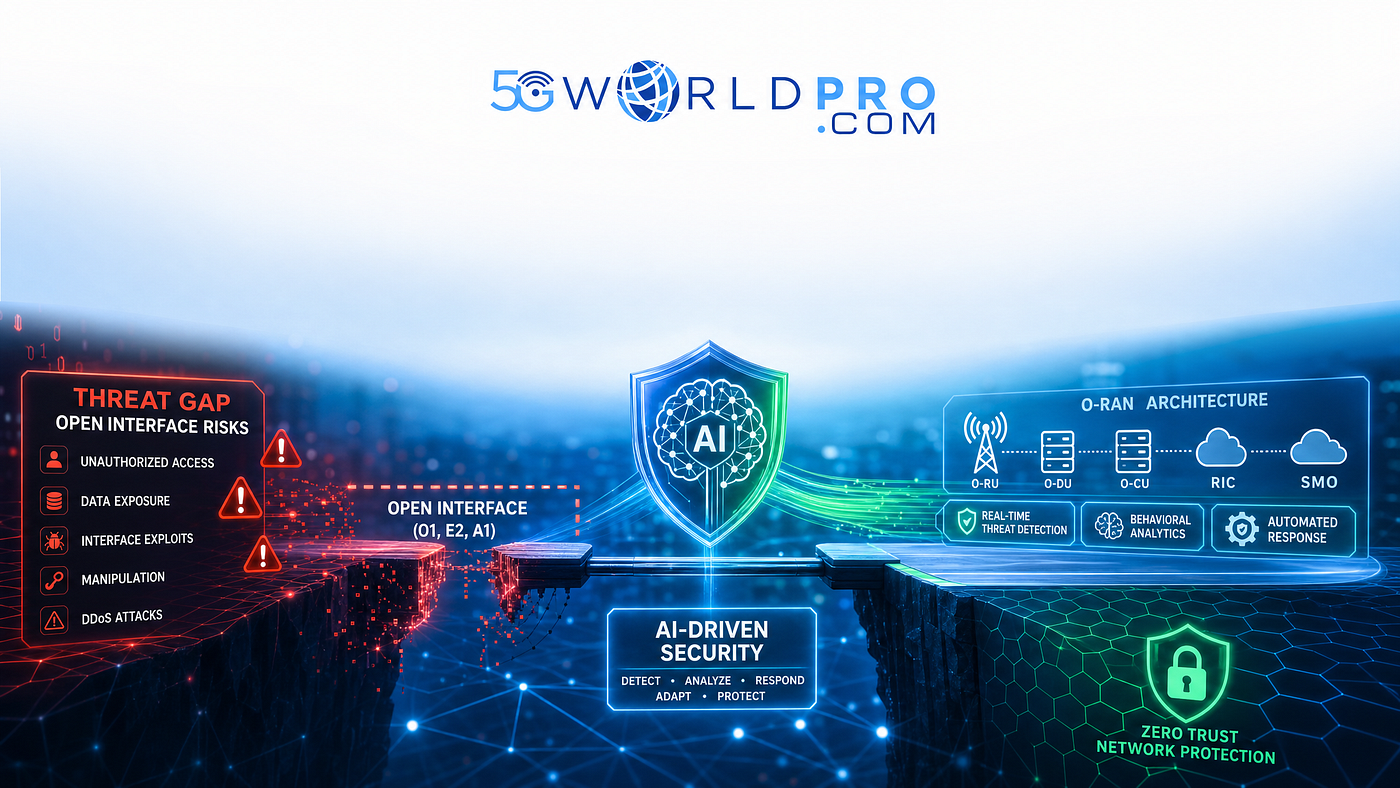
O-RAN deliberately opens this up. The architecture defines standardized interfaces — the A1, O1, O2, and E2 interfaces connecting the RAN Intelligent Controller (RIC) to radio units, distributed units, and centralized units supplied by different vendors. This is exactly what makes multi-vendor interoperability possible. It is also what creates new points of exposure that did not exist in integrated systems.
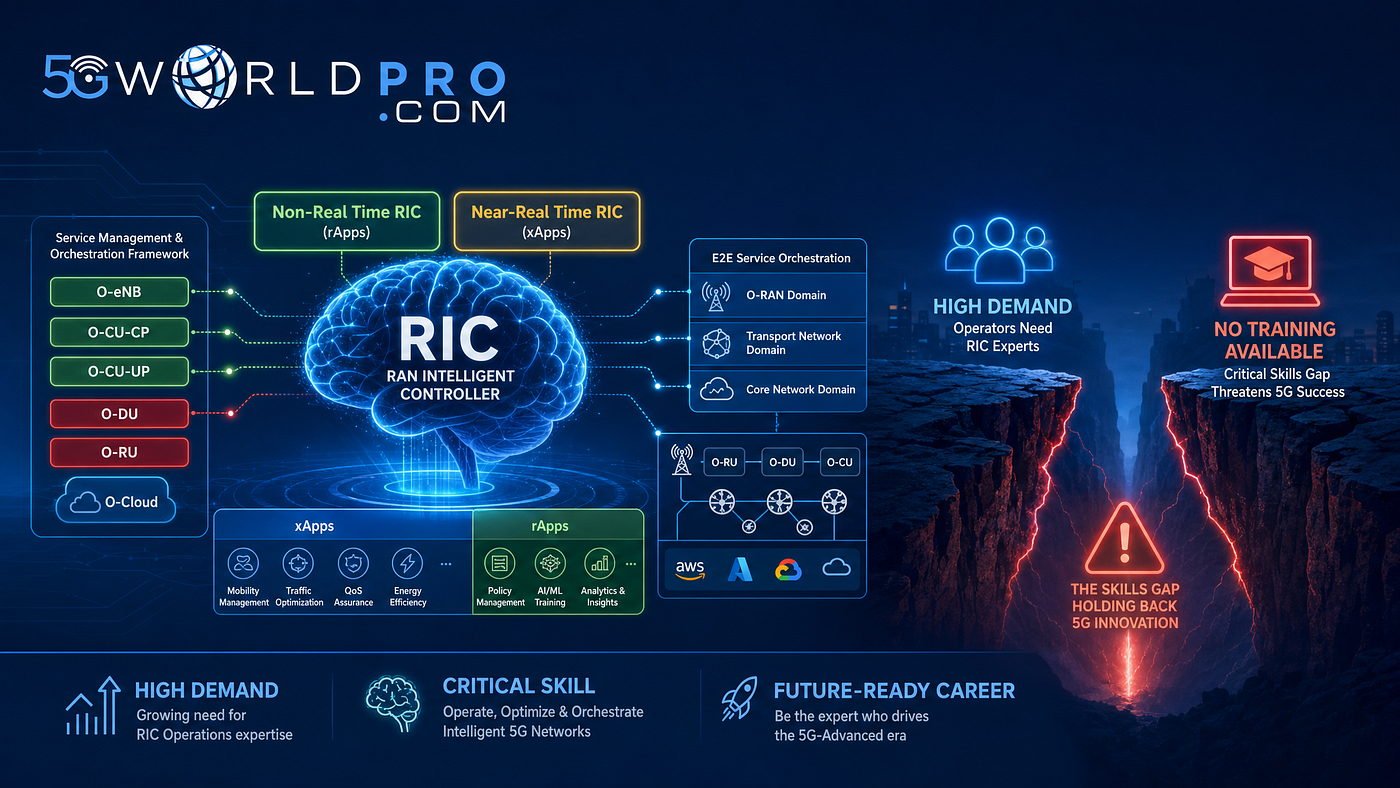
The E2 interface, which connects near-real-time RIC xApps to the RAN components they control, is a particular focus of concern. An xApp with E2 access can influence scheduling decisions, power settings, and handover behavior across the network. If that interface is not properly authenticated and monitored, a malicious or compromised xApp becomes a direct path into core radio operations.
The open-source nature of much O-RAN software, while valuable for innovation, means vulnerabilities are often publicly documented before patches are widely deployed across operator networks.
How AI Security Monitoring Works Across the O-RAN Stack
Traditional network security relied heavily on signature-based detection known attack patterns matched against network traffic. This approach struggles against the kind of subtle, behavioral anomalies that can occur when a compromised xApp or rogue component operates within otherwise normal-looking traffic.
AI-driven security monitoring in O-RAN environments works differently.
Anomaly detection at the xApp level
Machine learning models trained on the normal behavioral patterns of xApps how often they call specific E2 service models, what parameter ranges they typically request, how their resource consumption trends over time can flag deviations that indicate compromise or malfunction. An xApp that suddenly begins requesting unusual handover parameters across an abnormal number of cells is a pattern a trained model can catch in near real time, well before the behavior causes network degradation.
Interface traffic baselining
AI systems can build statistical baselines of normal traffic across the A1, O1, and E2 interfaces, then flag deviations. This is particularly valuable on the O1 interface, which handles configuration management and is a high-value target for attackers seeking persistent access to network components.
Cross-vendor correlation
In a multi-vendor O-RAN deployment, security events at one vendor’s radio unit may correlate with events at another vendor’s distributed unit in ways that are not obvious without centralized analysis. AI correlation engines operating across the RIC can identify these multi-component attack patterns that would be invisible to vendor-specific monitoring tools operating in isolation.
What This Looks Like in Production Deployments
Several tier-1 operators have published details of their O-RAN security architectures, and the pattern across them is consistent: AI-based monitoring is deployed as a non-removable layer within the near-real-time RIC, with dedicated xApps whose sole function is security observation rather than network optimization.
These security xApps typically operate with elevated read access across E2 traffic but restricted write access, allowing them to observe and flag without becoming an additional attack vector themselves. This separation of monitoring privilege from control privilege is considered a baseline requirement in mature O-RAN security architectures, and it reflects lessons learned from earlier deployments where overly permissive xApps created exactly the kind of exposure the architecture was meant to avoid.
The operational discipline required here is significant, and it is exactly the kind of capability covered in the RIC operations and security curriculum at 5GWorldPro because securing a disaggregated RAN requires engineers who understand both the radio architecture and the AI systems monitoring it.
The Skills Gap Behind the Security Gap
The technology to secure O-RAN deployments largely exists. What is harder to find is the operational capability to deploy it correctly.
Engineers managing O-RAN security need to understand the E2 service models well enough to recognize when an xApp’s behavior falls outside expected parameters and well enough to distinguish a genuine threat from a legitimate but unusual optimization decision. A security model that generates excessive false positives gets ignored or disabled, which defeats its purpose entirely.
They need to understand the trust boundaries between RIC, near-RT RIC, and the radio components themselves, because a vulnerability discovered at one layer does not necessarily indicate exposure at another, and treating every alert with equal urgency leads to alert fatigue.
They need to be able to validate vendor security claims independently. In a multi-vendor environment, each supplier has an interest in presenting their component as secure, but the operator bears the operational risk when something goes wrong. Engineers who can evaluate E2 interface implementations and O1 configuration management practices directly, rather than relying entirely on vendor documentation, are the ones who catch problems before they become incidents.
Building this capability requires structured training that connects RAN architecture knowledge to security operations knowledge a combination that remains rare in telecom engineering teams built around traditional, single-vendor security models.
Why This Matters Now, Not Later
O-RAN adoption is accelerating across major markets, driven by cost efficiency and vendor flexibility. Security cannot be treated as an afterthought layered on once deployments mature the interfaces and trust boundaries need to be secured from initial deployment, because retrofitting security architecture into a live multi-vendor RAN is significantly more disruptive than building it in from the start.
Regulatory attention is also increasing. Several markets have introduced specific security requirements for Open RAN deployments, reflecting government-level recognition that the disaggregation benefits driving O-RAN adoption come with security obligations that did not exist in the same form for traditional RAN architectures.
Operators who have invested in AI-driven security monitoring as a core part of their O-RAN architecture not a bolt-on are the ones positioned to scale multi-vendor deployments without scaling their risk exposure proportionally.
Closing the Gap Requires People, Not Just Tools
The AI tools to monitor O-RAN security exist and are commercially deployed. The gap between available capability and realized security comes down to the same factor across every operator: whether the engineering team understands the architecture deeply enough to configure, tune, and trust the monitoring systems they deploy.
That operational capability is what 5GWorldPro’s training programs are built around vendor-agnostic curriculum covering RIC operations, O-RAN security architecture, and AI-driven network monitoring for telecom professionals working across the full disaggregated stack.
Full curriculum at 5gworldpro.com/5g-training.
메타데이터
- post_id
- f715b6fec49c
- slug
- ai-driven-o-ran-security-how-operators-are-closing-the-open-interface-threat-gap-f715b6fec49c
- url
- https://medium.com/@elmehdinini1/ai-driven-o-ran-security-how-operators-are-closing-the-open-interface-threat-gap-f715b6fec49c
- canonical_url
- https://medium.com/@elmehdinini1/ai-driven-o-ran-security-how-operators-are-closing-the-open-interface-threat-gap-f715b6fec49c
- author_url
- https://medium.com/@elmehdinini1
- status
- ok
- fetched_at
- 2026-07-18 01:03:44