How AI is Becoming Your “Virtual Compliance Officer” in 2026
Introduction
How AI is Becoming Your “Virtual Compliance Officer” in 2026
Introduction
For decades, businesses have followed a familiar pattern:
- Record transactions
- Close books at month-end
- Wait for the auditor to review
- Fix errors after the fact
This approach made sense in a slower, manual world.
But in 2026, this model is starting to look outdated — even risky.
👉 The question founders are now asking is simple:
Why wait for the auditor to find problems… when AI can prevent them in real time?
The Traditional Problem: Delayed Compliance
Most businesses still operate on post-facto compliance.
What This Looks Like
- Errors are detected at month-end
- ITC mismatches are discovered after filing
- Fraud is identified too late
- Corrections require time and effort
The Cost of Delay
This delay creates real consequences:
- Blocked Input Tax Credit (ITC)
- GST notices and penalties
- Cash flow disruptions
- Loss of trust with stakeholders
👉 By the time issues are found, the damage is already done.
The Shift: From Periodic Audits to Continuous Compliance
The financial ecosystem in India is evolving rapidly.
With:
- Automated GST matching
- Real-time validations
- AI-driven monitoring by authorities
👉 Compliance is no longer periodic — it’s continuous.
Enter AI Agents: The Virtual Compliance Officer
AI is no longer just assisting finance teams — it is acting independently.
In 2026, AI agents are functioning as:
Virtual Compliance Officers
They don’t wait for instructions. They don’t wait for month-end. They don’t miss anomalies.
What Does a Virtual Compliance Officer Do?
AI agents continuously monitor financial data and perform tasks such as:
1. Real-Time ITC Verification
Instead of checking ITC at filing time, AI:
- Matches purchase data with GST records instantly
- Verifies eligibility in real time
- Flags mismatches immediately
2. Fraud Detection
AI can detect:
- Duplicate invoices
- Suspicious vendor activity
- Unusual transaction patterns
👉 And it does this before payments are made.
3. Continuous Reconciliation
No more waiting for month-end.
AI performs:
- Ongoing reconciliation
- Instant mismatch detection
- Automated corrections (where applicable)
4. Regulatory Monitoring
AI agents track changes such as:
- GST rate updates
- Compliance rules
- Reporting requirements
👉 And adjust systems automatically.
Real-Time vs Month-End: A Critical Difference
Traditional Approach
- Data collected → Reviewed later → Errors found → Fix applied
AI-Driven Approach
- Data generated → Checked instantly → Issues flagged → Action taken
👉 The difference is not just speed — it’s control.
Why This Matters for Businesses
1. Prevents Compliance Failures
Errors are corrected before they impact filings.
2. Protects Cash Flow
Accurate ITC ensures:
- No blocked credits
- Better liquidity
3. Reduces Risk
Fraud and anomalies are detected early.
4. Saves Time
Teams spend less time fixing errors and more time on strategy.
5. Improves Accuracy
Automation reduces human errors significantly.
The Role of ITC Verification in 2026
Input Tax Credit (ITC) is one of the most critical aspects of GST compliance.
The Challenge
- ITC depends on supplier filings
- Mismatches are common
- Errors can block claims
The AI Advantage
AI ensures:
- Real-time matching with GSTR-2B
- Instant validation of invoices
- Early detection of discrepancies
👉 This transforms ITC from a risk area into a controlled process.
From Reactive to Proactive Finance
This shift represents a larger transformation:
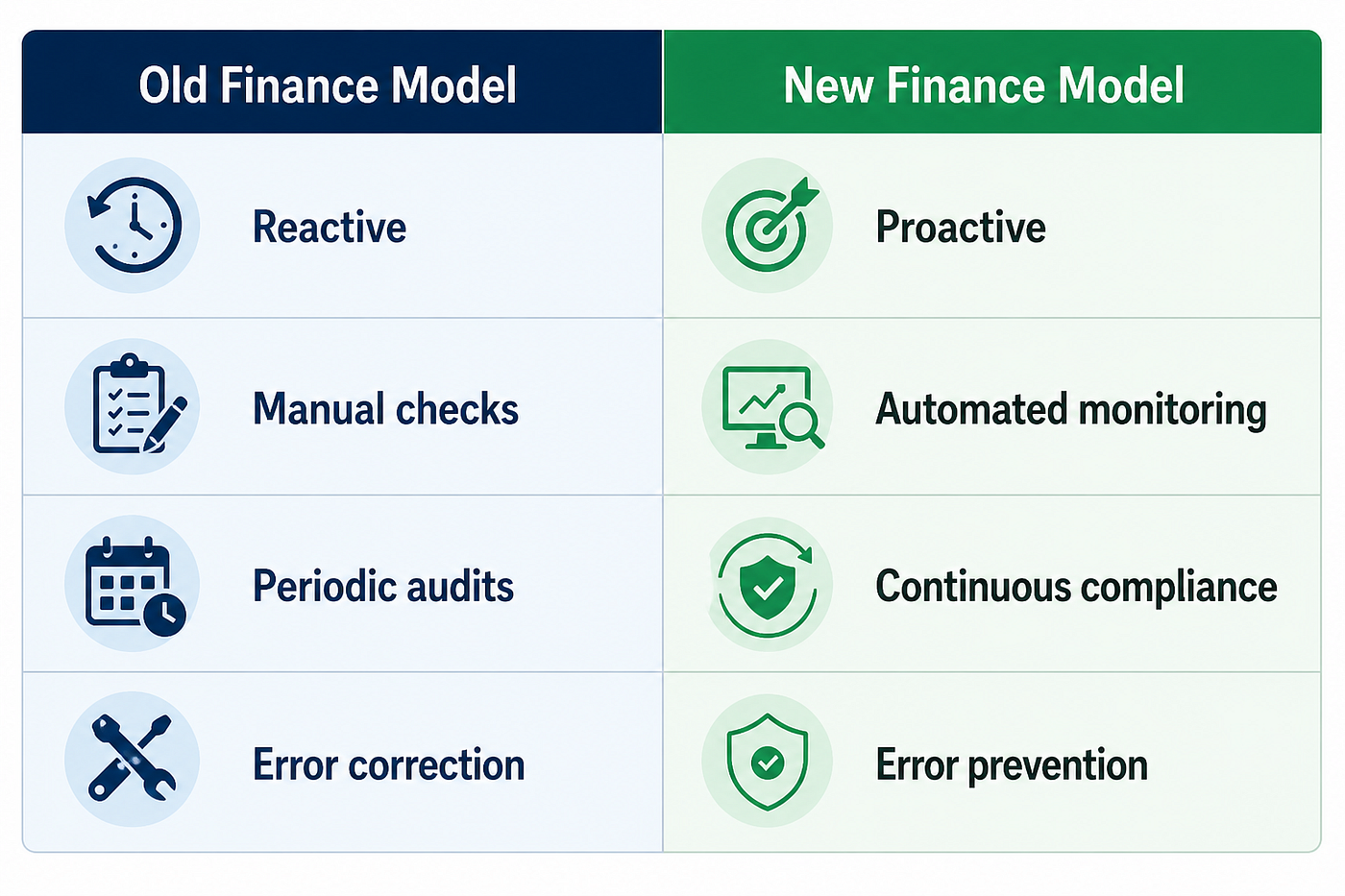
👉 Businesses are moving from fixing problems → preventing them
The Human + AI Collaboration
AI does not replace accountants — it enhances them.
What AI Handles
- Data processing
- Monitoring
- Detection
- Routine compliance
What Humans Focus On
- Strategy
- Decision-making
- Financial planning
- Advisory roles
👉 This creates a more efficient and intelligent finance function.
The Febi Edge: Your Always-On Compliance Partner
Most accounting systems act like tools — you use them when needed.
But platforms like Febi operate differently.
How Febi Functions as a Virtual Compliance Officer
- Monitors transactions continuously
- Detects anomalies in real time
- Verifies ITC automatically
- Ensures GST compliance without delays
The Key Difference
Instead of waiting for reports:
👉 Febi acts instantly.
It doesn’t just show problems — it prevents them.
The Future of Compliance in India
India is moving toward:
- Real-time tax systems
- AI-driven regulatory oversight
- Fully digital financial ecosystems
What This Means for Businesses
- Compliance will become stricter
- Errors will be detected faster
- Manual processes will become obsolete
👉 The only way forward is automation + intelligence.
Common Mistakes Businesses Must Avoid
- Waiting until month-end to review data
- Relying on manual reconciliation
- Ignoring real-time compliance tools
- Treating compliance as a secondary function
Conclusion
The era of waiting for auditors is coming to an end.
In 2026, businesses need systems that:
- Monitor continuously
- Detect instantly
- Act proactively
Final Thought
Why wait for the auditor to find errors… when AI can ensure they never happen?
The future belongs to businesses that adopt real-time, intelligent compliance systems — and turn finance from a reactive function into a strategic advantage.
메타데이터
- post_id
- f717c19d6130
- slug
- how-ai-is-becoming-your-virtual-compliance-officer-in-2026-f717c19d6130
- url
- https://medium.com/@febi.ai/how-ai-is-becoming-your-virtual-compliance-officer-in-2026-f717c19d6130
- canonical_url
- https://medium.com/@febi.ai/how-ai-is-becoming-your-virtual-compliance-officer-in-2026-f717c19d6130
- author_url
- https://medium.com/@febi.ai
- status
- ok
- fetched_at
- 2026-07-10 21:50:49