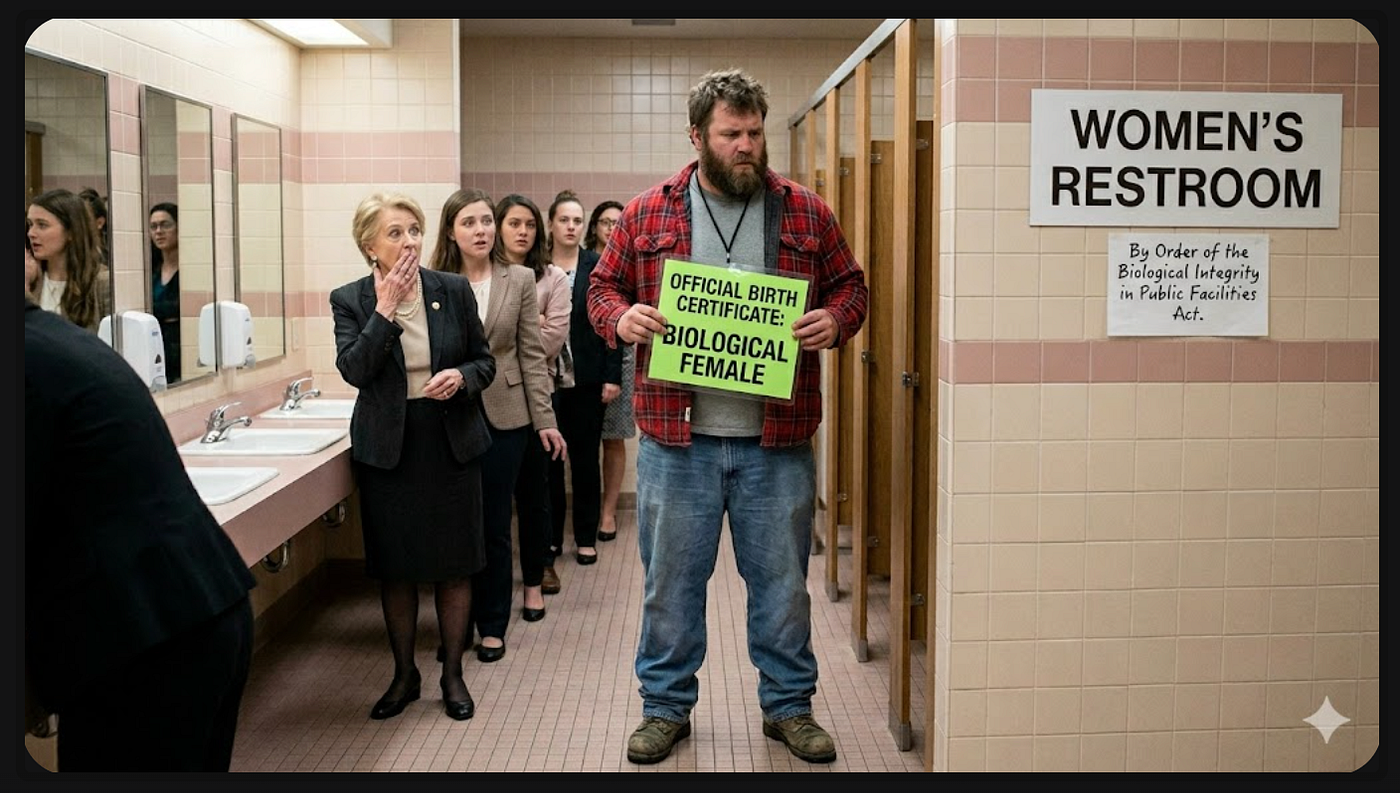
The Silent Majority: Honoring Women’s Strengths Without Toxic Feminism
The concept of feminism has evolved over the years, and while many embrace its core principles, there exists a division between those who…
The Silent Majority: Honoring Women’s Strengths Without Toxic Feminism
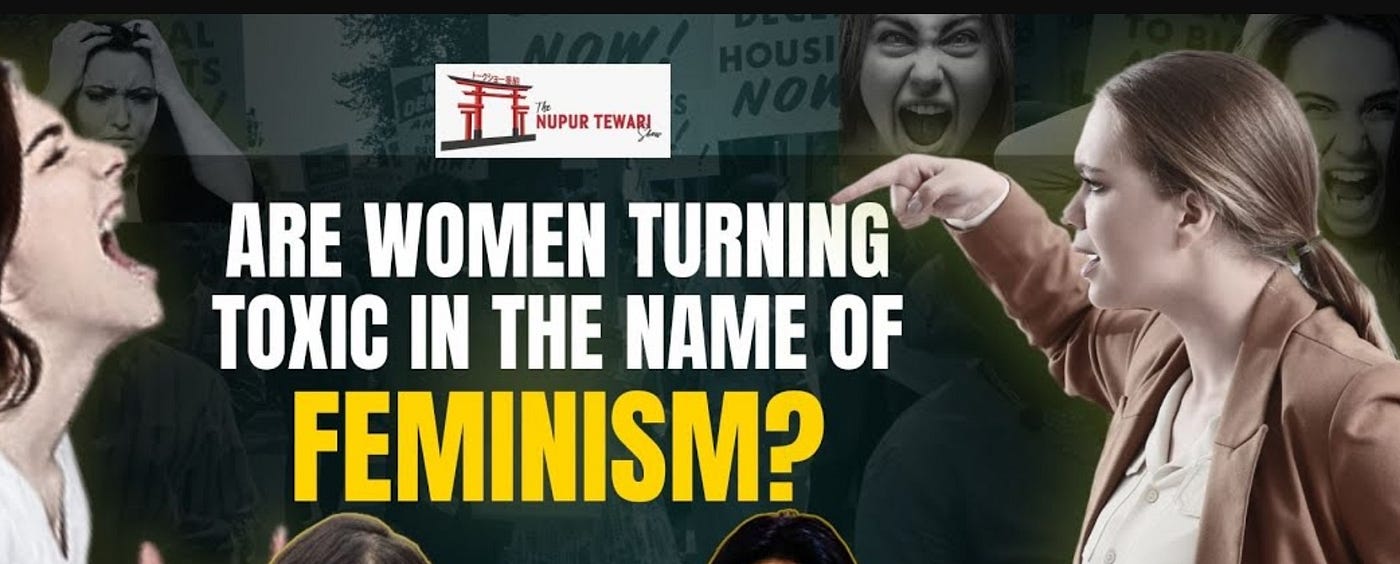
The concept of feminism has evolved over the years, and while many embrace its core principles, there exists a division between those who celebrate the natural roles of men and women and those who perceive systemic oppression in all aspects of gender relations. “True feminism” is good thing as opposed to the modern, more radical version, which often fosters a victimhood mentality. This silent majority — those who appreciate the natural distinctions between men and women while advocating for fairness — deserve more recognition.
Psychological Differences Between Men and Women
It is an established psychological fact that men and women are inherently different in their cognitive and emotional predispositions. Women naturally excel in nurturing and caregiving roles, while men exhibit a more structured, problem-solving approach to their environment. An illustrative example of this distinction is the handling of children. If a group of small children were left with a man and a woman, the man would likely struggle in managing them, whereas the woman would intuitively navigate their needs with ease. This is not a subjective viewpoint but a widely studied phenomenon in psychology.
Jordan Peterson, a highly respected psychologist, has extensively discussed this aspect of gender differences. He argues that true feminism should celebrate women’s contributions in traditional roles rather than denigrate them. In contrast, modern feminist ideologies often paint women as perpetual victims, generalizing from isolated experiences rather than looking at the broader picture. Many self-identified feminists today exhibit an anti-male sentiment, which lacks objectivity and fails to recognize the biological and psychological realities of gender.
The Different Goals of Men and Women
Men and women approach life with differing objectives. Men, by nature, seek freedom in all forms — whether in career, relationships, or personal pursuits. This is why many men are inclined towards short-term relationships or one-night stands, though the mature ones recognize the importance of commitment and stability in society. The fundamental drive for autonomy is deeply ingrained in the male psyche.
Wayne Dyer, another eminent psychologist, explores this in his documentary The Shift, a widely acclaimed work that provides a compelling narrative on personal transformation. He delineates a phase in life where both men and women undergo a psychological transition — moving from an ego-driven existence to a more meaningful, self-fulfilled state.
Men’s Priorities Before and After “The Shift”
Before the Shift (Ego-driven Phase):
- A strong focus on achievement, success, and wealth accumulation.
- A desire for status, recognition, and external validation.
- Career aspirations often overshadow family and personal well-being.
- Identity tied to profession rather than intrinsic self-worth.
After the Shift (Soul-driven Phase):
- Realization that success does not equate to fulfillment.
- Increased focus on relationships, spirituality, and personal development.
- Desire to contribute meaningfully to society.
- Less attachment to wealth and status, prioritizing inner peace.
Women’s Priorities Before and After “The Shift”
Before the Shift (Ego-driven Phase):
- Strong association with caregiving roles (mother, wife, nurturer).
- A tendency to prioritize others’ needs over personal aspirations.
- External validation from societal and familial expectations.
After the Shift (Soul-driven Phase):
- A renewed pursuit of self-discovery and independence.
- Greater emphasis on personal fulfillment over societal expectations.
- A shift from defining oneself through relationships to embracing individual identity.
- Engagement in creative, career, or spiritual pursuits.
The Problem with Modern “Toxic Feminism”
One of the significant issues with modern feminism is its push for gender equality without considering merit. While gender representation may be appropriate in some cases, enforcing quotas in the private sector — where leadership should be based on competency — can be detrimental. Appointing CEOs or managers based solely on gender rather than skill threatens a company’s stability and success.
Jordan Peterson critiques this flawed approach, highlighting key differences in leadership styles between men and women. Women in leadership often prioritize consensus and agreement, whereas business innovation requires debate, dissent, and a willingness to challenge the status quo. Male-dominated environments facilitate this dynamic exchange of ideas, where disagreements are seen as part of progress rather than personal conflicts. In contrast, women tend to hold grudges and struggle with conflict resolution in professional settings, which can hinder effective teamwork.
The Hypocrisy of Gender-Based Reservations
Another inconsistency within modern feminist discourse is its selective approach to gender-based reservations. Feminists often advocate for quotas in corporate leadership but rarely demand equal representation in physically demanding fields such as construction, roadwork, bridge-building, or mining. These jobs are overwhelmingly performed by men, yet feminists do not campaign for gender equality in these sectors. They enjoy the conveniences provided by male labor — such as infrastructure and essential services — while selectively choosing to challenge gender imbalances only in lucrative or high-status positions.
The Scandinavian Gender Equality Paradox
One of the most compelling rebuttals to the idea that gender roles are purely socially constructed comes from the Scandinavian Gender Equality Paradox. Over the past two decades, Scandinavian countries have implemented extensive gender-neutral policies, encouraging men and women to break traditional roles. Despite this social engineering, the opposite effect was observed — men and women chose even more distinct career paths. Women overwhelmingly opted for people-oriented professions (nursing, education, psychology), while men gravitated towards technical and system-driven fields (engineering, construction, technology).
Jordan Peterson emphasizes that when economic pressures are minimized, individuals default to their innate preferences. This suggests that gender differences are not merely a result of societal conditioning but are deeply rooted in biological and psychological predispositions. Key observations include:
- Women tend to score higher on agreeableness and interpersonal orientation.
- Men exhibit stronger interests in systems, structures, and abstract problem-solving.
- In societies with greater freedom, these differences become even more pronounced rather than diminished.
This directly challenges the modern feminist notion that gender disparities in careers, interests, or societal roles stem solely from systemic oppression. Instead, it suggests that, given complete freedom, men and women will naturally gravitate toward different paths — not due to discrimination, but because of intrinsic differences.
Conclusion
The ongoing debate about feminism needs to be reframed with a more balanced perspective. True feminism should celebrate the contributions of women in all roles, rather than seeking forced equality at the expense of merit. While opportunities should be fair and accessible to all, the fundamental biological and psychological differences between men and women must be acknowledged and respected. Attempts to erase these differences often backfire, as seen in societies that have tried to engineer gender neutrality. The silent majority — women who embrace their natural roles while advocating for fairness — deserve more recognition in this discourse. The objective should not be to diminish the unique strengths of either gender but to allow individuals to thrive in roles that align with their innate capabilities and aspirations.
메타데이터
- post_id
- f726f58b2f12
- slug
- the-silent-majority-honoring-womens-strengths-without-toxic-feminism-f726f58b2f12
- url
- https://medium.com/@SundarDwivedula/the-silent-majority-honoring-womens-strengths-without-toxic-feminism-f726f58b2f12
- canonical_url
- https://medium.com/@SundarDwivedula/the-silent-majority-honoring-womens-strengths-without-toxic-feminism-f726f58b2f12
- author_url
- https://medium.com/@SundarDwivedula
- status
- ok
- fetched_at
- 2026-07-09 16:18:44