EOS Fractional Integrator | Why EOS Loses Momentum
The biggest threat to EOS isn’t poor planning. It’s what happens after the planning session ends.
EOS Fractional Integrator | Why EOS Loses Momentum
The biggest threat to EOS isn’t poor planning. It’s what happens after the planning session ends.
An **EOS Fractional Integrator helps growing companies maintain execution when priorities begin competing, accountability weakens, and L10 meetings** become routine updates instead of decision making sessions.
Even with a strong Entrepreneurial Operating System, execution slows when leaders become consumed by daily operations.
Research shows organizations with disciplined execution practices complete strategic initiatives 31% more successfully than those with inconsistent execution.
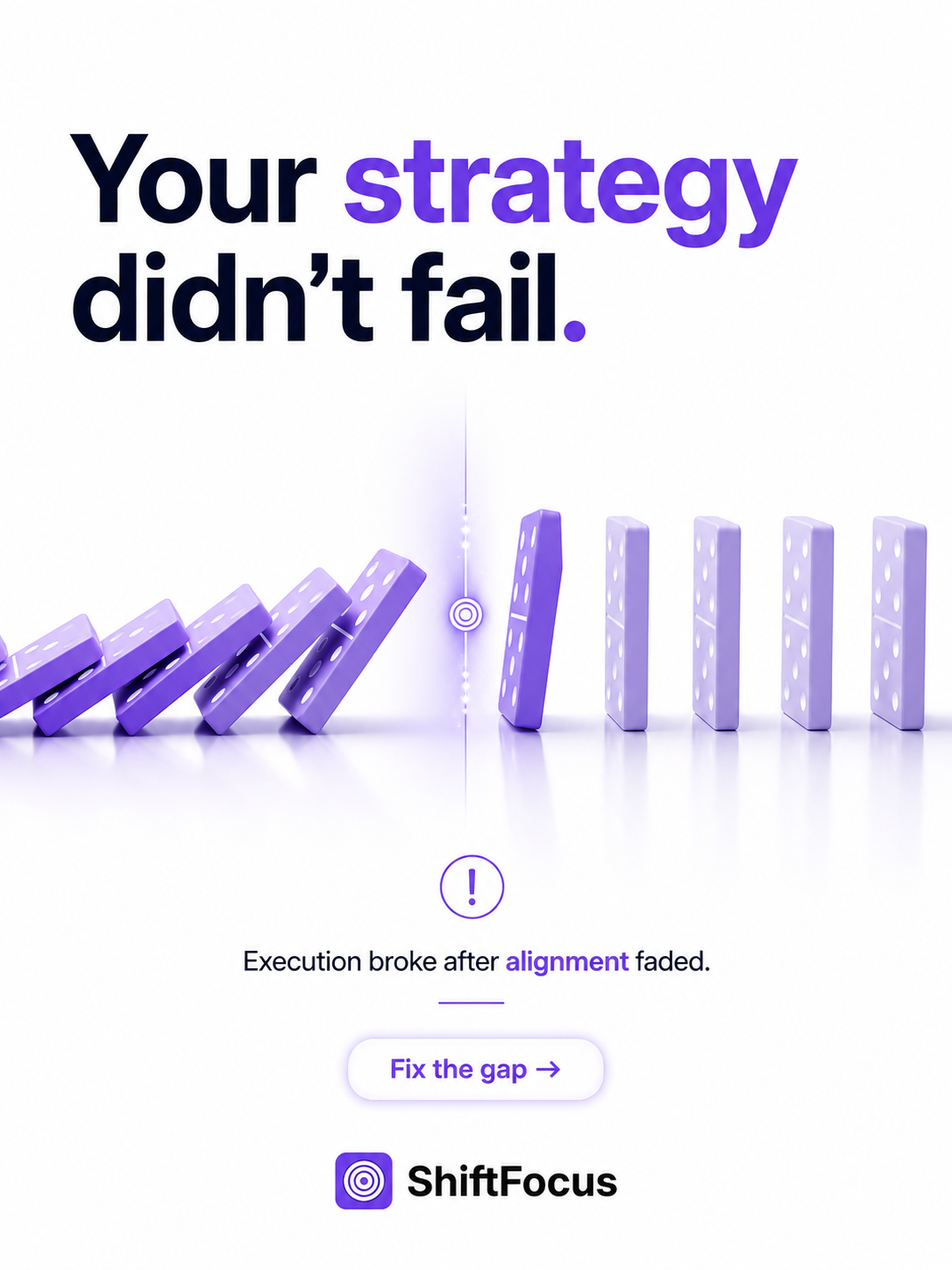
A Fractional Integrator keeps the leadership team aligned, protects quarterly priorities, and ensures EOS implementation continues driving measurable business growth.
EOS Implementation Is Only the Starting Point
Many organizations believe the difficult work ends after implementing EOS.
The opposite is true.
Implementation builds the foundation. Long term success depends on how consistently leadership follows the framework during the months that follow.
Initially, every leader is committed.
Quarterly Rocks receive attention.
Scorecards are reviewed.
Meetings stay productive.
Over time, however, normal business pressure returns.
Daily operations begin replacing strategic work.
Leadership meetings slowly become update sessions instead of problem solving sessions.
Departments focus on individual priorities rather than company priorities.
Execution does not disappear overnight.
It fades gradually.
By the time leadership notices the slowdown, important initiatives have already fallen behind schedule.
A Fractional Integrator helps prevent this by maintaining accountability, aligning the leadership team, and protecting execution every week instead of only during quarterly planning.
Why Execution Becomes Harder as Companies Grow
Growth creates new opportunities.
It also creates complexity.
Every new employee, customer, department, and project increases the number of decisions leaders must make.
Without strong operational leadership, communication slows, priorities become less visible, and accountability weakens.
Research on organizational performance shows companies with aligned leadership teams make strategic decisions 46% faster because responsibilities remain clear and execution stays consistent.
That speed creates a competitive advantage.
When decisions happen quickly, projects continue moving.
When decisions are delayed, priorities begin competing with each other.
An EOS Fractional Integrator helps maintain alignment as complexity increases.
Instead of allowing every department to move independently, they ensure everyone remains focused on the same strategic objectives.
The Hidden Cost of Weak Execution
Most companies carefully monitor revenue, expenses, and profitability.
Few measure execution quality.
That creates hidden costs.
Projects remain unfinished longer than expected.
Important decisions are delayed.
Departments unknowingly duplicate work.
Leadership spends valuable time chasing updates instead of driving growth.
These problems rarely appear on financial reports, yet they reduce productivity throughout the organization.
A workplace productivity study found managers spend nearly 23% of their workweek following up on unfinished commitments rather than making strategic decisions.
Imagine recovering that time every week.
Instead of searching for updates, leaders could focus on customers, innovation, hiring, and long term planning.
Strong execution creates leverage without increasing headcount.
What an EOS Fractional Integrator Really Does
Many people underestimate the responsibilities of a Fractional Integrator.
Their role extends far beyond facilitating meetings.
They become the operational connector between strategy and execution.
Their responsibility is making sure important work continues moving after L10 meetings end.
A Fractional Integrator typically helps by:
Keeping quarterly Rocks on schedule
Monitoring scorecards
Following up on leadership commitments
Removing execution blockers
Improving communication between departments
Supporting the leadership team
Facilitating productive L10 meetings
Maintaining accountability throughout the week
Perhaps their greatest contribution is protecting focus.
Growing businesses constantly receive new opportunities.
Every opportunity appears valuable.
Without operational discipline, new projects quickly replace previously agreed priorities.
Execution begins drifting.
The EOS Fractional Integrator execution strategy keeps leadership focused on completing existing priorities before adding new ones.
This creates consistency across the organization.
Instead of constantly changing direction, teams continue making measurable progress.
According to leadership research, organizations with clearly defined ownership experience 58% fewer delayed strategic initiatives because every priority has one accountable owner.
Ownership creates clarity.
Clarity creates execution.
Execution creates growth.
A successful business does not grow because it has more ideas than competitors.
It grows because it consistently completes the work that matters most.
Why L10 Meetings Alone Are Not Enough
One of the biggest strengths of the **Entrepreneurial Operating System is its meeting rhythm. Weekly L10 meetings** create structure, improve communication, and give leaders a consistent time to review priorities.
However, meetings alone do not guarantee execution.
A leadership meeting lasts about ninety minutes. The remaining one hundred sixty six hours determine whether quarterly priorities move forward or slowly disappear.
Leaders leave the meeting with clear commitments, but daily operations quickly compete for attention. Customer issues appear. Internal requests increase. New opportunities interrupt existing priorities. Without consistent follow up, accountability weakens and important work gets pushed into the following week.
This is exactly where an EOS Fractional Integrator adds value.
Instead of waiting until the next meeting to discover problems, they keep priorities visible throughout the week. They follow up on commitments, identify blockers early, and help leaders make decisions before delays affect the business.
Execution becomes continuous rather than something discussed only during meetings.
Building an EOS Leadership Team Accountability Framework
An effective EOS leadership team accountability framework starts with one simple principle.
Every priority must have one owner.

When ownership is shared, responsibility becomes unclear. People assume someone else is following up, and important work begins slipping through the cracks.
Clear ownership changes behavior.
Every leader understands what they own, when it must be completed, and how progress will be measured.
Strong accountability also requires visibility.
Quarterly Rocks should never become hidden inside meeting notes or spreadsheets. They should remain visible to everyone responsible for execution.
Leaders should regularly ask four questions.
Who owns this priority?
What progress has been made?
What is blocking completion?
What decision is needed today?
These conversations create alignment before problems become delays.
Businesses that consistently review ownership and progress maintain stronger execution because accountability becomes part of everyday operations instead of something discussed only during quarterly planning.
Execution Governance for Growing Businesses
As businesses expand, execution becomes more challenging because every department depends on another team to complete its work.
Sales depends on marketing.
Marketing depends on product.
Operations depend on finance.
Customer success depends on every department delivering on time.
Without execution governance for growing businesses, these dependencies create delays that slow the entire organization.
Execution governance creates a predictable operating rhythm.
Every department understands company priorities.
Every commitment has clear ownership.
Every blocker becomes visible before deadlines are missed.
Instead of reacting to problems after they occur, leadership identifies risks early and resolves them quickly.
Research from Harvard Business Review suggests organizations that review strategic priorities consistently are 33% more likely to achieve long term business objectives than companies that revisit priorities only during quarterly planning.
Consistency creates momentum.
Momentum creates growth.
Signs Your Business Needs an EOS Fractional Integrator
Many companies believe they need another manager when execution slows.
Often, they need stronger operational leadership instead.
Your organization may benefit from an EOS Fractional Integrator if quarterly Rocks frequently remain unfinished, leadership meetings repeat the same discussions, departments operate with competing priorities, founders spend too much time chasing updates, or accountability depends on constant reminders.
These are not signs that EOS has failed.
They are signs that execution needs stronger support.
An experienced **Fractional Integrator** helps restore operational discipline by keeping leaders aligned, following through on commitments, and maintaining focus between planning sessions.
Ready to Strengthen Execution with an EOS Fractional Integrator?
Planning creates direction, but consistent execution creates results. As businesses grow, maintaining accountability becomes more challenging, even with a proven operating framework.
Strong execution discipline helps leadership teams stay aligned, protect quarterly priorities, and maintain momentum between planning sessions.
If your Rocks keep slipping, L10 meetings repeat the same discussions, or accountability is becoming inconsistent, it’s time to strengthen your execution process.
ShiftFocus OS gives your team complete visibility into priorities, blockers, ownership, and weekly progress, helping everyone stay focused on what matters most.
Ready to eliminate execution gaps? See how ShiftFocus OS helps your team execute with clarity, accountability, and confidence.
Frequently Asked Questions
What is an EOS Fractional Integrator?
An EOS Fractional Integrator is an experienced operational leader who helps businesses maintain accountability, improve execution, and keep quarterly priorities moving after EOS implementation.
How is a Fractional Integrator different from an EOS Implementer?
An EOS Implementer guides organizations through adopting EOS. A Fractional Integrator works alongside the leadership team after implementation to maintain execution and accountability.
Why do companies lose momentum after EOS implementation?
Most businesses lose momentum because operational work begins replacing strategic priorities. Without consistent follow up, accountability weakens and execution slows.
Can a Fractional Integrator help without replacing existing leaders?
Yes. A Fractional Integrator works alongside the existing leadership team, improving coordination, accountability, and execution without changing reporting structures or replacing department leaders.
Why is execution governance important for growing businesses?
As organizations grow, projects, departments, and decisions become more complex. Execution governance provides clear ownership, regular follow up, and consistent visibility so strategic priorities remain on track.
메타데이터
- post_id
- f7290c7b68bf
- slug
- eos-fractional-integrator-f7290c7b68bf
- url
- https://medium.com/@vivek2raja/eos-fractional-integrator-f7290c7b68bf
- canonical_url
- https://medium.com/@vivek2raja/eos-fractional-integrator-f7290c7b68bf
- author_url
- https://medium.com/@vivek2raja
- status
- ok
- fetched_at
- 2026-07-07 10:08:12




