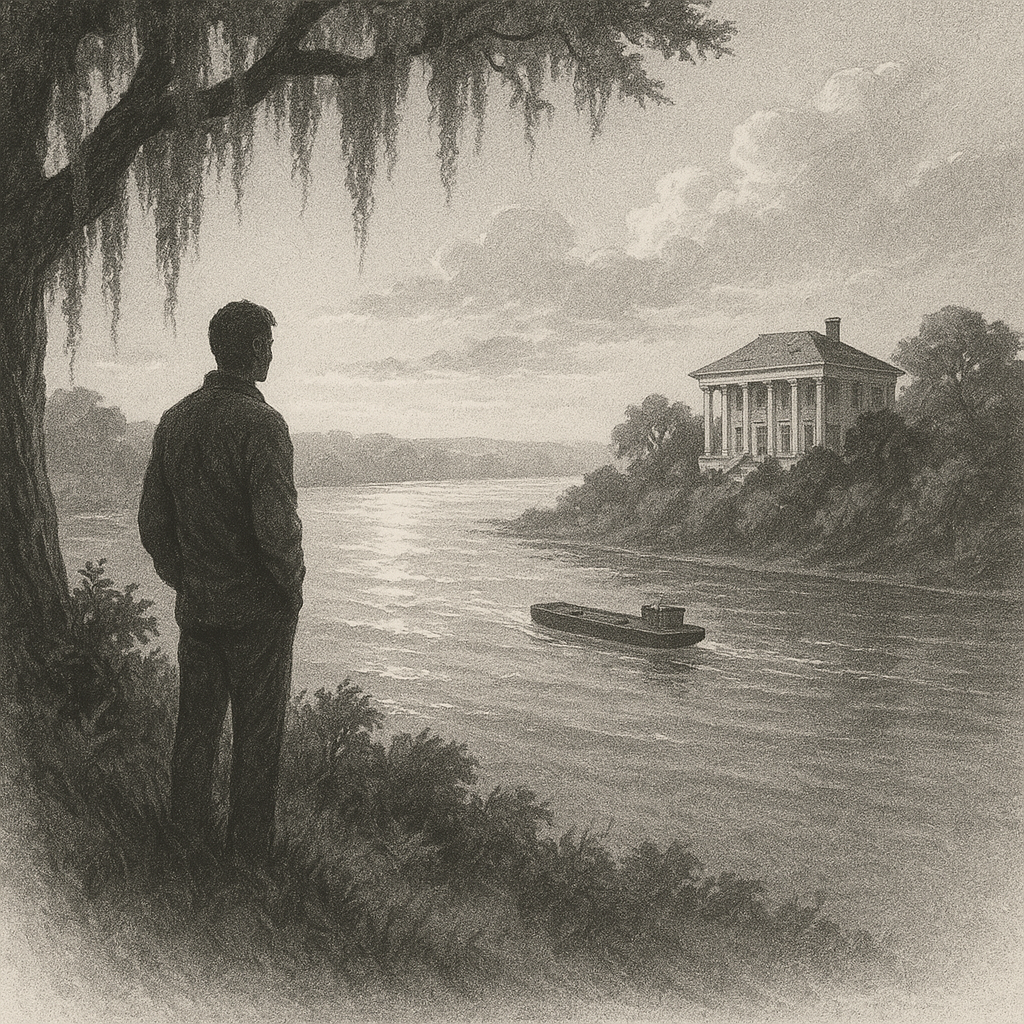
The Last Flame: The Rise and Fall of Natchez Oil
How a Mississippi Boomtown Emerged, Prospered, and Faded Beneath the Pines
The Last Flame: The Rise and Fall of Natchez Oil
How a Mississippi Boomtown Emerged, Prospered, and Faded Beneath the Pines
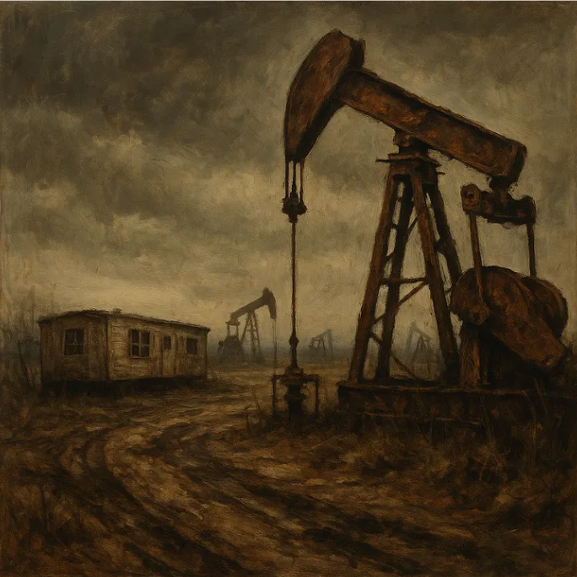
An oil pumpjack stands over a muddy lease road in a Mississippi oil field, symbolizing the boom-and-bust cycle that transformed Adams County during the Natchez oil. Illustration generated with AI and edited by the author.
It came fast. That’s what most folks remember.
One season the land was row crops and pasture, the next it was rigs and trailers, cranes and casing. Crews rolled in with rough accents and rougher hands. You’d see a kid one week cutting grass on Morgantown Road and by the next, he was pulling twelve-hour shifts and driving a new truck. The old rhythms — planting, hunting, river time — gave way to something louder, faster, richer.
By the late ’60s, Natchez wasn’t just a town with history — it was a town in motion. Oil leases exploded across the region, and with them came a fever. Men chased it like gamblers on a hot streak. Dust turned to diesel. Fences bowed under the weight of new pipelines. The sky filled with derricks, scaffolds, and red flares that lit up the night like war.
It was more than an industry. It was a transformation.
At its peak, according to longtime oilfield operators, the Natchez oil patch supported thirty drilling rigs and forty workover rigs, pounding away from Monterey to Church Hill and beyond. Fifteen drilling companies competed for crews. Twelve oilfield supply outfits ran sunup to sundown. Fifteen independent oil firms — plus the majors like Exxon, Pennzoil, Amoco, Chevron, and City Service — staked their claims in Mississippi clay.
Four thousand oilfield jobs. In a town of twenty something thousand.
The money moved fast. Boat dealerships couldn’t keep pontoons in stock. F-250s rolled off lots with paper tags and fresh mud. Mobile homes cropped up like mushrooms on cleared plots. Kids had minibikes. Men had mortgages they never read the fine print on. The bars stayed full, and the churches stayed packed — both with men trying to make peace with the week behind them.
And the land gave. Not forever, but long enough to convince people it might.
But oil, like luck, runs out.
By the early ’80s, the math turned sour. Too much supply, not enough demand. New fields opened in the North Sea, Alaska, the Persian Gulf. Prices tanked. Rigs got stacked or stripped for parts. Supply shops closed. Roughnecks headed west or back home, if there was anything to go back to.
The boom didn’t bust overnight — it leaked out slowly, like pressure from a valve someone forgot to shut. One company stopped hiring. Another pulled out. Service yards went quiet. The pickups got older. The overtime vanished. Swagger turned to silence.
No one threw farewell parties. No one lowered a flag. The majors simply left. Exxon gone. Pennzoil gone. So was the hope.
Now, what’s left?
Today, it’s down to three drilling rigs and five workover crews. Two drilling outfits still grind away, working local leases more out of grit than gain. Maybe two supply shops left — barely lit, barely moving. Four independents still scratching at the clay — small, stubborn, proud. The rest? Rusted pipe, shuttered yards, and pumpjacks stiff as tombstones in fields that used to hum.
Ask around and you’ll hear the same thing: Natchez leans on its past. But for a brief, wild window, the past didn’t matter. The future was loud, hot, and spitting oil from the ground like it would never stop.
The noise is gone now. The lights too. What’s left is silence stitched into the mud. The fields look calm, but they’ve seen things — promise, power, collapse. You can’t plow that under.
The pumpjacks don’t bow anymore — they just watch, like ghosts that remember.
메타데이터
- post_id
- f7470946c5cb
- slug
- the-last-flame-the-rise-and-fall-of-natchez-oil-f7470946c5cb
- url
- https://medium.com/the-memoirist/the-last-flame-the-rise-and-fall-of-natchez-oil-f7470946c5cb
- canonical_url
- https://medium.com/the-memoirist/the-last-flame-the-rise-and-fall-of-natchez-oil-f7470946c5cb
- author_url
- https://medium.com/@stevenelliot.pub
- status
- ok
- fetched_at
- 2026-07-10 08:43:10