AI Isn’t Killing Human-Centered Design. It’s Exposing How Little We Understood It.
The real tough part isn’t about making better products. It’s figuring out who’s calling the shots and ensuring that’s done with integrity.
AI Isn’t Killing Human-Centered Design. It’s Exposing How Little We Understood It.
The real tough part isn’t about making better products. It’s figuring out who’s calling the shots and ensuring that’s done with integrity.
We’ve been having the same conversation over and over for the last year. A new AI feature comes out, and someone starts a thread saying designers are going to become obsolete. Then, another person jumps in to argue that design is more crucial than ever. After that, we all go back to our Figma files, acting like we’ve figured it all out.
But we really haven’t!
What’s happening is even more fascinating — and a bit uncomfortable — than either side wants to admit. AI isn’t just changing our tools; it’s making us rethink what ‘human-centred’ design really means in the first place. And honestly, when I reflect on most of the products I’ve worked on in the last ten years, the truth is a bit cringe-worthy.
When it comes to human-centred design, it often comes down to creating a solid interface. You want it to be user-friendly and clear, do some testing, and then get it out there. The focus on the “human” aspect in HCD largely revolved around how well people understand the buttons, whether the process flows smoothly, and whether the wording is confusing. That’s definitely important work — real work. But there’s more to it than that.
AI is helping to reveal the bigger picture.
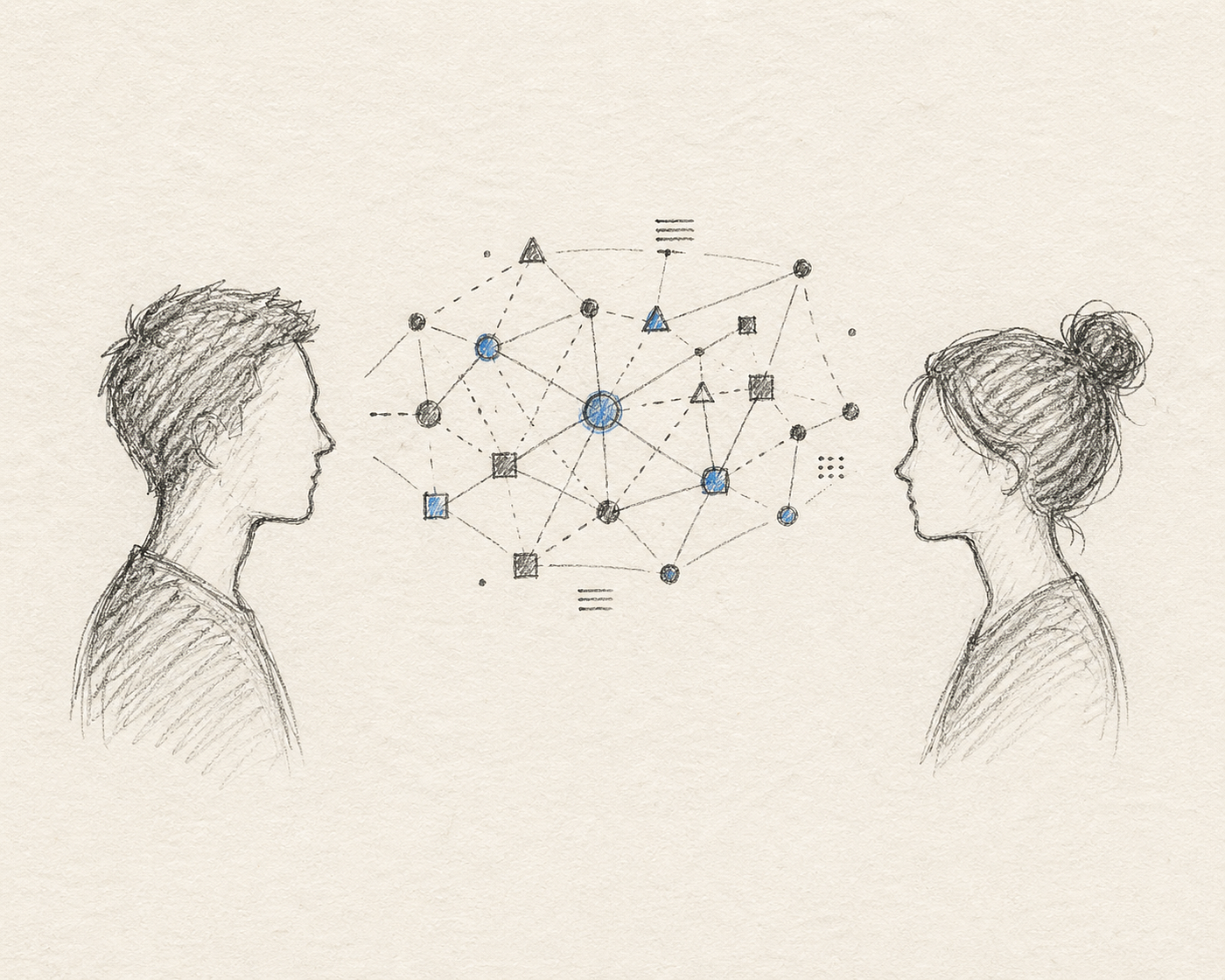
Human-centered design was always about the relationship between people and systems. AI is just making that relationship more explicit.
The Thing Nobody Says Out Loud About Human + AI
There’s an important takeaway that every designer working with AI should pay attention to: a big analysis published in Nature Human Behaviour showed that mixing humans and AI actually performed worse, on average, than just going with the best of either one alone, especially in decision-making situations. The only time the combo was consistently better was in generating content and coming up with ideas.
Let that sink in. When you combine humans and AI, they’re generally less effective than the stronger option on its own.
That doesn’t mean AI is without value. It highlights that the simple idea of “AI enhances humans” isn’t an automatic truth — it’s something that needs to be intentionally designed. Right now, many products aren’t utilising this approach thoughtfully. Instead, they’re just tacking on an AI feature to what they already have and calling it an enhancement.
When done right, the benefits show up in a specific way. For instance, in a significant study involving over five thousand customer service agents using a generative AI assistant, productivity saw an average increase of 15% — with some of the less experienced agents seeing boosts of up to 30%. The AI effectively shared valuable insights from senior staff with those still finding their feet. That’s real impact. But it relied on AI acting more like a supportive coach in the background rather than trying to replace the human touch.
On the flip side, when this principle is misapplied — when AI takes centre stage, becomes the main point of contact, and tries to assert authority — that’s when issues arise. Just look at that chatbot for eating disorders that was shut down after giving out harmful advice, or the airline bot that provided incorrect info and faced legal consequences. Or consider the hiring tool that ended up perpetuating historical biases against women because it was trained on biased data that the company claimed it wanted to change.
The trend is clear: AI shines brightest when it supports humans from behind the scenes. It tends to stumble when it tries to take their place.

The difference between AI as co-pilot and AI as replacement isn’t just philosophical — it shows up in outcomes.
HCD Doesn’t Mean What We Thought It Meant
The initial ISO definition of human-centred design focuses on creating systems that boost effectiveness, efficiency, and overall human well-being by prioritising user needs and context. It’s a solid definition, and it generally translates into: do research, test out prototypes, and iterate.
That approach works well for something like a form or a dashboard, but things get trickier when you’re designing systems that can make decisions, create content, and operate without constant human oversight.
Now, being “human-centred” has to take on a more specific meaning. It involves questions like: who’s in control at different times? When can someone step in? How does the system let users know when it’s uncertain? What are the consequences if it makes a mistake? And who takes responsibility for those mistakes?
These aren’t just philosophical dilemmas; they’re practical design challenges. They need to be integrated into wireframes, user flows, and design reviews. Previously, these considerations weren’t as critical because software simply followed instructions. But now, that’s changed — and our approach hasn’t fully adapted yet.
I’ve been contemplating this in terms of what I’d refer to as the backstage/frontstage distinction. When AI operates in the background — like summarising notes, drafting initial versions, pointing out anomalies, or organising information — it generally performs well since the human maintains the relationship and makes the final decisions. However, when AI is in the forefront — acting as the face of an interaction, making judgments, or representing an organisation — things can get problematic. Users may trust it too much, and correcting any errors isn’t straightforward.
A great example of this is the ambient AI scribing tools now making waves in healthcare. Research across various health systems has shown that when AI listens in the background and drafts notes for review, there’s a significant drop in documentation workload, after-hours tasks, and clinician burnout. One study even noted that burnout rates in outpatient clinics fell from around 52% to 39% in just 30 days. The AI didn’t replace the doctor-patient relationship; rather, it allowed doctors to engage more fully in that relationship. That’s what a successful backstage model looks like.

Good AI-integrated design feels like backstage infrastructure — present, useful, but never louder than the human at the center.
The Creativity Problem Nobody Wants to Talk About
There’s something else worth considering. A study published in Science Advances showed that when people had access to suggestions from generative AI, their individual work was rated as more creative and easier to read — especially for those who aren’t naturally very creative. That seems pretty positive.
However, on a broader scale, the variety of ideas actually decreased. So while the quality improved, the outputs started looking more alike.
For design work, this is perhaps the biggest caution from all the research. AI can help boost the average quality of what you produce, but it’s likely to reduce variability. What this means for you is that if you rely on AI for every design choice, you might end up with work that’s better than average but looks strikingly similar to other products created with the same tools and prompts.
Now, whether that’s an issue for you really depends on your context. In some cases, getting average quality quickly might be just what you need. But for anyone who cares about standing out — like with branding, product identity, or craftsmanship — it’s important to think carefully about where in your process you bring AI in, and where you keep those parts of the workflow that require original thought.
This isn’t to say you shouldn’t use AI in creative projects. Rather, it’s about being mindful of how you use it. If you generate ten ideas with AI and toss them all out because they help clarify your own thoughts, that’s a valid approach. Using AI to polish your writing once you have a solid idea is different from letting it generate the idea in the first place. Both approaches can work, but the key is to understand which process you’re actually employing.

AI tends to compress creative variance. That’s useful for some problems and dangerous for others — knowing the difference is the designer’s job.
What “Control” Actually Looks Like in a Design
When I think about how this impacts the daily routine of product design, several key points come to mind.
First off, human oversight isn’t just an occasional feature anymore. If your product relies on AI to make decisions that significantly influence what users can do or access, then options for undoing, reviewing, escalating, or appealing those decisions aren’t optional — they should be fundamental to the user experience. European laws, like GDPR Article 22 and the AI Act, require this for risky automated decisions, but honestly, it should be a design norm long before it turns into a legal requirement. If a chatbot gives the wrong information about refunds, there should be an easy way for users to reach a human. Similarly, an AI job screening tool ought to have a clear appeals process. Not just because the law might demand it, but because good design prioritises human needs.
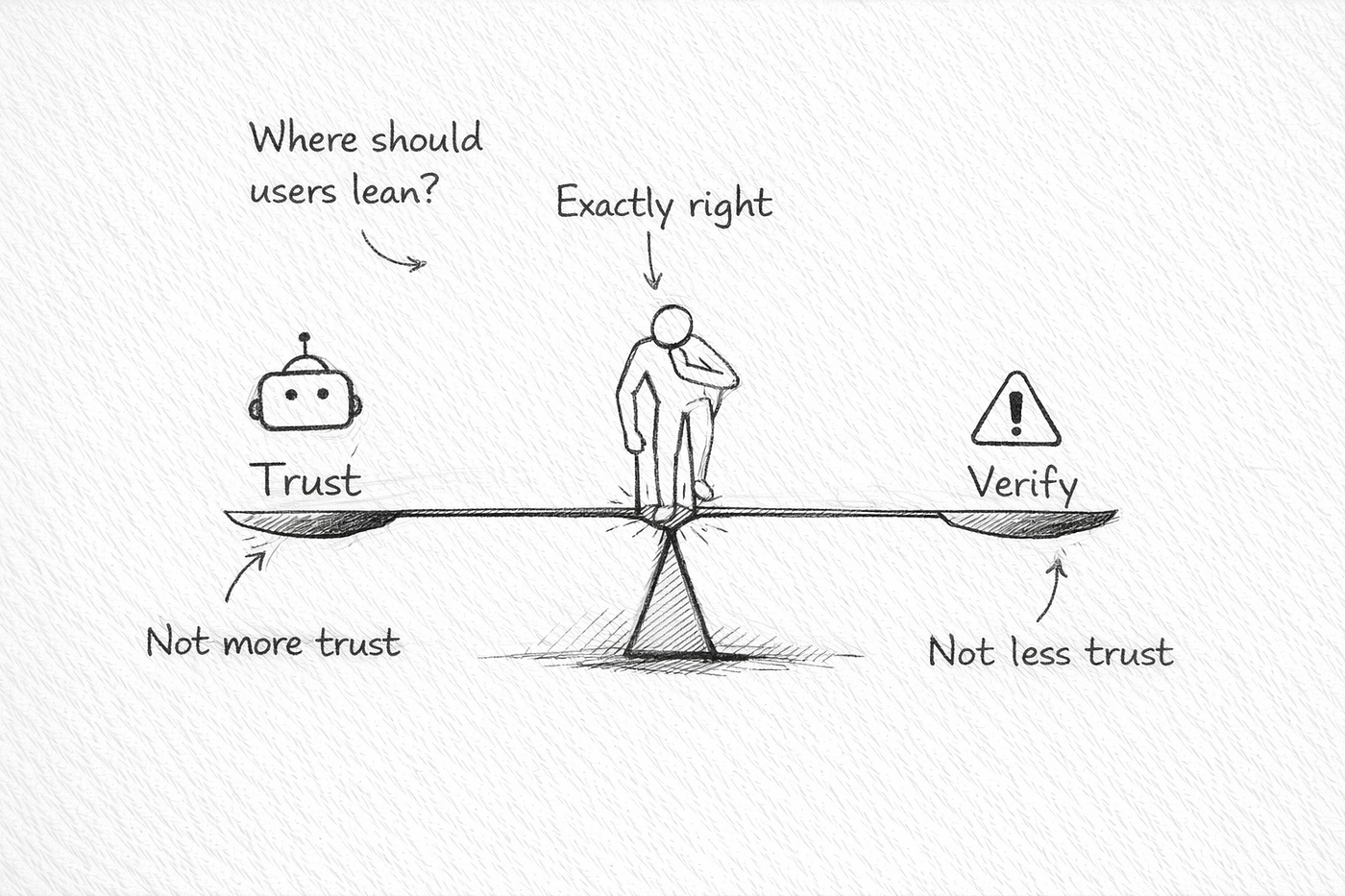
Next, I’d highlight what I call calibrated trust as a goal for design. Many products that incorporate AI features are focused on boosting user confidence in the AI itself, but that’s not quite right. What we should aim for is appropriate trust — meaning users should trust the AI based on how reliable it actually is. This requires the system to express uncertainty, recognise its limits, and be transparent about its confidence levels. A model that admits, “I’m not certain about this, you might want to double-check,” is often a better choice than one that responds to everything with the same level of confidence.
Lastly, there’s the idea of a hybrid fallback system. The accessibility app Be My Eyes got this right from the start. Their AI handles a good chunk of requests, but they also have human volunteers available for anything the AI struggles with. Users appreciate knowing they can always reach a real person if needed. This fallback option transforms the entire experience — it’s not just for rare cases, but it also positively impacts how users generally feel about the AI component of the product. Understanding that you can escape the automation makes that automation feel much more trustworthy.

The design of the escape hatch matters as much as the AI feature itself. Users who can see the exit trust the system more.
What HCD Has to Become
If I were to draft a job description for a human-centred design role in 2026, it would definitely look different from what it did back in 2020. Sure, the main skills are still there — like understanding users, doing research, and linking insights to design choices — but now we’ve got some fresh questions to consider alongside those.
For instance, where in this product does AI get to make decisions, and where is it the human’s turn? This goes beyond just product details; it’s a design issue that demands clear answers for every major interaction.
Then there’s the situation when AI thinks it’s right but isn’t. The way we handle failures in AI products is different from traditional software failures. A broken link is easy to spot, but a seemingly reasonable yet incorrect answer? That’s trickier to identify. We need to design for these failure modes by considering when users might mistakenly trust something actually wrong.
Another question to ponder is how the product affects users’ skills. This one’s a bit uncomfortable to think about. If your product takes over tasks that users could do themselves, they might lose that skill over time. Sometimes that’s okay — I mean, I don’t have to memorise phone numbers anymore, and that doesn’t bother me. But in areas where those skills are crucial, like learning or professional decision-making, completely handing things over to AI can come with some serious long-term downsides.
And last but not least, who’s the relationship with? When folks engage with an AI-driven product, there’s always this underlying question about whether they feel acknowledged by a person or just processed by a machine. Research from 2026 shows that people often want empathy from humans, even when they rate AI-generated responses as higher quality. The way a relationship feels matters just as much as what’s actually being communicated. That’s not something AI can just improve on by mastering language; it’s about the fundamental nature of the relationship.
These questions don’t have easy answers. However, they need to be part of any design process that involves AI, and right now, a lot of design teams aren’t even asking them.
The Conclusion Nobody Has the Courage to Say
Human-centred design was always supposed to be about protecting human agency — the ability of people to understand what’s happening to them, make real choices, push back when something’s wrong, and maintain relationships that feel genuinely human. We just didn’t need to be explicit about that when the software did exactly what we specified.
Now we do. The most important work in product design right now isn’t learning how to use the AI tools — it’s deciding where they go and where they stop. That’s a judgment call, and it belongs with the designer.
AI done right doesn’t make HCD less important. It makes it the only thing that matters.
메타데이터
- post_id
- f751a8447d86
- slug
- ai-isnt-killing-human-centered-design-it-s-exposing-how-little-we-understood-it-f751a8447d86
- url
- https://medium.com/@hamedsattarian/ai-isnt-killing-human-centered-design-it-s-exposing-how-little-we-understood-it-f751a8447d86
- canonical_url
- https://medium.com/@hamedsattarian/ai-isnt-killing-human-centered-design-it-s-exposing-how-little-we-understood-it-f751a8447d86
- author_url
- https://medium.com/@hamedsattarian
- status
- ok
- fetched_at
- 2026-06-26 03:39:16