Blood Covered Everything Equally
What the world keeps trying to unteach Africans: our humanity. An essay from Ahmed Haibu Lawan
Blood Covered Everything Equally
What the world keeps trying to unteach Africans: our humanity. An essay from Ahmed Haibu Lawan
The first Eid message I received this morning came from a friend, Blessing, a Christian.
The first Eid message I received this morning came from a friend, Blessing, a Christian. She was not alone. Mr. Jaff, my secondary school teacher, also bridged faith with warmth, alongside others dear to me, in ways that language sometimes struggles to convey. And somewhere between those simple “Eid Mubarak” messages, I was reminded of something the world keeps trying to unteach Africans: our humanity. For centuries, others have portrayed Africa as a continent rich only in emotion but poor in intellect, as though compassion and intelligence cannot coexist in the same person. Yet, in the quiet sincerity of people celebrating a faith that is not theirs simply because they cherish those who practice it, I see the contradiction clearly. Perhaps what Africa truly possesses is something far rarer, a soul still capable of recognizing another human being before recognizing tribe, religion, or difference.
Donald Trump stated on his social platform that Christians are being slaughtered in Nigeria, reducing a complicated national tragedy into a convenient headline polished for foreign applause. But can he explain that to my grandfather, a Muslim man shot on his way home because terrorists discovered photographs of him in a military uniform? Can he stand before his grave and insist only Christians are hunted here? If that is true, then what exactly does my grandfather’s death make him, collateral damage to a narrative too narrow to contain Nigeria’s reality?
The truth is uglier and far more painful: terror in Nigeria has never asked politely for religion before pulling a trigger. Christians have bled. Muslims have bled. Farmers, students, soldiers, imams, pastors, traders, and children have all become statistics in a country where violence feeds on vulnerability more than theology. Yet foreign politicians often flatten our suffering into slogans because nuance does not trend, and complexity rarely wins elections.
What insults me most is not merely the inaccuracy, but the arrogance of outsiders telling Nigerians what our pain should look like. We, who bury the dead ourselves, who hear the gunshots without the comfort of distance, understand this horror better than any man typing from a golden tower across the Atlantic. Nigeria’s tragedy is not a competition of faiths. It is a wound carried by a people abandoned too often by leadership, exploited by extremists, and misunderstood by spectators eager to simplify African suffering into digestible propaganda.
What many refuse to admit is that slavery did not end with chains — it evolved into something quieter, more sophisticated, almost invisible. The colonizers did not merely exploit Africa’s minerals, labor, and land, they studied our fractures with scientific precision. Tribe against tribe. Religion against religion. Region against region. They understood early that a divided people are easier to govern, easier to manipulate, and far easier to loot. And the cruel genius of it all is that decades after independence, many Africans still inherit those divisions like family heirlooms, defending lines drawn by people who never intended for us to become truly united.
Yet Europe itself was forged in blood and contradiction. The English and the French spent centuries tearing into each other. Rome rose through conquest and collapsed beneath its own arrogance. Europe witnessed Catholics and Protestants slaughtering one another in the name of God, entire generations erased because men believed heaven belonged exclusively to them. Then came the World Wars, industrial-scale madness where millions died under flags and nationalism. And even in those wars, Africans were dragged into battles that were never truly ours, dying for empires that barely considered us human beyond the usefulness of our bodies.
That is why the selective moral superiority aimed at Africa often feels deeply dishonest. Terrorism, extremism, ethnic violence, and territorial greed, these are not African inventions. Humanity itself has a long and ugly archive of them. The difference is that when Europe burns, it is called conflict, ideology, or geopolitics. When Africa burns, it is called primitiveness, as though violence suddenly becomes genetic when it happens on black soil.
And perhaps the saddest thing is watching Africans absorb these narratives until we begin policing ourselves through foreign eyes. Today, even separatist fantasies echo across continents. White South Africans openly discussing enclaves and self-preservation would be unthinkable if Africans attempted the same in Europe, America, the Arab world, or parts of Asia. The reaction would be swift and merciless. Yet Africa is constantly expected to stretch itself infinitely in the name of tolerance while others fiercely guard identity, borders, culture, and power without apology.
Still, Africa’s greatest danger may not be outsiders anymore, but our willingness to inherit their divisions as sacred truth. Because a continent cannot rise while constantly being convinced to distrust its own reflection.
Take, for example, the dangerous narratives that have been planted for decades in parts of Southern Nigeria, where some pastors, heavily influenced by missionary-era fears and foreign-funded propaganda, preach to their congregations that the North exists only to destroy Christians and “Islamize” Nigeria. It is a tragic oversimplification of a country too layered to fit inside a sermon. What many of them ignore is that Christianity has lived in Northern Nigeria for generations, not as strangers, but as family. In many northern homes, Islam and Christianity are separated not by borders, but by dining tables and bloodlines. A Muslim man may have a Christian sister, a Christian mother, or cousins attending church every Sunday while he goes to the mosque on Friday.
Look at figures like Senator Mohammed Ali Ndume of Southern Borno, who has publicly spoken about his Christian mother and his Christian elder brothers. Does anyone truly believe a man like that wakes each morning plotting the extermination of Christians? Reality is far more human than the propaganda machine allows. Northern Nigeria is not some monolithic army marching under religion — it is a fragile coexistence of communities tied together by history, marriage, language, and survival.
And if we are being honest, barbarity is not exclusive to any region, religion, or ethnicity. Human beings, when poisoned by fanaticism, tribalism, and power, become capable of horrifying things everywhere. Nigeria has seen communities betray one another during civil war. Families were torn apart by ideology during the Biafran conflict. Europe witnessed sons turning on neighbors during ethnic cleansings and religious wars. America still wrestles with violence inside homes and streets despite presenting itself as civilization’s headquarters. Evil travels well — it does not need a visa.
Then there is terrorism, that shapeless monster which exposed the stupidity of trying to force neat religious narratives onto Nigerian suffering. Boko Haram murdered Muslims and Christians alike. They bombed mosques in the morning and attacked churches in the evening. One day they slaughtered Islamic clerics for rejecting extremism — the next day they kidnapped pastors for ransom or propaganda. Their loyalty was never to Islam, Christianity, or humanity, but to chaos and power. By sunset, blood covered everything equally. That is the cruel truth many outsiders, and even some Nigerians, refuse to confront: much of the violence in this country has been sustained not only by hatred, but by politics, poverty, corruption, foreign interests, and sponsored instability masquerading as religious war.
I have lost too many loved ones to this thing that we still struggle to name properly. I was born and raised in Borno State, Nigeria, and I have lived through the years of insurgency that turned ordinary days into survival exercises. I have seen what statistics cannot hold, I have buried what headlines reduce to numbers, and I have learned that grief does not care for geography, religion, or politics.
So when people speak so lightly about what is happening here, I listen, but I do not recognize their version of it.
Because I have been here when the silence was broken by something that should never belong in human memory.
Eid Mubarak.
Ahmed Haibu Lawan
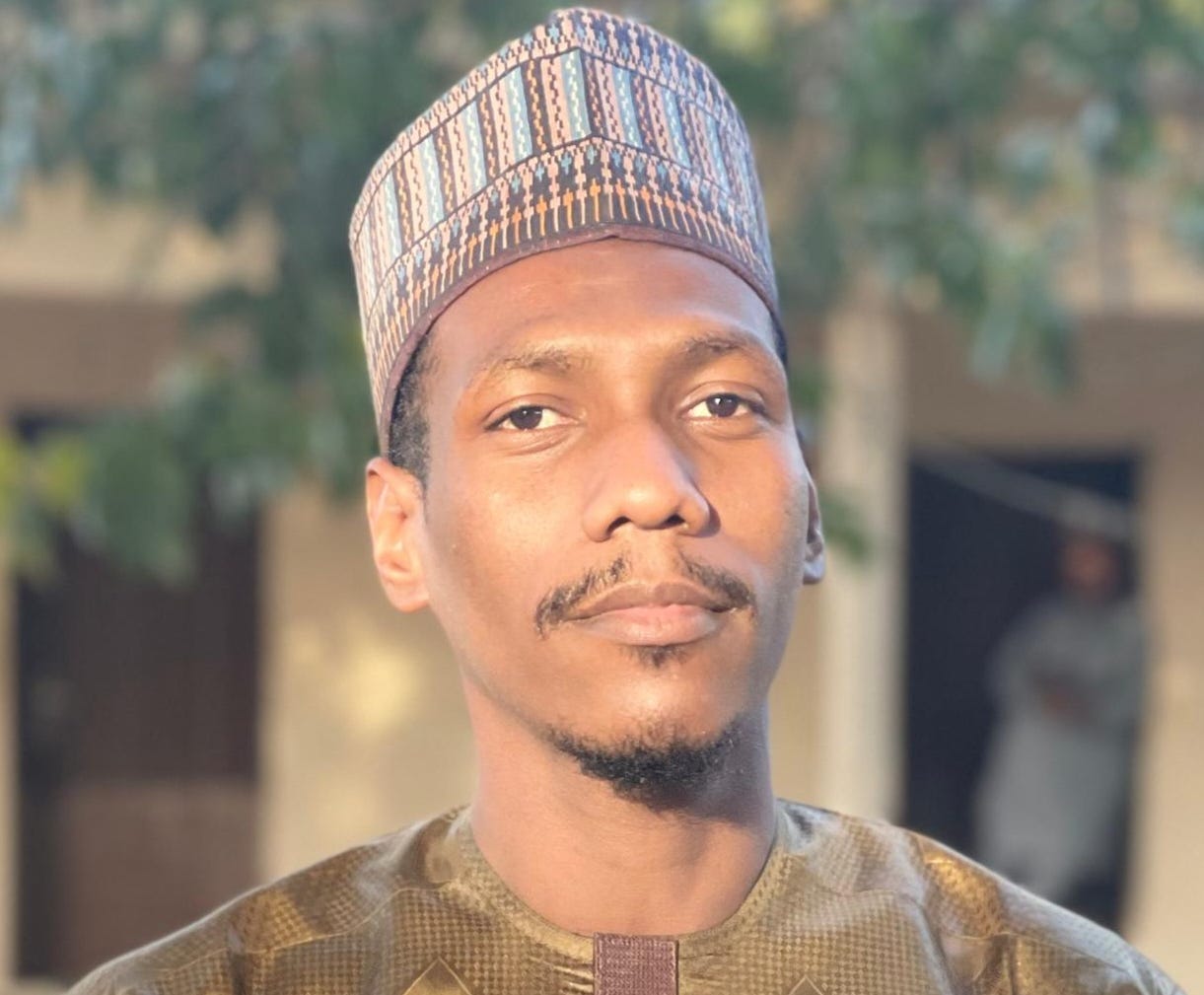
Ahmed Haibu Lawan is a Nigerian writer and poet from Borno State. His work explores memory, conflict, identity, faith, and the emotional landscapes of contemporary African life. Drawing on personal experiences shaped by his time in Northern Nigeria, he writes across genres, including fiction, essays, and poetry. You can follow him on X[ @LawanHaibu](http://x.com/Twitter/X: @LawanHaibu Website/Blog: https://share.google/HwAQeRAKrEHfBswiS Links: Medium: https://medium.com/@ahmedhaibulawan) and read more of his work on Medium ahmedhaibulawan and on his blog.
메타데이터
- post_id
- f75e2c424f9d
- slug
- blood-covered-everything-equally-f75e2c424f9d
- url
- https://kalaharireview.com/blood-covered-everything-equally-f75e2c424f9d
- canonical_url
- https://kalaharireview.com/blood-covered-everything-equally-f75e2c424f9d
- author_url
- https://medium.com/@kalaharireview
- status
- ok
- fetched_at
- 2026-07-16 20:45:22