Love with a Swipe
Once upon a time, love required courage. Today, it requires a charged phone.
Love with a Swipe
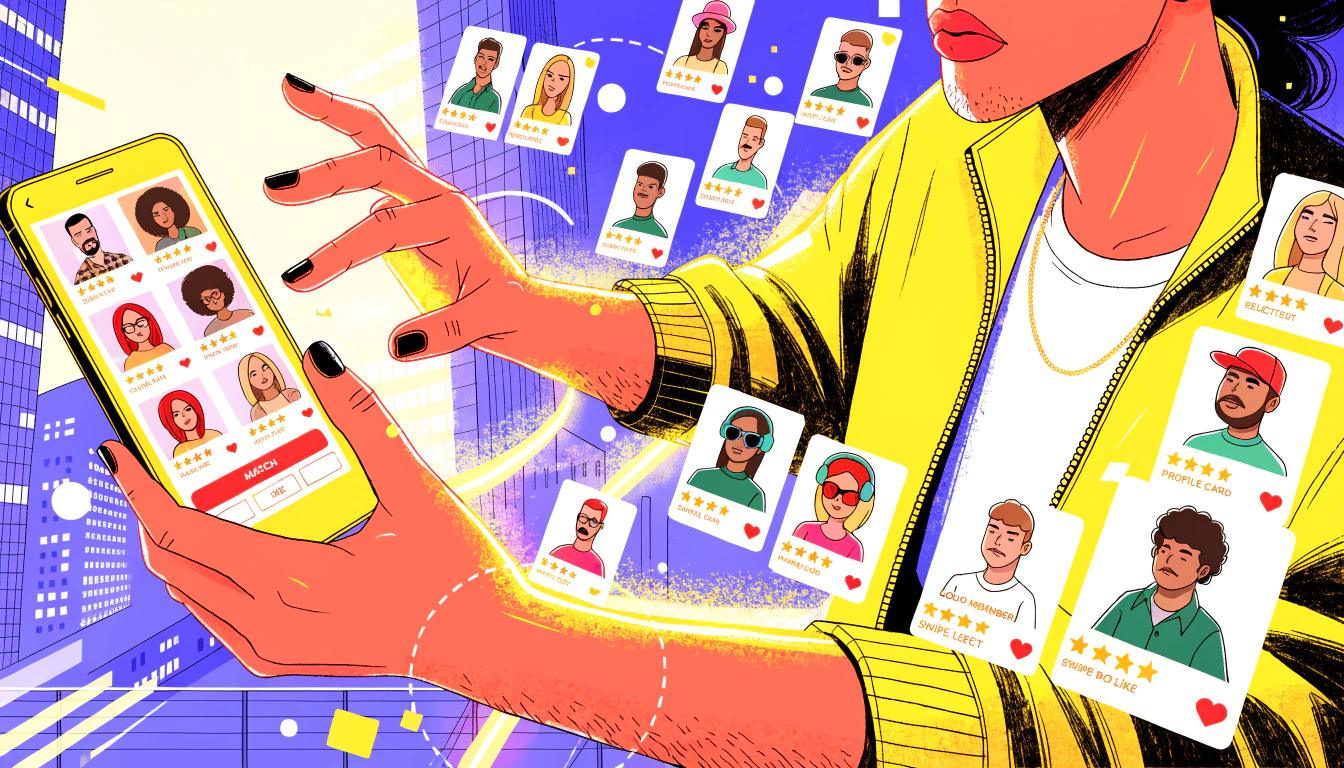
Photo by author via AI
Once upon a time, love required courage. Today, it requires a charged phone.
In the past, finding a life partner required something close to a heroic effort. Love didn’t simply happen; it was a long-term project. A shy glance in a public place, a carefully folded paper letter treated like a confidential document, long hours waiting beside a landline phone that rarely rang, and sometimes — in the worst cases — an official confrontation with a parent whose stare alone felt like an interrogation, and whose stick clearly wasn’t decorative.
There was risk. There was anticipation. And there was something resembling a story.
Today? Today all you need is an active right thumb, a fully charged phone, and a respectable amount of desperation disguised as false confidence.
You open a dating app and quickly realize you haven’t entered the world of humans, but a massive online marketplace. These aren’t people — they’re products. Each one carefully packaged: photos taken from strategic angles that hide what should be hidden, filters that smooth skin, whiten teeth, and give everyone the same ready-made smile — the kind borrowed straight from toothpaste commercials rather than real life.
Then you read the bio. “I love traveling.” “I love coffee.” “I love adventure.”
Who doesn’t? This isn’t a personality description — it’s a generic shopping list. As if everyone graduated from the same factory, or bought their identity from the same shelf.
We’re not browsing people. We’re browsing covers. We swipe right if the cover appeals to us, swipe left if the color doesn’t work. The content inside? Secondary. It can always be replaced later.
The real problem isn’t the lack of options — it’s their overwhelming abundance. When hundreds of people are available, the individual becomes worthless. Why invest effort in someone with a minor flaw — they laugh too loudly, reply too slowly, don’t like the same music — when the “perfect person” might be waiting in the very next photo?
This is supermarket philosophy applied to love. We’re not searching for a human being — we’re hunting perfection. And we reject anything with even the smallest scratch.
The result? We swipe. And swipe. And swipe.
Emotionally hungry, yet refusing to eat because we’re waiting for a Michelin-star meal that may not exist.
Then comes the match. Congratulations. Now begins the hardest stage: the conversation.
“Hi.” “Hi.” “How are you?” “Good. You?”
And here — at this staggering level of depth — most modern relationships collapse.
We don’t talk. We manage conversations. We copy the same lines, paste them to ten different people at the same time, and wait for results. If the reply is delayed by an hour, the internal investigation begins: Did they lose interest? Are they talking to someone else? Were they kidnapped? Did they die?
In reality, they were probably asleep. Or working. Or — the most painful possibility — simply not interested enough to reply immediately. But in the world of apps, silence is not neutral. Silence is a verdict.
Then we reach the most dangerous phenomenon of this era: disappearing. Ghosting.
You’ve been talking to someone for weeks. You laughed, met, exchanged small stories. Then suddenly… nothing. No goodbye message. No explanation. No “it’s not you, it’s me.” Just emptiness.
As if the person never existed at all.
In the past, ending a relationship required courage and confrontation. Today, it requires a single button. We delete, block, move on. We treat human hearts the way we treat canceled subscriptions — no feelings, no responsibility, no farewell.
And this leaves a heavy mark. A quiet feeling that you are replaceable. That your value is no greater than your last posted photo, or the last message left unopened.
In the end, dating apps are not evil by nature. They’re just tools. The problem is that we turned them into destinations rather than gateways. We tried to shorten the path to love — and in doing so, we shortened the process of getting to know, hesitating, slowing down, and all the beautiful mess that makes love… love.
Real love is unorganized. Imperfect. And it doesn’t come with a return policy.
It requires seeing flaws, not hiding them. It requires tolerating silence sometimes, not filling it with notifications.
Maybe it’s time to close the app for a while. Step into the real world. Sit somewhere public. Look around. Talk to a human being without checking your phone first.
The conversation might be awkward. The silence might last longer than you’d like. And the person may not be as perfect as they look in photos.
But they will be… real.
And in a world crowded with polished digital copies, the real thing is the rarest commodity of all.
But let’s be honest with ourselves: Most of us will return shortly to swiping right. Because it’s easier. Less risky. And because it feeds the comforting illusion that the next option… might be the best one.
If you enjoy reflections about writing, modern life, and the quiet struggles behind the page, I explore them more deeply in my private space on Substack.
메타데이터
- post_id
- f7615ddb9dd6
- slug
- love-with-a-swipe-f7615ddb9dd6
- url
- https://medium.com/@otbajakob/love-with-a-swipe-f7615ddb9dd6
- canonical_url
- https://medium.com/@otbajakob/love-with-a-swipe-f7615ddb9dd6
- author_url
- https://medium.com/@otbajakob
- status
- ok
- fetched_at
- 2026-06-09 15:37:30