Mutation or Transformation? A New Theory of Urban Change
The Theory of Interventional Urban Change
Mutation or Transformation? A New Theory of Urban Change
The Theory of Interventional Urban Change
The Theory of Interventional Urban Change (Vidalis, M. A. 2017)
By Dr. Michael A. Vidalis, Architect
I still remember the first time I walked the streets of Youngstown, Ohio. It was a city that once had pulse and voice: its steel mills had fueled an entire nation through war and growth. Now, its streets were empty. Buildings were collapsing in silence. Entire neighborhoods had vanished, not metaphorically, but literally. Where houses once stood, wild grass had taken over.
I was working at an architecture firm in Cleveland at the time, and the visit was professional. But what I saw there was not simply urban decay; it was something deeper. A question that refused to leave me alone: when exactly does a city stop transforming and begin to mutate? And who makes that decision?
That experience planted the seeds for what would later become, in my Ph.D dissertation (2016), the Theory of Interventional Urban Change, published in the Carolina Planning Journal (2017).
The Question Nobody Is Asking Correctly
In the world of urban planning and city design, we are accustomed to speaking of “development,” “revitalization,” “regeneration”, or “gentrification”. These are words that sound positive, progressive, hopeful. But they conceal a fundamental ambiguity: they do not distinguish what kind of change they describe.
Why do so many urban projects fail? Why do well-funded, carefully designed interventions leave no lasting mark, or worse, leave a neighborhood in worse shape than before?
The conventional answer looks for causes in bureaucracy, corruption, or lack of resources. These exist, of course. But they do not fully explain the phenomenon. The real root of the problem lies in something simpler and at the same time far more difficult to address: we do not understand the nature of the change we are attempting.
A Psychotherapy Book That Changed the Way I Think About Cities
In 1974, three researchers at the Mental Research Institute in Palo Alto — Paul Watzlawick, John Weakland, and Richard Fisch, published a book with the spare title “Change.” It was about short-term psychotherapy. But it was, in essence, a theory of how systems change; any systems.
Their central distinction was simple and revolutionary: there are two kinds of change.
First Order Change (FOC) is change that occurs within the system, without altering the system itself. It is adaptation, optimization, gradual evolution. The system remains within the same frame of reference.
Second Order Change (SOC) is change that transforms the system itself: its rules, its logic, the way it operates. It is discontinuous, unexpected, often counterintuitive. What Watzlawick and his colleagues call a “quantum leap.”
Reading this book, I realized that this distinction applies with remarkable precision to the urban realm. And that the failure of so many urban interventions is due, in large part, to the fact that we apply FOC when the problem demands SOC; or vice versa.
Transformation and Mutation: The Foundational Distinction
The Theory introduces two key concepts to describe the types of urban change.
Transformation is the natural, historical evolution of a city: the process through which the urban fabric gradually adapts to the changing needs of its inhabitants. It is neither linear nor untroubled. It has its crises and contradictions. But it is organic: it arises from within the city’s own fabric, from the relationships and needs that inhabit it.
Mutation is interventional change: change imposed from the outside, often abruptly and according to a centralized logic. It is not inherently negative, as it can be necessary, even life-saving. But it is fundamentally different from transformation, and it demands a different approach.
The greatest mistake in urban planning is treating mutation as though it were transformation: applying gradual, gentle interventions to a situation that has already moved beyond the logic of natural evolution. And conversely: intervening drastically in a system that simply needs time and support to transform itself.
Difficulty or Problem? The Most Underrated Distinction in Urban Design
Watzlawick and his colleagues make one more distinction that proves extraordinarily fertile in this theory: the difference between a difficulty and a problem.
A difficulty is an undesirable state that either has no solution (e.g., natural phenomena), or can be resolved through simple, practical action. It requires no theoretical processing or structural change.
A problem is an impasse created - or perpetuated - by misguided attempts to solve a difficulty. The problem is not the situation itself: it is the way we try to manage it.
In urban planning, this distinction has critical consequences. Very often, a deteriorated neighborhood is treated as a “problem” demanding urgent “solutions”, when in reality it is a “difficulty” that would resolve itself with less interventionist methods, given time and support. Conversely, situations that demand immediate and radical intervention are met with gentle, incremental measures, allowing the difficulty to harden into a genuine problem.
Two Cities, Two Lessons
Youngstown, Ohio: The Courage of Second Order Change
Youngstown was, for decades, the textbook example of urban decay or collapse. After the steel mills closed in the late 1970s, the city lost more than half its population within a few decades. Conventional responses - subsidies, infrastructure investment, efforts to attract business - were tried, and failed.
The strategic shift came when local leaders decided to abandon the idea of “recovery” - to stop trying to make Youngstown what it once was - and to accept it as a smaller city, designing for what it actually is. This was SOC (Second Order Change). They changed the rules of the game, not just the pieces on the board.
The result was, paradoxically, a form of revival: not as a major industrial city, but as a functional, resilient community with identity and a path forward.
Barceloneta, Barcelona: The Cost of Mutation
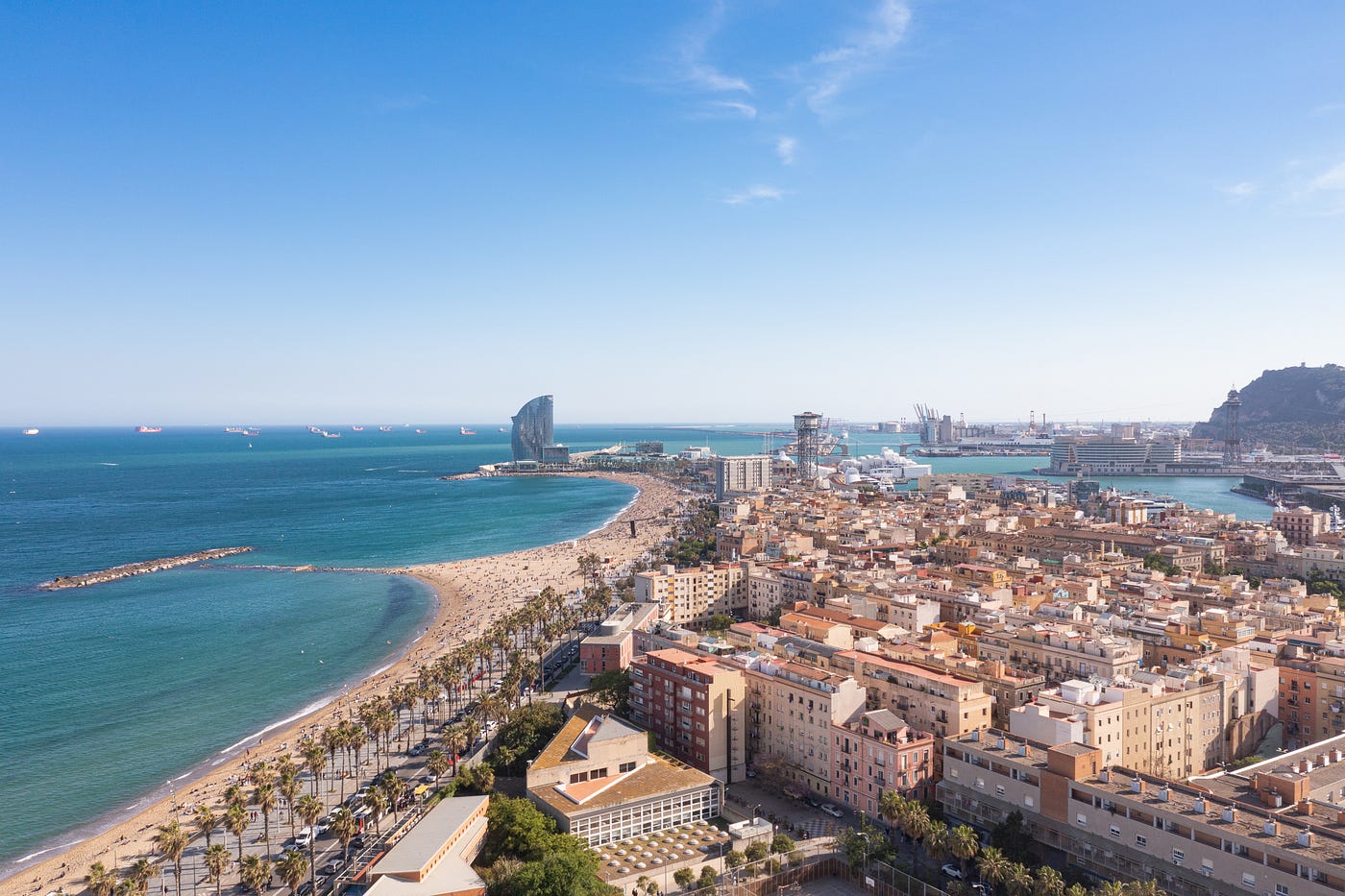
Barceloneta is Barcelona’s traditional fishermen’s quarter. Densely inhabited, vibrant, with deep social cohesion. In preparation for the 1992 Olympic Games, it underwent one of the most ambitious urban renewal projects of the twentieth century.
The result was visually spectacular and deeply contentious socially. The neighborhood was “regenerated,” but many of its original residents had no place in it anymore; were displaced. This is the classic face of mutation: change that does not arise from the community’s own fabric, but is imposed upon it.
The theory does not condemn this intervention — it recognizes that it was, in large part, unavoidable, given the Olympic deadlines and political pressures involved. But it analyzes it as a case study in interventional change, with the defining characteristics of speed, exogenous logic, and inevitable social displacement.
Why This Theory Matters Now
We are living through a moment when cities across the Western world - from post-industrial American towns to rapidly gentrifying European neighborhoods - are undergoing rapid transformation. Short-term rentals are reshaping the character of entire districts. Underutilized land or lack of land, creates pressure for redevelopment. Funding programs fuel revitalization projects. And once again, the question goes unanswered: what kind of change are we attempting? And is it the change we actually need?
The Theory of Interventional Urban Change does not offer ready-made solutions. It offers something more valuable: a framework for asking the right questions before breaking ground.
The complete article - with a full presentation of the theoretical foundations, methodological tools, and case studies - is published in the Carolina Planning Journal:
**https://issuu.com/carolinaplanningjournal/docs/2017_issue_layout_42_final_full_spr**
It is also published (in Greek) in the architectural journal Archetype:
**archetype.gr/blog/arthro/i-theoria-tis-paremvatikis-astikis-allagis**

VIDALIS ARCHITECTS: Michael A. Vidalis, Ph.D & Associates
Dr. Vidalis was born in the USA. He is an Architect, Interior Designer, Doctor of Urban [Architectural] Sociology, general contractor, author of two seminal architectural design books and an Expert to the E. U. on architecture, design, ecology issues. He has taught at both sides of the Atlantic and is a Court Expert Witness on architectural and structural errors and omissions. He leads the Bespoke architectural firm VIDALIS ARCHITECTS, based in Athens.
메타데이터
- post_id
- f76b11df5de1
- slug
- mutation-or-transformation-a-new-theory-of-urban-change-f76b11df5de1
- url
- https://medium.com/@vidalis-architects/mutation-or-transformation-a-new-theory-of-urban-change-f76b11df5de1
- canonical_url
- https://medium.com/@vidalis-architects/mutation-or-transformation-a-new-theory-of-urban-change-f76b11df5de1
- author_url
- https://medium.com/@vidalis-architects
- status
- ok
- fetched_at
- 2026-06-15 20:49:13