Now NVIDIA is on Personal Local AI
What the media don’t tell you about NVIDIA GTC Taipei 2026 Keynote
Now NVIDIA is on Personal Local AI
What the media don’t tell you about NVIDIA GTC Taipei 2026 Keynote
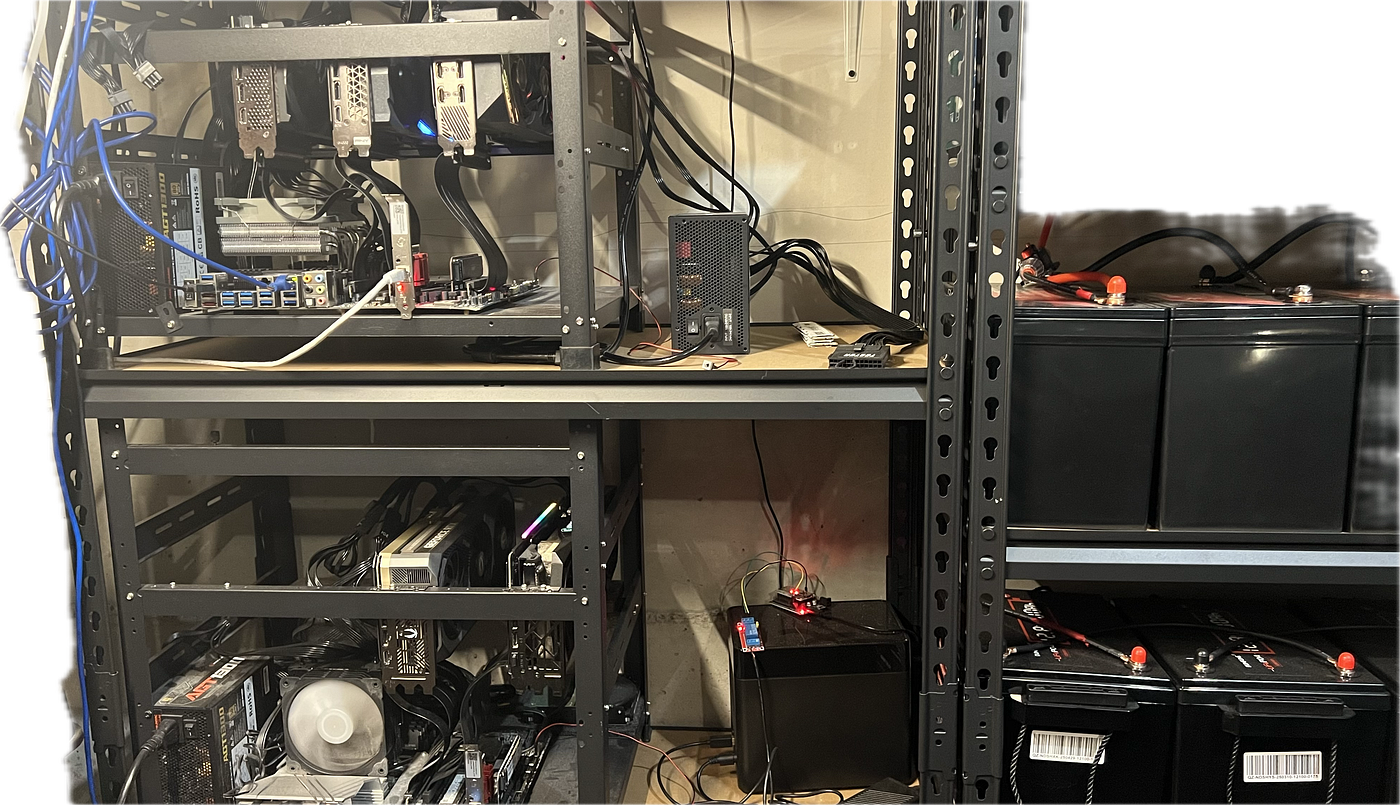
About two months ago, I wrote an article pitching you to build your own local AI machine. It resonated with a lot of people. Why? Because the conversation has shifted. Open-source models are now smart enough to do a tremendous amount of real work. And the bottleneck is no longer token price — it’s privacy, it’s ownership, and it’s the promise of a 24/7 AI agent that belongs to you.
Nobody can monitor you. Nobody can sunset your model. Nobody can take your AI agent away from you.
How could Jensen Huang and Microsoft miss that? They didn’t.
Today, NVIDIA Made It Official
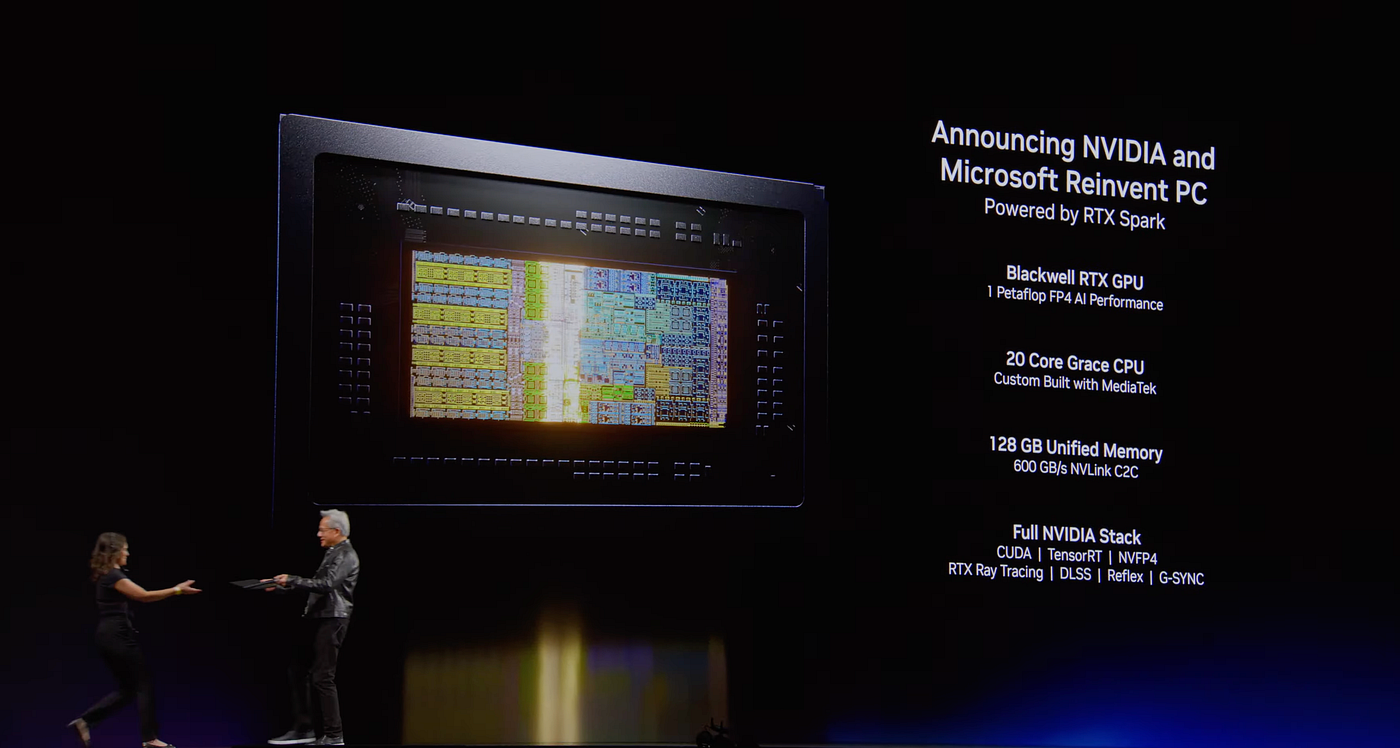
At the NVIDIA GTC Taipei keynote on June 1, 2026, Jensen Huang didn’t just talk about data centers and Vera Rubin architectures. He sent a clear signal to the world: NVIDIA is heading to Personal Local AI next. Together with Microsoft.
(Finally Microsoft did one thing right in 2026)
For years, NVIDIA’s major revenue has come from big customers and data center contracts. But what about the end user? You and me? We’re still using traditional laptops, sending our most valuable private data — our messages, our documents, our creative work — to remote API vendors like Anthropic and OpenAI. We’re renting intelligence. We don’t own it.
NVIDIA’s answer is RTX Spark and DGX Station.
RTX Spark is a Windows-on-Arm superchip co-developed with MediaTek, built on the same GB10 Grace-Blackwell architecture as the DGX Spark. It packs 20 Arm CPU cores, a Blackwell GPU with 6,144 CUDA cores, and up to 128 GB of unified LPDDR5X memory running at 300 GB/s. That’s roughly RTX 5070-class GPU compute, but with a memory pool that lets you run 120-billion-parameter models with million-token context windows entirely on-device. One petaflop of FP4 AI compute. No cloud. No API calls. No one watching.
And then there’s the DGX Station.
The DGX Station: A Monster That Does Something No Personal Computer Has Ever Done
Let’s look at the DGX Station specification, because this is where the story gets really interesting.
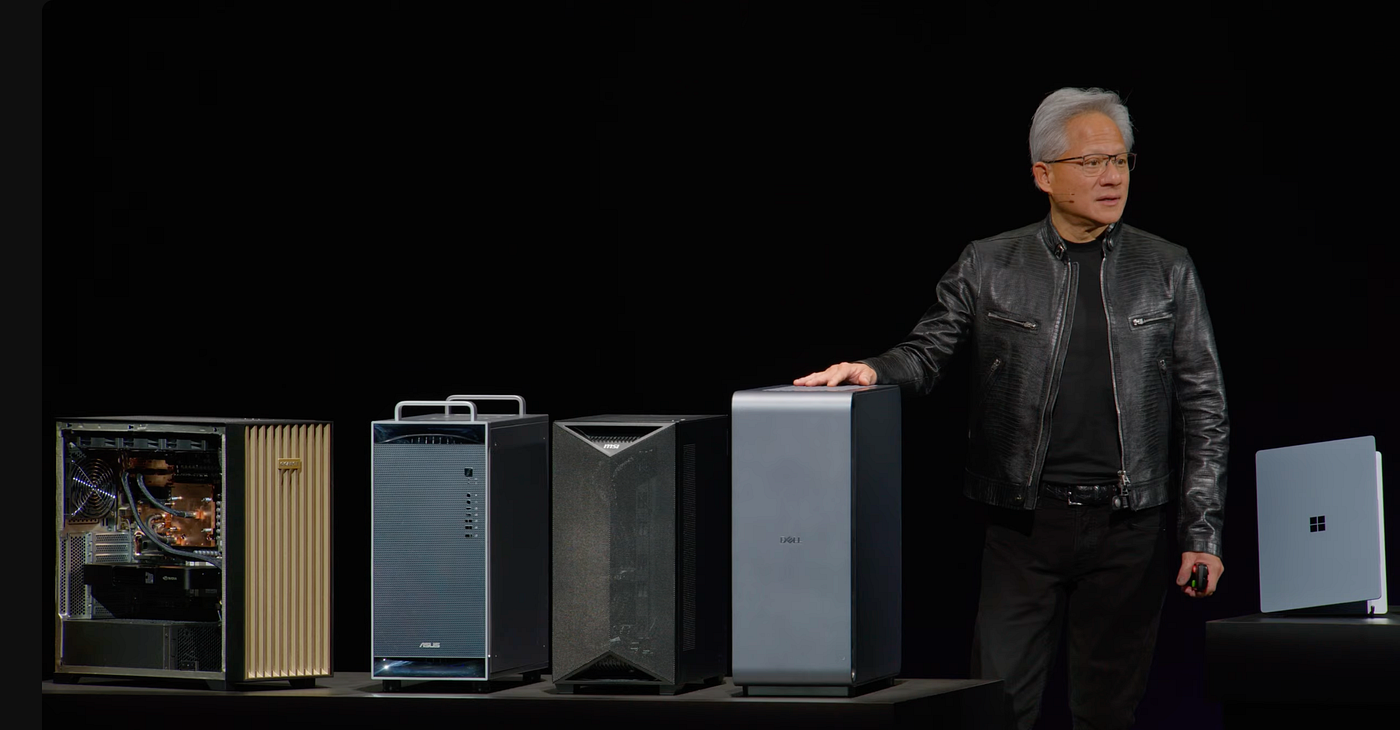
- GPU Memory: 252 GB HBM3e at 7.1 TB/s bandwidth
- CPU Memory: 496 GB LPDDR5X at 396 GB/s
- Total Coherent Memory: 748 GB unified pool via NVLink-C2C at 900 GB/s
- AI Compute: 20 petaFLOPS FP4 Tensor Core (153 petaFLOPS peak with sparsity)
- Network: ConnectX-8 SuperNIC, up to 800 Gb/s
- Power: 1,600 W
This is not a workstation. This is a monster. A powerhouse. And beyond inference and agent tool calls, this machine can do something that no other personal computing device can do:
LLM inference while training.
The next generation of agents won’t just run pre-trained models. They will be able to improve their own harness and their own model weights — continuously, in real time, on your machine. They will backpropagate loss values and update weights while simultaneously serving you. The current RTX PRO 6000 still can’t handle live-time model inference while backpropagating. But the DGX Station can. And it will.
This means your agent will get better and better, smarter and smarter. It will learn your patterns, adapt to your workflow, and grow together with you. Over time, it won’t just be an assistant — it will be an extension of your own cognitive capacity, fine-tuned specifically for you.
This is the fundamental shift that the media isn’t covering. We’re not just talking about faster inference. We’re talking about self-improving personal AI that lives on your hardware, owned by you, trained on your data, and never leaving your machine.
What You Can Do Next
If you’re a software engineer or a developer, here is my advice: stop your current task and start learning how to build a harness for yourself. Build your own agent. Build your own robot.
This is indeed a new era — not just a new era of PCs, but a new era of individuals wielding power that hasn’t been fully unleashed yet.
Just a few days ago, someone wrote on Medium that the AI era will end sooner than you think. Don’t listen to that. It’s ignorance dressed up as insight.
On the contrary, we are at the beginning of the next era. AI will have the capability to improve itself over time — not just its harness, but its weights. And at the same time, robots will be everywhere. The physical world is catching up to the digital one.
My friend, take your own time. Take your focus. If you don’t have time, make time. Because the window is open now, and it won’t stay open forever. The people who build their own agents, who own their own compute, who train their own models — they will define what comes next.
The rest of us will just be users again.
Don’t be a user. Be a builder.
메타데이터
- post_id
- f76b154cae83
- slug
- now-nvidia-is-on-personal-local-ai-f76b154cae83
- url
- https://medium.com/@xhinker/now-nvidia-is-on-personal-local-ai-f76b154cae83
- canonical_url
- https://medium.com/@xhinker/now-nvidia-is-on-personal-local-ai-f76b154cae83
- author_url
- https://medium.com/@xhinker
- status
- ok
- fetched_at
- 2026-06-09 15:37:30