Why the Depth of Teacher Training Defines the Quality of Any Early Years Programme
Whenever parents assess schools for their young children, the conversation typically gravitates toward building quality, available…
Why the Depth of Teacher Training Defines the Quality of Any Early Years Programme
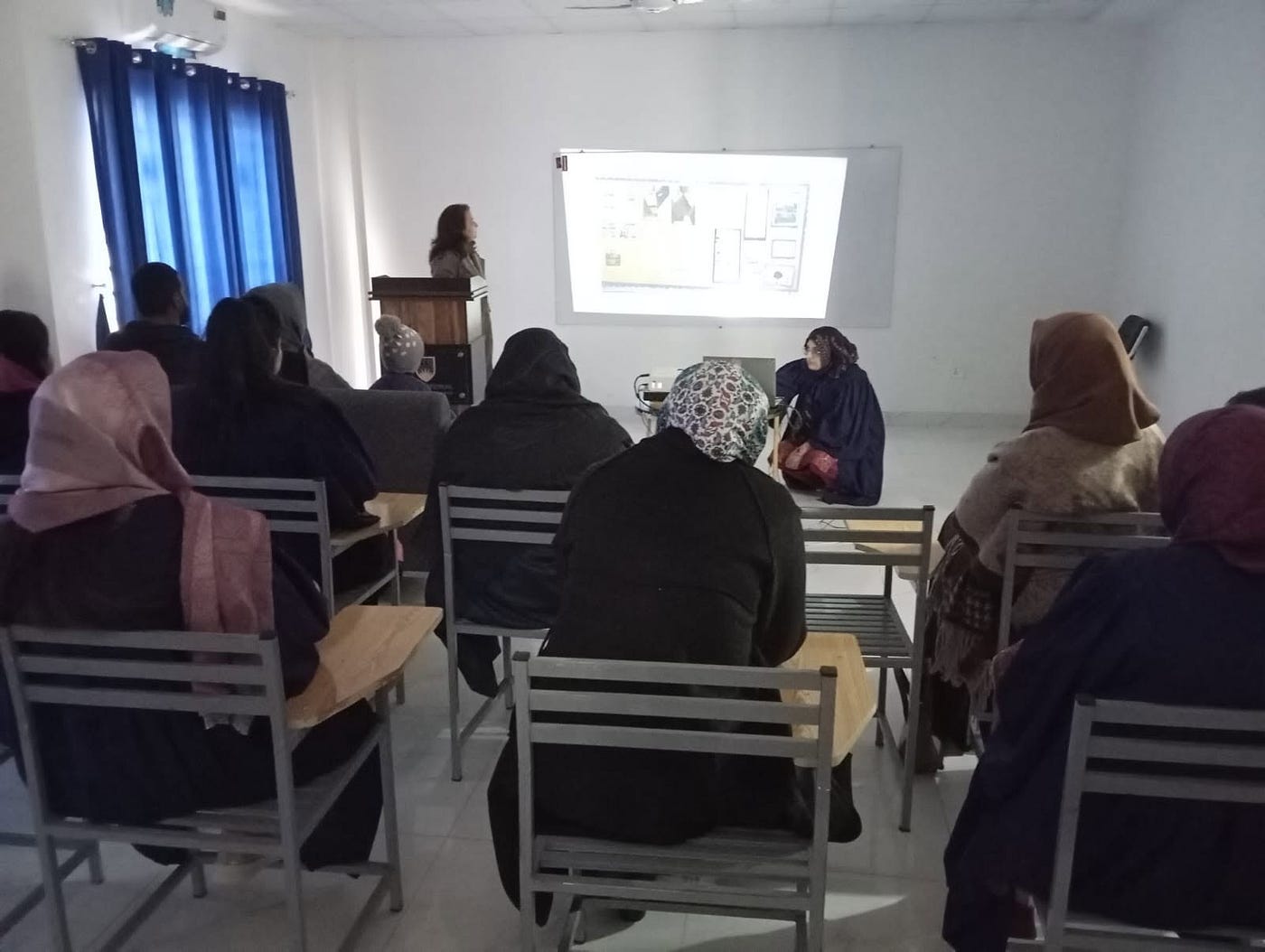
Whenever parents assess schools for their young children, the conversation typically gravitates toward building quality, available extracurriculars, and fee structures. What seldom surfaces — despite overwhelming evidence from developmental research — is the single factor that matters most: the rigour and depth of teacher preparation. Study after study confirms that the professional training level of early childhood educators predicts children’s developmental outcomes more powerfully than any other measurable school variable.
The Scope of Proper Early Childhood Educator Preparation
Preparation specific to early childhood teaching is a sophisticated, multi-dimensional professional discipline. It incorporates a thorough grounding in developmental theory across physical, cognitive, linguistic, social, and emotional domains; age-appropriate instructional methodologies; strategies for creating psychologically safe group learning environments; skills in positive behaviour guidance; and the capacity to form the responsive, attuned relationships upon which young children’s development depends. Each of these elements must be cultivated through targeted training rather than assumed from general experience.
The Professional Demands on Early Childhood Educators
The early childhood classroom is one of the most professionally demanding environments in existence. Educators in these settings simultaneously orchestrate complex group dynamics, attend to individual developmental profiles spanning multiple domains, maintain consistent emotional regulation and authentic warmth, exercise rapid and research-informed instructional judgment, and sustain the quality of their relationships with children across every interaction throughout the day. None of this can be improvised — it must be built through preparation that is as specialised as the work itself. For a closer look at what this expertise produces in practice, visit **how ITH teachers inspire a love for lifelong learning**.
The Documented Difference Trained Teachers Make
Peer-reviewed research comparing children taught by qualified early childhood educators to those in classrooms led by unqualified teachers shows consistent, significant differences across all developmental domains. Language development, cognitive ability, emotional regulation, social competence, and physical skill acquisition are all stronger in children whose teachers have been formally prepared for early years work. These are not marginal differences — they are meaningful divergences that compound over time and shape children’s readiness for every subsequent stage of learning.
Relational Skill as a Core Product of Teacher Training
What distinguishes a trained early childhood educator most fundamentally is not curriculum mastery but relational skill — the cultivated capacity to build the consistent, warm, responsive bonds that young children’s healthy development requires. Attunement, the ability to accurately read a child’s emotional state; empathetic responsiveness, the ability to meet that state with genuine understanding; and the reliability to show up the same way for children day after day — these are professional skills developed through training that specifically attends to the interpersonal dimensions of early years work. Read more about the lasting impact of these bonds in **how great teachers build confidence in young children that lasts a lifetime**.
Positive Behaviour Guidance Requires Professional Preparation
Behaviour in early childhood settings is almost always communicative — children signal needs, boundaries, and confusions through their actions because their verbal and cognitive systems are still maturing. A trained educator interprets these signals accurately and responds in developmentally appropriate ways that build capacity. An unprepared teacher is more likely to misread behaviour as defiance and respond reactively, damaging the relationship and creating the conditions for further difficulty. The positive behaviour guidance skills developed through training are among the most consequential a teacher can hold. Explore this further at **positive discipline — the approach that builds better behaviour and better children**.
Sustained Growth Beyond Initial Qualification
Professional preparation for early childhood educators does not conclude at the point of credentialing. The educators who produce the most powerful outcomes for children are those who treat their initial qualification as a beginning rather than a destination — who engage continuously with current research, seek and incorporate feedback on their practice, reflect critically on their own teaching, and adapt their skills as the children they serve change year to year. Schools that actively invest in this kind of professional culture demonstrate that quality is a living commitment, not a hiring criterion.
Key Questions to Guide Your School Search
When evaluating schools, bring these questions to your conversations with leadership:
- What qualifications do early childhood educators hold across all year levels?
- What professional development opportunities are built into the academic year?
- How are teachers supported to reflect on and refine their practice?
- What specific preparation do educators have in child development and behaviour guidance?
Strong schools will welcome these questions and respond with specific, substantive answers.
Teacher Development at the Heart of ITH School
At **ITH School**, professional educator development is not a supplementary programme — it is central to the school’s identity. Every teacher, from Playgroup through Grade Five, is selected for their credentials and their genuine investment in the lives of young children. Professional development is ongoing, structured, and actively supported by the school’s leadership team.
Teachers observe, reflect, collaborate, and grow throughout the school year, ensuring that the expertise they bring to the classroom evolves continuously alongside the children they serve. Every child at the school benefits directly from this institutional commitment to teaching excellence. Learn more about the people behind the programme at **ITH School about us**.
There is no shortcut around the primacy of teacher training in early childhood education — it is the foundation everything else is built upon. Connect with the **ITH School admissions team or [message our admissions team on WhatsApp](http://wa.me/+923367777881) to learn more. Meet the team in person at [01 Block A, Chaudhry Road, KCHS Phase 1, Defense Road](https://maps.app.goo.gl/o8oiS5RBvu6WzbFW6). Join our community on [Facebook](https://www.facebook.com/ithschool/), [Instagram](https://www.instagram.com/ithschool/), [LinkedIn](https://www.linkedin.com/company/ithschool/), and [X](https://x.com/IthSchool)**.
메타데이터
- post_id
- f77c9f3c6eae
- slug
- why-the-depth-of-teacher-training-defines-the-quality-of-any-early-years-programme-f77c9f3c6eae
- url
- https://medium.com/@ithschool/why-the-depth-of-teacher-training-defines-the-quality-of-any-early-years-programme-f77c9f3c6eae
- canonical_url
- https://medium.com/@ithschool/why-the-depth-of-teacher-training-defines-the-quality-of-any-early-years-programme-f77c9f3c6eae
- author_url
- https://medium.com/@ithschool
- status
- ok
- fetched_at
- 2026-07-30 22:36:23




