Lean Beyond the Myth of Efficiency: Why Variability and Stability Are Becoming More Important
Those who focus solely on optimizing capacity utilization often end up building fragile systems. The next stage of Lean lies in consciously…
Lean Beyond the Myth of Efficiency: Why Variability and Stability Are Becoming More Important
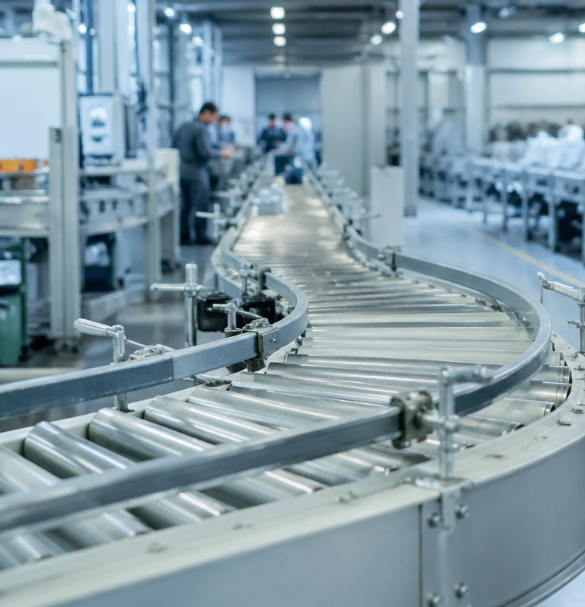
Those who focus solely on optimizing capacity utilization often end up building fragile systems. The next stage of Lean lies in consciously managing variation.
Lean remains relevant. But the focus is shifting. It is not maximum efficiency alone that creates robust performance, but the ability to recognize variability, cushion its impact, and make it manageable. This is precisely what connects classic Lean principles with current insights from Factory Physics and military logistics.
The Misunderstanding of Recent Years
In many companies, Lean has been reduced to mere “leanness.” Less inventory, fewer reserves, fewer buffers, less staff turnover, less time. That sounds reasonable as long as markets, inflows, and decisions remain stable.
But: Practice is not stable. It fluctuates. Demand fluctuates. Delivery times fluctuate. Quality fluctuates. Management signals fluctuate. Priorities fluctuate. Anyone who optimizes solely for efficiency in such a situation builds a system that becomes unstable even in the face of moderate turbulence.
Lean itself was originally broader. The term Mura explicitly identifies imbalance as a problem. So the question is not whether Lean recognizes variability. The question is whether organizations take it seriously enough in their management.
Why Variability Eats Up Performance
Factory Physics articulates the connection matter-of-factly: Variability disrupts systems’ predictable behavior; combined with high utilization, wait times and delays increase sharply. Furthermore, in practice, variability is always cushioned in three ways: inventory, capacity, or time. So you can reduce buffers, but you cannot eliminate them. You merely shift them.
This is an uncomfortable thought. Because many programs celebrate buffer reduction as progress without clearly stating where the fluctuation then ends up. Most often, it ends up with the customer, in the schedule, or with the people.
What military logistics demonstrates in a pragmatic way
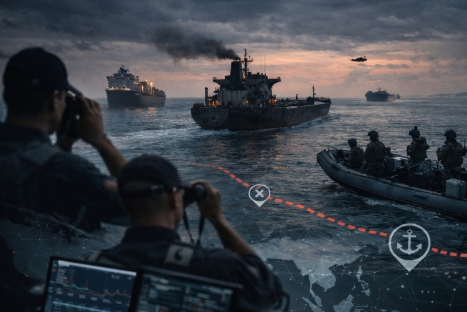
Military logistics in contested or disrupted environments is increasingly focused on resilience, distribution, and predictability. This is not driven by an academic trend, but by operational necessity. When supply lines are threatened, distances are great, and disruptions are likely, cost optimization is not enough. A system must remain viable even under pressure. Recent reports from the U.S. Army and DLA highlight precisely this shift: away from a narrow understanding of efficiency, toward adaptive, networked, and robust supply.
For civilian organizations, this does not mean copying military models. It means adopting operational honesty: a system is only good if it remains controllable even when deviations occur.
Typical patterns of failure in companies
First: Bottlenecks are constantly at full capacity.
Second: Schedules are misused as a substitute for safety.
Third: Priorities change faster than teams can react.
Fourth: Local efficiency destroys global stability.
Fifth: Escalations become normal, even though they are warning signs.
These are rarely isolated errors. They are system signals.
What stabilization means in practice
Stabilization does not begin with a large-scale program, but with clarity.
First measure: Make variability measurable. Do not just look at averages, but at dispersion. Fluctuating inputs, rescheduling, downtime, and deviations at the bottleneck must become visible.
Second step: Targeted buffering of critical areas. Stop blindly building up inventory; instead, decide where time buffers, capacity reserves, and inventory safeguards make sense.
Third step: Streamline management. Fewer competing initiatives, clear priority logic, and unambiguous escalation thresholds.
Fourth measure: Establish routines for early intervention. Daily or weekly stability meetings are more helpful than retrospective root-cause workshops.
Which KPIs make sense
Good metrics include:
- On-time performance at the bottleneck or critical path
- Lead time and standard deviation
- Number of short-term priority changes
- Proportion of unplanned accelerations, special runs, or escalations
Risks and trade-offs
There is no such thing as free stability.
More inventory increases capital tied up.
More capacity reserves appear inefficient in the short term.
Too much standardization can limit local flexibility.
But the opposite mistake is often more costly: building a system so rigid that every deviation triggers chain reactions.
The True Maturity Level
Organizations do not become more mature simply by becoming leaner.
They become more mature when they can absorb fluctuations without losing control.
This is precisely where the added value of HSC begins: not with cosmetic optimization, but with project stabilization. First bring order to operational reality, then improve it in a targeted manner. Not theoretically, but practically.
Outlook
The next stage of Lean’s development is not a departure from efficiency. It is its grounding. Efficiency remains important. But stability takes precedence as environments become more volatile, interconnected, and prone to disruption.
Those who understand this early on do not build perfect plans.
They build resilient systems.
메타데이터
- post_id
- f7a5d62a68f9
- slug
- lean-beyond-the-myth-of-efficiency-why-variability-and-stability-are-becoming-more-important-f7a5d62a68f9
- url
- https://medium.com/@thomasarnosander/lean-beyond-the-myth-of-efficiency-why-variability-and-stability-are-becoming-more-important-f7a5d62a68f9
- canonical_url
- https://medium.com/@thomasarnosander/lean-beyond-the-myth-of-efficiency-why-variability-and-stability-are-becoming-more-important-f7a5d62a68f9
- author_url
- https://medium.com/@thomasarnosander
- status
- ok
- fetched_at
- 2026-06-09 15:37:30